
February 2, 2026
- AI Technology
- Interior Design
- Design Tools
AI Interior Décor: How Artificial Intelligence Generates Design Options from Your Floor Plan
Hemanth Velury
CEO & Co-FounderAI Interior Décor: How Artificial Intelligence Generates Design Options from Your Floor Plan
Let's be honest: interior design is getting harder, not easier. Your clients are drowning in Pinterest inspiration, your email inbox is bursting with material samples, and that design project timeline you promised? It's slipping. Meanwhile, your competitors are adopting new tools, and you're stuck manually sketching variations of the same room for the third time this week.
What if there was a way to generate unlimited interior décor options from a simple floor plan? What if you could show your client five different design directions complete with furniture, colors, lighting, and décor, in the time it used to take you to source fabrics?
That's where AI interior décor comes in. And it's not just about speed. It's about standing out in a crowded market by offering something your competitors can't.
The Real Problem Interior Designers Face
As an interior designer, you're caught in a paradox. Your clients want choices, but too many choices paralyze them. Psychologists call it the paradox of choice and research shows it's getting worse. A decade ago, the design selection process took weeks. Today, it takes months. Your clients spend hours scrolling through options, comparing products, reading reviews, and changing their minds.
Meanwhile, you're the one bearing the cost. You're creating mood-boards, sketching layouts, sourcing materials, and preparing presentations. For every project, you're spending countless hours generating design variations that might not even resonate with your client.
Here's what's really happening: your billable hours are being eaten up by iteration. Your creativity is being consumed by logistics. And your competitive edge, the thing that should set you apart from other designers, is getting buried under administrative work.
This is where differentiation becomes critical. You need a way to work faster without compromising quality. You need to offer more options without burning out. And you need to make your design process so seamless that clients feel like they're working with someone on the cutting edge of the industry.
That's exactly what AI interior design and AI virtual staging technology delivers.
How AI Generates Design Options from Your Floor Plan
Let's talk about how this works.
You start with a 2D floor plan: something your client already has, or something you've created. Maybe it's a blueprint from the architect, or a floor plan from a real estate listing. It's basic. It shows walls, doorways, and dimensions. Nothing fancy.
You upload that floor plan to 3D converter, and something interesting happens. The AI doesn't just look at the layout: it understands spatial relationships, dimensions, natural light, and flow. It analyzes the room proportions, the wall configurations, and how people move through the space.
Then, here's the magic: it generates multiple interior design options, complete with:
-
Furniture placement that maximizes the functionality of the space
-
Color palettes that work with the room's natural lighting and dimensions
-
Texture and material selections that feel cohesive and professional
-
Décor elements, accessories, art, lighting fixtures, that complete the look
-
3D visualizations so detailed that clients can almost visualize themselves in the space
This isn't guessing. This isn't a designer's sketch that might be hard for clients to visualize. This is photorealistic 3D visualization: interior design renders so detailed that they look like professional photography. This is AI 3D visualization technology working at its best.
And here's the crucial part: you're not locked into one idea. The AI interior design system can generate multiple style options. Want to show your client a modern minimalist version and a warm contemporary version? Done. Want to explore options at different budget levels? Done. Want to see how different furniture arrangements affect the flow of the room? Done.
This is convert floor plan to 3D technology at its finest. But instead of just converting geometry, it's converting your client's space into a fully realized interior design vision.
Why This Changes Everything for Interior Designers
Let's talk about what this means for your practice.
Speed is your new superpower
Remember when you spent a full day creating three design directions? With AI visualization tools like Foursite, you can generate that in an hour. Or generate ten directions in the time you used to spend on three. This isn't about cutting corners, it's about multiplication. You're amplifying your creative output without amplifying your effort.
Your clients see multiple vision options. They can explore different aesthetics, different color stories, different furniture arrangements. They get to be part of the creative process in a way that was impossible before. And because they can visualize so many options through interior design 3D visualization, they make faster decisions. Your project timelines compress. Your stress levels drop.
Differentiation becomes your brand
Here's the uncomfortable truth: a lot of interior designers offer the same thing. They have good taste. They know how to source materials. They can create beautiful spaces. But their process is indistinguishable from every other designer.
When you offer AI interior décor options powered by platforms like VirtualSpaces' Foursite, you're offering something different. Your clients feel like they're working with a modern, forward-thinking designer. Someone who understands technology. Someone who respects their time. Someone who can give them options instead of ultimatums.
This is how you compete against the designer down the street who still creates mood boards by hand. This is how virtual staging and AI virtual staging become your competitive advantage.
Client confidence skyrockets
When a client can see their space rendered in photorealistic 3D with actual furniture, actual colors, actual lighting, they're making decisions from a place of confidence, not fear. They can visualize the final result. They understand your design vision. They feel like they're investing in something tangible, not betting on an abstract concept.
This is especially powerful for 2D floor plans to 3D visualization. Your client had a flat, boring blueprint. You've transformed it into a living, breathing interior design visualization. They can walk through the space mentally. They can imagine themselves in it. They can trust the process because they can see the destination.
You become a curator, not a creator
This might sound counterintuitive, but it's one of the best parts of AI interior design. The AI handles the heavy lifting: the initial design generation, the furniture placement, the color harmony, the lighting distribution. You handle the refinement.
You're curating options. You're applying your expert eye to what the AI has generated. You're personalizing it based on what you know about your client. You're making it uniquely yours while saving hours of time.
This is a fundamentally different relationship with your tools. You're not replacing your expertise, but amplifying it. The AI 3D visualization platform is your assistant. You're the designer.
Blueprint to 3D: The Technology Behind the Scenes
Now, let's talk about the actual technology. Understanding how this works gives you even more confidence in the results.
When you convert blueprint to 3D using AI interior design tools from platforms like VirtualSpaces' Foursite, the technology is doing several things simultaneously:
Spatial analysis: The AI reads your 2D floor plans and extracts dimensional data. It understands wall heights, ceiling configurations, window placements, and door swings. It knows where natural light comes in and how that affects the décor choices.
Style interpretation: Based on style parameters you select (or that your client selects), the AI understands what design elements should be included. If your client says "modern minimalist," the AI knows what that means: clean lines, neutral color palettes, uncluttered surfaces, and functional furniture. If they say "warm contemporary," the AI pivots to warmer tones, layered textures, and inviting arrangements.
Constraint awareness: The AI understands your parameters. Budget constraints? Material preferences? Accessibility requirements? The AI respects those as it generates options. This isn't a tool that ignores your real-world limitations.
Material and texture knowledge: This is crucial for interior design photoreal renders. The AI has learned what materials look like in different lighting conditions. It knows how fabric drapes, how wood finishes reflect light, how metal surfaces behave. The result is photorealistic rendering: interior design renders so realistic that clients sometimes think they're photographs.
The output is what you'd call AI 3D visualization at its best, not just a 3D model, but a fully rendered, detailed, livable vision of the space.
From 2D Floor Plans to Professional Interior Design Visualization
What makes this process so powerful is the transformation from 2D floor plans to 3D visualization. Think about the difference:
-
Before: You have a boring, flat floor plan. Wall lines. Door swings. Dimensions. It tells you a lot about the space, but it doesn't tell you how it feels.
-
After: You have a fully realized interior design visualization. You can see the afternoon light coming through the windows. You can see how the furniture grouping creates conversation areas. You can see the color story, the texture layering, the accessory placement. It tells you everything.
This transformation, from blueprint to 3D visualization, is what AI interior design tools like Foursite have mastered. It's not just converting geometry. It's translating spatial potential into visual reality.
The Competitive Advantage You're Building
Here's what matters: every hour you save using AI interior décor technology is an hour you can invest in client relationships, project strategy, or your own business growth. Every project you complete faster is another project you can take on. Every client who's impressed by your modern, efficient process becomes your best referral source.
Compare yourself to designers who aren't using this technology. They're spending time on tasks that don't require human creativity. They're creating multiple hand-drawn concepts when they could be generating AI-powered visualizations. They're wrestling with client indecision when they could be showing options in 3D visualization.
You're operating in a different league. You're using convert floor plan to 3D technology and AI interior design visualization to do more with less effort. You're offering clients virtual staging that feels real and immediate. You're presenting design concepts in interior design 3D visualization so polished that they feel professional and inevitable.
This is differentiation that clients can feel and see.
How to Get Started: From Floor Plan to Design Reality
The process is simpler than you might think.
First, you gather your 2D floor plans. These might be existing plans from your clients, or floor plans converted from architectural drawings. The source doesn't matter much, as long as you have accurate dimensions.
Second, you choose your design parameters. Style preferences, color directions, budget ranges, material priorities. The more specific you are, the more tailored your options will be.
Third, you upload to a platform like Foursite (powered by VirtualSpaces AI technology) and let the AI generate options. This typically happens within minutes. You're not waiting for render farms to process overnight. You're getting results fast.
Fourth, you review and refine. Maybe one option nails the aesthetic but the furniture arrangement isn't quite right. Maybe another option has perfect color harmony but needs different accessories. You make these tweaks or the AI makes them for you based on your feedback.
Fifth, you present to your client. Whether it's one design direction or five, you're presenting interior design renders so clear and detailed that your client can make confident decisions.
This entire process, from floor plan to finished options, might take a few hours instead of a few days. And the quality? The interior design photoreal renders are professional-grade. They're something you'd be proud to put in your portfolio.
The Human Element Still Matters
Let's be clear about something important: AI interior décor technology is a tool, not a replacement for your expertise. The best interior designers won't be the ones who abandon traditional design thinking. They'll be the ones who combine AI efficiency with human taste and experience.
You understand your client's lifestyle in a way no AI ever will. You know they have three dogs and two kids, so that pristine white sofa isn't going to work. You understand they work from home, so the workspace needs to be integrated thoughtfully into the living room. You know their partner prefers warm tones while they prefer cool tones, so you're balancing both preferences.
The AI generates options. You refine them based on human insight. That combination is unbeatable.
The Future of Interior Design
Interior design is evolving rapidly. Clients expect faster turnarounds. They expect to see visual concepts, not sketches. They expect designers to understand and use modern tools. They expect efficiency without sacrificing quality.
Designers who aren't adapting are losing market share to those who are. It's not about being the most talented designer anymore: talent matters, but speed and visualization matter too.
AI interior design technology whether it's converting a floor plan to 3D, generating design options, or creating photoreal renders, is becoming standard in the industry. Not optional. Standard. The designers using platforms like Foursite are attracting clients who appreciate modern tools. They're completing projects faster. They're taking on more work. They're building stronger businesses.
And here's the best part: they're actually enjoying design more because they're spending less time on busywork and more time on the creative decisions that matter.
Your Next Step
If you're an interior designer still creating mood boards by hand, still manually sketching design variations, still watching clients struggle to visualize concepts — it's time to evolve. AI interior décor tools from VirtualSpaces' Foursite aren't about replacing your creativity. They're about multiplying it.
Convert your floor plans into stunning 3D visualizations. Generate multiple design directions in a fraction of the time. Present options with such clarity that client decisions become simple.
Your clients will be impressed. Your business will run smoother. Your competitive advantage will be obvious.
That's not the future of interior design. That's today. The only question is: are you ready to join it?
Recommended for you

August 19, 2026
The End of the Model Home? 3D Changes the Math | VirtualSpaces
HHemanth Velury
CEO & Co-Founder
August 17, 2026
Designing Spaces That Actually Get Built | VirtualSpaces
HHemanth Velury
CEO & Co-Founder
August 12, 2026
Designing Homes for the Stuff People Actually Own | VirtualSpaces
HHemanth Velury
CEO & Co-Founder
August 07, 2026
Floor Plan to Bill of Materials: The 3D Model as Data | VirtualSpaces
HHemanth Velury
CEO & Co-Founder.png&w=1080&q=75)
August 05, 2026
Designing Homes for How People Actually Live | VirtualSpaces
HHemanth Velury
CEO & Co-Founder
August 03, 2026
Honest by Design: Trust in AI Real Estate Imagery | VirtualSpaces
HHemanth Velury
CEO & Co-Founder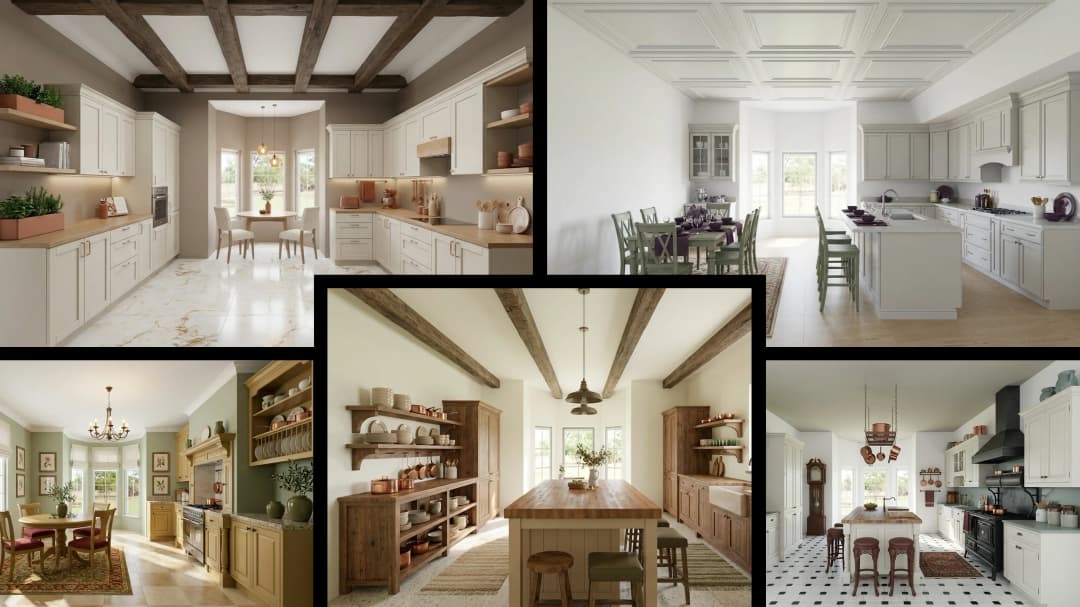
July 29, 2026
Kitchen and Bath: The Two Rooms That Decide Resale | VirtualSpaces
HHemanth Velury
CEO & Co-Founder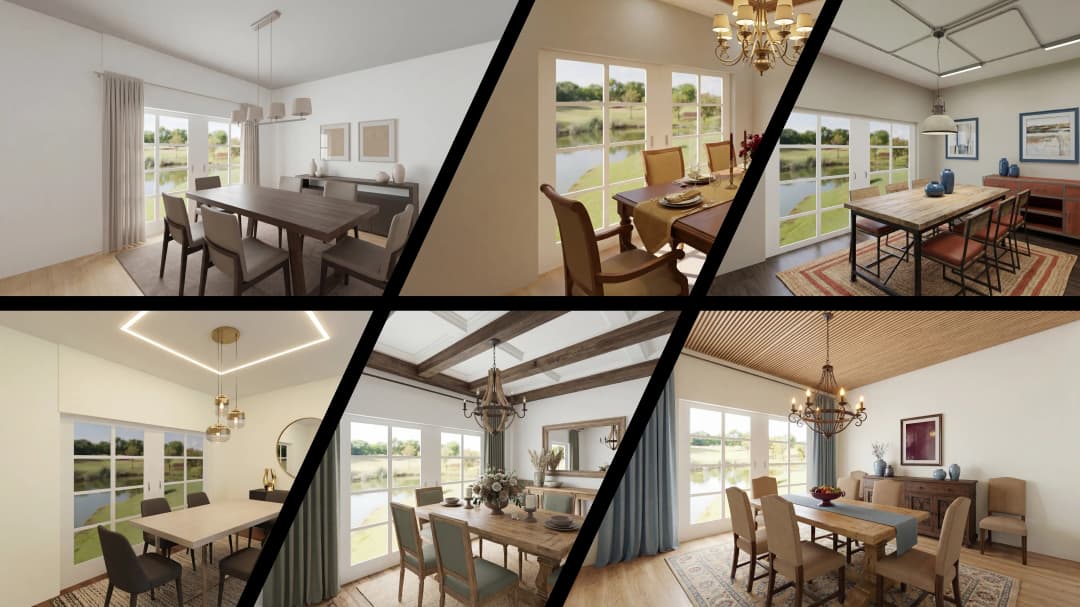
July 27, 2026
Why Empty Rooms Don't Sell: Virtual Staging | VirtualSpaces
HHemanth Velury
CEO & Co-Founder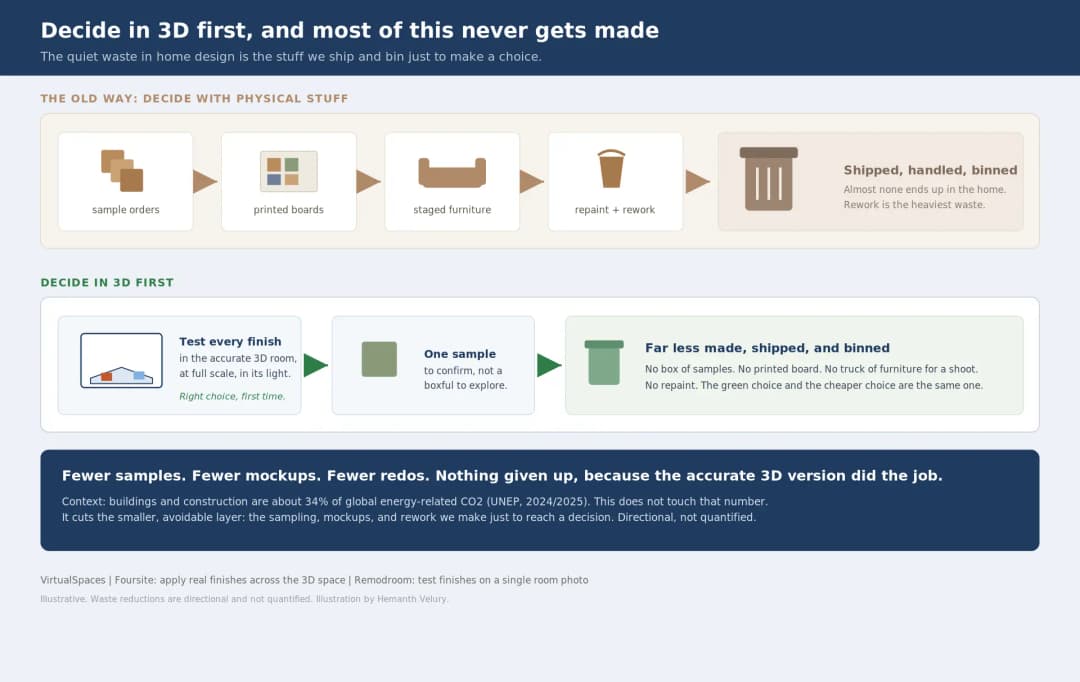
July 24, 2026
The Quiet Sustainability Win of Deciding in 3D | VirtualSpaces
HHemanth Velury
CEO & Co-Founder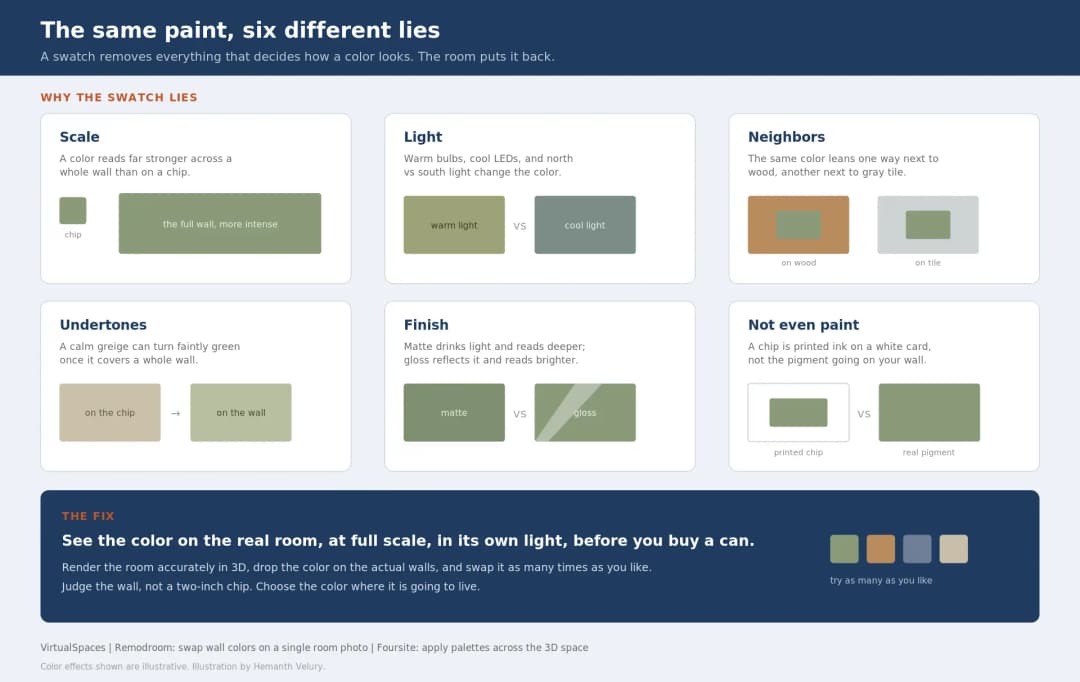
July 22, 2026
Why Paint Swatches Lie: Test Color in 3D First | VirtualSpaces
HHemanth Velury
CEO & Co-Founder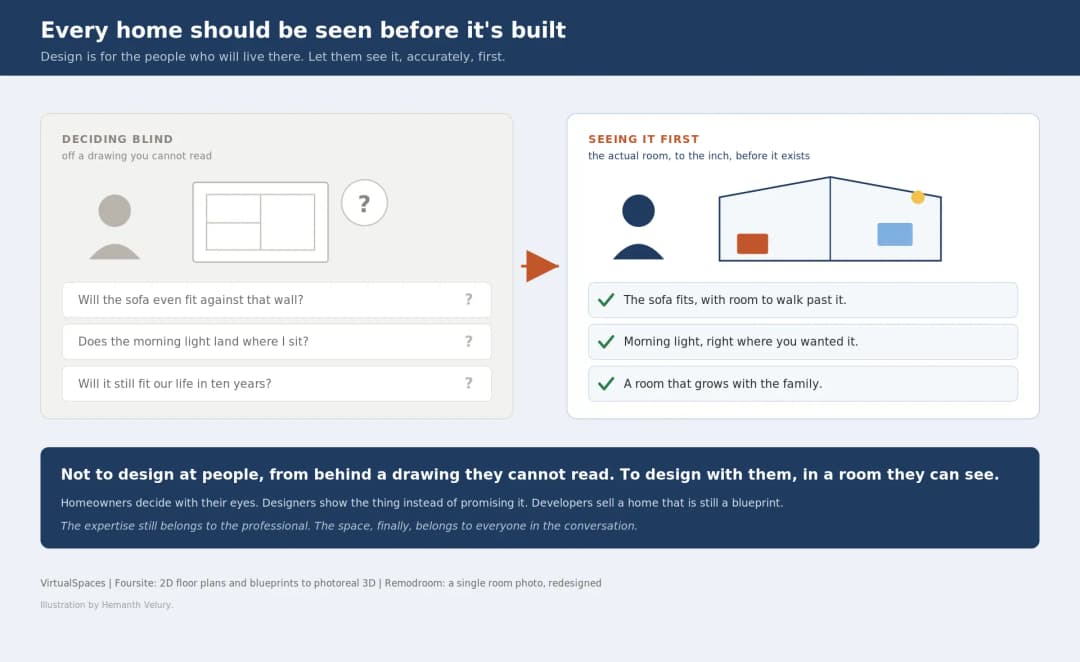
July 20, 2026
Why Every Home Should Be Seen Before It's Built | VirtualSpaces
HHemanth Velury
CEO & Co-Founder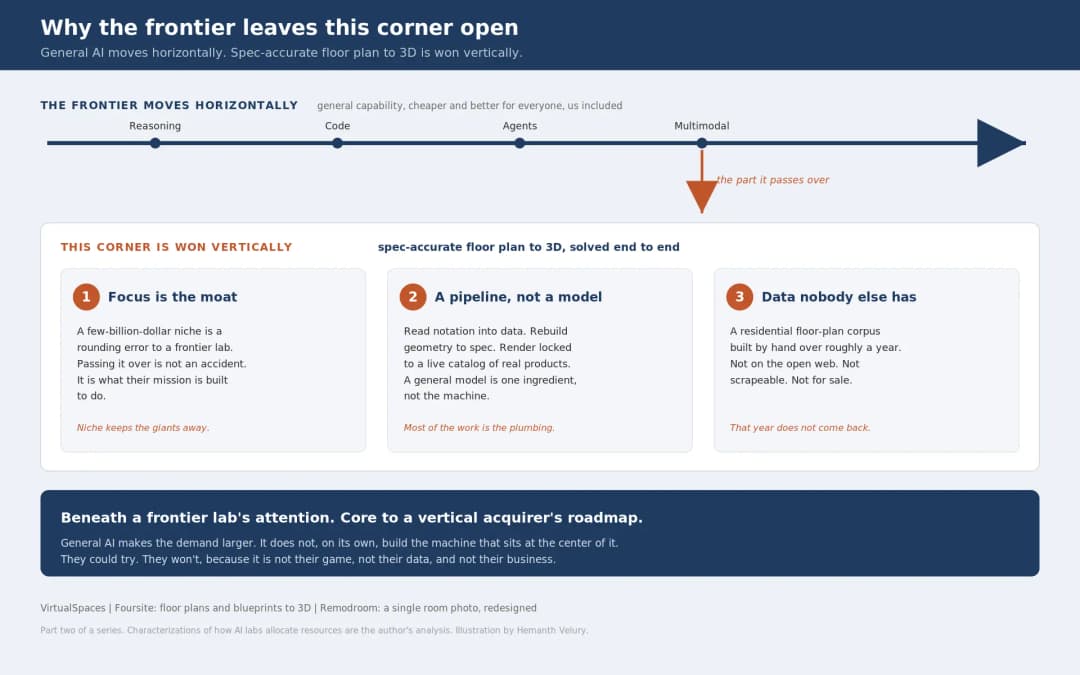
July 17, 2026
Why Big AI Labs Won't Build Floor Plan to 3D | VirtualSpaces
HHemanth Velury
CEO & Co-Founder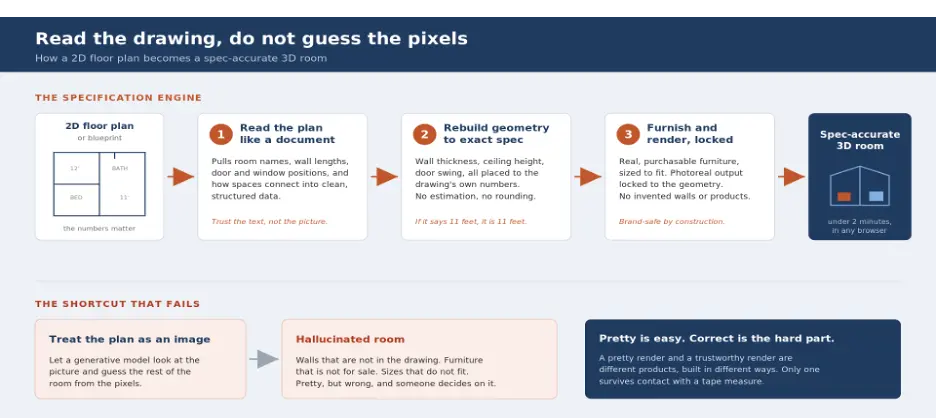
July 15, 2026
How We Solve Floor Plan to 3D, Accurately | VirtualSpaces
HHemanth Velury
CEO & Co-Founder
July 13, 2026
Designing Homes That Age With the People in Them | VirtualSpaces
HHemanth Velury
CEO & Co-Founder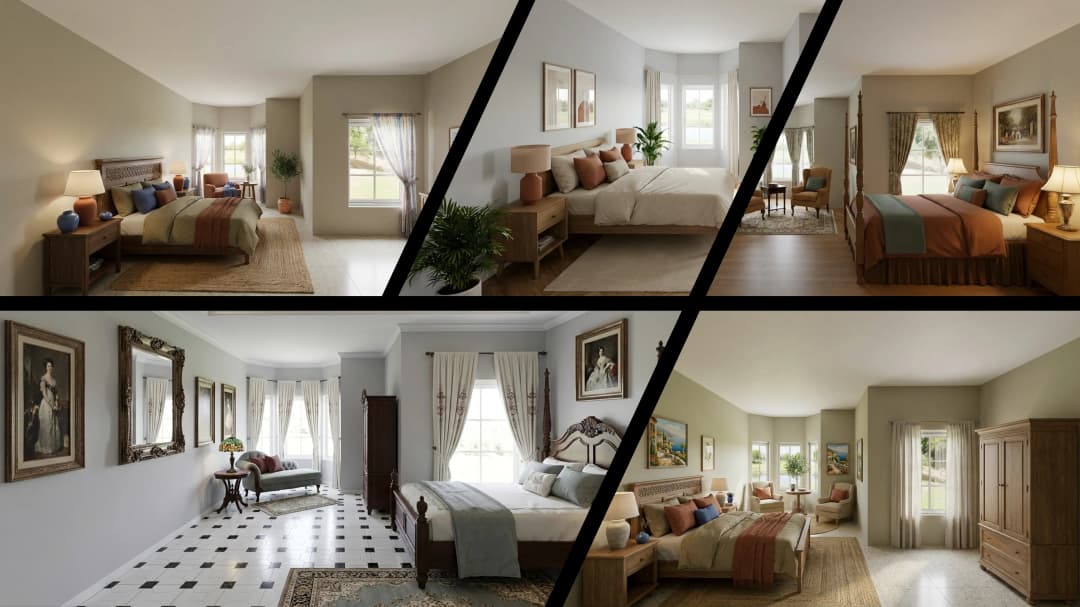
July 10, 2026
Designing Spaces for How Light Actually Moves | VirtualSpaces
HHemanth Velury
CEO & Co-Founder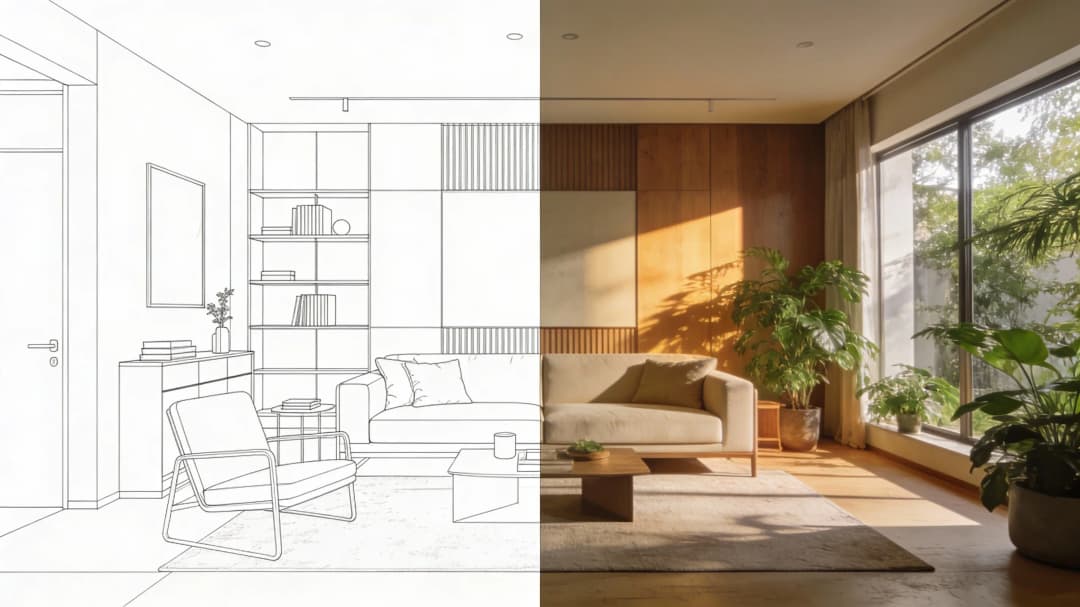
July 08, 2026
Designing Homes for Every Life Stage in 3D | VirtualSpaces
HHemanth Velury
CEO & Co-Founder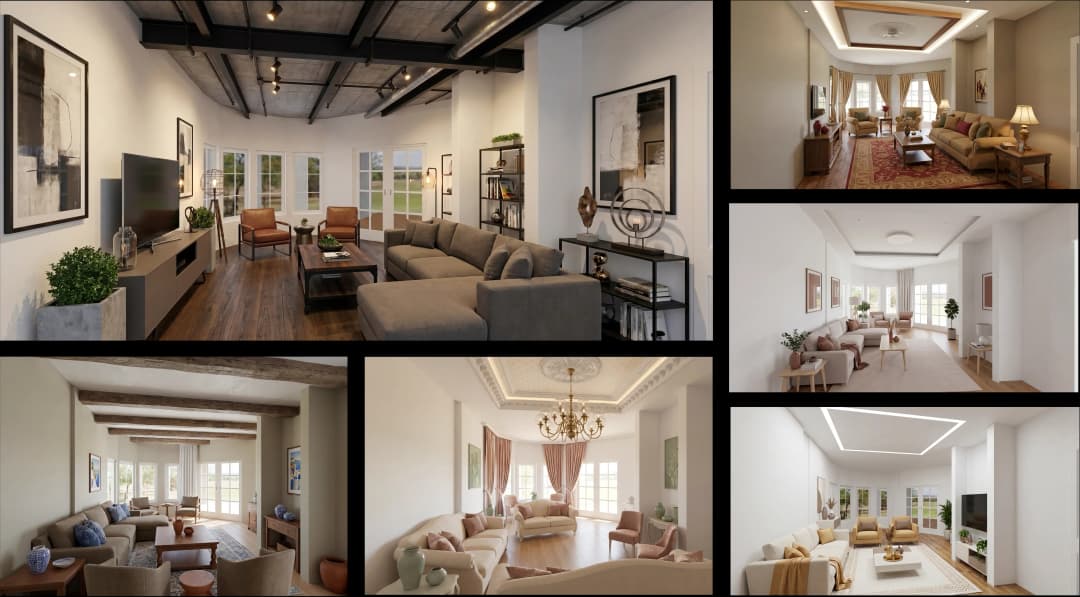
July 06, 2026
Build an Interior Design Portfolio Without Clients | VirtualSpaces
HHemanth Velury
CEO & Co-Founder
June 26, 2026
AI Interior Design: Full 3D Workflow in One Platform | VirtualSpaces
HHemanth Velury
CEO & Co-Founder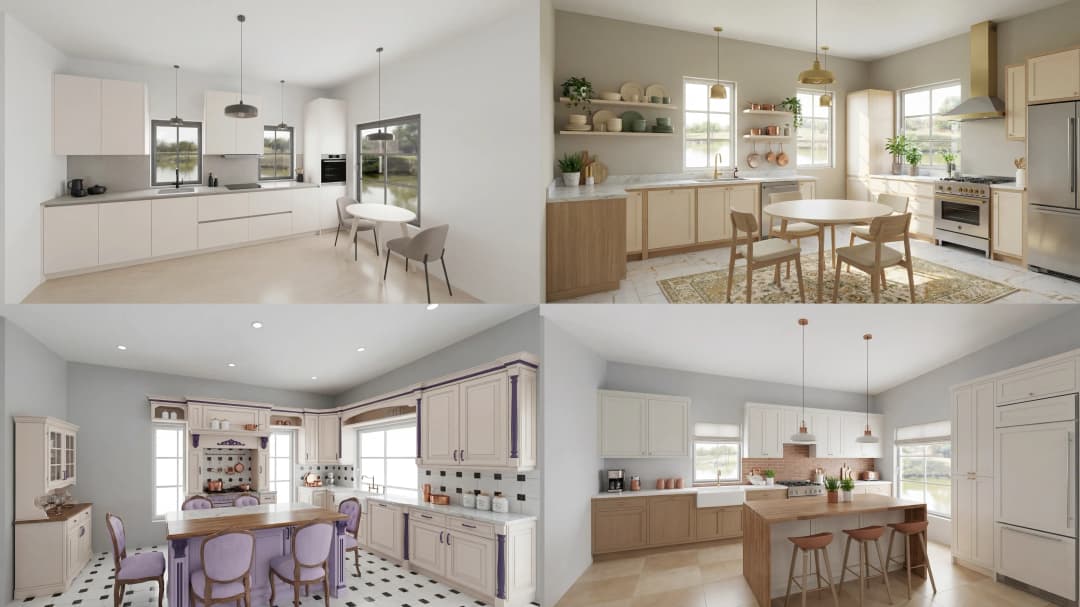
June 24, 2026
Scope Creep in Interior Design: How AI Visualization Fixes It | VirtualSpaces
HHemanth Velury
CEO & Co-Founder
June 22, 2026
What Buyers See on a Floor Plan: Your Biggest Sales Problem | VirtualSpaces
HHemanth Velury
CEO & Co-Founder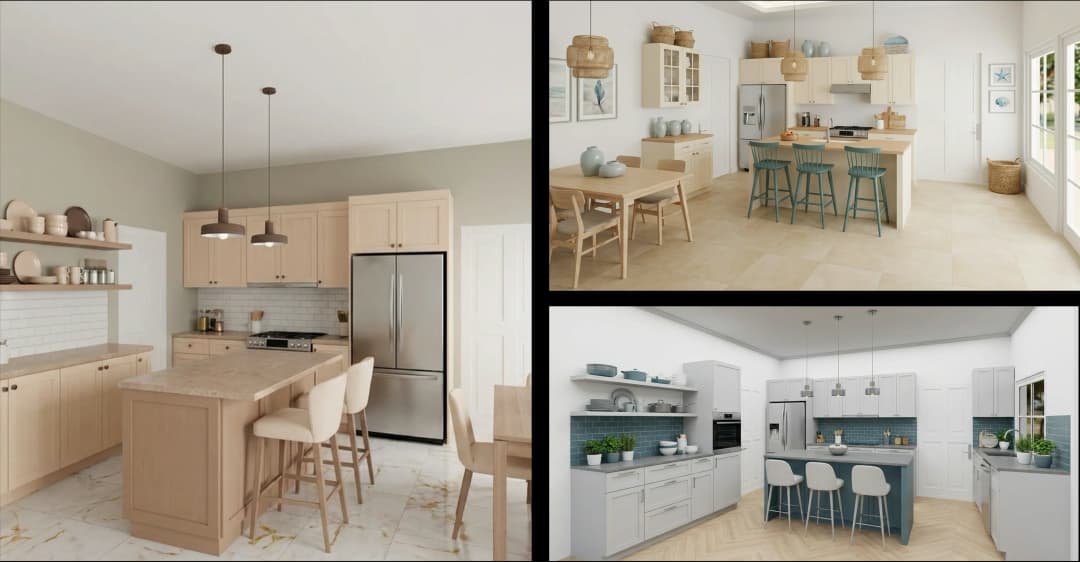
June 19, 2026
Small Design Studios vs Big Firms: The AI Advantage | VirtualSpaces
HHemanth Velury
CEO & Co-Founder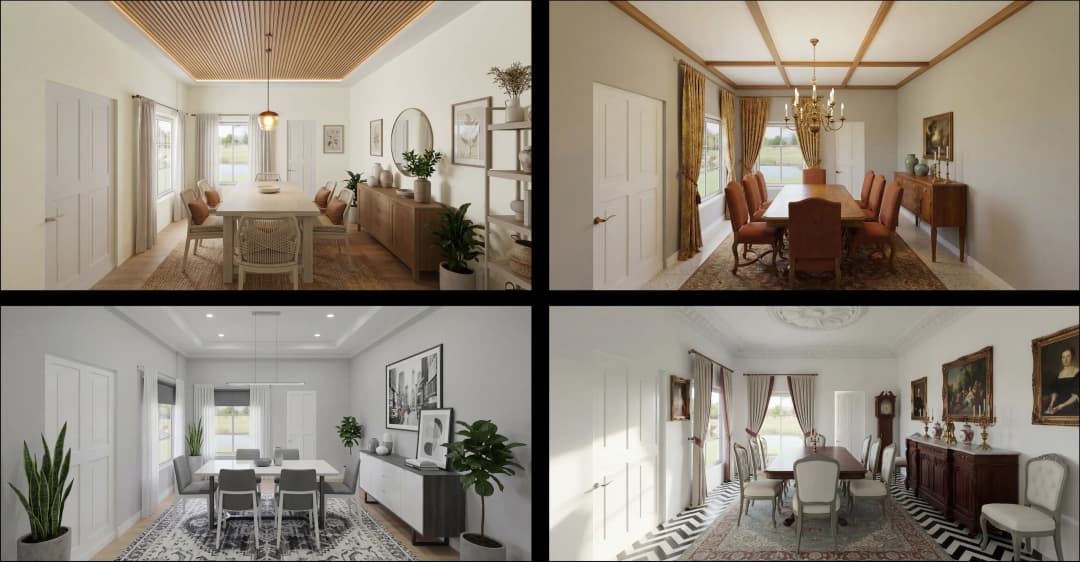
June 17, 2026
After the Mood Board: AI Interior Visualization | VirtualSpaces
HHemanth Velury
CEO & Co-Founder
June 15, 2026
Foursite Pro Editor: Full Floor Plan Control for Designers | VirtualSpaces
HHemanth Velury
CEO & Co-Founder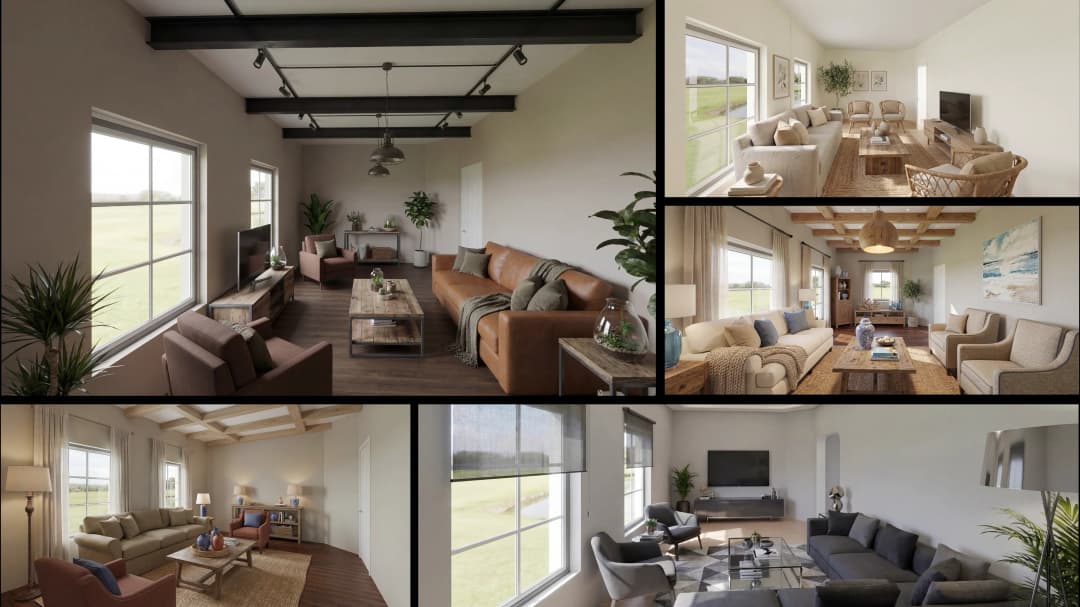
June 12, 2026
AI Interior Design: Style Any Room in Seconds with Foursite | VirtualSpaces
HHemanth Velury
CEO & Co-Founder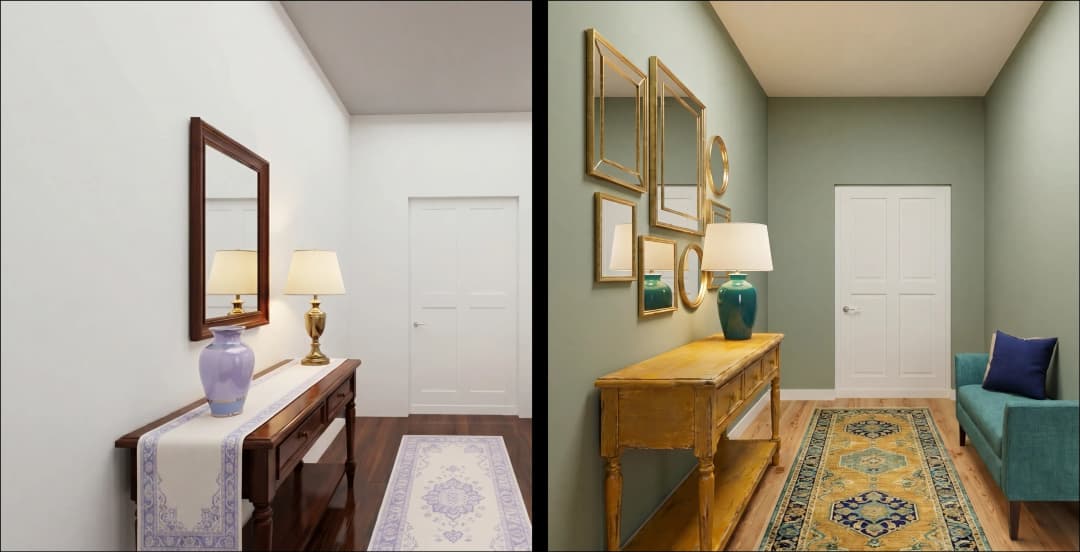
June 10, 2026
Foursite: Floor Plan to 3D Walkthrough in Minutes | VirtualSpaces
HHemanth Velury
CEO & Co-Founder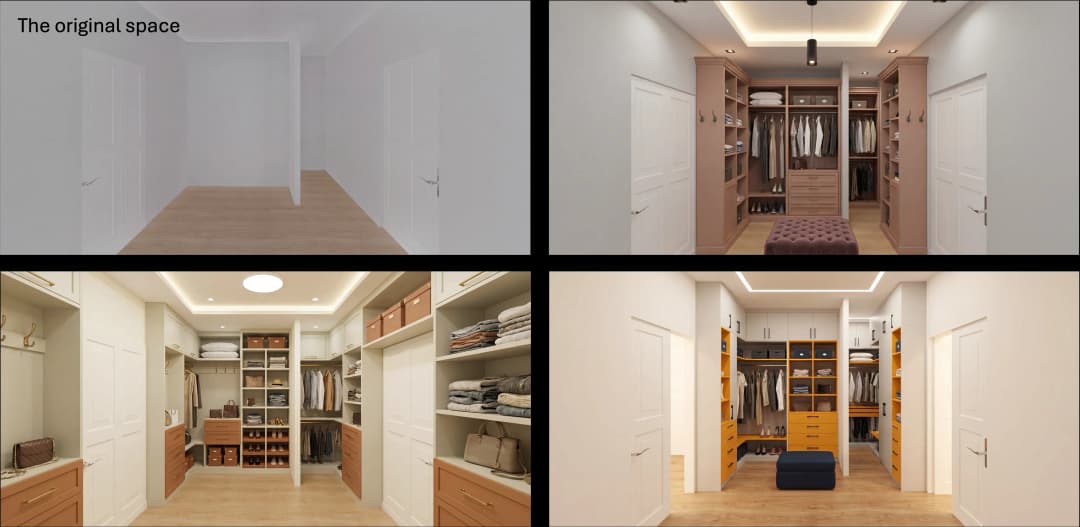
June 08, 2026
Win More Pitches With AI Renders Before the Meeting | VirtualSpaces
HHemanth Velury
CEO & Co-Founder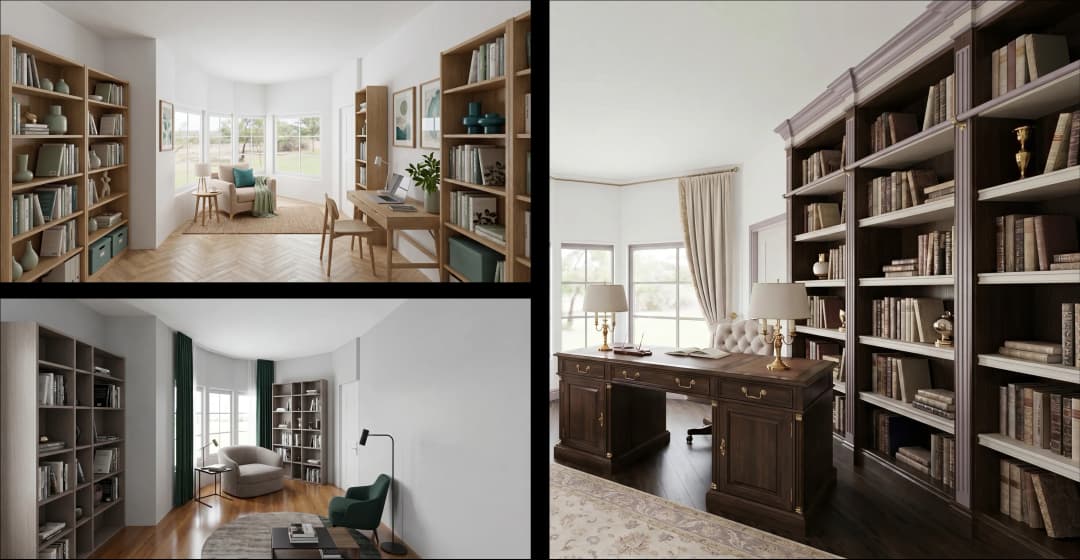
June 05, 2026
From Floor Plan to Finished Room: What AI Now Makes Possible | VirtualSpaces
HHemanth Velury
CEO & Co-Founder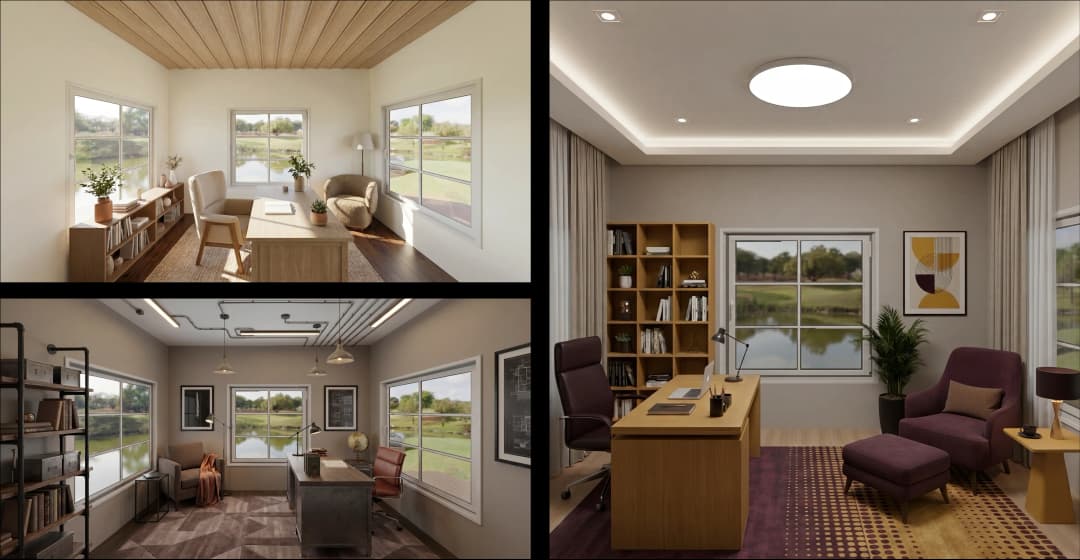
June 03, 2026
The Interior Design Brief Is Broken. AI Fixes It | VirtualSpaces
HHemanth Velury
CEO & Co-Founder
June 01, 2026
Pre-Construction Home Sales: AI Interior Visualization Guide | VirtualSpaces
HHemanth Velury
CEO & Co-Founder
May 30, 2026
Interior Design Principles: Applied with AI | VirtualSpaces
HHemanth Velury
CEO & Co-Founder
May 28, 2026
Designing Spaces for People, Not Blueprints | VirtualSpaces
HHemanth Velury
CEO & Co-Founder
May 26, 2026
The Future of Interior Design: Closing the Visualization Gap with Foursite and Remodroom | VirtualSpaces
HHemanth Velury
CEO & Co-Founder
May 18, 2026
How AI Visualization Upgrades Property Data Platforms | VirtualSpaces
HHemanth Velury
CEO & Co-Founder
May 14, 2026
How AI-First Insurers Can Use 3D Property Data to Transform Home Claims | VirtualSpaces
HHemanth Velury
CEO & Co-FounderMay 12, 2026
Why Photoreal 3D Renders Are Replacing Mood Boards | Interior Design Client Presentations | VirtualSpaces
HHemanth Velury
CEO & Co-Founder
May 08, 2026
From 2D Floor Plans To Living Worlds: The Spec‑Accurate 3D Engine | VirtualSpaces
HHemanth Velury
CEO & Co-Founder
May 06, 2026
Why Furniture Brands Need AI 3D Visualization Now | VirtualSpaces
HHemanth Velury
CEO & Co-Founder
May 4, 2026
How Property Portals Can Turn 2D Floor Plans into 3D Design Decisions | VirtualSpaces
HHemanth Velury
CEO & Co-Founder
April 29, 2026
The Home-Fit Test: Why Square Footage Misleads | VirtualSpaces
HHemanth Velury
CEO & Co-Founder
April 27, 2026
Designing Homes That Sell: 3D Visualization ROI Data | VirtualSpaces
HHemanth Velury
CEO & Co-FounderApril 24, 2026
What's Next: Foursite & Remodroom's New AI Features | VirtualSpaces
HHemanth Velury
CEO & Co-Founder
April 22, 2026
AI in Architecture: Closing the 85% Exposure Gap | VirtualSpaces
HHemanth Velury
CEO & Co-Founder
April 20, 2026
Interior Design Pricing in 2026: From Hourly to Value-Based Fees | VirtualSpaces
HHemanth Velury
CEO & Co-FounderApril 17, 2026
How Foursite and Remodroom Help Designers Win Clients | VirtualSpaces
HHemanth Velury
CEO & Co-Founder
April 15, 2026
Designing Spaces for People: Remodroom + Foursite AI Guide | VirtualSpaces
HHemanth Velury
CEO & Co-Founder
April 13, 2026
Designing for the Way People Actually Live: How AI 3D Is Finally Closing the Gap Between Floor Plan and Reality
HHemanth Velury
CEO & Co-Founder
April 11, 2026
Design in Real Time: AI Renders in Your First Client Meeting
HHemanth Velury
CEO & Co-Founder
April 06, 2026
Why Real Estate Photography Is No Longer Enough: The Shift to Spatial-First Listings
HHemanth Velury
CEO & Co-Founder
April 03, 2026
Property Management's Hidden Weapon: AI 3D Floor Plans That Cut Vacancy Time and Raise Tenant Quality
HHemanth Velury
CEO & Co-Founder
April 01, 2026
Off-Plan and Oversubscribed: How AI 3D Visualization Is Transforming Real Estate Pre-Sales
HHemanth Velury
CEO & Co-Founder
March 30, 2026
Why Foursite Beats Generic AI Tools for Interior Design 3D Visualization
HHemanth Velury
CEO & Co-Founder
March 27, 2026
7 Tenets of Interior Design: How AI Accelerates Harmony in Residential Spaces
HHemanth Velury
CEO & Co-Founder
March 25, 2026
What Is the 3-5-7 Rule in Interior Design? Foursite's AI Guide for Residential Spaces
HHemanth Velury
CEO & Co-Founder
March 23, 2026
What Is the 70/30 Rule in Interior Design? Foursite's AI Guide for Residential Spaces
HHemanth Velury
CEO & Co-Founder
March 20, 2026
How AI 3D Visualization Is Rewriting Residential Interior Design Workflows
HHemanth Velury
CEO & Co-Founder
March 18, 2026
Beyond Marketing: How 3D Floorplans Transform FM, Retrofit Planning & ESG Operations
HHemanth Velury
CEO & Co-Founder
March 16, 2026
Why AI Companies Use Token Payments (And Why VirtualSpaces Is Returning To Fiat)
HHemanth Velury
CEO & Co-Founder
March 13, 2026
Floorplan‑Native Digital Twins: Beyond BIM for Consumer‑Ready Real Estate Experiences
HHemanth Velury
CEO & Co-Founder
March 11, 2026
The Foursite Platform Thesis: Why Floor Plans, Not Photos, Are the Next Property Software Primitive
HHemanth Velury
CEO & Co-Founder
March 09, 2026
Design Systems for Space: Building Reusable 3D Component Libraries on Top of AI Floorplan‑to‑3D Engines
HHemanth Velury
CEO & Co-Founder
March 06, 2026
How to Standardize Design Quality Across Global Projects Using AI Floorplan-to-3D Tools
HHemanth Velury
CEO & Co-Founder
March 04, 2026
From CAD-First to AI-First: Reskilling Your Team for AI-Native Design Workflows
HHemanth Velury
CEO & Co-Founder
March 02, 2026
Algorithmic Ergonomics Meets Photorealistic 3D: Designing Human-Centered Smart Homes with Foursite in 2026
HHemanth Velury
CEO & Co-Founder
February 27, 2026
The Ethics of AI in Interior Design: Ownership, Originality, and Client Transparency
HHemanth Velury
CEO & Co-Founder
February 25, 2026
Designing with Empathy: Using AI 3D Visualization to Improve Client Communication and Emotional Clarity
HHemanth Velury
CEO & Co-Founder
February 23, 2026
From Tool to Infrastructure: AI Floorplan-to-3D and the Next Wave of PropTech
HHemanth Velury
CEO & Co-Founder
February 20, 2026
AI Interior Design for Holiday Homes: Turn Spare Flats into High-Demand Short-Stay Rentals with 3D Visuals
HHemanth Velury
CEO & Co-Founder
February 18, 2026
The Pre‑Purchase Power Play: How Savvy Home Buyers Use 3D Floor Plan Visualization to Negotiate Better Deals
HHemanth Velury
CEO & Co-FounderFebruary 16, 2026
AI Interior Design for Non‑Designers: How Homeowners Can Brief Like Pros
HHemanth Velury
CEO & Co-Founder
February 13, 2026
Scaling a Design Business Without Hiring a 3D Team: An Owner's Guide
HHemanth Velury
CEO & Co-Founder
February 11, 2026
From Bland to Bold: How to Rescue Builder-Grade Interiors on Any Budget
HHemanth Velury
CEO & Co-Founder
February 6, 2026
The Psychology of Space: How Room Dimensions Influence Interior Design Decisions
HHemanth Velury
CEO & Co-Founder
February 4, 2026
The Future of Interior Design Visualization: How AI Technology is Transforming 2D Concepts Into 3D Reality
HHemanth Velury
CEO & Co-Founder
January 30, 2026
Photoreal vs. Reality: What Clients Actually Expect from Interior Design Visualization
HHemanth Velury
CEO & Co-Founder
January 28, 2026
The Design Approval Conversation That Changes Everything: Communication Strategy When Using Photorealistic Visualization
HHemanth Velury
CEO & Co-Founder
January 25, 2026
Interior Design as Experience Design: How 3D Visualization Changes Your Professional Identity
HHemanth Velury
CEO & Co-Founder
January 23, 2026
The Professional Gap: How 3D Visualization Changes Interior Design Client Perception
HHemanth Velury
CEO & Co-Founder
January 21, 2026
Why Clients Fire Designers (And How 3D Visualization Could Have Saved the Project)
HHemanth Velury
CEO & Co-Founder
January 16, 2026
Blueprint to Vision: Why Seeing Is Believing in Interior Design
HHemanth Velury
CEO & Co-Founder
January 14, 2026
The Speed of Responsiveness: How AI Visualization Tools Make You Look Like You Care More
HHemanth Velury
CEO & Co-Founder
January 12, 2026
Why Interior Designers and Architects Can't Compete Without AI 3D Visualization Tools
HHemanth Velury
CEO & Co-Founder
January 07, 2026
From "Saved" to "Sold": How Homeowners Are Planning Renovations with AI
HHemanth Velury
CEO & Co-Founder
January 05, 2026
The Interior Designer's Secret Weapon: Speed as Premium Positioning
HHemanth Velury
CEO & Co-Founder
December 31, 2025
Gratitude, Growth & Game-Changing Innovation: VirtualSpaces' 2025 Journey & What's Coming in 2026
HHemanth Velury
CEO & Co-Founder
December 29, 2025
Why Interior Designers Are Switching to AI Floor Plan-to-3D Tools in 2026
HHemanth Velury
CEO & Co-Founder
December 26, 2025
AI Virtual Staging for Real Estate Agents: Sell More Homes Faster with Foursite
HHemanth Velury
CEO & Co-Founder
December 24, 2025
Why Architects Are Switching to AI 2D-to-3D: The SketchUp Alternative
HHemanth Velury
CEO & Co-Founder
December 22, 2025
Cut 3 Weeks from Real Estate Sales Cycle: The ROI of AI 2D to 3D Visualization
HHemanth Velury
CEO & Co-Founder
December 19, 2025
2D Floor Plans Are Dying: Why 3D Visualization & AI Virtual Staging Are the Future
HHemanth Velury
CEO & Co-Founder
December 17, 2025
Virtual Staging vs Physical Staging: How AI Saves Money Per Property
HHemanth Velury
CEO & Co-Founder
December 15, 2025
AI Floor Plan to Image: Revolutionizing Real Estate Marketing for Agents
HHemanth Velury
CEO & Co-Founder
December 12, 2025
Color of the Year 2026: Cloud Dancer | VirtualSpaces AI Interior Design Guide
HHemanth Velury
CEO & Co-Founder
December 10, 2025
AI Floor Plan to 3D: The New Standard for Interior Design Workflows
HHemanth Velury
CEO & Co-Founder
December 08, 2025
How Interior Design Studios Can Operationalize AI 2D-to-3D Workflows (Without Breaking Their Process)
HHemanth Velury
CEO & Co-Founder
December 06, 2025
How to Implement AI Interior Design Workflows in Your Studio
HHemanth Velury
CEO & Co-Founder
December 4, 2025
How Homeowners Can Use AI Interior Design Tools to Plan Renovations with Confidence
HHemanth Velury
CEO & Co-Founder
November 28, 2025
Interior Designers in the Age of AI: From Threat Narrative to Superpower
HHemanth Velury
CEO & Co-Founder
November 21, 2025
Foursite Launch: Embracing 'Release Early, Release Often'
HHemanth Velury
CEO & Co-Founder
November 13, 2025
Foursite by VirtSpaces: Empowering Interior Designers, Architects, and Homeowners
HHemanth Velury
CEO & Co-Founder
November 7, 2025
Reimagining Architectural Education: How AI Floorplan-to-3D Technology Can Transform Design Learning
VVirtualSpaces Research Labs
AI Research Initiative
October 27, 2025
Archisculpt AI: Turning Architectural Drawings into Photorealistic 3D Spaces
AAbhijeet Naik
Co-Founder & CTO
October 13, 2025
Home Makeover: From Floor Plan to Dream Space with AI
HHemanth Velury
CEO & Co-Founder
October 6, 2025
Real-Time Rendering & AI: Revolutionizing Interactive Property Walkthroughs with VirtSpaces
HHemanth Velury
CEO & Co-Founder
September 26, 2025
Foursite - A True AI-Native Experience in Design Visualization
AAbhijeet Naik
CTO & Co-Founder
September 18, 2025
Why PropTech Startups Are Betting on AI Interior Design
HHemanth Velury
CEO & Co-Founder
September 11, 2025
How AI Differs from Traditional 3D Rendering Software
HHemanth Velury
CEO & Co-Founder
September 2, 2025
From Client to Investor: How Nila Spaces and VirtSpaces Are Redefining Proptech with AI
HHemanth Velury
CEO & Co-Founder
August 25, 2025
VirtSpaces From Virtual Reality to AI – Transforming Real Estate Visualization.
HHemanth Velury
CEO & Co-Founder


We help teams collaborate seamlessly and reduce costs. Virtual Spaces offers cutting-edge technology with flexible plans designed to fit modern teams.
Copyright © VirtSpaces Pvt. Ltd. 2025 All Rights Reserved.
CIN: U74999KA2016PTC094921