
January 23, 2026
- Interior Design
- AI Technology
- Client Relations
The Professional Gap: How 3D Visualization Changes Interior Design Client Perception
Hemanth Velury
CEO & Co-FounderThe Professional Gap: How 3D Visualization Changes Interior Design Client Perception
You've probably been there. You spend hours perfecting a design concept. You carefully select every paint color, piece of furniture, and lighting detail. You understand the spatial flow, the material textures, and exactly how light will interact with that accent wall at 3 PM. You're ready for your presentation.
Then you show your client a sketch or a 2D floor plan.
Their eyes glaze over. They stare at lines on paper, trying to mentally construct what you're envisioning. They nod politely, but you can feel the gaps - the enormous distance between what's in your head and what they're actually seeing. It's not that your design isn't good. It's that they can't see it.
This is the professional gap that separates confident interior designers from those who struggle with client approval cycles. And the research is clear about what's happening on both sides of this gap.
Why Your Brain Works Differently Than Your Client's
Here's something neuroscience tells us: your brain works differently because of your training. You've spent years learning spatial relationships, understanding how 2D drawings translate to 3D spaces, and visualizing how materials interact with light. When you look at a 2D floor plan or blueprint, your brain instantly converts those abstract lines into a complete sensory experience. You can imagine walking through the space.
Your client? They're being asked to perform a complex cognitive task that many people have never trained for. They're looking at a flat diagram with lines and numbers and being asked to project themselves into a future space that exists nowhere except in abstract representation. This creates what designers call "cognitive load", a mental strain that slows decision-making and creates uncertainty.
The research backs this up consistently. When clients see a 2D drawing, they're working hard just to understand the basic layout. They're not mentally available to appreciate your creative choices. They're stuck translating geometry.
What Changed Everything: The 3D Revolution in Interior Design
Then something interesting happened. Technology caught up to the designer's mental model. Tools for converting blueprints to 3D visualization became sophisticated enough to show clients exactly what you see in your mind's eye. Not a mood-board. Not a sketch. Not a collection of Pinterest images. A complete, photorealistic visualization of their actual space with their actual furniture, their actual lighting, and their actual color palette.
When a client can now see a 3D visualization of their space, when they can stand (virtually) in their future living room and see the sofa placed exactly where you'd planned it, see the light bouncing off the wall color you selected, see the spatial relationship between elements, something fundamental shifts.
They stop squinting at a drawing and start experiencing a decision.
A study from professional design research found that when architects and interior designers presented designs using 3D visualization instead of 2D drawings, clients showed dramatically higher comprehension, faster decision-making, and significantly more confidence in their approval. But here's what's more important than the statistics: clients reported feeling heard and understood. They felt like their designer actually understood their space and their vision.
That's not a small thing. That's the difference between a client who's hesitant to say yes and a client who's eager to move forward.
The Speed Element Nobody's Talking About
Here's where the real competitive advantage emerges, and most interior designers haven't fully grasped this yet.
When you can convert a floor plan to 3D in hours instead of weeks, the entire economics of your client relationship change. You're no longer the designer who "needs time to work up rendering." You're the designer who can show multiple design directions in the same client meeting.
A client says, "I'm torn between modern and warm traditional." Instead of saying, "Let me go home and sketch that out, I'll get back to you next week," you can say, "Let me show you both right now." You upload the blueprint to your AI visualization tool, whether that's Foursite, or similar platforms, and within 5 minutes, you're showing them photorealistic interior design renders of their space in two completely different styles. They can compare immediately. They can say, "I like the warmth from the traditional but the clean lines of the modern," and you can iterate right there.
What does this do to your client's perception of you?
It makes you seem responsive. Collaborative. Confident. In control. These are the qualities that transform a client from someone who's evaluating you against three other designers into someone who's committed to working with you specifically.
One interior design firm reported that shifting from traditional rendering timelines (3-4 weeks) to AI-powered 3D visualization (24-48 hours) resulted in clients approving designs in days instead of months. They weren't just saving time. They were repositioning their entire brand as a premium, responsive service.
Speed, when positioned correctly, doesn't feel like cutting corners. It feels like mastery.
The Trust Factor: Why 3D Visualization Changes Everything
Let's talk about something that rarely makes it into designer conversations: client trust.
When a client can see their space in photorealistic 3D detail before anything is ordered or installed, trust fundamentally changes. They're not imagining. They're not guessing. They're seeing. And when they see exactly how that expensive marble countertop reflects light, or how those custom built-ins fill the wall, or how the color palette creates the atmosphere you promised, they understand the value of what they're paying for.
A designer who presents a 2D sketch and asks a client to visualize how a sofa will look in a room creates a gap between expectation and understanding. The client might imagine the sofa smaller, in a slightly different color, with different proportions. Then the sofa arrives, and it's not what they envisioned. They blame the designer for miscommunication.
But here's what actually happened: there was no miscommunication. There was NO communication. The client never had a clear visual reference point to communicate about.
Now imagine the same scenario with a floor plan to 3D conversion. The client sees that sofa in their actual space, with actual dimensions, at actual scale. They see it positioned exactly where you've planned. They see how it interacts with the light, the wall colors, the other elements. If they don't like how it looks, they tell you immediately - not three weeks after purchase. You adjust the 3D model. They approve. Then you order the sofa knowing exactly what they want.
The difference? Zero surprises. Zero blame. Maximum trust.
Research on interior design projects shows that firms using 3D visualization report 30-50% fewer client revisions compared to firms relying on 2D drawings and mood-boards alone. Not 5-10% fewer. 30-50%. That's the difference between a project that feels like constant firefighting and a project that feels like smooth execution.
Differentiation in a Crowded Market
Let's be honest: interior design is a crowded field. Every designer has a portfolio. Every designer says they're "collaborative" and "detail-oriented." Portfolios look similar because clients are looking for similar things. How do you stand out?
Speed + clarity. That's your differentiation.
When you can show clients 3D visualizations of their space, complete, photorealistic, multiple design directions, in your first consultation instead of after weeks of back-and-forth, you're offering something your competitors probably aren't. You're offering decisive, responsive partnership backed by visual clarity.
Designers who have adopted AI 3D visualization tools like Foursite report that they can confidently increase their fees by 10-15% and clients happily pay because they perceive the service as premium. Not because the design is better. But because the process feels premium. The designer who shows you your complete design in photorealistic detail within 48 hours and can iterate based on your feedback seems more professional, more capable, more in control.
And here's the thing: that perception is accurate. You are more in control. You have more capability. You are making faster, more informed decisions because you have better information.
The interior design firms leading the market right now aren't necessarily the most creative. They're the ones who've figured out how to make the creative process feel responsive and collaborative. They show options faster. They integrate client feedback in real-time. They deliver clarity instead of approximation.
And the tools that enable that? Virtual staging tools, AI interior design platforms, blueprint to 3D conversion software, these aren't futuristic luxuries anymore. They're becoming baseline expectations.
What Clients Actually Think (What the Research Shows)
Let's look at what's happening in client perception studies.
When researchers compared client reactions to 2D presentations versus 3D visualizations, the findings were striking. Clients shown 3D renderings reported:
- Significantly higher confidence in their design approval. They knew what they were getting instead of imagining it.
- Faster decision-making: Ambiguity creates delays. Clarity creates momentum.
- Better understanding of spatial relationships: Seeing furniture at scale in an actual room is incomparably more informative than a floor plan with dimensions.
- Stronger emotional connection to their future space. This matters more than most designers realize. When clients emotionally connect to a space, when they can visualize themselves living in it, they're more satisfied, more likely to refer, and more likely to become repeat clients.
- Greater willingness to invest in quality finishes. When clients understand exactly what materials will look like in their actual space and how they'll perform, they're more willing to invest in premium options because they can see the value.
One finding, is striking: when architects and interior designers presented designs using immersive 3D visualization, 70% of professionals reported that clients felt more heard and trusted in the design process. That's not a small percentage. That's a fundamental shift in relationship quality.
Clients don't just want beautiful designs. They want to feel understood. They want a designer who listens to their preferences and translates those preferences into visual reality. 2D presentations make that translation feel abstract. 3D visualization makes it feel concrete.
The Speed Advantage: From Weeks to Hours
This is where things get interesting from a business perspective.
Traditional interior design rendering used to work like this: you'd work with a client, gather all the specifications, create design concepts, send everything to a rendering company, wait 5-7 business days while a 3D artist built the model, wait another few days for revisions, and finally show the client something rendered. If the client wanted changes, you'd send the revision requests back to the rendering company, wait another 3-5 days, and show them the updated version. One round of revisions took 8-10 days.
Now, with AI interior visualization tools, you can convert a floor plan to 3D in 30 minutes. You can show the client photorealistic interior design renders instantly. They want a different color? You adjust and regenerate in 10 minutes. Different furniture arrangement? 15 minutes. The entire design approval process that used to take 3-4 weeks now happens in days.
From a client perspective, this feels like your superpower. You're responsive. You're fast. You understand what they want and can show them alternatives immediately. From a business perspective, you just compressed your design phase timeline by 75% while simultaneously increasing the quality of your client communication.
Some design studios have integrated this approach and now show clients 3D renderings in their initial consultation: not weeks later, but at the first meeting. They photograph the client's space, scan the floor plan, run it through their AI visualization tool, and by the time the consultation ends, the client has seen their space in multiple design directions. The client leaves excited because they've seen the future. They've had the emotional experience of walking through their redesigned room. And they've done it in one afternoon instead than over the course of months.
That speed changes everything about how clients perceive your value.
Virtual Staging and AI: The New Studio Standard
What about virtual staging specifically? This technology deserves its own moment because it's where the interior design industry is fundamentally shifting.
Virtual staging using AI doesn't mean synthetic-looking or unrealistic. Modern AI virtual staging tools can produce photorealistic images that clients believe are possible. You can show a client their empty living room fully furnished and decorated in seconds. Not rendered by hand over days. Generated by AI with multiple variations instantly.
This completely changes the client consultation. Instead of showing a client mood boards and asking them to imagine, you show them their actual space virtually staged in multiple styles. "Which aesthetic resonates with you?" Client points to one. "Love the warm contemporary feel from this one, but with the clean minimalist layout from that one." You adjust the AI interior decor tool and regenerate. Done.
From a practical standpoint, this means you can explore significantly more options with clients. You're not limited by rendering time. You can show 5, 10, even 15 different design directions for the same space because the 3D visualization process is so fast. Clients get to make truly informed decisions because they've seen real alternatives, not just one or two carefully curated options.
The Perception of Professionalism
Here's something that deserves more conversation: how clients perceive your professionalism based on your presentation technology.
When a client comes in and you show them a sketch, they see: "an early-stage idea." When you show them a mood-board, they see: "inspiration, but not concrete." When you show them a photorealistic 3D visualization of their actual space, they see: "a designer who understands my vision and can execute it."
The tool you use to communicate your design isn't separate from the design itself. It's part of your brand. It's part of how clients evaluate your capability.
Designers who've shifted to AI 3D visualization consistently report that clients perceive them as more professional, more technologically sophisticated, and more in command of their work. One interior designer noted that the moment she started showing clients photorealistic interior design renders instead of sketches, her close rate on design proposals jumped 35%. The design quality hadn't changed. The presentation had.
That's not about fooling clients. That's about meeting them where they are. Clients today don't want to work harder to understand your vision. They want you to make it so clear that understanding is inevitable.
The Competitive Moat (While It Still Exists)
Here's a reality check: adoption of AI 3D visualization tools is accelerating rapidly in the interior design industry, but it's not yet universal. There's still a window of time - probably 12-24 months, where interior designers who adopt these tools now have a genuine competitive advantage. They're faster. They're clearer. They're more responsive.
The designers who figure this out now will have built client relationships, developed a reputation, and established their market position before this technology becomes standard. Within 2-3 years, clients will expect you to show them a 3D visualization of their space. It won't be a premium service. It will be baseline.
The interior designers who are already proficient with blueprint to 3D conversion, who understand how to use Foursite or similar platforms, who have integrated AI visualization into their workflows, they'll be ahead. They'll have years of experience, established client testimonials, and proven results. By the time every designer in town is offering 3D visualization, they'll have already moved on to the next competitive advantage.
That's how you build a sustainable business in a crowded market. You adopt the tools that move the needle early.
What This Means for Your Interior Design Practice
Let's translate this research into practical action.
If you're still primarily showing clients sketches or 2D floor plans, you're operating with a disadvantage. Not because your design isn't good, but because your communication tool is weak. Your clients are doing cognitive work that should be unnecessary. They're struggling to understand something that could be crystal clear.
Start thinking about 3D visualization not as a luxury add-on but as a core communication tool. Whether it's floor plan to 3D conversion, virtual staging of spaces, or AI interior design visualization, the specific tool matters less than the commitment to clarity. Tools like VirtualSpaces' Foursite exist specifically to make this accessible to design professionals, no 3D artist required, no weeks of waiting, just speed and quality.
Integrate these tools into how you work with clients. Show 3D visualizations earlier in the process. Use them to explore more options collaboratively. Let clients iterate based on visual feedback rather than abstract conversation. Watch how much faster decisions happen. Watch how much higher client satisfaction becomes. Watch how clients start referring you because the experience of working with you feels professional, responsive, and clear.
The professional gap between sketches and 3D visualization isn't really about the rendering quality. It's about whether your client understands what you're showing them. It's about whether they trust that you understand their vision. It's about whether they feel heard and seen in the process.
3D visualization closes that gap. And in a market where every interior designer is claiming the same things, closing that gap, delivering clarity and speed and responsiveness, is what differentiates you.
References
- International Journal of Computing and Digital Systems (2021). "Perception of Clients Towards the 2D and 3D Types of Design Presentation of the Projects in Interior Design."
- Journal of Design and Development Studies (2025). "Design and Development of Smart Home Interior Animation Using the 3D Rendering Method."
- Professional Design Firms Survey (2024). "Client Revisions and 3D Visualization Implementation Study."
- Interior Design Industry Research (2026). "Pricing Strategy and Client Perception in AI-Enabled Design Services."
- Transparent House Research (2025). "3D Interior Design Rendering to Win Clients."
- Journal of Applied Design Research (2025). "Using Virtual Reality in Interior Design Visualization."
- Professional Interior Designer Interviews (2025). Various interviews with designers implementing 3D visualization workflows.
Recommended for you

August 19, 2026
The End of the Model Home? 3D Changes the Math | VirtualSpaces
HHemanth Velury
CEO & Co-Founder
August 17, 2026
Designing Spaces That Actually Get Built | VirtualSpaces
HHemanth Velury
CEO & Co-Founder
August 12, 2026
Designing Homes for the Stuff People Actually Own | VirtualSpaces
HHemanth Velury
CEO & Co-Founder
August 07, 2026
Floor Plan to Bill of Materials: The 3D Model as Data | VirtualSpaces
HHemanth Velury
CEO & Co-Founder.png&w=1080&q=75)
August 05, 2026
Designing Homes for How People Actually Live | VirtualSpaces
HHemanth Velury
CEO & Co-Founder
August 03, 2026
Honest by Design: Trust in AI Real Estate Imagery | VirtualSpaces
HHemanth Velury
CEO & Co-Founder
July 29, 2026
Kitchen and Bath: The Two Rooms That Decide Resale | VirtualSpaces
HHemanth Velury
CEO & Co-Founder
July 27, 2026
Why Empty Rooms Don't Sell: Virtual Staging | VirtualSpaces
HHemanth Velury
CEO & Co-Founder
July 24, 2026
The Quiet Sustainability Win of Deciding in 3D | VirtualSpaces
HHemanth Velury
CEO & Co-Founder
July 22, 2026
Why Paint Swatches Lie: Test Color in 3D First | VirtualSpaces
HHemanth Velury
CEO & Co-Founder
July 20, 2026
Why Every Home Should Be Seen Before It's Built | VirtualSpaces
HHemanth Velury
CEO & Co-Founder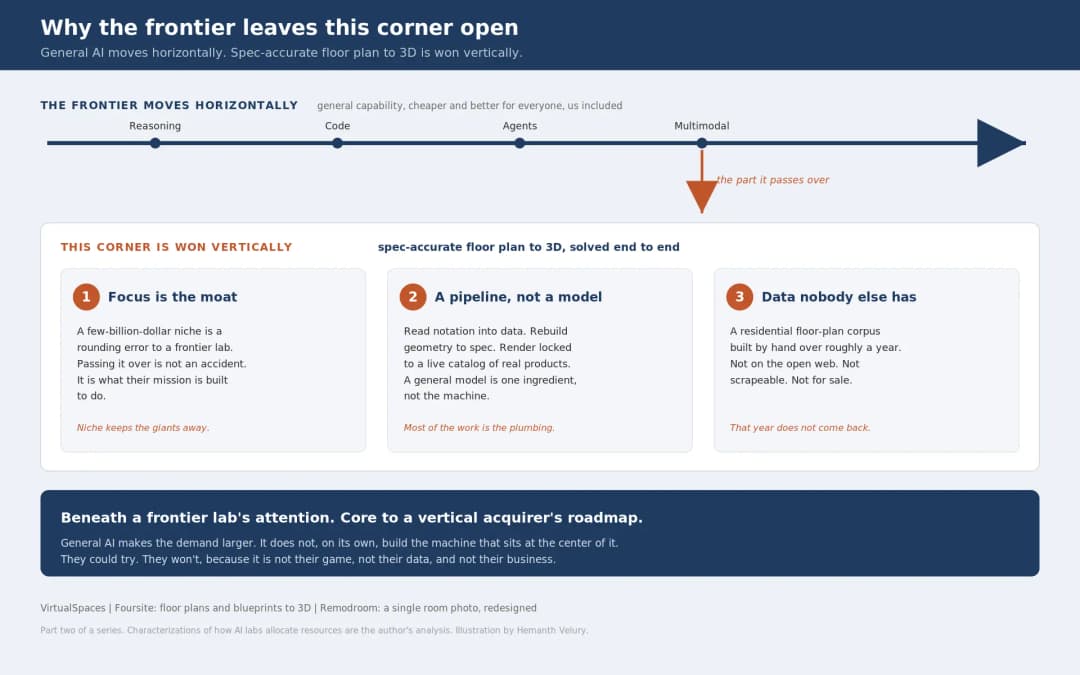
July 17, 2026
Why Big AI Labs Won't Build Floor Plan to 3D | VirtualSpaces
HHemanth Velury
CEO & Co-Founder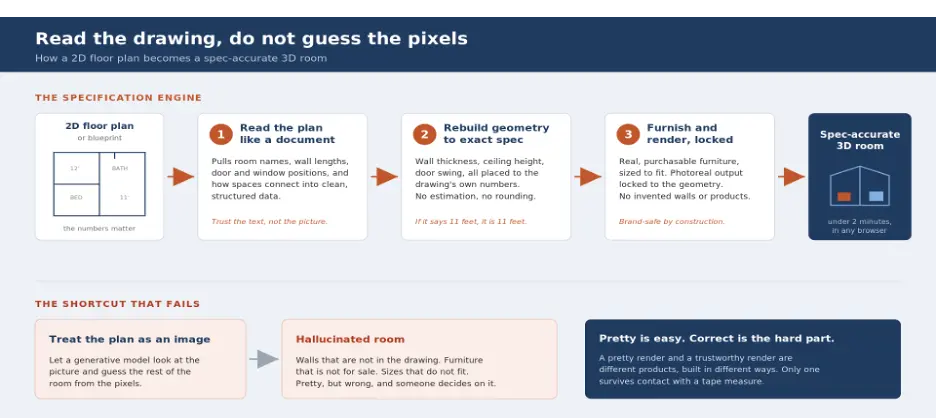
July 15, 2026
How We Solve Floor Plan to 3D, Accurately | VirtualSpaces
HHemanth Velury
CEO & Co-Founder
July 13, 2026
Designing Homes That Age With the People in Them | VirtualSpaces
HHemanth Velury
CEO & Co-Founder
July 10, 2026
Designing Spaces for How Light Actually Moves | VirtualSpaces
HHemanth Velury
CEO & Co-Founder
July 08, 2026
Designing Homes for Every Life Stage in 3D | VirtualSpaces
HHemanth Velury
CEO & Co-Founder
July 06, 2026
Build an Interior Design Portfolio Without Clients | VirtualSpaces
HHemanth Velury
CEO & Co-Founder
June 26, 2026
AI Interior Design: Full 3D Workflow in One Platform | VirtualSpaces
HHemanth Velury
CEO & Co-Founder
June 24, 2026
Scope Creep in Interior Design: How AI Visualization Fixes It | VirtualSpaces
HHemanth Velury
CEO & Co-Founder
June 22, 2026
What Buyers See on a Floor Plan: Your Biggest Sales Problem | VirtualSpaces
HHemanth Velury
CEO & Co-Founder
June 19, 2026
Small Design Studios vs Big Firms: The AI Advantage | VirtualSpaces
HHemanth Velury
CEO & Co-Founder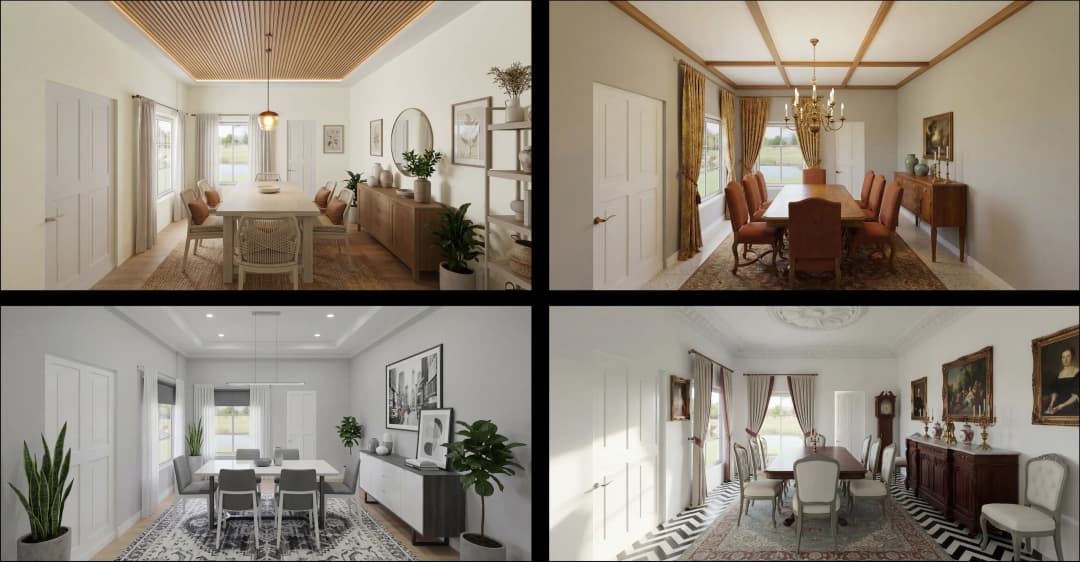
June 17, 2026
After the Mood Board: AI Interior Visualization | VirtualSpaces
HHemanth Velury
CEO & Co-Founder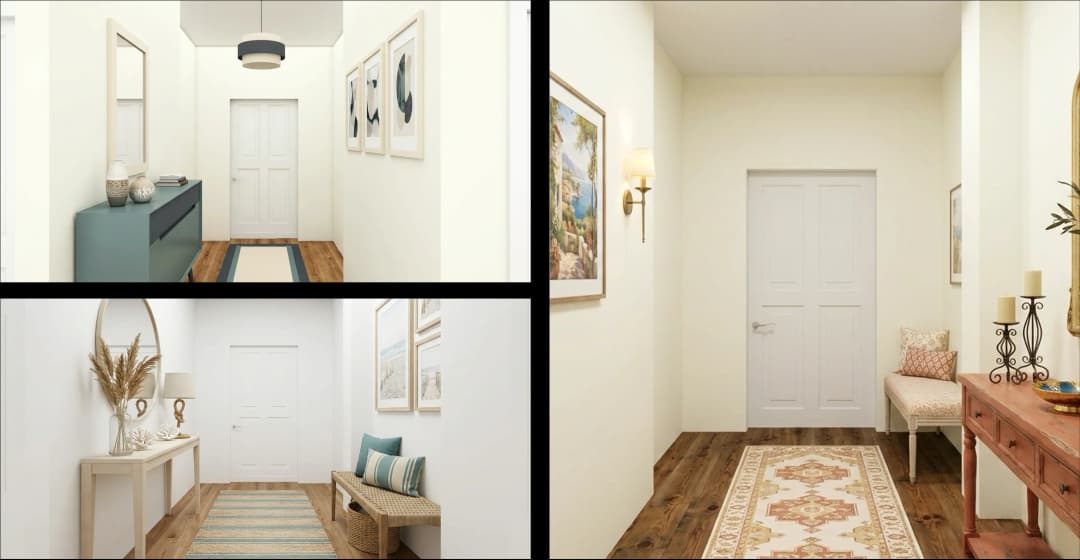
June 15, 2026
Foursite Pro Editor: Full Floor Plan Control for Designers | VirtualSpaces
HHemanth Velury
CEO & Co-Founder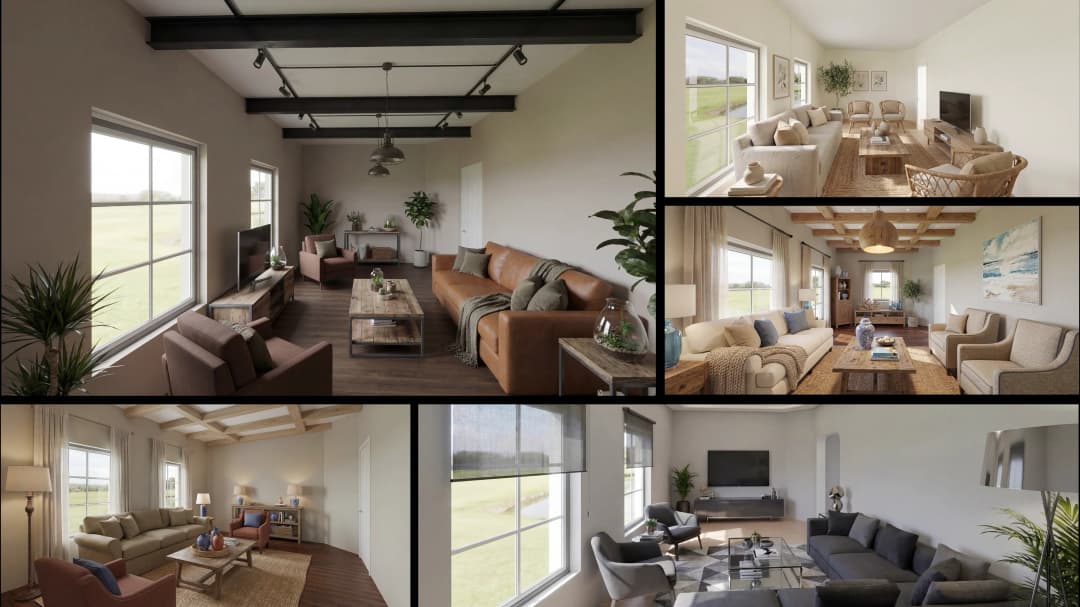
June 12, 2026
AI Interior Design: Style Any Room in Seconds with Foursite | VirtualSpaces
HHemanth Velury
CEO & Co-Founder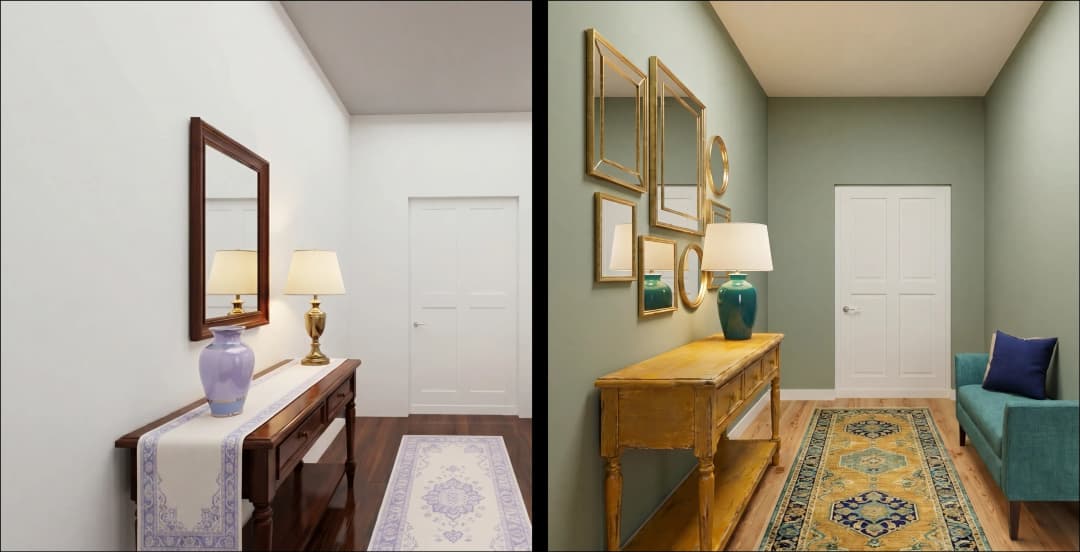
June 10, 2026
Foursite: Floor Plan to 3D Walkthrough in Minutes | VirtualSpaces
HHemanth Velury
CEO & Co-Founder
June 08, 2026
Win More Pitches With AI Renders Before the Meeting | VirtualSpaces
HHemanth Velury
CEO & Co-Founder
June 05, 2026
From Floor Plan to Finished Room: What AI Now Makes Possible | VirtualSpaces
HHemanth Velury
CEO & Co-Founder
June 03, 2026
The Interior Design Brief Is Broken. AI Fixes It | VirtualSpaces
HHemanth Velury
CEO & Co-Founder
June 01, 2026
Pre-Construction Home Sales: AI Interior Visualization Guide | VirtualSpaces
HHemanth Velury
CEO & Co-Founder
May 30, 2026
Interior Design Principles: Applied with AI | VirtualSpaces
HHemanth Velury
CEO & Co-Founder
May 28, 2026
Designing Spaces for People, Not Blueprints | VirtualSpaces
HHemanth Velury
CEO & Co-Founder
May 26, 2026
The Future of Interior Design: Closing the Visualization Gap with Foursite and Remodroom | VirtualSpaces
HHemanth Velury
CEO & Co-Founder
May 18, 2026
How AI Visualization Upgrades Property Data Platforms | VirtualSpaces
HHemanth Velury
CEO & Co-Founder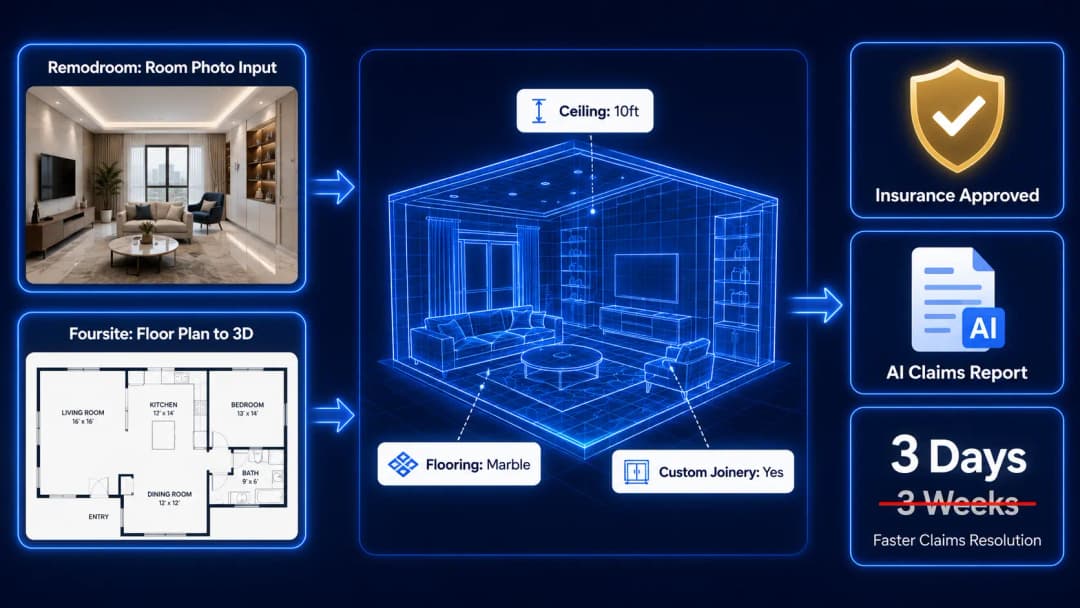
May 14, 2026
How AI-First Insurers Can Use 3D Property Data to Transform Home Claims | VirtualSpaces
HHemanth Velury
CEO & Co-FounderMay 12, 2026
Why Photoreal 3D Renders Are Replacing Mood Boards | Interior Design Client Presentations | VirtualSpaces
HHemanth Velury
CEO & Co-Founder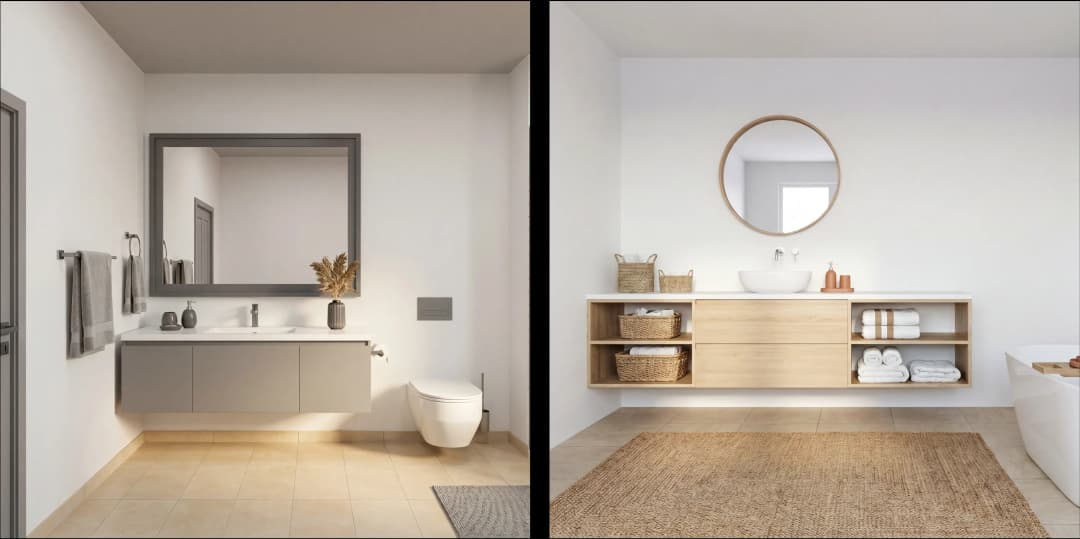
May 08, 2026
From 2D Floor Plans To Living Worlds: The Spec‑Accurate 3D Engine | VirtualSpaces
HHemanth Velury
CEO & Co-Founder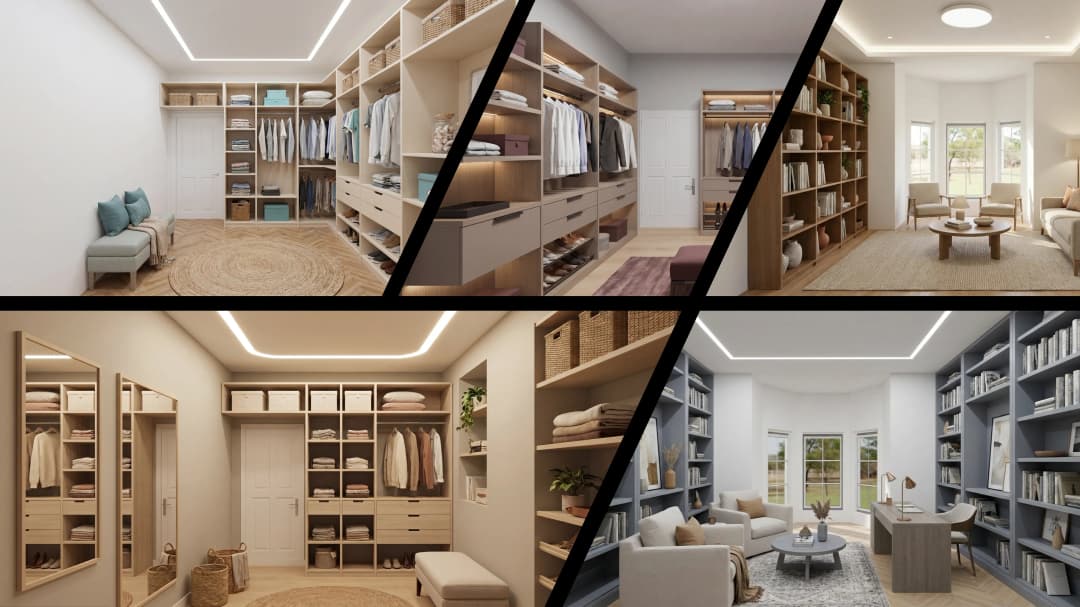
May 06, 2026
Why Furniture Brands Need AI 3D Visualization Now | VirtualSpaces
HHemanth Velury
CEO & Co-Founder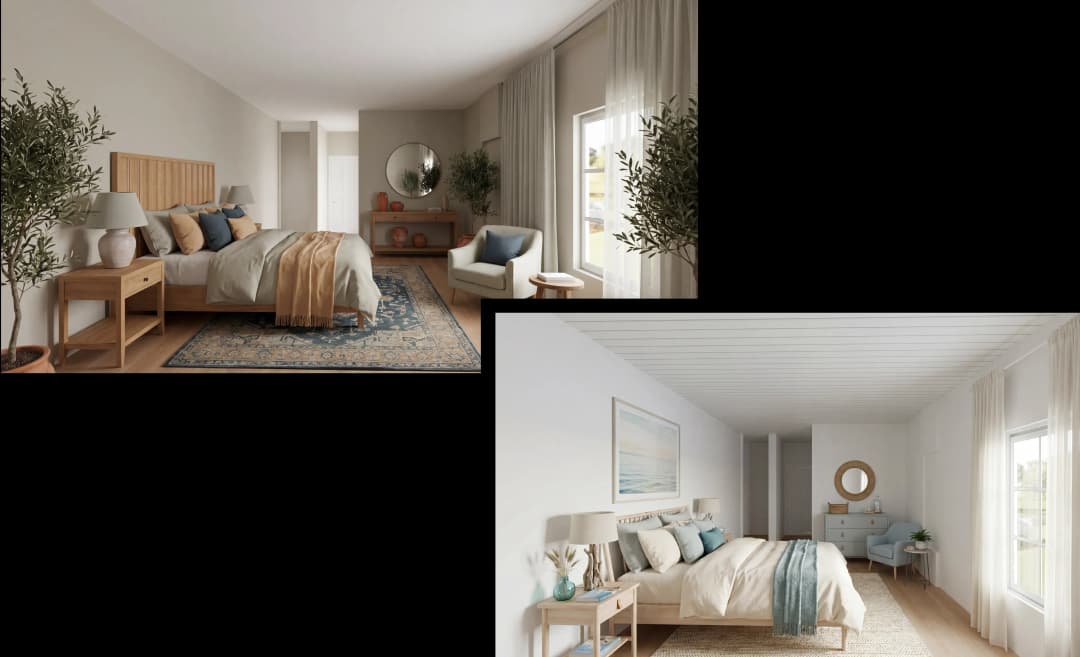
May 4, 2026
How Property Portals Can Turn 2D Floor Plans into 3D Design Decisions | VirtualSpaces
HHemanth Velury
CEO & Co-Founder
April 29, 2026
The Home-Fit Test: Why Square Footage Misleads | VirtualSpaces
HHemanth Velury
CEO & Co-Founder
April 27, 2026
Designing Homes That Sell: 3D Visualization ROI Data | VirtualSpaces
HHemanth Velury
CEO & Co-FounderApril 24, 2026
What's Next: Foursite & Remodroom's New AI Features | VirtualSpaces
HHemanth Velury
CEO & Co-Founder
April 22, 2026
AI in Architecture: Closing the 85% Exposure Gap | VirtualSpaces
HHemanth Velury
CEO & Co-Founder
April 20, 2026
Interior Design Pricing in 2026: From Hourly to Value-Based Fees | VirtualSpaces
HHemanth Velury
CEO & Co-FounderApril 17, 2026
How Foursite and Remodroom Help Designers Win Clients | VirtualSpaces
HHemanth Velury
CEO & Co-Founder
April 15, 2026
Designing Spaces for People: Remodroom + Foursite AI Guide | VirtualSpaces
HHemanth Velury
CEO & Co-Founder
April 13, 2026
Designing for the Way People Actually Live: How AI 3D Is Finally Closing the Gap Between Floor Plan and Reality
HHemanth Velury
CEO & Co-Founder
April 11, 2026
Design in Real Time: AI Renders in Your First Client Meeting
HHemanth Velury
CEO & Co-Founder
April 06, 2026
Why Real Estate Photography Is No Longer Enough: The Shift to Spatial-First Listings
HHemanth Velury
CEO & Co-Founder
April 03, 2026
Property Management's Hidden Weapon: AI 3D Floor Plans That Cut Vacancy Time and Raise Tenant Quality
HHemanth Velury
CEO & Co-Founder
April 01, 2026
Off-Plan and Oversubscribed: How AI 3D Visualization Is Transforming Real Estate Pre-Sales
HHemanth Velury
CEO & Co-Founder
March 30, 2026
Why Foursite Beats Generic AI Tools for Interior Design 3D Visualization
HHemanth Velury
CEO & Co-Founder
March 27, 2026
7 Tenets of Interior Design: How AI Accelerates Harmony in Residential Spaces
HHemanth Velury
CEO & Co-Founder
March 25, 2026
What Is the 3-5-7 Rule in Interior Design? Foursite's AI Guide for Residential Spaces
HHemanth Velury
CEO & Co-Founder
March 23, 2026
What Is the 70/30 Rule in Interior Design? Foursite's AI Guide for Residential Spaces
HHemanth Velury
CEO & Co-Founder
March 20, 2026
How AI 3D Visualization Is Rewriting Residential Interior Design Workflows
HHemanth Velury
CEO & Co-Founder
March 18, 2026
Beyond Marketing: How 3D Floorplans Transform FM, Retrofit Planning & ESG Operations
HHemanth Velury
CEO & Co-Founder
March 16, 2026
Why AI Companies Use Token Payments (And Why VirtualSpaces Is Returning To Fiat)
HHemanth Velury
CEO & Co-Founder
March 13, 2026
Floorplan‑Native Digital Twins: Beyond BIM for Consumer‑Ready Real Estate Experiences
HHemanth Velury
CEO & Co-Founder
March 11, 2026
The Foursite Platform Thesis: Why Floor Plans, Not Photos, Are the Next Property Software Primitive
HHemanth Velury
CEO & Co-Founder
March 09, 2026
Design Systems for Space: Building Reusable 3D Component Libraries on Top of AI Floorplan‑to‑3D Engines
HHemanth Velury
CEO & Co-Founder
March 06, 2026
How to Standardize Design Quality Across Global Projects Using AI Floorplan-to-3D Tools
HHemanth Velury
CEO & Co-Founder
March 04, 2026
From CAD-First to AI-First: Reskilling Your Team for AI-Native Design Workflows
HHemanth Velury
CEO & Co-Founder
March 02, 2026
Algorithmic Ergonomics Meets Photorealistic 3D: Designing Human-Centered Smart Homes with Foursite in 2026
HHemanth Velury
CEO & Co-Founder
February 27, 2026
The Ethics of AI in Interior Design: Ownership, Originality, and Client Transparency
HHemanth Velury
CEO & Co-Founder
February 25, 2026
Designing with Empathy: Using AI 3D Visualization to Improve Client Communication and Emotional Clarity
HHemanth Velury
CEO & Co-Founder
February 23, 2026
From Tool to Infrastructure: AI Floorplan-to-3D and the Next Wave of PropTech
HHemanth Velury
CEO & Co-Founder
February 20, 2026
AI Interior Design for Holiday Homes: Turn Spare Flats into High-Demand Short-Stay Rentals with 3D Visuals
HHemanth Velury
CEO & Co-Founder
February 18, 2026
The Pre‑Purchase Power Play: How Savvy Home Buyers Use 3D Floor Plan Visualization to Negotiate Better Deals
HHemanth Velury
CEO & Co-FounderFebruary 16, 2026
AI Interior Design for Non‑Designers: How Homeowners Can Brief Like Pros
HHemanth Velury
CEO & Co-Founder
February 13, 2026
Scaling a Design Business Without Hiring a 3D Team: An Owner's Guide
HHemanth Velury
CEO & Co-Founder
February 11, 2026
From Bland to Bold: How to Rescue Builder-Grade Interiors on Any Budget
HHemanth Velury
CEO & Co-Founder
February 6, 2026
The Psychology of Space: How Room Dimensions Influence Interior Design Decisions
HHemanth Velury
CEO & Co-Founder
February 4, 2026
The Future of Interior Design Visualization: How AI Technology is Transforming 2D Concepts Into 3D Reality
HHemanth Velury
CEO & Co-Founder
February 2, 2026
AI Interior Décor: How Artificial Intelligence Generates Design Options from Your Floor Plan
HHemanth Velury
CEO & Co-Founder
January 30, 2026
Photoreal vs. Reality: What Clients Actually Expect from Interior Design Visualization
HHemanth Velury
CEO & Co-Founder
January 28, 2026
The Design Approval Conversation That Changes Everything: Communication Strategy When Using Photorealistic Visualization
HHemanth Velury
CEO & Co-Founder
January 25, 2026
Interior Design as Experience Design: How 3D Visualization Changes Your Professional Identity
HHemanth Velury
CEO & Co-Founder
January 21, 2026
Why Clients Fire Designers (And How 3D Visualization Could Have Saved the Project)
HHemanth Velury
CEO & Co-Founder
January 16, 2026
Blueprint to Vision: Why Seeing Is Believing in Interior Design
HHemanth Velury
CEO & Co-Founder
January 14, 2026
The Speed of Responsiveness: How AI Visualization Tools Make You Look Like You Care More
HHemanth Velury
CEO & Co-Founder
January 12, 2026
Why Interior Designers and Architects Can't Compete Without AI 3D Visualization Tools
HHemanth Velury
CEO & Co-Founder
January 07, 2026
From "Saved" to "Sold": How Homeowners Are Planning Renovations with AI
HHemanth Velury
CEO & Co-Founder
January 05, 2026
The Interior Designer's Secret Weapon: Speed as Premium Positioning
HHemanth Velury
CEO & Co-Founder
December 31, 2025
Gratitude, Growth & Game-Changing Innovation: VirtualSpaces' 2025 Journey & What's Coming in 2026
HHemanth Velury
CEO & Co-Founder
December 29, 2025
Why Interior Designers Are Switching to AI Floor Plan-to-3D Tools in 2026
HHemanth Velury
CEO & Co-Founder
December 26, 2025
AI Virtual Staging for Real Estate Agents: Sell More Homes Faster with Foursite
HHemanth Velury
CEO & Co-Founder
December 24, 2025
Why Architects Are Switching to AI 2D-to-3D: The SketchUp Alternative
HHemanth Velury
CEO & Co-Founder
December 22, 2025
Cut 3 Weeks from Real Estate Sales Cycle: The ROI of AI 2D to 3D Visualization
HHemanth Velury
CEO & Co-Founder
December 19, 2025
2D Floor Plans Are Dying: Why 3D Visualization & AI Virtual Staging Are the Future
HHemanth Velury
CEO & Co-Founder
December 17, 2025
Virtual Staging vs Physical Staging: How AI Saves Money Per Property
HHemanth Velury
CEO & Co-Founder
December 15, 2025
AI Floor Plan to Image: Revolutionizing Real Estate Marketing for Agents
HHemanth Velury
CEO & Co-Founder
December 12, 2025
Color of the Year 2026: Cloud Dancer | VirtualSpaces AI Interior Design Guide
HHemanth Velury
CEO & Co-Founder
December 10, 2025
AI Floor Plan to 3D: The New Standard for Interior Design Workflows
HHemanth Velury
CEO & Co-Founder
December 08, 2025
How Interior Design Studios Can Operationalize AI 2D-to-3D Workflows (Without Breaking Their Process)
HHemanth Velury
CEO & Co-Founder
December 06, 2025
How to Implement AI Interior Design Workflows in Your Studio
HHemanth Velury
CEO & Co-Founder
December 4, 2025
How Homeowners Can Use AI Interior Design Tools to Plan Renovations with Confidence
HHemanth Velury
CEO & Co-Founder
November 28, 2025
Interior Designers in the Age of AI: From Threat Narrative to Superpower
HHemanth Velury
CEO & Co-Founder
November 21, 2025
Foursite Launch: Embracing 'Release Early, Release Often'
HHemanth Velury
CEO & Co-Founder
November 13, 2025
Foursite by VirtSpaces: Empowering Interior Designers, Architects, and Homeowners
HHemanth Velury
CEO & Co-Founder
November 7, 2025
Reimagining Architectural Education: How AI Floorplan-to-3D Technology Can Transform Design Learning
VVirtualSpaces Research Labs
AI Research Initiative
October 27, 2025
Archisculpt AI: Turning Architectural Drawings into Photorealistic 3D Spaces
AAbhijeet Naik
Co-Founder & CTO
October 13, 2025
Home Makeover: From Floor Plan to Dream Space with AI
HHemanth Velury
CEO & Co-Founder
October 6, 2025
Real-Time Rendering & AI: Revolutionizing Interactive Property Walkthroughs with VirtSpaces
HHemanth Velury
CEO & Co-Founder
September 26, 2025
Foursite - A True AI-Native Experience in Design Visualization
AAbhijeet Naik
CTO & Co-Founder
September 18, 2025
Why PropTech Startups Are Betting on AI Interior Design
HHemanth Velury
CEO & Co-Founder
September 11, 2025
How AI Differs from Traditional 3D Rendering Software
HHemanth Velury
CEO & Co-Founder
September 2, 2025
From Client to Investor: How Nila Spaces and VirtSpaces Are Redefining Proptech with AI
HHemanth Velury
CEO & Co-Founder
August 25, 2025
VirtSpaces From Virtual Reality to AI – Transforming Real Estate Visualization.
HHemanth Velury
CEO & Co-Founder


We help teams collaborate seamlessly and reduce costs. Virtual Spaces offers cutting-edge technology with flexible plans designed to fit modern teams.
Copyright © VirtSpaces Pvt. Ltd. 2025 All Rights Reserved.
CIN: U74999KA2016PTC094921