
March 13, 2026
- Interior Design
- AI Technology
- Real Estate
Floorplan‑Native Digital Twins: Beyond BIM for Consumer‑Ready Real Estate Experiences
Hemanth Velury
CEO & Co-FounderFloorplan‑Native Digital Twins: Beyond BIM for Consumer‑Ready Real Estate Experiences
Why BIM Alone Isn't Enough Anymore
For two decades, Building Information Modeling (BIM) has been the backbone of serious construction, engineering, and facilities work.
But BIM was never designed to be the language of everyday buyers, renters, underwriters, or asset managers scrolling through a portal on their phones.
BIM models are dense, file‑heavy, and optimized for professionals who care about clash detection, MEP coordination, and schedules, not for a first‑time homebuyer trying to imagine where their sofa goes.
Even when BIM data exists, it rarely flows cleanly into the consumer‑facing layers of real estate tech without painful custom work, exports, and compromises.
Meanwhile, the front line of real estate has shifted to immersive, visual storytelling: photoreal interiors, virtual walkthroughs, and instant context around space, light, and layout. That's where floorplan‑native digital twins come in.
What Is a Floorplan‑Native Digital Twin?
A floorplan‑native digital twin starts not from a massive BIM model, but from the one asset every project has: a simple plan.
It could be a PDF from the architect, a scanned brochure, or a set of 2D floor plans exported from CAD.
Using computer vision and modern generative models, you can now lift these 2D plans into structured 3D spaces with walls, doors, windows, and rooms that are semantically understood by the system. On top of that structural shell, AI interior design and AI visualization engines layer materials, lighting, and furnishings, turning "line drawing" into "lived‑in" without a 3D artist in the loop.
The result is an AI‑native digital twin:
- Lightweight enough to generate on demand from Blueprints and floor plans
- Rich enough to support 3D Visualization, AI virtual staging, and interior design photoreal renders
- Structured enough to plug directly into portals, lending UX, and asset dashboards
Heavy BIM vs Light, Floorplan‑Native Twins
Rather than arguing that BIM is obsolete, it's more useful to see BIM and floorplan‑native twins as serving very different jobs.
BIM is:
- Deep, multi‑disciplinary, and detail‑heavy
- Built for engineers, contractors, and technical coordination
- Often locked in professional tools and large proprietary files
Floorplan‑native twins are:
- Light, AI‑generated, and built from 2D floor plans or Blueprints
- Designed for fast 2D to 3D transformation and AI 3D visualization
- Web‑friendly, API‑driven, and easy to embed anywhere a consumer experience lives
In other words, BIM is the construction record; the floorplan‑native twin is the product surface.
One answers "can we build this safely?" while the other answers "can a buyer, renter, lender, or asset manager understand this instantly?"
From "Model" to "Experience Layer"
If you zoom out, the real shift isn't just 2D to 3D; it's 3D as an experience layer for decisions.
A lender doesn't need every screw in a BIM model, but they do need instant clarity about unit mix, light, volumes, and comparables.
Portals want every listing to feel like a mini product demo: click a card, and within seconds you're inside a high‑fidelity 3D environment that matches the floor plan, not a generic 360 tour stitched from whatever photos happened to be on hand. Asset managers want to scan through a portfolio and, in one glance per asset, understand layout quality, space efficiency, and potential for repositioning or new rent strategies.
Floorplan‑native digital twins, especially when powered by AI 3D visualization and AI interior décor, give you that consistent experience layer with minimal friction.
You're not re‑authoring heavy scenes for each property; you're converting floor plan to 3D once, then re‑using that twin across every surface.
Why Floor Plans and Blueprints Are the Perfect Starting Point
Every serious real estate project already has some form of layout: hand sketches, formal Blueprints, or tidy 2D floor plans shipped around in email threads.
Historically, these artifacts have been dead ends for consumers: flat PDFs, confusing linework, and a legend no one reads.
Academic and commercial work over the past decade has shown that these same floor plans are excellent inputs for automated 3D reconstruction.
Computer vision pipelines can detect walls, openings, and symbols, then assemble a coherent 3D shell that matches the plan.
Once that shell exists, a floor plan to 3D engine can:
- Convert blueprint to 3D in minutes
- Convert floor plan to 3D without manual modeling
- Support interior design 3D visualization and interior design renders on demand
That's the foundational bet behind VirtualSpaces and its products: if you treat 2D floor plans and Blueprints as structured data, not static images, you unlock a new generation of AI visualization for real estate.
Where Foursite Fits in This New Stack
Foursite, from VirtualSpaces, is a floor plan to 3D engine built explicitly for this world of floorplan‑native twins. Instead of asking teams to learn traditional 3D tools, it takes ordinary 2D floor plans or Blueprints and turns them into interactive, furnished 3D spaces with AI interior design at the core.
In practice, that means a portal, lender, or asset manager can:
- Feed in existing layouts (even legacy or in‑progress documentation)
- Instantly stand up an AI 3D visualization that respects the true geometry
- Layer on Virtual Staging or AI virtual staging that's layout‑aware, not just overlaid on photos
Foursite is not trying to replace BIM; it's sitting beside it as the "consumer graphics card" for your property data.
It takes the structural truth embedded in plans and turns it into interior design photoreal renders that anyone can understand at a glance.
Portals: Upgrading the Listing Card
For portals, the first few seconds of attention are everything.
Today, most listings still rely on a mix of phone photos, stitched panoramas, and a lonely floor plan buried in the gallery.
With a floorplan‑native digital twin behind each listing, that same portal can:
- Present a consistent, navigable 3D Visualization experience for every unit
- Offer AI interior decor variations tuned to different buyer profiles or ticket sizes
- Use AI visualization to remove ambiguity about room sizes, flows, and sightlines
Because Foursite converts 2D to 3D from the plan itself, portals are no longer hostage to whatever photos happen to exist. Even off‑plan inventory or early‑stage projects get the same level of clarity as completed units, thanks to blueprint to 3D and floor plan to 3D capabilities.
In a market where attention is the scarcest asset, that kind of visual consistency becomes a quiet but powerful differentiator.
Lenders: Seeing Collateral, Not Just Numbers
Lenders and credit committees live in spreadsheets, but their risk is fundamentally tied to real, physical space.
Traditionally, they lean on static reports, appraisals, and static imagery to understand the collateral behind the numbers.
With floorplan‑native digital twins, a lender's interface can embed AI 3D visualization right alongside covenants and coverage ratios.
Click a deal, and the system can surface a Foursite‑powered view of the asset: true volumes, natural light exposure, layout efficiency, and even multiple AI interior décor scenarios that match targeted positioning.
This is not about "wow" moments in presentations; it's about compressing understanding.
A blueprint‑driven twin, rendered with AI interior decor and interior design 3D visualization, lets underwriters internalize a space in seconds rather than scrolling through disjointed photos.
For global lenders backstopping assets across markets, that kind of shared spatial language is quietly transformative.
Asset Managers: A Single Visual Language Across a Portfolio
On the asset management side, portfolios rarely speak one visual language.
You might have marketing CGI for one building, forensic BIM for another, hand‑drawn plans for a third, and phone photos in a shared drive for the rest.
Floorplan‑native digital twins offer a way to normalize that chaos.
If you can convert floor plan to 3D or convert blueprint to 3D for every property, you can standardize how your team "sees" the portfolio, regardless of when or where each asset was documented.
With an engine like Foursite under the hood, that normalization becomes repeatable instead of bespoke.
You get a common canvas for questions like "What's the real potential of this floorplate?" or "How might this lobby look under a different interior design style?" without firing up a modeling team for each idea.
The twin becomes a living backdrop for asset strategy conversations, not just a marketing artifact.
Why AI‑Native Matters (Not Just "3D in the Cloud")
It's tempting to label all of this simply as "3D, but online."
The real inflection point, though, is that these twins are AI‑native, not just cloud‑hosted geometry.
An AI‑native twin can:
- Understand room types, adjacency, and patterns in 2D floor plans, then propose layouts that "feel right" for users
- Drive AI virtual staging that respects proportions, circulation, and functional use of space
- Generate interior design renders and interior design photoreal renders that are consistent with material libraries, brand standards, or developer playbooks
Research in using generative models to lift floorplans into full 3D scenes shows how quickly this space is evolving, with diffusion models generating coherent multi‑view RGB‑D imagery from layout‑level inputs. Tools like Foursite operationalize that frontier work into something a designer, developer, or real estate operator can actually deploy at scale.
This is less about pretty pictures, more about creating a programmable, AI‑addressable representation of space.
The Underrated Power of "Good Enough, Everywhere"
Traditional archviz culture optimizes for hero shots: one or two immaculate images tuned within an inch of their lives.
Floorplan‑native digital twins, by contrast, optimize for coverage: every unit, every stack, every iteration can be spun up with consistent quality from the same 2D floor plans.
When a 2D to 3D engine like Foursite is plugged directly into your upstream data, you can reach a point where:
- Every new plan automatically gains a 3D Visualization twin
- Every asset can be toggled between multiple AI interior design looks with a few prompts
- Every stakeholder views the same underlying geometry, even if the styling differs
For portals, that means you can apply Virtual Staging or AI virtual staging across broad inventory without creating a maintenance nightmare.
For product teams, it turns "interior design photoreal renders" from a special‑occasion deliverable into a reusable capability that can be invoked wherever your product needs clarity around space.
From Point Solution to Infrastructure Layer
Viewed in isolation, Foursite might look like a "nice‑to‑have" design tool that helps people convert floor plan to 3D and generate fast interior design renders. Viewed through the lens of floorplan‑native digital twins, it starts to look more like infrastructure.
Think about what happens when a single 2D floor plan or Blueprint can reliably become:
- A navigable 3D twin for your consumer portal
- A standardized visualization for your lender interface
- A common canvas for asset management and repositioning discussions
- A seed for future AR, VR, or digital twin integrations across devices
All routed through the same floor plan to 3D engine, using the same AI 3D visualization stack and interior design 3D visualization capabilities.
That's not just a feature; it's an enabling layer on which whole product categories can be built.
In that sense, Foursite and other platforms don't sit at the edge of the real estate stack; they creep steadily toward the center. They turn "send me the plans" from a dead‑end request into the start of a digital twin lifecycle.
Where This Goes Next
We're still early in the shift from BIM‑centric thinking to a world where floorplan‑native digital twins underpin every consumer‑facing real estate interaction.
But the direction of travel is clear: lighter, AI‑native, and tightly coupled to the humble floor plan rather than to heavyweight files and desktop tools.
As 2D to 3D research matures and commercial tools continue to compress the gap between Blueprints and fully staged interiors, the expectation bar will keep rising. For buyers, renters, lenders, and asset managers, "send me the plans" will quietly become "send me the twin."
And for teams building the next generation of portals, underwriting systems, and asset platforms, the decision is no longer "Do we add 3D someday?"
It's "Which floor plan to 3D and AI visualization layer do we want to bet on as part of our core product architecture?"
Foursite's answer is to start where every project already is: Those 2D floor plans and Blueprints and build upward into a living, AI‑driven representation of space that anyone can understand in seconds. That's what it means to go beyond BIM for consumer‑ready real estate experiences.
PS: some features may not be available and are a part of our future product roadmap
Recommended for you

August 19, 2026
The End of the Model Home? 3D Changes the Math | VirtualSpaces
HHemanth Velury
CEO & Co-Founder
August 17, 2026
Designing Spaces That Actually Get Built | VirtualSpaces
HHemanth Velury
CEO & Co-Founder
August 12, 2026
Designing Homes for the Stuff People Actually Own | VirtualSpaces
HHemanth Velury
CEO & Co-Founder
August 07, 2026
Floor Plan to Bill of Materials: The 3D Model as Data | VirtualSpaces
HHemanth Velury
CEO & Co-Founder.png&w=1080&q=75)
August 05, 2026
Designing Homes for How People Actually Live | VirtualSpaces
HHemanth Velury
CEO & Co-Founder
August 03, 2026
Honest by Design: Trust in AI Real Estate Imagery | VirtualSpaces
HHemanth Velury
CEO & Co-Founder
July 29, 2026
Kitchen and Bath: The Two Rooms That Decide Resale | VirtualSpaces
HHemanth Velury
CEO & Co-Founder
July 27, 2026
Why Empty Rooms Don't Sell: Virtual Staging | VirtualSpaces
HHemanth Velury
CEO & Co-Founder
July 24, 2026
The Quiet Sustainability Win of Deciding in 3D | VirtualSpaces
HHemanth Velury
CEO & Co-Founder
July 22, 2026
Why Paint Swatches Lie: Test Color in 3D First | VirtualSpaces
HHemanth Velury
CEO & Co-Founder
July 20, 2026
Why Every Home Should Be Seen Before It's Built | VirtualSpaces
HHemanth Velury
CEO & Co-Founder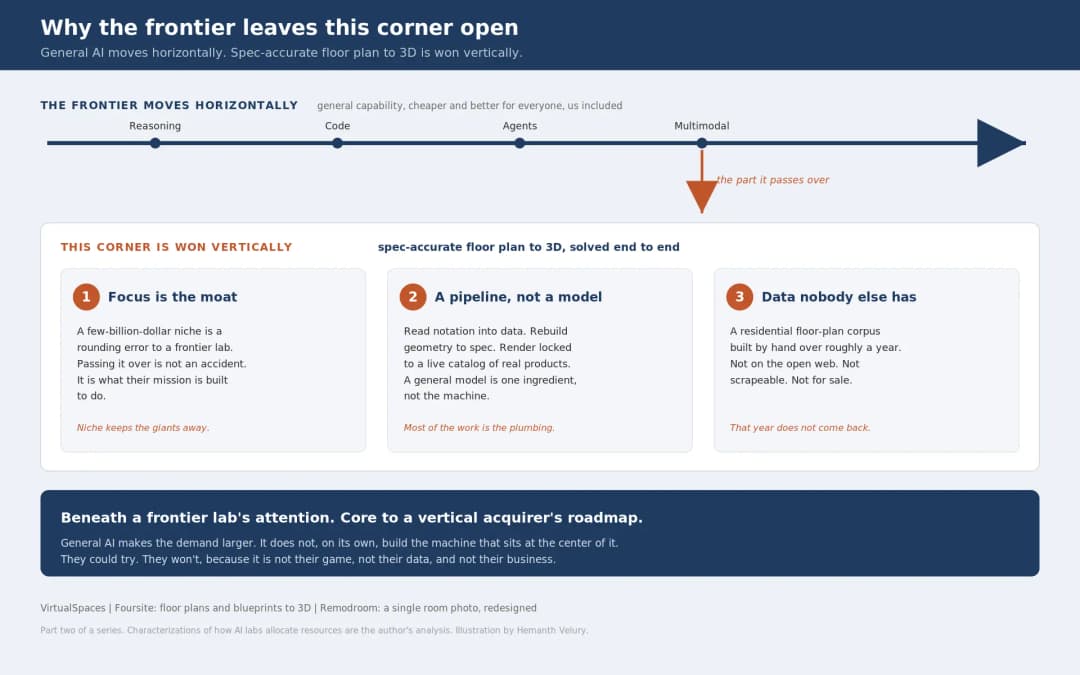
July 17, 2026
Why Big AI Labs Won't Build Floor Plan to 3D | VirtualSpaces
HHemanth Velury
CEO & Co-Founder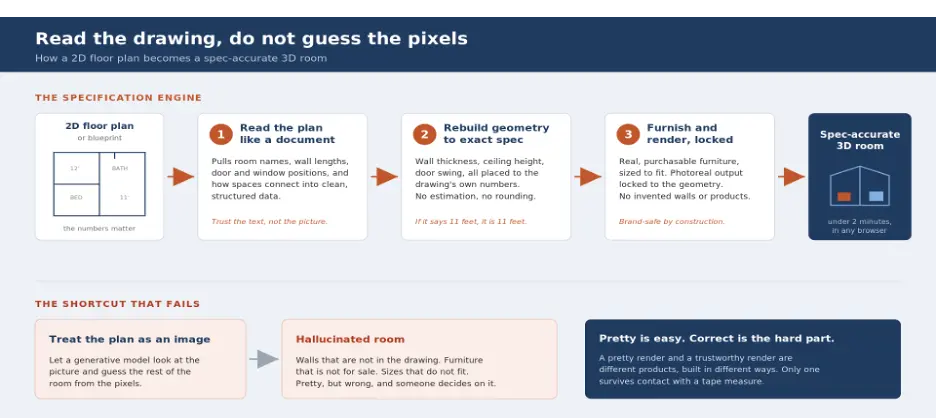
July 15, 2026
How We Solve Floor Plan to 3D, Accurately | VirtualSpaces
HHemanth Velury
CEO & Co-Founder
July 13, 2026
Designing Homes That Age With the People in Them | VirtualSpaces
HHemanth Velury
CEO & Co-Founder
July 10, 2026
Designing Spaces for How Light Actually Moves | VirtualSpaces
HHemanth Velury
CEO & Co-Founder
July 08, 2026
Designing Homes for Every Life Stage in 3D | VirtualSpaces
HHemanth Velury
CEO & Co-Founder
July 06, 2026
Build an Interior Design Portfolio Without Clients | VirtualSpaces
HHemanth Velury
CEO & Co-Founder
June 26, 2026
AI Interior Design: Full 3D Workflow in One Platform | VirtualSpaces
HHemanth Velury
CEO & Co-Founder
June 24, 2026
Scope Creep in Interior Design: How AI Visualization Fixes It | VirtualSpaces
HHemanth Velury
CEO & Co-Founder
June 22, 2026
What Buyers See on a Floor Plan: Your Biggest Sales Problem | VirtualSpaces
HHemanth Velury
CEO & Co-Founder
June 19, 2026
Small Design Studios vs Big Firms: The AI Advantage | VirtualSpaces
HHemanth Velury
CEO & Co-Founder
June 17, 2026
After the Mood Board: AI Interior Visualization | VirtualSpaces
HHemanth Velury
CEO & Co-Founder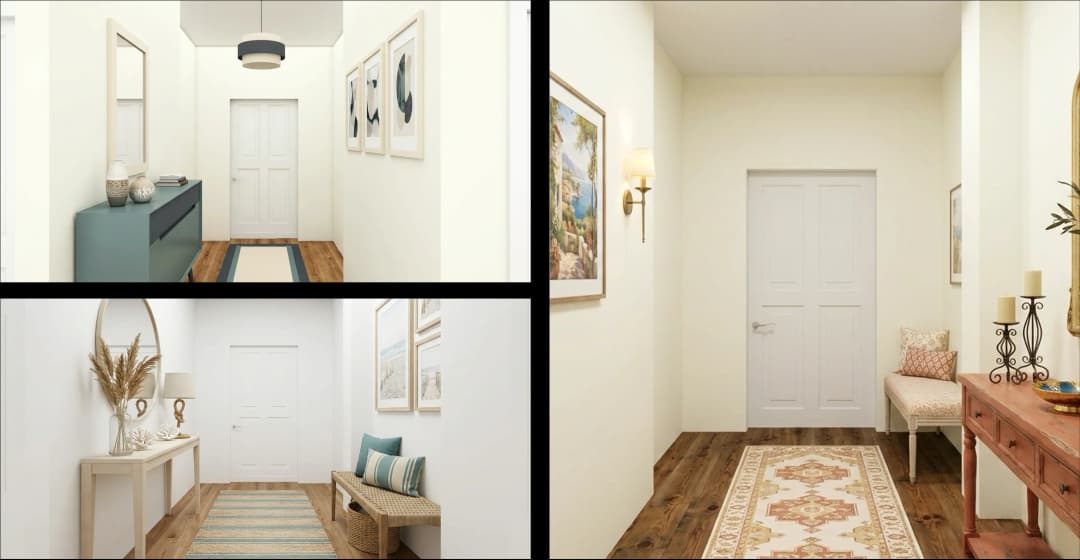
June 15, 2026
Foursite Pro Editor: Full Floor Plan Control for Designers | VirtualSpaces
HHemanth Velury
CEO & Co-Founder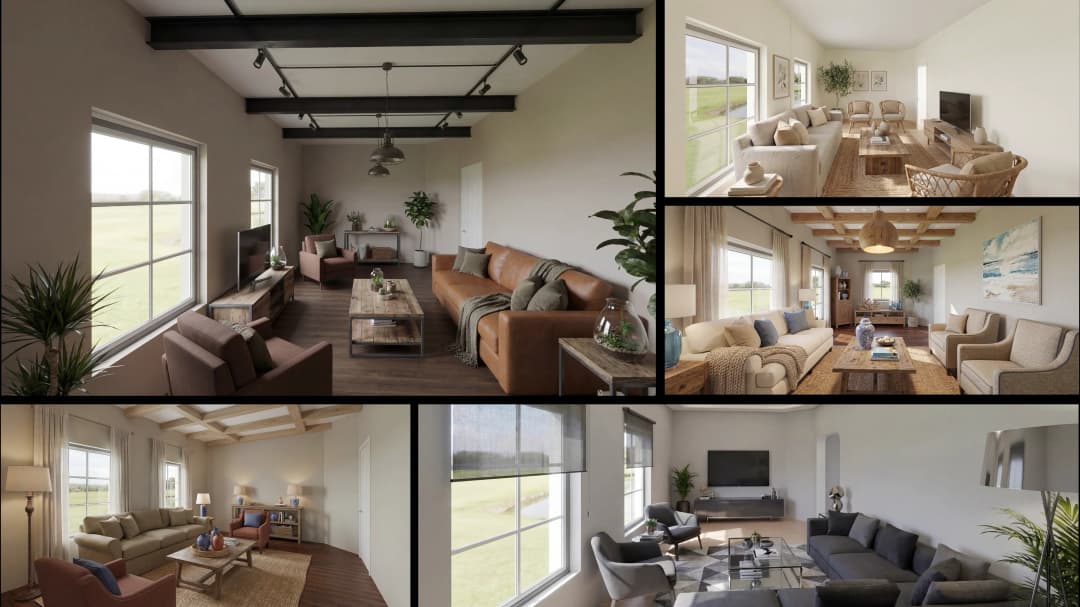
June 12, 2026
AI Interior Design: Style Any Room in Seconds with Foursite | VirtualSpaces
HHemanth Velury
CEO & Co-Founder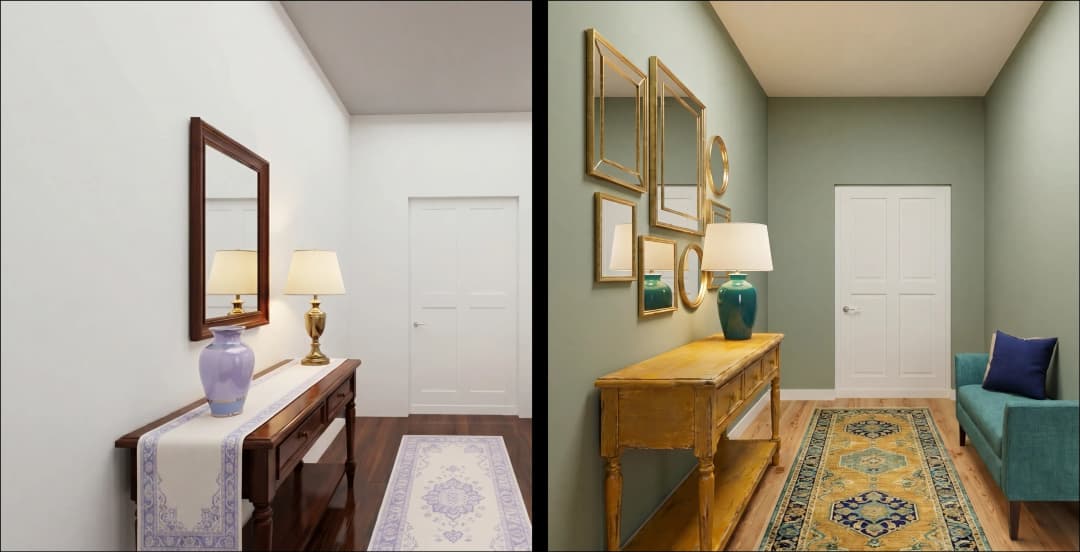
June 10, 2026
Foursite: Floor Plan to 3D Walkthrough in Minutes | VirtualSpaces
HHemanth Velury
CEO & Co-Founder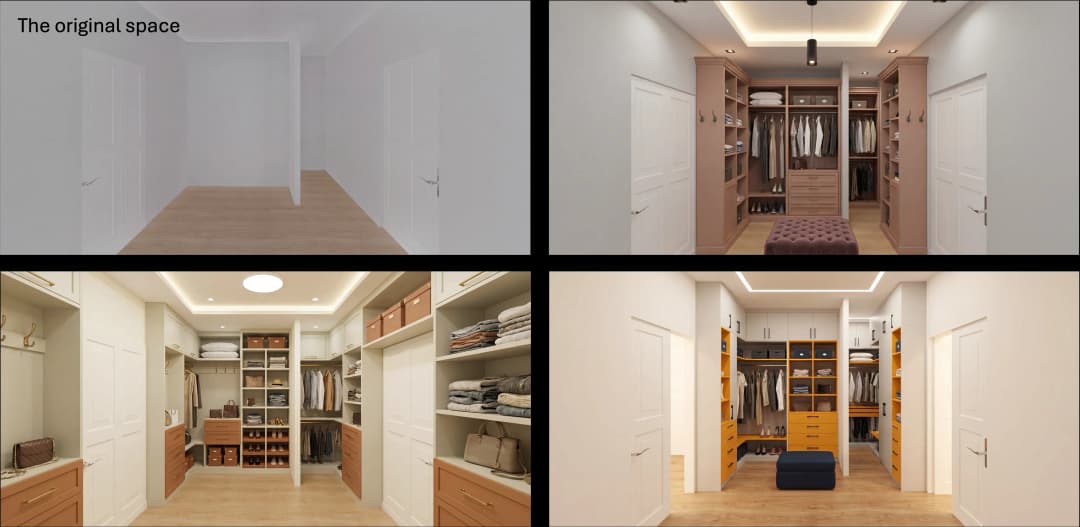
June 08, 2026
Win More Pitches With AI Renders Before the Meeting | VirtualSpaces
HHemanth Velury
CEO & Co-Founder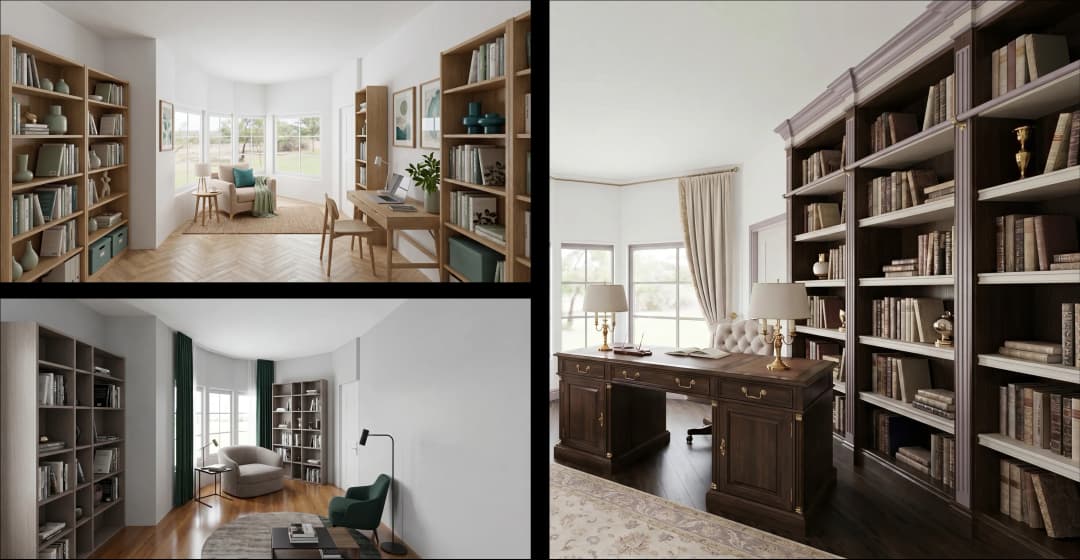
June 05, 2026
From Floor Plan to Finished Room: What AI Now Makes Possible | VirtualSpaces
HHemanth Velury
CEO & Co-Founder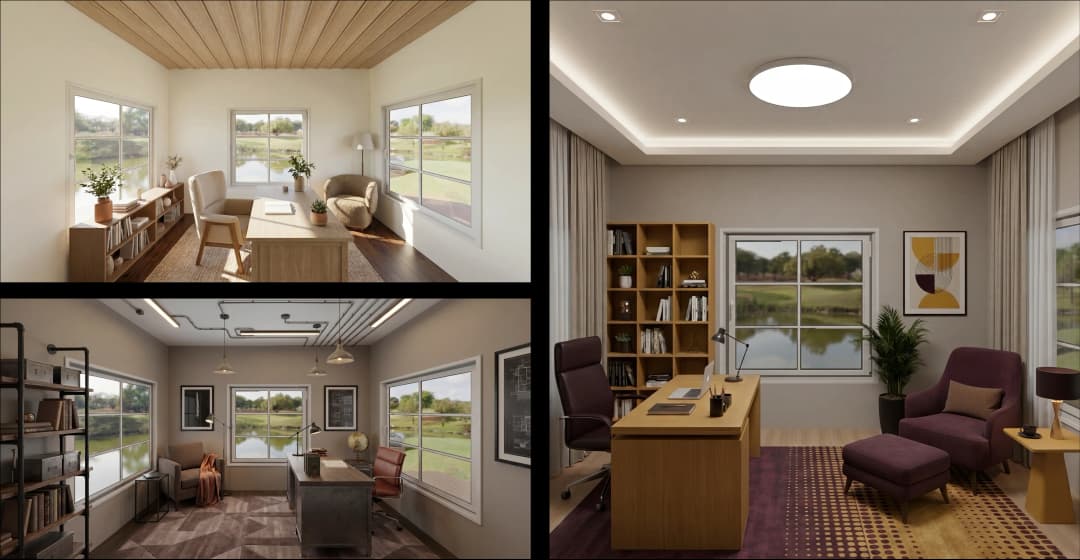
June 03, 2026
The Interior Design Brief Is Broken. AI Fixes It | VirtualSpaces
HHemanth Velury
CEO & Co-Founder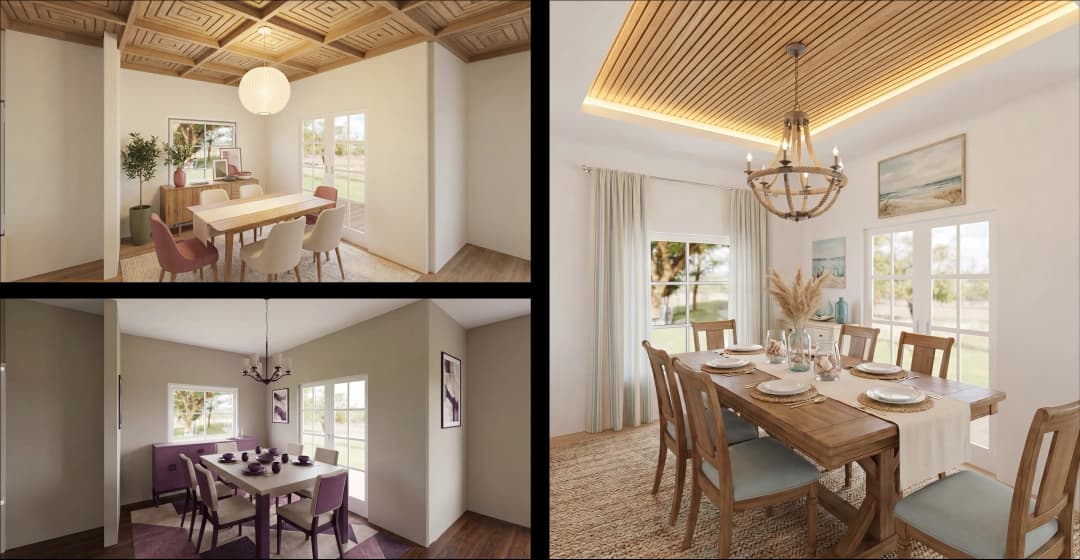
June 01, 2026
Pre-Construction Home Sales: AI Interior Visualization Guide | VirtualSpaces
HHemanth Velury
CEO & Co-Founder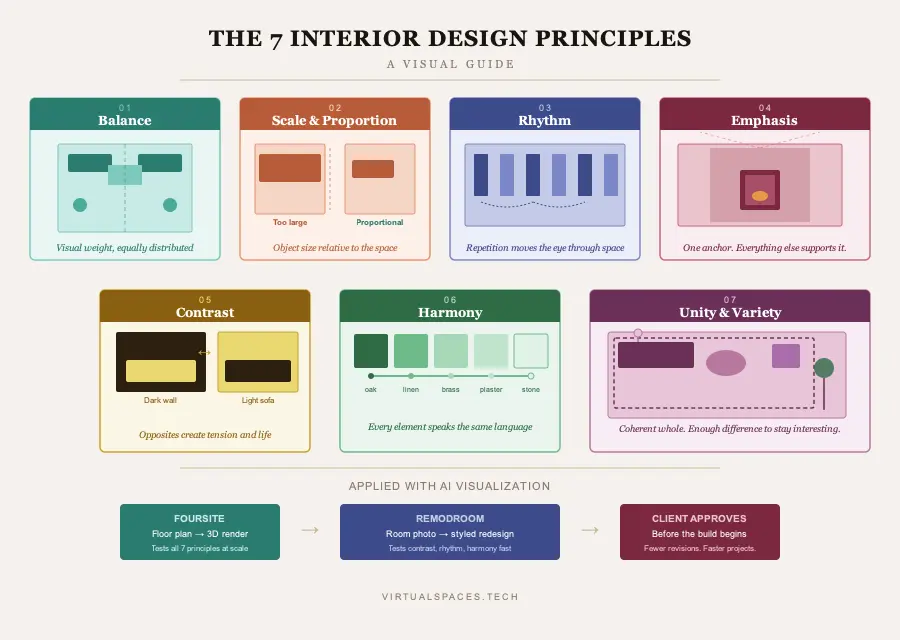
May 30, 2026
Interior Design Principles: Applied with AI | VirtualSpaces
HHemanth Velury
CEO & Co-Founder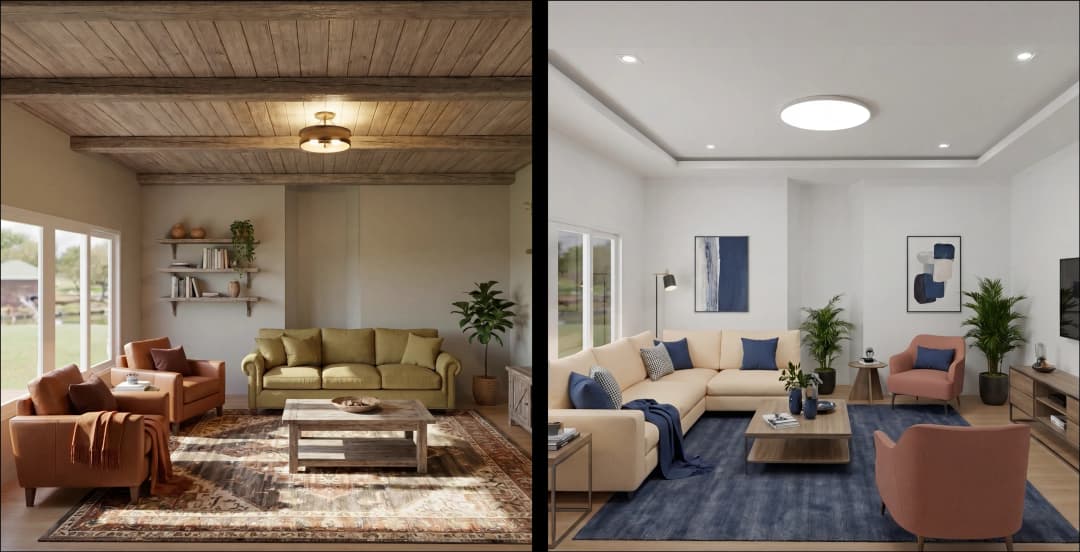
May 28, 2026
Designing Spaces for People, Not Blueprints | VirtualSpaces
HHemanth Velury
CEO & Co-Founder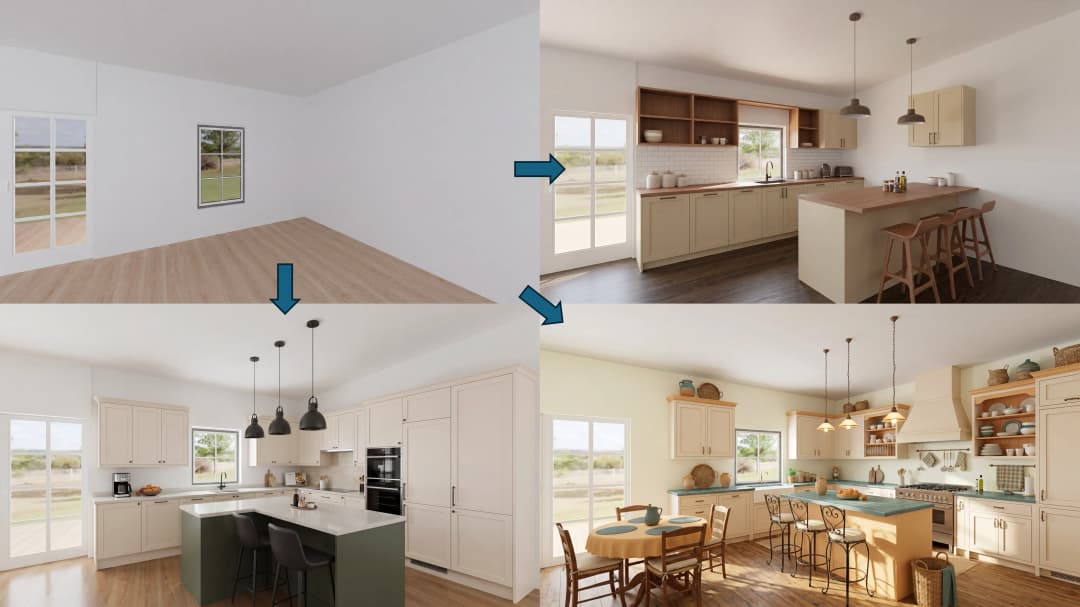
May 26, 2026
The Future of Interior Design: Closing the Visualization Gap with Foursite and Remodroom | VirtualSpaces
HHemanth Velury
CEO & Co-Founder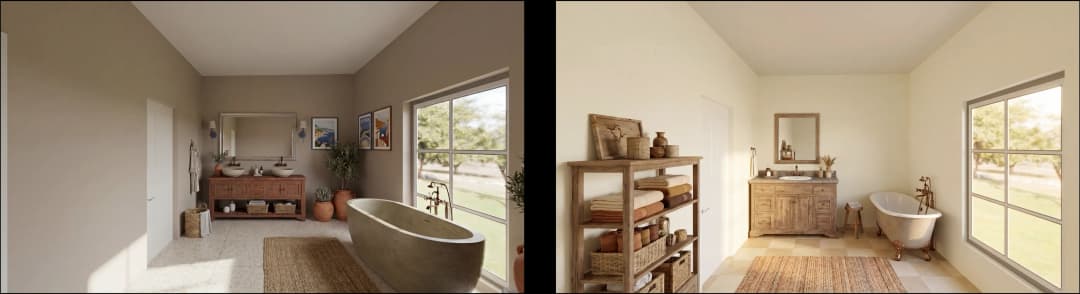
May 18, 2026
How AI Visualization Upgrades Property Data Platforms | VirtualSpaces
HHemanth Velury
CEO & Co-Founder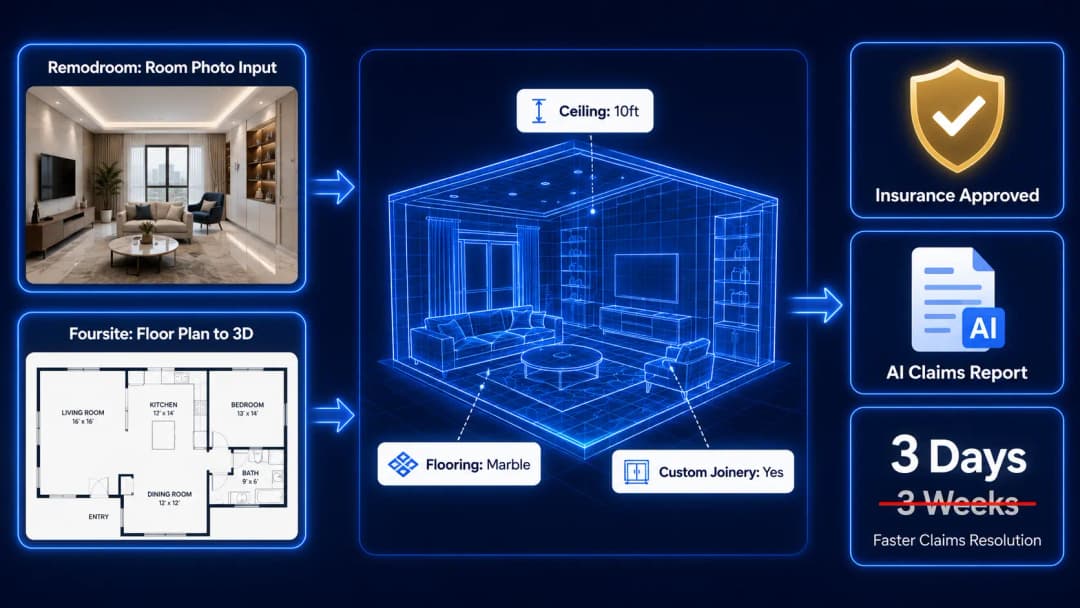
May 14, 2026
How AI-First Insurers Can Use 3D Property Data to Transform Home Claims | VirtualSpaces
HHemanth Velury
CEO & Co-FounderMay 12, 2026
Why Photoreal 3D Renders Are Replacing Mood Boards | Interior Design Client Presentations | VirtualSpaces
HHemanth Velury
CEO & Co-Founder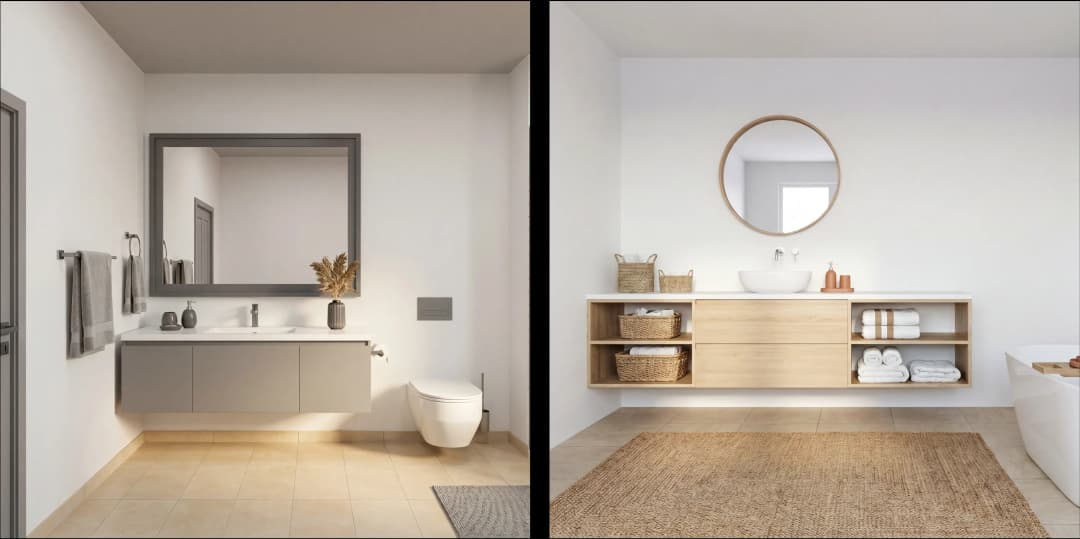
May 08, 2026
From 2D Floor Plans To Living Worlds: The Spec‑Accurate 3D Engine | VirtualSpaces
HHemanth Velury
CEO & Co-Founder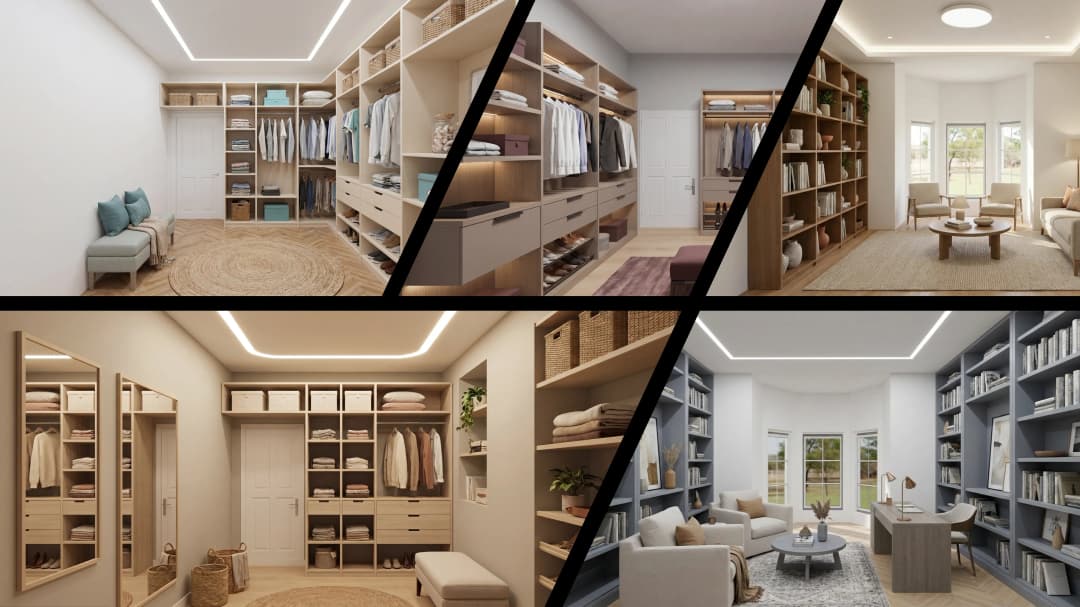
May 06, 2026
Why Furniture Brands Need AI 3D Visualization Now | VirtualSpaces
HHemanth Velury
CEO & Co-Founder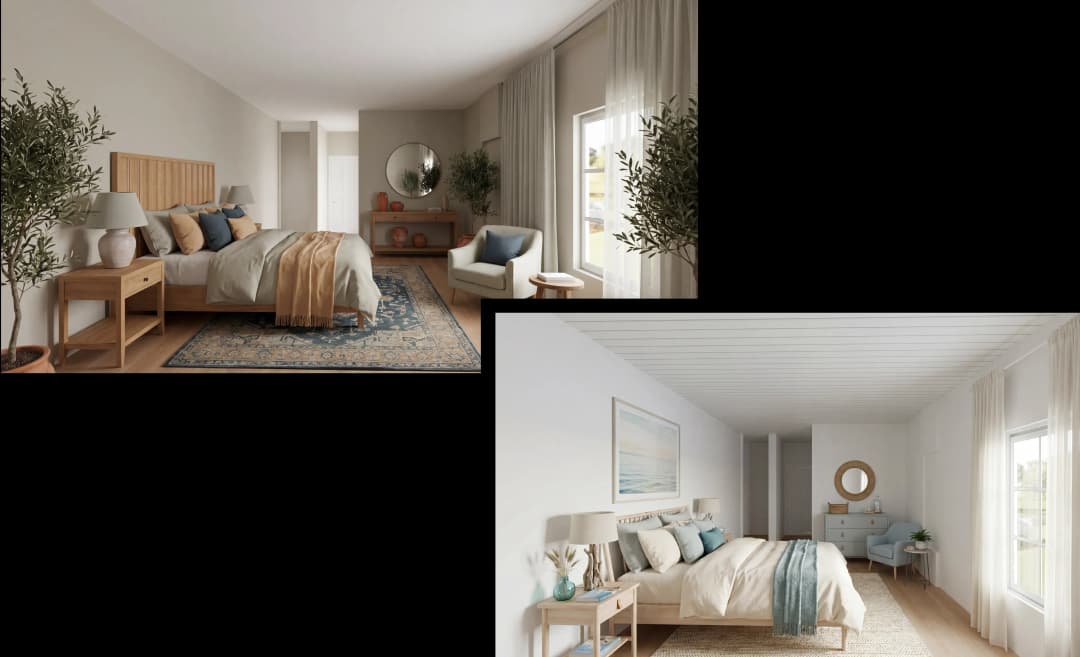
May 4, 2026
How Property Portals Can Turn 2D Floor Plans into 3D Design Decisions | VirtualSpaces
HHemanth Velury
CEO & Co-Founder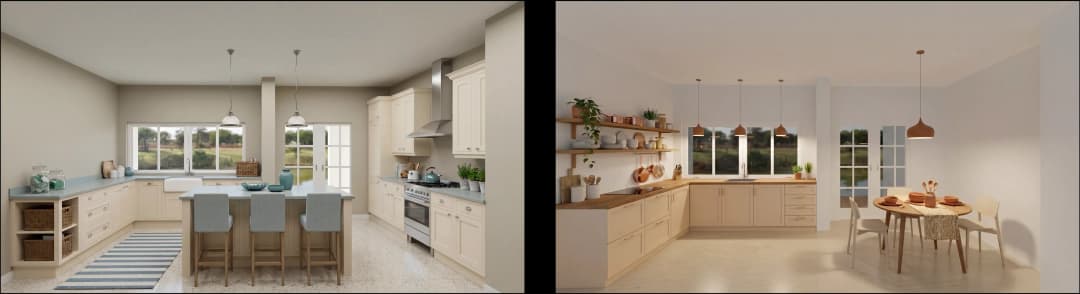
April 29, 2026
The Home-Fit Test: Why Square Footage Misleads | VirtualSpaces
HHemanth Velury
CEO & Co-Founder
April 27, 2026
Designing Homes That Sell: 3D Visualization ROI Data | VirtualSpaces
HHemanth Velury
CEO & Co-FounderApril 24, 2026
What's Next: Foursite & Remodroom's New AI Features | VirtualSpaces
HHemanth Velury
CEO & Co-Founder
April 22, 2026
AI in Architecture: Closing the 85% Exposure Gap | VirtualSpaces
HHemanth Velury
CEO & Co-Founder
April 20, 2026
Interior Design Pricing in 2026: From Hourly to Value-Based Fees | VirtualSpaces
HHemanth Velury
CEO & Co-FounderApril 17, 2026
How Foursite and Remodroom Help Designers Win Clients | VirtualSpaces
HHemanth Velury
CEO & Co-Founder
April 15, 2026
Designing Spaces for People: Remodroom + Foursite AI Guide | VirtualSpaces
HHemanth Velury
CEO & Co-Founder
April 13, 2026
Designing for the Way People Actually Live: How AI 3D Is Finally Closing the Gap Between Floor Plan and Reality
HHemanth Velury
CEO & Co-Founder
April 11, 2026
Design in Real Time: AI Renders in Your First Client Meeting
HHemanth Velury
CEO & Co-Founder
April 06, 2026
Why Real Estate Photography Is No Longer Enough: The Shift to Spatial-First Listings
HHemanth Velury
CEO & Co-Founder
April 03, 2026
Property Management's Hidden Weapon: AI 3D Floor Plans That Cut Vacancy Time and Raise Tenant Quality
HHemanth Velury
CEO & Co-Founder
April 01, 2026
Off-Plan and Oversubscribed: How AI 3D Visualization Is Transforming Real Estate Pre-Sales
HHemanth Velury
CEO & Co-Founder
March 30, 2026
Why Foursite Beats Generic AI Tools for Interior Design 3D Visualization
HHemanth Velury
CEO & Co-Founder
March 27, 2026
7 Tenets of Interior Design: How AI Accelerates Harmony in Residential Spaces
HHemanth Velury
CEO & Co-Founder
March 25, 2026
What Is the 3-5-7 Rule in Interior Design? Foursite's AI Guide for Residential Spaces
HHemanth Velury
CEO & Co-Founder
March 23, 2026
What Is the 70/30 Rule in Interior Design? Foursite's AI Guide for Residential Spaces
HHemanth Velury
CEO & Co-Founder
March 20, 2026
How AI 3D Visualization Is Rewriting Residential Interior Design Workflows
HHemanth Velury
CEO & Co-Founder
March 18, 2026
Beyond Marketing: How 3D Floorplans Transform FM, Retrofit Planning & ESG Operations
HHemanth Velury
CEO & Co-Founder
March 16, 2026
Why AI Companies Use Token Payments (And Why VirtualSpaces Is Returning To Fiat)
HHemanth Velury
CEO & Co-Founder
March 11, 2026
The Foursite Platform Thesis: Why Floor Plans, Not Photos, Are the Next Property Software Primitive
HHemanth Velury
CEO & Co-Founder
March 09, 2026
Design Systems for Space: Building Reusable 3D Component Libraries on Top of AI Floorplan‑to‑3D Engines
HHemanth Velury
CEO & Co-Founder
March 06, 2026
How to Standardize Design Quality Across Global Projects Using AI Floorplan-to-3D Tools
HHemanth Velury
CEO & Co-Founder
March 04, 2026
From CAD-First to AI-First: Reskilling Your Team for AI-Native Design Workflows
HHemanth Velury
CEO & Co-Founder
March 02, 2026
Algorithmic Ergonomics Meets Photorealistic 3D: Designing Human-Centered Smart Homes with Foursite in 2026
HHemanth Velury
CEO & Co-Founder
February 27, 2026
The Ethics of AI in Interior Design: Ownership, Originality, and Client Transparency
HHemanth Velury
CEO & Co-Founder
February 25, 2026
Designing with Empathy: Using AI 3D Visualization to Improve Client Communication and Emotional Clarity
HHemanth Velury
CEO & Co-Founder
February 23, 2026
From Tool to Infrastructure: AI Floorplan-to-3D and the Next Wave of PropTech
HHemanth Velury
CEO & Co-Founder
February 20, 2026
AI Interior Design for Holiday Homes: Turn Spare Flats into High-Demand Short-Stay Rentals with 3D Visuals
HHemanth Velury
CEO & Co-Founder
February 18, 2026
The Pre‑Purchase Power Play: How Savvy Home Buyers Use 3D Floor Plan Visualization to Negotiate Better Deals
HHemanth Velury
CEO & Co-FounderFebruary 16, 2026
AI Interior Design for Non‑Designers: How Homeowners Can Brief Like Pros
HHemanth Velury
CEO & Co-Founder
February 13, 2026
Scaling a Design Business Without Hiring a 3D Team: An Owner's Guide
HHemanth Velury
CEO & Co-Founder
February 11, 2026
From Bland to Bold: How to Rescue Builder-Grade Interiors on Any Budget
HHemanth Velury
CEO & Co-Founder
February 6, 2026
The Psychology of Space: How Room Dimensions Influence Interior Design Decisions
HHemanth Velury
CEO & Co-Founder
February 4, 2026
The Future of Interior Design Visualization: How AI Technology is Transforming 2D Concepts Into 3D Reality
HHemanth Velury
CEO & Co-Founder
February 2, 2026
AI Interior Décor: How Artificial Intelligence Generates Design Options from Your Floor Plan
HHemanth Velury
CEO & Co-Founder
January 30, 2026
Photoreal vs. Reality: What Clients Actually Expect from Interior Design Visualization
HHemanth Velury
CEO & Co-Founder
January 28, 2026
The Design Approval Conversation That Changes Everything: Communication Strategy When Using Photorealistic Visualization
HHemanth Velury
CEO & Co-Founder
January 25, 2026
Interior Design as Experience Design: How 3D Visualization Changes Your Professional Identity
HHemanth Velury
CEO & Co-Founder
January 23, 2026
The Professional Gap: How 3D Visualization Changes Interior Design Client Perception
HHemanth Velury
CEO & Co-Founder
January 21, 2026
Why Clients Fire Designers (And How 3D Visualization Could Have Saved the Project)
HHemanth Velury
CEO & Co-Founder
January 16, 2026
Blueprint to Vision: Why Seeing Is Believing in Interior Design
HHemanth Velury
CEO & Co-Founder
January 14, 2026
The Speed of Responsiveness: How AI Visualization Tools Make You Look Like You Care More
HHemanth Velury
CEO & Co-Founder
January 12, 2026
Why Interior Designers and Architects Can't Compete Without AI 3D Visualization Tools
HHemanth Velury
CEO & Co-Founder
January 07, 2026
From "Saved" to "Sold": How Homeowners Are Planning Renovations with AI
HHemanth Velury
CEO & Co-Founder
January 05, 2026
The Interior Designer's Secret Weapon: Speed as Premium Positioning
HHemanth Velury
CEO & Co-Founder
December 31, 2025
Gratitude, Growth & Game-Changing Innovation: VirtualSpaces' 2025 Journey & What's Coming in 2026
HHemanth Velury
CEO & Co-Founder
December 29, 2025
Why Interior Designers Are Switching to AI Floor Plan-to-3D Tools in 2026
HHemanth Velury
CEO & Co-Founder
December 26, 2025
AI Virtual Staging for Real Estate Agents: Sell More Homes Faster with Foursite
HHemanth Velury
CEO & Co-Founder
December 24, 2025
Why Architects Are Switching to AI 2D-to-3D: The SketchUp Alternative
HHemanth Velury
CEO & Co-Founder
December 22, 2025
Cut 3 Weeks from Real Estate Sales Cycle: The ROI of AI 2D to 3D Visualization
HHemanth Velury
CEO & Co-Founder
December 19, 2025
2D Floor Plans Are Dying: Why 3D Visualization & AI Virtual Staging Are the Future
HHemanth Velury
CEO & Co-Founder
December 17, 2025
Virtual Staging vs Physical Staging: How AI Saves Money Per Property
HHemanth Velury
CEO & Co-Founder
December 15, 2025
AI Floor Plan to Image: Revolutionizing Real Estate Marketing for Agents
HHemanth Velury
CEO & Co-Founder
December 12, 2025
Color of the Year 2026: Cloud Dancer | VirtualSpaces AI Interior Design Guide
HHemanth Velury
CEO & Co-Founder
December 10, 2025
AI Floor Plan to 3D: The New Standard for Interior Design Workflows
HHemanth Velury
CEO & Co-Founder
December 08, 2025
How Interior Design Studios Can Operationalize AI 2D-to-3D Workflows (Without Breaking Their Process)
HHemanth Velury
CEO & Co-Founder
December 06, 2025
How to Implement AI Interior Design Workflows in Your Studio
HHemanth Velury
CEO & Co-Founder
December 4, 2025
How Homeowners Can Use AI Interior Design Tools to Plan Renovations with Confidence
HHemanth Velury
CEO & Co-Founder
November 28, 2025
Interior Designers in the Age of AI: From Threat Narrative to Superpower
HHemanth Velury
CEO & Co-Founder
November 21, 2025
Foursite Launch: Embracing 'Release Early, Release Often'
HHemanth Velury
CEO & Co-Founder
November 13, 2025
Foursite by VirtSpaces: Empowering Interior Designers, Architects, and Homeowners
HHemanth Velury
CEO & Co-Founder
November 7, 2025
Reimagining Architectural Education: How AI Floorplan-to-3D Technology Can Transform Design Learning
VVirtualSpaces Research Labs
AI Research Initiative
October 27, 2025
Archisculpt AI: Turning Architectural Drawings into Photorealistic 3D Spaces
AAbhijeet Naik
Co-Founder & CTO
October 13, 2025
Home Makeover: From Floor Plan to Dream Space with AI
HHemanth Velury
CEO & Co-Founder
October 6, 2025
Real-Time Rendering & AI: Revolutionizing Interactive Property Walkthroughs with VirtSpaces
HHemanth Velury
CEO & Co-Founder
September 26, 2025
Foursite - A True AI-Native Experience in Design Visualization
AAbhijeet Naik
CTO & Co-Founder
September 18, 2025
Why PropTech Startups Are Betting on AI Interior Design
HHemanth Velury
CEO & Co-Founder
September 11, 2025
How AI Differs from Traditional 3D Rendering Software
HHemanth Velury
CEO & Co-Founder
September 2, 2025
From Client to Investor: How Nila Spaces and VirtSpaces Are Redefining Proptech with AI
HHemanth Velury
CEO & Co-Founder
August 25, 2025
VirtSpaces From Virtual Reality to AI – Transforming Real Estate Visualization.
HHemanth Velury
CEO & Co-Founder


We help teams collaborate seamlessly and reduce costs. Virtual Spaces offers cutting-edge technology with flexible plans designed to fit modern teams.
Copyright © VirtSpaces Pvt. Ltd. 2025 All Rights Reserved.
CIN: U74999KA2016PTC094921