
April 13, 2026
- Interior Design
- AI Technology
- Real Estate
Designing for the Way People Actually Live: How AI 3D Is Finally Closing the Gap Between Floor Plan and Reality
Hemanth Velury
CEO & Co-FounderDesigning for the Way People Actually Live: How AI 3D Is Finally Closing the Gap Between Floor Plan and Reality
Walk any new-build site on handover week and you will hear the same sentence from at least one buyer: "This feels smaller than I imagined." The floor plan did not lie, but it also did not match how their brain understood space, movement, and daily life.
For interior designers, architects, and residential developers, that gap between plan and lived experience is not just a communication problem. It is a structural friction in every project: misaligned expectations, late design changes, and deals that never close because someone "cannot quite picture it." VirtualSpaces Foursite exists to close that cognitive gap, by converting 2D floor plans and blueprints into AI 3D visualization that feels like actually being in the home, not just looking at a diagram.
Why 2D Floor Plans Break Inside the Human Brain
Professionals read 2D floor plans fluently. Most buyers do not. That difference is rooted in spatial cognition and how we build mental models of space.
Three issues show up again and again in residential projects:
- People struggle to imagine volume from area
- People misjudge distance, especially in open plans
- People underestimate how furniture and circulation will compete for space
A plan might say 1200 square feet, but the buyer's brain wants to know something else:
- How does it feel to walk from the entry to the sofa with shopping bags in hand
- Where the stroller will live without blocking a corridor
- Whether two people can cook together without bumping shoulders
When a floor plan does not match reality in the buyer's mind, they either stall or overcompensate. They over-specify storage, overspend on larger units, or walk away entirely because the cognitive load feels too high. Designing spaces for people means designing for their mental shortcuts, not just their square footage requirements.
Behavioral Psychology: Why "I'll Know It When I See It" Is Rational
On paper, "I'll know it when I see it" sounds indecisive. In behavioral psychology, it is exactly how humans protect themselves from regret.
Buyers worry about:
- Making an irreversible choice that feels wrong once they move in
- Paying for space that looks generous on a plan and cramped in real life
- Discovering too late that a key daily routine does not fit the layout
So, they delay decisions or push for more meetings, more options, more images. What looks like indecision is often a rational response to low-fidelity information. A flat PDF, a couple of still renders, and an under-construction site visit are not enough to simulate how a home will feel at 7:30 am on a weekday or 10 pm on a weekend.
Interior designers designing for people have known this intuitively for years. You see it in the way you walk clients through mood boards, material boards, and ad-hoc sketches. The difference now is that AI 3D visualization can compress all of that into an interactive, spatially honest experience that anyone can understand.
Spatial Cognition: From Drawing to Lived Path
Spatial cognition research tells us that people think about space as sequences, not as static diagrams. We recall:
- Paths: how we move from one zone to another
- Landmarks: the sofa, the kitchen island, the window seat
- Regions: "the kids' side" of the house, "the quiet corner," "the messy zone"
A 2D floor plan shows rooms and dimensions. It does not show paths, behavior, or friction. That is why "how to visualize floor plan before buying" has become a real search behavior: buyers are looking for tools that match how their brains already work.
When you convert floor plan to 3D and let someone walk it as a first-person experience, you are aligning with their natural spatial cognition. They no longer have to rotate the plan in their head, translate symbols, or guess how a 900 mm passage feels when a chair is pulled out. They can just move, look, and feel.
Foursite's 2D to 3D pipeline is built around that exact mental model: from blueprint to 3D, from drawing to lived path, from "I think it works" to "I can see myself here."
Designing Spaces for People, Not Just Projects
If you look across the lifecycle of a residential project, the gap between floor plan and reality shows up at predictable points:
- Pre-sales: Buyers cannot picture off-plan units, so conversion drags
- Design development: Clients request late changes once they finally feel the space
- Handover: "This is not how I imagined it" becomes the most expensive sentence in the project
Designing homes today means designing for three overlapping experiences:
- The designer who needs control and nuance
- The developer who needs speed and consistency
- The buyer who needs emotional clarity and behavioral fit
Traditional software makes you choose: high-end interior design renders that arrive after multiple hand-offs, or crude floor plans that are cheap but cognitively expensive for the client. AI interior design and AI interior decor, when rooted in accurate floor plan to 3D models, lets you serve all three without fracture.
Why "Floor Plan Does Not Match Reality" Is a Workflow Problem
When a buyer says "the floor plan doesn't match reality," it is rarely the architecture that changed. It is the mental picture that was never accurate. The workflow usually looks like this:
- Architect or drafter creates 2D floor plans
- Designer imports into another tool, rebuilds 3D
- Renders are outsourced to a studio
- Marketing extracts a small set of final images
- Buyer sees only a thin slice of the design intent
Every hand-off strips away context and adds time. By the time visuals reach the buyer, the team is already emotionally and operationally committed. Late feedback is treated as a problem, not as valuable input.
AI 3D visualization tools like Foursite cut straight through that. Upload 2D floor plans or blueprints, and the system converts blueprint to 3D in minutes, interprets walls, openings, and room types, and generates interior design 3D visualization that the whole team can work from.
You are not just "adding 3D." You are collapsing a chain of software hand-offs into a single shared spatial layer.
Foursite as a Cognitive Bridge: From 2D to 3D in Minutes
Foursite is built for precisely this cognitive gap: it takes the documents you already have and turns them into an environment your clients can actually feel.
With Foursite you can:
- Upload 2D floor plans and blueprints, as simple JPGs
- Convert floor plan to 3D instantly, with walls, doors, and windows modeled accurately
- Use AI interior design to generate room-appropriate layouts, materials, and lighting
- Apply AI virtual staging and AI interior decor variations from the same base model
- Export interior design photoreal renders for marketing, while still navigating the scene in real time
Because the system understands blueprints as spatial logic rather than just lines, AI interior decor feels natural. Furniture aligns with circulation paths, window orientations make sense for light, and room functions are respected by default.
How Interior Designers Use AI 3D to Design for Real Life
Interior designers designing for people are already re-wiring their process around AI 3D visualization. A typical Foursite-enabled workflow looks like this:
Start with the real constraints
- Upload the latest 2D floor plans
- Validate that structural elements and services are correctly interpreted in 3D
Explore behavioral scenarios
- Create multiple layouts for the same plan: young family, work-from-home couple, multigenerational living
- Use AI interior decor variations to match actual lifestyle patterns, not generic styles
Co-design live with the client
- Sit with the client and move through the AI 3D visualization together
- Test decisions in real time: sofa orientation, study nook, kids' play area, storage walls
Commit only after the space clicks
- Generate interior design renders once the client has walked the space and felt the flow
- Share links or renders with other stakeholders without re-modeling from scratch
This is designing spaces for people in the literal sense: the design conversation happens inside a navigable version of their future home, not around abstract diagrams.
Why Developers Care: Faster Pre-Sales, Fewer Surprises
Developers are not in love with 3D for its own sake. They care because:
- Faster clarity means faster bookings
- Better visualization reduces cancellations and post-handover disputes
- A single spatial asset can serve pre-sales, approvals, and post-sales updates
With Foursite, a residential project can move from floor plan to 3D across an entire unit mix in days instead of weeks. Every unit type gets a consistent AI 3D visualization model that can be:
- Dressed with AI virtual staging for sales galleries and portals
- Customized with AI interior design options for different buyer profiles
- Exported as interior design photoreal renders for brochures and campaign assets
Instead of one hero render per project, you get a living, reusable 3D layer that keeps matching reality as drawings evolve.
Architects and the Integrity Question: Is AI 3D Honest?
Architects often worry that visualization can oversell and mislead. The answer depends entirely on where the 3D starts.
If you begin from photos and "paint in" a future state, the temptation to bend reality is high. When you start from 2D floor plans and blueprints, and convert blueprint to 3D as the primary step, structural integrity remains the anchor.
Foursite's floor plan to 3D engine treats:
- Wall positions and thicknesses as non-negotiable
- Window and door openings as fixed constraints
- Room dimensions and adjacencies as the backbone of every visualization
AI interior design and AI interior decor live on top of that. You can show variations in taste, furniture, and lighting without compromising the bones of the building. That matters both ethically and operationally: what the buyer falls in love with remains aligned with what can actually be built.
Homeowners: "Can I See My Life Here?"
For homeowners, designing homes is rarely about design language first. It is about friction points:
- Where will I keep shoes, bags, and school gear
- How far is the kitchen from the dining table when I am carrying hot food
- Can my parent navigate safely at night without sharp turns or tight corridors
AI 3D visualization gives them permission to ask those questions early. With Foursite they can:
- Walk the plan and notice where everyday items naturally want to live
- Test different storage and furniture strategies with AI virtual staging
- See multiple design schemes in the same path: morning routine, evening hosting, weekend family time
Designing spaces for people means inviting those questions in the first meeting, not in week ten.
AI as Augmentation, Not Replacement
For all four audiences, the fear around AI is often the same: will AI interior design replace the human designer. The pattern emerging in studios using Foursite is the opposite.
AI handles:
- Converting 2D floor plans into clean 3D space
- Generating first-pass layouts and decor ideas
- Producing consistent interior design 3D visualization across dozens of units
Designers handle:
- Translating client psychology and lifestyle into meaningful constraints
- Editing AI interior decor to align with local context, brand, and culture
- Making judgment calls about what should be left unsaid or unseen
The result is not fewer designers. It is designers who spend more time in client conversations and less time inside modeling software.
You move from "software operator" to "spatial strategist," using AI visualization as an instrument rather than a threat.
Less Outsourcing, Fewer Hand-Offs, More Control
Outsourcing 3D has always been a compromise: good quality, but slow and opaque. If the floor plan changes, the render cycle restarts. If the client wants a different mood, you are back in the queue.
Foursite flips this model:
- You own the 2D to 3D pipeline inside your own workflow
- You can regenerate AI virtual staging or new interior design photoreal renders in minutes
- You reduce software hand-offs, plug-ins, and file translations that cost time and focus
For interior design studios and residential developers, that translates into:
- Shorter decision cycles
- Fewer "version control" issues between drawings, models, and images
- Lower outsourcing spend per project, while increasing the number of visual assets created
Designing spaces for people becomes compatible with designing businesses that scale.
A Different Kind of Scale: From Project to Platform
Look closely at how Foursite fits inside VirtualSpaces and you see something important: it is not just a nice tool for one-off jobs. It behaves like infrastructure.
Because everything starts from 2D floor plans and blueprints:
- The same conversion logic can be applied across markets, unit mixes, and portfolios
- The same 3D visualization layer can serve listings, design development, and post-sales upgrades
- The same AI interior design engine can learn from thousands of homes and keep improving its suggestions
For practitioners, the benefit is immediate: faster visualization, happier clients, more control. For anyone thinking about the broader residential ecosystem, it signals something bigger: floor plan to 3D is becoming a default expectation, not a luxury extra.
When every serious project offers AI 3D visualization as standard, the question shifts from "should we visualize" to "how deeply can we simulate the way people actually live in this space."
If you had to pick one stage of your workflow to test this kind of AI 3D visualization first, would you start with pre-sales, design development, or post-handover upgrades?
PS: some features may not be available and are a part of our future product roadmap
Recommended for you

August 19, 2026
The End of the Model Home? 3D Changes the Math | VirtualSpaces
HHemanth Velury
CEO & Co-Founder
August 17, 2026
Designing Spaces That Actually Get Built | VirtualSpaces
HHemanth Velury
CEO & Co-Founder
August 12, 2026
Designing Homes for the Stuff People Actually Own | VirtualSpaces
HHemanth Velury
CEO & Co-Founder
August 07, 2026
Floor Plan to Bill of Materials: The 3D Model as Data | VirtualSpaces
HHemanth Velury
CEO & Co-Founder.png&w=1080&q=75)
August 05, 2026
Designing Homes for How People Actually Live | VirtualSpaces
HHemanth Velury
CEO & Co-Founder
August 03, 2026
Honest by Design: Trust in AI Real Estate Imagery | VirtualSpaces
HHemanth Velury
CEO & Co-Founder
July 29, 2026
Kitchen and Bath: The Two Rooms That Decide Resale | VirtualSpaces
HHemanth Velury
CEO & Co-Founder
July 27, 2026
Why Empty Rooms Don't Sell: Virtual Staging | VirtualSpaces
HHemanth Velury
CEO & Co-Founder
July 24, 2026
The Quiet Sustainability Win of Deciding in 3D | VirtualSpaces
HHemanth Velury
CEO & Co-Founder
July 22, 2026
Why Paint Swatches Lie: Test Color in 3D First | VirtualSpaces
HHemanth Velury
CEO & Co-Founder
July 20, 2026
Why Every Home Should Be Seen Before It's Built | VirtualSpaces
HHemanth Velury
CEO & Co-Founder
July 17, 2026
Why Big AI Labs Won't Build Floor Plan to 3D | VirtualSpaces
HHemanth Velury
CEO & Co-Founder
July 15, 2026
How We Solve Floor Plan to 3D, Accurately | VirtualSpaces
HHemanth Velury
CEO & Co-Founder
July 13, 2026
Designing Homes That Age With the People in Them | VirtualSpaces
HHemanth Velury
CEO & Co-Founder
July 10, 2026
Designing Spaces for How Light Actually Moves | VirtualSpaces
HHemanth Velury
CEO & Co-Founder
July 08, 2026
Designing Homes for Every Life Stage in 3D | VirtualSpaces
HHemanth Velury
CEO & Co-Founder
July 06, 2026
Build an Interior Design Portfolio Without Clients | VirtualSpaces
HHemanth Velury
CEO & Co-Founder
June 26, 2026
AI Interior Design: Full 3D Workflow in One Platform | VirtualSpaces
HHemanth Velury
CEO & Co-Founder
June 24, 2026
Scope Creep in Interior Design: How AI Visualization Fixes It | VirtualSpaces
HHemanth Velury
CEO & Co-Founder
June 22, 2026
What Buyers See on a Floor Plan: Your Biggest Sales Problem | VirtualSpaces
HHemanth Velury
CEO & Co-Founder
June 19, 2026
Small Design Studios vs Big Firms: The AI Advantage | VirtualSpaces
HHemanth Velury
CEO & Co-Founder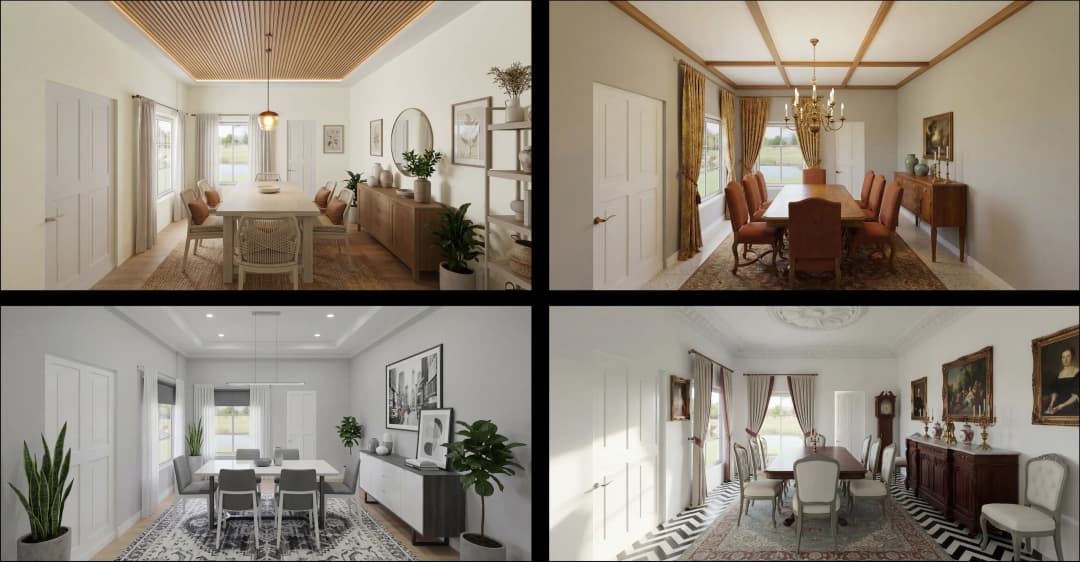
June 17, 2026
After the Mood Board: AI Interior Visualization | VirtualSpaces
HHemanth Velury
CEO & Co-Founder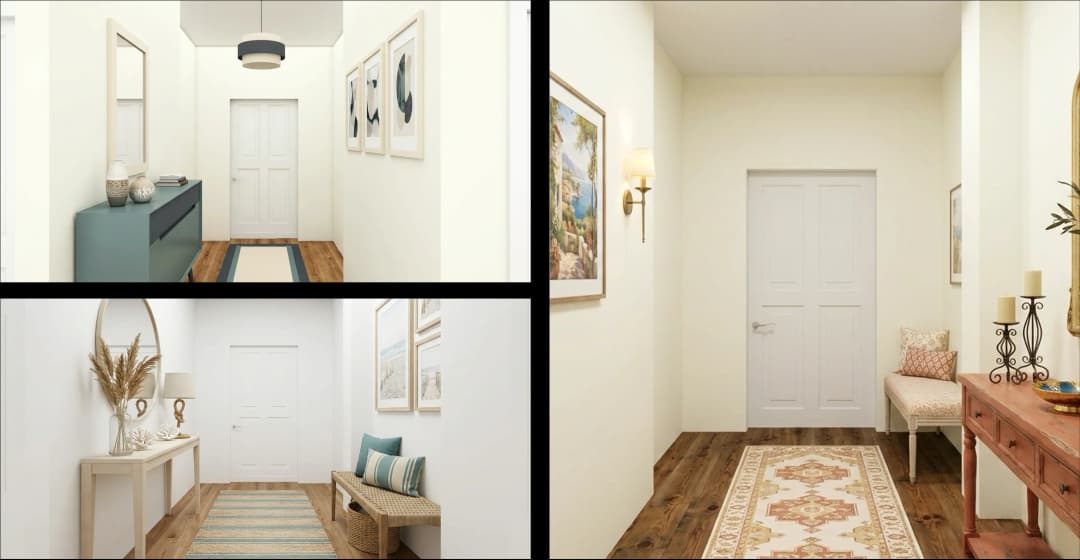
June 15, 2026
Foursite Pro Editor: Full Floor Plan Control for Designers | VirtualSpaces
HHemanth Velury
CEO & Co-Founder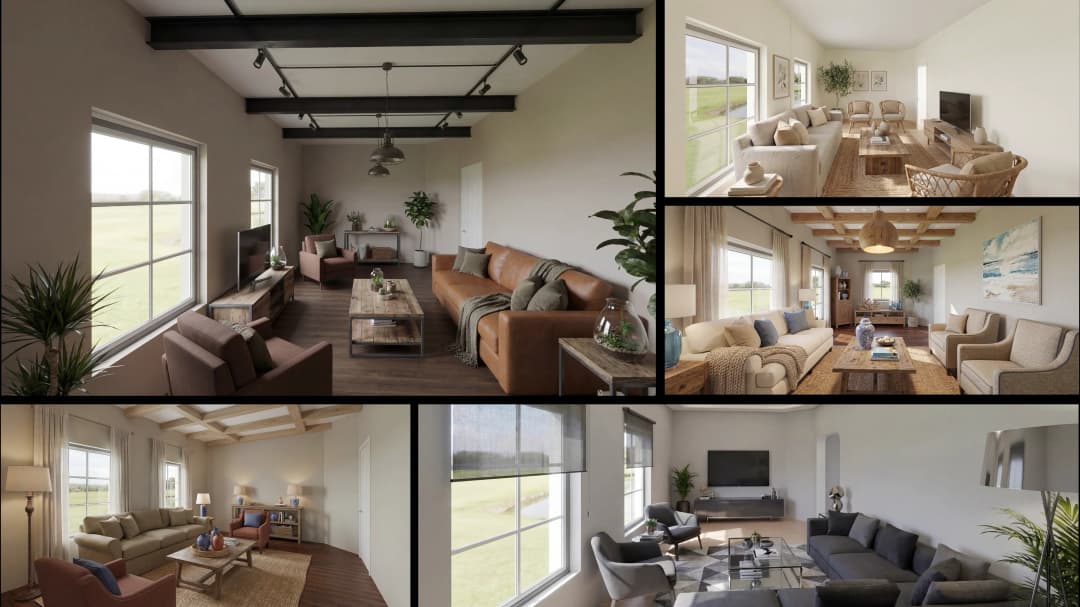
June 12, 2026
AI Interior Design: Style Any Room in Seconds with Foursite | VirtualSpaces
HHemanth Velury
CEO & Co-Founder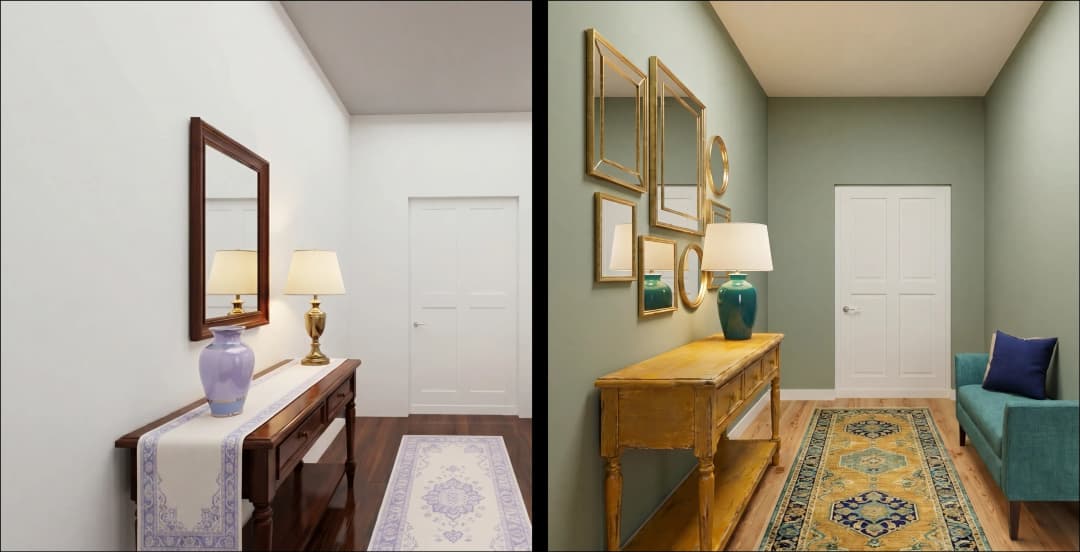
June 10, 2026
Foursite: Floor Plan to 3D Walkthrough in Minutes | VirtualSpaces
HHemanth Velury
CEO & Co-Founder
June 08, 2026
Win More Pitches With AI Renders Before the Meeting | VirtualSpaces
HHemanth Velury
CEO & Co-Founder
June 05, 2026
From Floor Plan to Finished Room: What AI Now Makes Possible | VirtualSpaces
HHemanth Velury
CEO & Co-Founder
June 03, 2026
The Interior Design Brief Is Broken. AI Fixes It | VirtualSpaces
HHemanth Velury
CEO & Co-Founder
June 01, 2026
Pre-Construction Home Sales: AI Interior Visualization Guide | VirtualSpaces
HHemanth Velury
CEO & Co-Founder
May 30, 2026
Interior Design Principles: Applied with AI | VirtualSpaces
HHemanth Velury
CEO & Co-Founder
May 28, 2026
Designing Spaces for People, Not Blueprints | VirtualSpaces
HHemanth Velury
CEO & Co-Founder
May 26, 2026
The Future of Interior Design: Closing the Visualization Gap with Foursite and Remodroom | VirtualSpaces
HHemanth Velury
CEO & Co-Founder
May 18, 2026
How AI Visualization Upgrades Property Data Platforms | VirtualSpaces
HHemanth Velury
CEO & Co-Founder
May 14, 2026
How AI-First Insurers Can Use 3D Property Data to Transform Home Claims | VirtualSpaces
HHemanth Velury
CEO & Co-FounderMay 12, 2026
Why Photoreal 3D Renders Are Replacing Mood Boards | Interior Design Client Presentations | VirtualSpaces
HHemanth Velury
CEO & Co-Founder
May 08, 2026
From 2D Floor Plans To Living Worlds: The Spec‑Accurate 3D Engine | VirtualSpaces
HHemanth Velury
CEO & Co-Founder
May 06, 2026
Why Furniture Brands Need AI 3D Visualization Now | VirtualSpaces
HHemanth Velury
CEO & Co-Founder
May 4, 2026
How Property Portals Can Turn 2D Floor Plans into 3D Design Decisions | VirtualSpaces
HHemanth Velury
CEO & Co-Founder
April 29, 2026
The Home-Fit Test: Why Square Footage Misleads | VirtualSpaces
HHemanth Velury
CEO & Co-Founder
April 27, 2026
Designing Homes That Sell: 3D Visualization ROI Data | VirtualSpaces
HHemanth Velury
CEO & Co-FounderApril 24, 2026
What's Next: Foursite & Remodroom's New AI Features | VirtualSpaces
HHemanth Velury
CEO & Co-Founder
April 22, 2026
AI in Architecture: Closing the 85% Exposure Gap | VirtualSpaces
HHemanth Velury
CEO & Co-Founder
April 20, 2026
Interior Design Pricing in 2026: From Hourly to Value-Based Fees | VirtualSpaces
HHemanth Velury
CEO & Co-FounderApril 17, 2026
How Foursite and Remodroom Help Designers Win Clients | VirtualSpaces
HHemanth Velury
CEO & Co-Founder
April 15, 2026
Designing Spaces for People: Remodroom + Foursite AI Guide | VirtualSpaces
HHemanth Velury
CEO & Co-Founder
April 11, 2026
Design in Real Time: AI Renders in Your First Client Meeting
HHemanth Velury
CEO & Co-Founder
April 06, 2026
Why Real Estate Photography Is No Longer Enough: The Shift to Spatial-First Listings
HHemanth Velury
CEO & Co-Founder
April 03, 2026
Property Management's Hidden Weapon: AI 3D Floor Plans That Cut Vacancy Time and Raise Tenant Quality
HHemanth Velury
CEO & Co-Founder
April 01, 2026
Off-Plan and Oversubscribed: How AI 3D Visualization Is Transforming Real Estate Pre-Sales
HHemanth Velury
CEO & Co-Founder
March 30, 2026
Why Foursite Beats Generic AI Tools for Interior Design 3D Visualization
HHemanth Velury
CEO & Co-Founder
March 27, 2026
7 Tenets of Interior Design: How AI Accelerates Harmony in Residential Spaces
HHemanth Velury
CEO & Co-Founder
March 25, 2026
What Is the 3-5-7 Rule in Interior Design? Foursite's AI Guide for Residential Spaces
HHemanth Velury
CEO & Co-Founder
March 23, 2026
What Is the 70/30 Rule in Interior Design? Foursite's AI Guide for Residential Spaces
HHemanth Velury
CEO & Co-Founder
March 20, 2026
How AI 3D Visualization Is Rewriting Residential Interior Design Workflows
HHemanth Velury
CEO & Co-Founder
March 18, 2026
Beyond Marketing: How 3D Floorplans Transform FM, Retrofit Planning & ESG Operations
HHemanth Velury
CEO & Co-Founder
March 16, 2026
Why AI Companies Use Token Payments (And Why VirtualSpaces Is Returning To Fiat)
HHemanth Velury
CEO & Co-Founder
March 13, 2026
Floorplan‑Native Digital Twins: Beyond BIM for Consumer‑Ready Real Estate Experiences
HHemanth Velury
CEO & Co-Founder
March 11, 2026
The Foursite Platform Thesis: Why Floor Plans, Not Photos, Are the Next Property Software Primitive
HHemanth Velury
CEO & Co-Founder
March 09, 2026
Design Systems for Space: Building Reusable 3D Component Libraries on Top of AI Floorplan‑to‑3D Engines
HHemanth Velury
CEO & Co-Founder
March 06, 2026
How to Standardize Design Quality Across Global Projects Using AI Floorplan-to-3D Tools
HHemanth Velury
CEO & Co-Founder
March 04, 2026
From CAD-First to AI-First: Reskilling Your Team for AI-Native Design Workflows
HHemanth Velury
CEO & Co-Founder
March 02, 2026
Algorithmic Ergonomics Meets Photorealistic 3D: Designing Human-Centered Smart Homes with Foursite in 2026
HHemanth Velury
CEO & Co-Founder
February 27, 2026
The Ethics of AI in Interior Design: Ownership, Originality, and Client Transparency
HHemanth Velury
CEO & Co-Founder
February 25, 2026
Designing with Empathy: Using AI 3D Visualization to Improve Client Communication and Emotional Clarity
HHemanth Velury
CEO & Co-Founder
February 23, 2026
From Tool to Infrastructure: AI Floorplan-to-3D and the Next Wave of PropTech
HHemanth Velury
CEO & Co-Founder
February 20, 2026
AI Interior Design for Holiday Homes: Turn Spare Flats into High-Demand Short-Stay Rentals with 3D Visuals
HHemanth Velury
CEO & Co-Founder
February 18, 2026
The Pre‑Purchase Power Play: How Savvy Home Buyers Use 3D Floor Plan Visualization to Negotiate Better Deals
HHemanth Velury
CEO & Co-FounderFebruary 16, 2026
AI Interior Design for Non‑Designers: How Homeowners Can Brief Like Pros
HHemanth Velury
CEO & Co-Founder
February 13, 2026
Scaling a Design Business Without Hiring a 3D Team: An Owner's Guide
HHemanth Velury
CEO & Co-Founder
February 11, 2026
From Bland to Bold: How to Rescue Builder-Grade Interiors on Any Budget
HHemanth Velury
CEO & Co-Founder
February 6, 2026
The Psychology of Space: How Room Dimensions Influence Interior Design Decisions
HHemanth Velury
CEO & Co-Founder
February 4, 2026
The Future of Interior Design Visualization: How AI Technology is Transforming 2D Concepts Into 3D Reality
HHemanth Velury
CEO & Co-Founder
February 2, 2026
AI Interior Décor: How Artificial Intelligence Generates Design Options from Your Floor Plan
HHemanth Velury
CEO & Co-Founder
January 30, 2026
Photoreal vs. Reality: What Clients Actually Expect from Interior Design Visualization
HHemanth Velury
CEO & Co-Founder
January 28, 2026
The Design Approval Conversation That Changes Everything: Communication Strategy When Using Photorealistic Visualization
HHemanth Velury
CEO & Co-Founder
January 25, 2026
Interior Design as Experience Design: How 3D Visualization Changes Your Professional Identity
HHemanth Velury
CEO & Co-Founder
January 23, 2026
The Professional Gap: How 3D Visualization Changes Interior Design Client Perception
HHemanth Velury
CEO & Co-Founder
January 21, 2026
Why Clients Fire Designers (And How 3D Visualization Could Have Saved the Project)
HHemanth Velury
CEO & Co-Founder
January 16, 2026
Blueprint to Vision: Why Seeing Is Believing in Interior Design
HHemanth Velury
CEO & Co-Founder
January 14, 2026
The Speed of Responsiveness: How AI Visualization Tools Make You Look Like You Care More
HHemanth Velury
CEO & Co-Founder
January 12, 2026
Why Interior Designers and Architects Can't Compete Without AI 3D Visualization Tools
HHemanth Velury
CEO & Co-Founder
January 07, 2026
From "Saved" to "Sold": How Homeowners Are Planning Renovations with AI
HHemanth Velury
CEO & Co-Founder
January 05, 2026
The Interior Designer's Secret Weapon: Speed as Premium Positioning
HHemanth Velury
CEO & Co-Founder
December 31, 2025
Gratitude, Growth & Game-Changing Innovation: VirtualSpaces' 2025 Journey & What's Coming in 2026
HHemanth Velury
CEO & Co-Founder
December 29, 2025
Why Interior Designers Are Switching to AI Floor Plan-to-3D Tools in 2026
HHemanth Velury
CEO & Co-Founder
December 26, 2025
AI Virtual Staging for Real Estate Agents: Sell More Homes Faster with Foursite
HHemanth Velury
CEO & Co-Founder
December 24, 2025
Why Architects Are Switching to AI 2D-to-3D: The SketchUp Alternative
HHemanth Velury
CEO & Co-Founder
December 22, 2025
Cut 3 Weeks from Real Estate Sales Cycle: The ROI of AI 2D to 3D Visualization
HHemanth Velury
CEO & Co-Founder
December 19, 2025
2D Floor Plans Are Dying: Why 3D Visualization & AI Virtual Staging Are the Future
HHemanth Velury
CEO & Co-Founder
December 17, 2025
Virtual Staging vs Physical Staging: How AI Saves Money Per Property
HHemanth Velury
CEO & Co-Founder
December 15, 2025
AI Floor Plan to Image: Revolutionizing Real Estate Marketing for Agents
HHemanth Velury
CEO & Co-Founder
December 12, 2025
Color of the Year 2026: Cloud Dancer | VirtualSpaces AI Interior Design Guide
HHemanth Velury
CEO & Co-Founder
December 10, 2025
AI Floor Plan to 3D: The New Standard for Interior Design Workflows
HHemanth Velury
CEO & Co-Founder
December 08, 2025
How Interior Design Studios Can Operationalize AI 2D-to-3D Workflows (Without Breaking Their Process)
HHemanth Velury
CEO & Co-Founder
December 06, 2025
How to Implement AI Interior Design Workflows in Your Studio
HHemanth Velury
CEO & Co-Founder
December 4, 2025
How Homeowners Can Use AI Interior Design Tools to Plan Renovations with Confidence
HHemanth Velury
CEO & Co-Founder
November 28, 2025
Interior Designers in the Age of AI: From Threat Narrative to Superpower
HHemanth Velury
CEO & Co-Founder
November 21, 2025
Foursite Launch: Embracing 'Release Early, Release Often'
HHemanth Velury
CEO & Co-Founder
November 13, 2025
Foursite by VirtSpaces: Empowering Interior Designers, Architects, and Homeowners
HHemanth Velury
CEO & Co-Founder
November 7, 2025
Reimagining Architectural Education: How AI Floorplan-to-3D Technology Can Transform Design Learning
VVirtualSpaces Research Labs
AI Research Initiative
October 27, 2025
Archisculpt AI: Turning Architectural Drawings into Photorealistic 3D Spaces
AAbhijeet Naik
Co-Founder & CTO
October 13, 2025
Home Makeover: From Floor Plan to Dream Space with AI
HHemanth Velury
CEO & Co-Founder
October 6, 2025
Real-Time Rendering & AI: Revolutionizing Interactive Property Walkthroughs with VirtSpaces
HHemanth Velury
CEO & Co-Founder
September 26, 2025
Foursite - A True AI-Native Experience in Design Visualization
AAbhijeet Naik
CTO & Co-Founder
September 18, 2025
Why PropTech Startups Are Betting on AI Interior Design
HHemanth Velury
CEO & Co-Founder
September 11, 2025
How AI Differs from Traditional 3D Rendering Software
HHemanth Velury
CEO & Co-Founder
September 2, 2025
From Client to Investor: How Nila Spaces and VirtSpaces Are Redefining Proptech with AI
HHemanth Velury
CEO & Co-Founder
August 25, 2025
VirtSpaces From Virtual Reality to AI – Transforming Real Estate Visualization.
HHemanth Velury
CEO & Co-Founder


We help teams collaborate seamlessly and reduce costs. Virtual Spaces offers cutting-edge technology with flexible plans designed to fit modern teams.
Copyright © VirtSpaces Pvt. Ltd. 2025 All Rights Reserved.
CIN: U74999KA2016PTC094921