
March 16, 2026
- AI Technology
- Business Strategy
Why AI Companies Use Token Payments (And Why VirtualSpaces Is Returning To Fiat)
Hemanth Velury
CEO & Co-FounderWhy AI Companies Fell In Love With Tokens (And Why We're Betting On Fiat Again)
If you've tried to budget for AI in the last year, you've probably felt it: that subtle unease when someone says, "Don't worry, it's just 3 million tokens a month." You nod along, open the spreadsheet, and quietly think, "What does that actually mean for my budget?"
This gap between how AI vendors price and how real people think about money is now big enough to be a strategic risk. Tokens were supposed to make everything fair and usage-based. Instead, they've created a strange kind of cognitive dissonance for companies and individuals and a growing number of teams are starting to question whether this is sustainable.
VirtualSpaces is one of those teams. We're making a deliberate attempt to move back to fiat-based pricing: Normal, boring, predictable currency, not because we're anti-innovation, but because we believe clarity is the real unlock for adoption, retention, and long-term enterprise value.
How We Ended Up In A Token-Denominated AI Economy
Tokens didn't appear by accident; they solved a very real technical and commercial problem for early AI infrastructure providers.
- AI models "think" in chunks of text (tokens), not in lines of code or paragraphs of prose, so tokens became a convenient way to meter usage at the infrastructure layer.
- Usage-based pricing was fashionable; aligning cost with consumption felt modern, cloud-native, and "fair."
- For AI vendors, tokens made it easy to map cost of goods sold (model calls, DRAM, GPU time) to revenue, which investors love because it makes margin stories cleaner.
From the supply side, this logic is airtight. But on the demand side, think, finance teams, product leaders, individual users the story looks very different.
Most buyers don't wake up thinking, "We need 12 billion tokens this quarter." They think, "We need to reduce support tickets by 30%," or "We want our team to save 10 hours a week." Tokens are a machine's unit of value, not a human's. When you make a non-human unit the center of your pricing story, you plant the seeds for confusion.
The Cognitive Dissonance Problem: When Money Stops Feeling Like Money
Cognitive dissonance shows up when what we believe and what we experience don't match. In AI pricing, that gap looks like this:
- We believe we're making rational, grounded budget decisions.
- We experience prices, invoices, and dashboards in a language (tokens) that doesn't map intuitively to value.
Here's how that plays out in the real world.
Budgeting Feels Like Guesswork
A finance leader gets a forecast: "We expect to consume 80 million tokens this month." She asks the obvious follow-up: "So... in dollars?" The answer, if it exists at all, is often followed by three caveats about model changes, prompt lengths, and experimental usage.
The result is not confidence; it's a coin flip in spreadsheet form. That mental discomfort shows up as:
- Padding budgets "just in case," which is effectively a tax on uncertainty.
- Pulling back on experiments because no one knows where the ceiling is.
Users Feel Like They're Spending Play Money
We've seen this in gaming and consumer apps before: gems, credits, coins. People spend more freely when they're not thinking directly in dollars. But enterprise AI is not a casual game; it's attached to P&Ls and headcount plans.
When you see "200,000 tokens remaining," it doesn't hit the same emotional center as "You've already spent $4,200 this week." That disconnect:
- Encourages overuse in some pockets of the organization.
- Triggers aggressive clampdowns when the first surprise invoice lands.
You get a sawtooth pattern: enthusiastic adoption, panic, then artificial scarcity.
Product and Finance Speak Different Languages
Product teams love tokens because they map nicely to API calls and performance metrics. Finance teams care about unit economics, cash burn, and payback periods. When the same usage is described as "1.5B tokens" in one deck and "unexpected overage" in another, tension is inevitable.
Cognitive dissonance here is subtle but powerful: everyone says they're optimizing for value, but the metrics they stare at all day pull them in different directions.
Why AI Tokens Create Strategic Risk (Not Just An Annoying Billing Model)
The industry's shift to tokens was framed as a clever pricing innovation. The reality on the ground is that it introduces friction exactly where AI needs trust: long-term adoption, strategic planning, and boardroom narratives.
Here are three strategic risks that matter if you're building or backing AI-native companies.
Unpredictable Costs Erode Trust
Every cloud-era investor has lived through the "we didn't expect that AWS bill" moment. Token-based AI pricing is recreating that pattern with more volatility and less transparency.
When:
- Unit prices per token drop,
- But workloads, model complexity, and verbosity increase faster,
you get the paradox: "AI is getting cheaper per unit, but we're somehow spending more overall." That's a narrative that makes CFOs nervous and pushes boards to question the maturity of a company's AI strategy.
Pricing Complexity Slows Sales Cycles
Complex, non-intuitive pricing doesn't just annoy users; it stretches enterprise deals:
- More time in procurement and legal to understand risk around variable usage.
- More internal education to explain how tokens map to use cases and ROI.
Every extra week spent explaining the difference between input and output tokens is a week not spent on value, outcomes, and expansion opportunities.
Misaligned Incentives Distort Product Decisions
When revenue is directly tied to tokens consumed, there's a subtle incentive to design products that encourage more usage, not necessarily more efficiency.
Innovative teams do the right thing anyway, but the underlying gravity is real:
- Do you invest in optimization that cuts token usage (and short-term revenue)?
- Or do you prioritize features that make it easy to generate more, longer, richer interactions?
The healthiest businesses eventually re-anchor on value-based pricing: where customers pay for outcomes, not internal implementation details.
The Human Side: How Tokens Change Behavior For Individuals
It's not just companies feeling the strain. Individual users are quietly experiencing their own version of token-induced cognitive dissonance.
- The mental math overhead: "If this prompt costs 3 cents, can I afford to iterate 20 times?"
- The anxiety of experimentation: people self-censor usage because every interaction feels like metered taxi time instead of creative exploration.
- The loss of intuitive feedback: traditional tools give you clear signals when you're over budget; tokens often hide that signal behind abstract dashboards.
Creative, high-leverage work thrives under psychological safety. A pricing model that makes users second-guess every click is structurally misaligned with the kind of deep adoption AI actually needs.
Why VirtualSpaces Is Moving Back To Fiat
Against this backdrop, VirtualSpaces is taking a deliberately contrarian position: we're going back to normal money. Not because we don't understand tokens, but because we understand what they're doing to adoption, behavior, and trust.
Here's the core belief: the more abstract your pricing, the more concrete your friction.
Pricing Should Speak the Language of Decision-Makers
Budget holders think in line items, not token counts. A VP of Operations wants to see:
- A monthly or annual price in their own currency.
- Clear tiers mapped to business outcomes (seats, workspaces, use cases, SLAs).
- Simple rules for overages that don't require a PhD in AI metering.
By anchoring pricing in fiat, we reduce translation overhead. A proposal that says "₹X per workspace per month" or "$Y per team per year" is instantly legible in the boardroom.
Transparency Builds Compounding Trust
Transparent fiat pricing doesn't mean ignoring the underlying token economics. It means absorbing that complexity internally so customers don't have to. This is not because we want to, but its just what we get charged ourselves by AI companies.
Inside VirtualSpaces, we still model:
- Token consumption per workflow.
- Infrastructure costs per feature.
- Margins at different usage levels.
But externally, we present a clean, predictable interface: normal currency, clear limits, clear upgrade paths. Over time, that kind of clarity compounds into:
- Faster approvals.
- Lower churn from "billing surprises."
- Deeper willingness to experiment, because the downside is bounded.
Fiat Pricing Lets Us Optimize for Value, Not Volume
When your revenue is not directly indexed to tokens consumed, you're free to optimize for efficiency without fear of cannibalizing your top line.
That changes how you build:
- You invest in smarter caching, reuse, and orchestration because saving tokens strengthens your margins instead of weakening your revenue story.
- You prioritize features that reduce noise and redundant prompts, because your incentive is to deliver more value per dollar, not more tokens per user.
In other words, fiat pricing lets us align our economic engine with the customer's lived experience of value.
"But Tokens Are the Future": The Counterargument
There's a reasonable pushback: "Isn't this just how infrastructure is priced now? Won't everyone converge on token-based models anyway?"
There's some truth there:
- At the lowest layer (model APIs, raw infrastructure), tokens are an efficient abstraction.
- For power users and platform teams, direct token exposure can provide useful transparency into workload design and optimization.
The issue isn't tokens per se; it's pushing the token abstraction all the way up to the product and pricing layer where most customers live.
Our view is simple:
- Infrastructure can stay token-denominated under the hood.
- Products should be outcome-denominated and fiat-priced at the surface.
This two-layer model preserves the benefits of usage-based economics while respecting the cognitive reality of how people and organizations budget, plan, and decide.
What This Signals About the Next Wave of AI Products
Whenever an industry matures, pricing is one of the earliest leading indicators. We've seen this in cloud, SaaS, and consumer apps. AI will be no different.
The current token-heavy landscape suggests we're still in the "infrastructure-first" phase:
- Deep focus on metering, scaling, and cost pass-through.
- Less emphasis on narrative simplicity and outcome-based packaging.
The next wave, the enduring companies, will likely be the ones that:
- Abstract away token complexity for the majority of customers.
- Offer clear, fiat-based tiers aligned to real outcomes (support deflection, time saved, revenue lifted).
- Keep token intelligence as an internal optimization layer, not a front-of-house billing story.
In that sense, moving back to fiat isn't regression; it's a signal of maturity. It's a bet that the market will reward clarity, predictability, and alignment over clever but confusing monetization.
A Practical Lens: How To Evaluate AI Pricing As A Buyer (Or Builder)
If you're evaluating AI tools today or designing one, here are a few questions that cut through the noise:
-
Can a non-technical budget owner understand the pricing in under two minutes? If not, expect friction later.
-
Does the pricing unit map to my outcomes, or to the vendor's internals? Tokens and credits are usually a hint it's the latter.
-
How easy is it to forecast spend three quarters out, given my expected adoption and use cases?
-
What happens if my team uses the product more because it's successful? Is that a strategic win or a budgeting headache?
-
Is the vendor willing to talk in fiat, with clear ceilings and floors, even if they meter in tokens behind the scenes?
Vendors who can answer those questions simply will have an easier time winning not just pilots, but durable, expansion-ready relationships.
Why This Matters Now
The AI market is still early, but the capital, expectations, and deployment velocity are not. Budgets are getting real. Boards are asking harder questions. Regulators are slowly waking up.
In that environment, pricing is not a side quest; it's part of your strategic architecture:
- It shapes who adopts your product internally.
- It determines whether your customers feel in control or in the dark.
- It telegraphs to the market whether you're building for short-term extraction or long-term partnership.
VirtualSpaces choosing fiat is our way of making a clear bet: the companies that win this market will be the ones that make AI feel not just powerful, but legible: Economically, cognitively, and operationally.
We're happy to work with tokens behind the scenes. But when it comes to how our customers see, feel, and plan their spend, we'd rather talk in the language everyone already understands: real currency, clear tiers, transparent value.
If you were sketching your ideal AI pricing model from scratch today, would you choose tokens as your front-and-center unit, or would you start with the outcomes and currencies your team already trusts?
We should also be honest about our own journey. For a while, we flirted with tokens and credits because they felt like the "right" thing to do in a momentum-driven AI market, and we convinced ourselves that this abstraction was a clever way to align cost and usage. In hindsight, it added more confusion than clarity, and it created exactly the kind of cognitive dissonance we're arguing against. So this is our apology and our reset: we're moving back to simple, fiat-based pricing, owning the complexity on our side so you don't have to carry it on yours.
This is "Work-In-Progress" and we hope to complete it this week. We're also working on a model that will help our existing customers better, without them losing any value.
Recommended for you

August 19, 2026
The End of the Model Home? 3D Changes the Math | VirtualSpaces
HHemanth Velury
CEO & Co-Founder
August 17, 2026
Designing Spaces That Actually Get Built | VirtualSpaces
HHemanth Velury
CEO & Co-Founder
August 12, 2026
Designing Homes for the Stuff People Actually Own | VirtualSpaces
HHemanth Velury
CEO & Co-Founder
August 07, 2026
Floor Plan to Bill of Materials: The 3D Model as Data | VirtualSpaces
HHemanth Velury
CEO & Co-Founder.png&w=1080&q=75)
August 05, 2026
Designing Homes for How People Actually Live | VirtualSpaces
HHemanth Velury
CEO & Co-Founder
August 03, 2026
Honest by Design: Trust in AI Real Estate Imagery | VirtualSpaces
HHemanth Velury
CEO & Co-Founder
July 29, 2026
Kitchen and Bath: The Two Rooms That Decide Resale | VirtualSpaces
HHemanth Velury
CEO & Co-Founder
July 27, 2026
Why Empty Rooms Don't Sell: Virtual Staging | VirtualSpaces
HHemanth Velury
CEO & Co-Founder
July 24, 2026
The Quiet Sustainability Win of Deciding in 3D | VirtualSpaces
HHemanth Velury
CEO & Co-Founder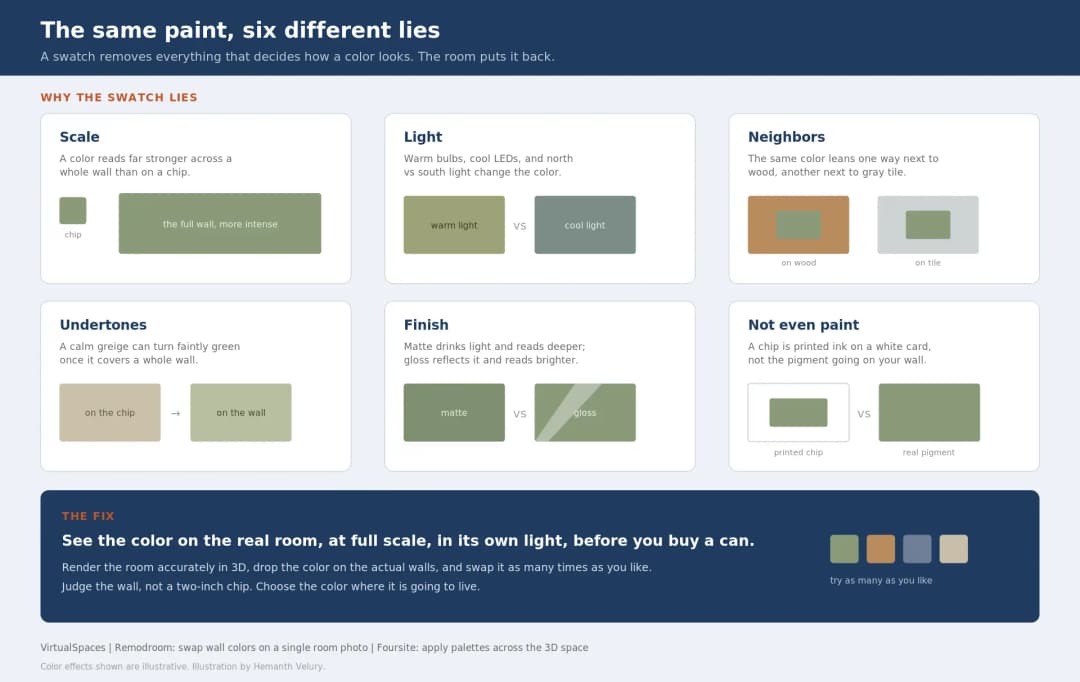
July 22, 2026
Why Paint Swatches Lie: Test Color in 3D First | VirtualSpaces
HHemanth Velury
CEO & Co-Founder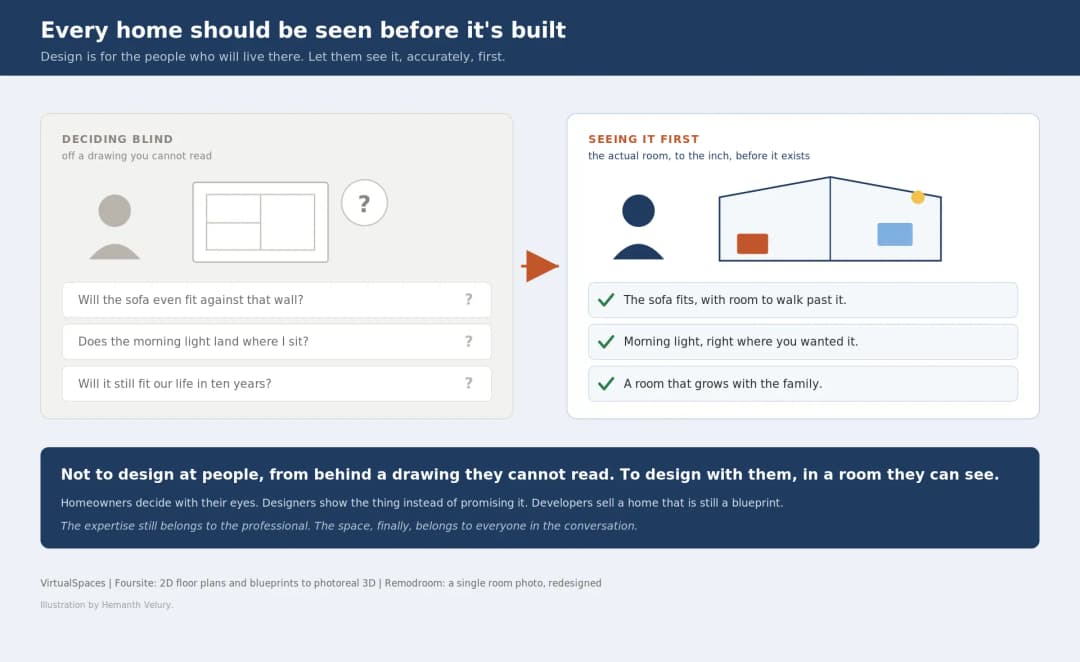
July 20, 2026
Why Every Home Should Be Seen Before It's Built | VirtualSpaces
HHemanth Velury
CEO & Co-Founder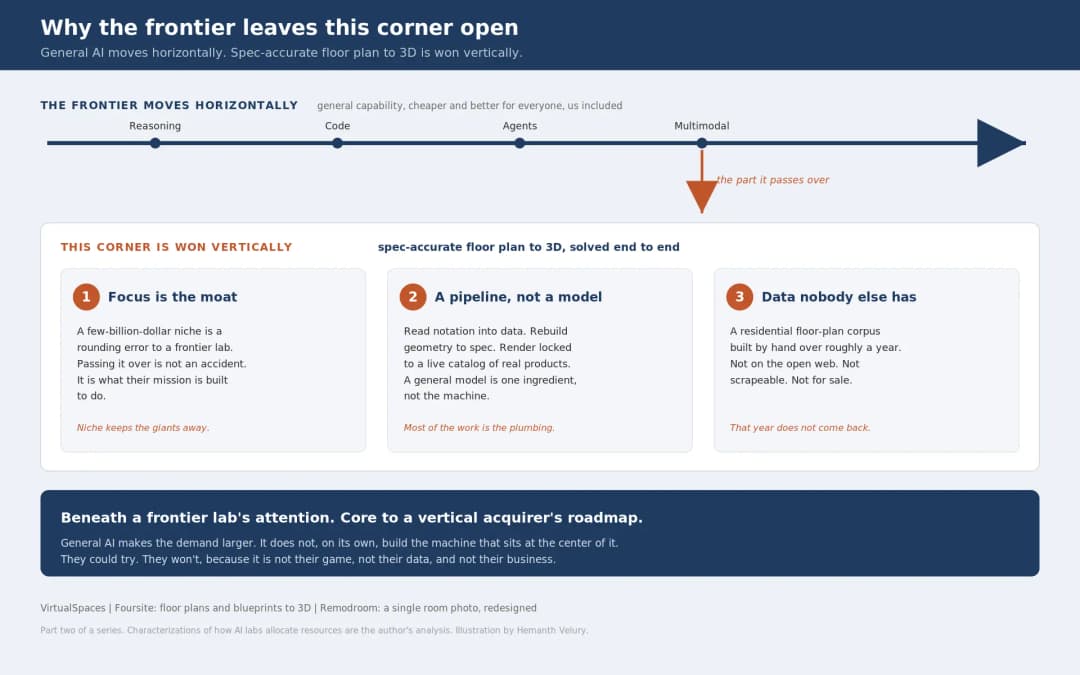
July 17, 2026
Why Big AI Labs Won't Build Floor Plan to 3D | VirtualSpaces
HHemanth Velury
CEO & Co-Founder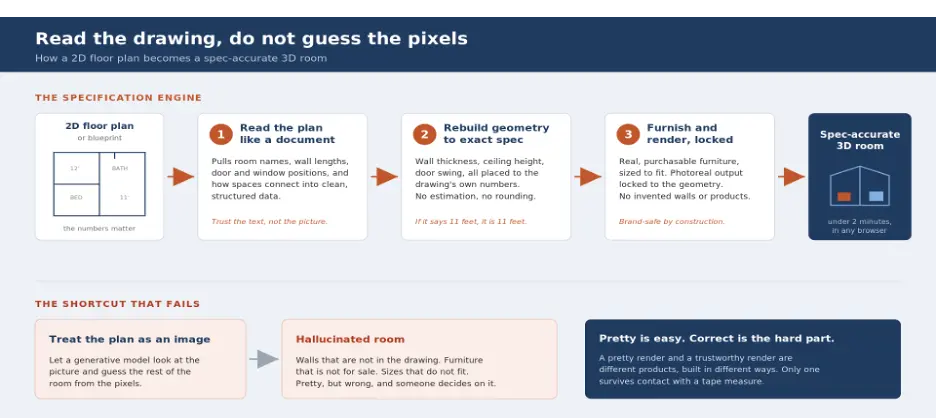
July 15, 2026
How We Solve Floor Plan to 3D, Accurately | VirtualSpaces
HHemanth Velury
CEO & Co-Founder
July 13, 2026
Designing Homes That Age With the People in Them | VirtualSpaces
HHemanth Velury
CEO & Co-Founder
July 10, 2026
Designing Spaces for How Light Actually Moves | VirtualSpaces
HHemanth Velury
CEO & Co-Founder
July 08, 2026
Designing Homes for Every Life Stage in 3D | VirtualSpaces
HHemanth Velury
CEO & Co-Founder
July 06, 2026
Build an Interior Design Portfolio Without Clients | VirtualSpaces
HHemanth Velury
CEO & Co-Founder
June 26, 2026
AI Interior Design: Full 3D Workflow in One Platform | VirtualSpaces
HHemanth Velury
CEO & Co-Founder
June 24, 2026
Scope Creep in Interior Design: How AI Visualization Fixes It | VirtualSpaces
HHemanth Velury
CEO & Co-Founder
June 22, 2026
What Buyers See on a Floor Plan: Your Biggest Sales Problem | VirtualSpaces
HHemanth Velury
CEO & Co-Founder
June 19, 2026
Small Design Studios vs Big Firms: The AI Advantage | VirtualSpaces
HHemanth Velury
CEO & Co-Founder
June 17, 2026
After the Mood Board: AI Interior Visualization | VirtualSpaces
HHemanth Velury
CEO & Co-Founder
June 15, 2026
Foursite Pro Editor: Full Floor Plan Control for Designers | VirtualSpaces
HHemanth Velury
CEO & Co-Founder
June 12, 2026
AI Interior Design: Style Any Room in Seconds with Foursite | VirtualSpaces
HHemanth Velury
CEO & Co-Founder
June 10, 2026
Foursite: Floor Plan to 3D Walkthrough in Minutes | VirtualSpaces
HHemanth Velury
CEO & Co-Founder
June 08, 2026
Win More Pitches With AI Renders Before the Meeting | VirtualSpaces
HHemanth Velury
CEO & Co-Founder
June 05, 2026
From Floor Plan to Finished Room: What AI Now Makes Possible | VirtualSpaces
HHemanth Velury
CEO & Co-Founder
June 03, 2026
The Interior Design Brief Is Broken. AI Fixes It | VirtualSpaces
HHemanth Velury
CEO & Co-Founder
June 01, 2026
Pre-Construction Home Sales: AI Interior Visualization Guide | VirtualSpaces
HHemanth Velury
CEO & Co-Founder
May 30, 2026
Interior Design Principles: Applied with AI | VirtualSpaces
HHemanth Velury
CEO & Co-Founder
May 28, 2026
Designing Spaces for People, Not Blueprints | VirtualSpaces
HHemanth Velury
CEO & Co-Founder
May 26, 2026
The Future of Interior Design: Closing the Visualization Gap with Foursite and Remodroom | VirtualSpaces
HHemanth Velury
CEO & Co-Founder
May 18, 2026
How AI Visualization Upgrades Property Data Platforms | VirtualSpaces
HHemanth Velury
CEO & Co-Founder
May 14, 2026
How AI-First Insurers Can Use 3D Property Data to Transform Home Claims | VirtualSpaces
HHemanth Velury
CEO & Co-FounderMay 12, 2026
Why Photoreal 3D Renders Are Replacing Mood Boards | Interior Design Client Presentations | VirtualSpaces
HHemanth Velury
CEO & Co-Founder
May 08, 2026
From 2D Floor Plans To Living Worlds: The Spec‑Accurate 3D Engine | VirtualSpaces
HHemanth Velury
CEO & Co-Founder
May 06, 2026
Why Furniture Brands Need AI 3D Visualization Now | VirtualSpaces
HHemanth Velury
CEO & Co-Founder
May 4, 2026
How Property Portals Can Turn 2D Floor Plans into 3D Design Decisions | VirtualSpaces
HHemanth Velury
CEO & Co-Founder
April 29, 2026
The Home-Fit Test: Why Square Footage Misleads | VirtualSpaces
HHemanth Velury
CEO & Co-Founder
April 27, 2026
Designing Homes That Sell: 3D Visualization ROI Data | VirtualSpaces
HHemanth Velury
CEO & Co-FounderApril 24, 2026
What's Next: Foursite & Remodroom's New AI Features | VirtualSpaces
HHemanth Velury
CEO & Co-Founder
April 22, 2026
AI in Architecture: Closing the 85% Exposure Gap | VirtualSpaces
HHemanth Velury
CEO & Co-Founder
April 20, 2026
Interior Design Pricing in 2026: From Hourly to Value-Based Fees | VirtualSpaces
HHemanth Velury
CEO & Co-FounderApril 17, 2026
How Foursite and Remodroom Help Designers Win Clients | VirtualSpaces
HHemanth Velury
CEO & Co-Founder
April 15, 2026
Designing Spaces for People: Remodroom + Foursite AI Guide | VirtualSpaces
HHemanth Velury
CEO & Co-Founder
April 13, 2026
Designing for the Way People Actually Live: How AI 3D Is Finally Closing the Gap Between Floor Plan and Reality
HHemanth Velury
CEO & Co-Founder
April 11, 2026
Design in Real Time: AI Renders in Your First Client Meeting
HHemanth Velury
CEO & Co-Founder
April 06, 2026
Why Real Estate Photography Is No Longer Enough: The Shift to Spatial-First Listings
HHemanth Velury
CEO & Co-Founder
April 03, 2026
Property Management's Hidden Weapon: AI 3D Floor Plans That Cut Vacancy Time and Raise Tenant Quality
HHemanth Velury
CEO & Co-Founder
April 01, 2026
Off-Plan and Oversubscribed: How AI 3D Visualization Is Transforming Real Estate Pre-Sales
HHemanth Velury
CEO & Co-Founder
March 30, 2026
Why Foursite Beats Generic AI Tools for Interior Design 3D Visualization
HHemanth Velury
CEO & Co-Founder
March 27, 2026
7 Tenets of Interior Design: How AI Accelerates Harmony in Residential Spaces
HHemanth Velury
CEO & Co-Founder
March 25, 2026
What Is the 3-5-7 Rule in Interior Design? Foursite's AI Guide for Residential Spaces
HHemanth Velury
CEO & Co-Founder
March 23, 2026
What Is the 70/30 Rule in Interior Design? Foursite's AI Guide for Residential Spaces
HHemanth Velury
CEO & Co-Founder
March 20, 2026
How AI 3D Visualization Is Rewriting Residential Interior Design Workflows
HHemanth Velury
CEO & Co-Founder
March 18, 2026
Beyond Marketing: How 3D Floorplans Transform FM, Retrofit Planning & ESG Operations
HHemanth Velury
CEO & Co-Founder
March 13, 2026
Floorplan‑Native Digital Twins: Beyond BIM for Consumer‑Ready Real Estate Experiences
HHemanth Velury
CEO & Co-Founder
March 11, 2026
The Foursite Platform Thesis: Why Floor Plans, Not Photos, Are the Next Property Software Primitive
HHemanth Velury
CEO & Co-Founder
March 09, 2026
Design Systems for Space: Building Reusable 3D Component Libraries on Top of AI Floorplan‑to‑3D Engines
HHemanth Velury
CEO & Co-Founder
March 06, 2026
How to Standardize Design Quality Across Global Projects Using AI Floorplan-to-3D Tools
HHemanth Velury
CEO & Co-Founder
March 04, 2026
From CAD-First to AI-First: Reskilling Your Team for AI-Native Design Workflows
HHemanth Velury
CEO & Co-Founder
March 02, 2026
Algorithmic Ergonomics Meets Photorealistic 3D: Designing Human-Centered Smart Homes with Foursite in 2026
HHemanth Velury
CEO & Co-Founder
February 27, 2026
The Ethics of AI in Interior Design: Ownership, Originality, and Client Transparency
HHemanth Velury
CEO & Co-Founder
February 25, 2026
Designing with Empathy: Using AI 3D Visualization to Improve Client Communication and Emotional Clarity
HHemanth Velury
CEO & Co-Founder
February 23, 2026
From Tool to Infrastructure: AI Floorplan-to-3D and the Next Wave of PropTech
HHemanth Velury
CEO & Co-Founder
February 20, 2026
AI Interior Design for Holiday Homes: Turn Spare Flats into High-Demand Short-Stay Rentals with 3D Visuals
HHemanth Velury
CEO & Co-Founder
February 18, 2026
The Pre‑Purchase Power Play: How Savvy Home Buyers Use 3D Floor Plan Visualization to Negotiate Better Deals
HHemanth Velury
CEO & Co-FounderFebruary 16, 2026
AI Interior Design for Non‑Designers: How Homeowners Can Brief Like Pros
HHemanth Velury
CEO & Co-Founder
February 13, 2026
Scaling a Design Business Without Hiring a 3D Team: An Owner's Guide
HHemanth Velury
CEO & Co-Founder
February 11, 2026
From Bland to Bold: How to Rescue Builder-Grade Interiors on Any Budget
HHemanth Velury
CEO & Co-Founder
February 6, 2026
The Psychology of Space: How Room Dimensions Influence Interior Design Decisions
HHemanth Velury
CEO & Co-Founder
February 4, 2026
The Future of Interior Design Visualization: How AI Technology is Transforming 2D Concepts Into 3D Reality
HHemanth Velury
CEO & Co-Founder
February 2, 2026
AI Interior Décor: How Artificial Intelligence Generates Design Options from Your Floor Plan
HHemanth Velury
CEO & Co-Founder
January 30, 2026
Photoreal vs. Reality: What Clients Actually Expect from Interior Design Visualization
HHemanth Velury
CEO & Co-Founder
January 28, 2026
The Design Approval Conversation That Changes Everything: Communication Strategy When Using Photorealistic Visualization
HHemanth Velury
CEO & Co-Founder
January 25, 2026
Interior Design as Experience Design: How 3D Visualization Changes Your Professional Identity
HHemanth Velury
CEO & Co-Founder
January 23, 2026
The Professional Gap: How 3D Visualization Changes Interior Design Client Perception
HHemanth Velury
CEO & Co-Founder
January 21, 2026
Why Clients Fire Designers (And How 3D Visualization Could Have Saved the Project)
HHemanth Velury
CEO & Co-Founder
January 16, 2026
Blueprint to Vision: Why Seeing Is Believing in Interior Design
HHemanth Velury
CEO & Co-Founder
January 14, 2026
The Speed of Responsiveness: How AI Visualization Tools Make You Look Like You Care More
HHemanth Velury
CEO & Co-Founder
January 12, 2026
Why Interior Designers and Architects Can't Compete Without AI 3D Visualization Tools
HHemanth Velury
CEO & Co-Founder
January 07, 2026
From "Saved" to "Sold": How Homeowners Are Planning Renovations with AI
HHemanth Velury
CEO & Co-Founder
January 05, 2026
The Interior Designer's Secret Weapon: Speed as Premium Positioning
HHemanth Velury
CEO & Co-Founder
December 31, 2025
Gratitude, Growth & Game-Changing Innovation: VirtualSpaces' 2025 Journey & What's Coming in 2026
HHemanth Velury
CEO & Co-Founder
December 29, 2025
Why Interior Designers Are Switching to AI Floor Plan-to-3D Tools in 2026
HHemanth Velury
CEO & Co-Founder
December 26, 2025
AI Virtual Staging for Real Estate Agents: Sell More Homes Faster with Foursite
HHemanth Velury
CEO & Co-Founder
December 24, 2025
Why Architects Are Switching to AI 2D-to-3D: The SketchUp Alternative
HHemanth Velury
CEO & Co-Founder
December 22, 2025
Cut 3 Weeks from Real Estate Sales Cycle: The ROI of AI 2D to 3D Visualization
HHemanth Velury
CEO & Co-Founder
December 19, 2025
2D Floor Plans Are Dying: Why 3D Visualization & AI Virtual Staging Are the Future
HHemanth Velury
CEO & Co-Founder
December 17, 2025
Virtual Staging vs Physical Staging: How AI Saves Money Per Property
HHemanth Velury
CEO & Co-Founder
December 15, 2025
AI Floor Plan to Image: Revolutionizing Real Estate Marketing for Agents
HHemanth Velury
CEO & Co-Founder
December 12, 2025
Color of the Year 2026: Cloud Dancer | VirtualSpaces AI Interior Design Guide
HHemanth Velury
CEO & Co-Founder
December 10, 2025
AI Floor Plan to 3D: The New Standard for Interior Design Workflows
HHemanth Velury
CEO & Co-Founder
December 08, 2025
How Interior Design Studios Can Operationalize AI 2D-to-3D Workflows (Without Breaking Their Process)
HHemanth Velury
CEO & Co-Founder
December 06, 2025
How to Implement AI Interior Design Workflows in Your Studio
HHemanth Velury
CEO & Co-Founder
December 4, 2025
How Homeowners Can Use AI Interior Design Tools to Plan Renovations with Confidence
HHemanth Velury
CEO & Co-Founder
November 28, 2025
Interior Designers in the Age of AI: From Threat Narrative to Superpower
HHemanth Velury
CEO & Co-Founder
November 21, 2025
Foursite Launch: Embracing 'Release Early, Release Often'
HHemanth Velury
CEO & Co-Founder
November 13, 2025
Foursite by VirtSpaces: Empowering Interior Designers, Architects, and Homeowners
HHemanth Velury
CEO & Co-Founder
November 7, 2025
Reimagining Architectural Education: How AI Floorplan-to-3D Technology Can Transform Design Learning
VVirtualSpaces Research Labs
AI Research Initiative
October 27, 2025
Archisculpt AI: Turning Architectural Drawings into Photorealistic 3D Spaces
AAbhijeet Naik
Co-Founder & CTO
October 13, 2025
Home Makeover: From Floor Plan to Dream Space with AI
HHemanth Velury
CEO & Co-Founder
October 6, 2025
Real-Time Rendering & AI: Revolutionizing Interactive Property Walkthroughs with VirtSpaces
HHemanth Velury
CEO & Co-Founder
September 26, 2025
Foursite - A True AI-Native Experience in Design Visualization
AAbhijeet Naik
CTO & Co-Founder
September 18, 2025
Why PropTech Startups Are Betting on AI Interior Design
HHemanth Velury
CEO & Co-Founder
September 11, 2025
How AI Differs from Traditional 3D Rendering Software
HHemanth Velury
CEO & Co-Founder
September 2, 2025
From Client to Investor: How Nila Spaces and VirtSpaces Are Redefining Proptech with AI
HHemanth Velury
CEO & Co-Founder
August 25, 2025
VirtSpaces From Virtual Reality to AI – Transforming Real Estate Visualization.
HHemanth Velury
CEO & Co-Founder


We help teams collaborate seamlessly and reduce costs. Virtual Spaces offers cutting-edge technology with flexible plans designed to fit modern teams.
Copyright © VirtSpaces Pvt. Ltd. 2025 All Rights Reserved.
CIN: U74999KA2016PTC094921