
March 18, 2026
- Interior Design
- AI Technology
- Real Estate
Beyond Marketing: How 3D Floorplans Transform FM, Retrofit Planning & ESG Operations
Hemanth Velury
CEO & Co-FounderBeyond Marketing: Operational Use Cases for Floorplan-Native 3D Across the Real Estate Lifecycle
For years, 3D visualization has been the darling of marketing departments. Developers use photorealistic interior design renders to dazzle potential buyers. Real estate agents deploy AI virtual staging to accelerate sales cycles. Interior designers create stunning visual narratives that tell the story of spaces not yet built. These applications are valuable, undeniably. But they represent just the surface of what floorplan-native 3D technology can accomplish.
There's a quieter revolution happening in real estate: One that doesn't show up in glossy brochures or virtual staging portfolios. It's happening in facilities management offices, retrofit planning sessions, compliance audits, and asset operations boardrooms. This is where 3D visualization technology, when rooted in accurate floorplan data, becomes something far more powerful than a marketing tool: it becomes an operational necessity.
As an interior designer navigating the modern real estate landscape, you're likely aware that your role extends beyond aesthetics. You're increasingly expected to think like an operator. You need to understand how spaces function across their entire lifecycle: Initial concept through decades of operations. This shift in expectations creates both challenge and opportunity. Understanding how to leverage floorplan-native 3D technology across operations can position you as an invaluable partner to clients who care about long-term value, not just opening-day impressions.
The Market Shift: Why Operations Matter Now
For decades, real estate development followed a linear progression: design, build, market, sell. The industry's relationship with visualization technology mirrored this progression, visualization meant marketing. You created beautiful images to help clients imagine spaces. That's still true. But the industry's center of gravity has shifted.
Today's real estate stakeholders face unprecedented operational challenges. ESG compliance has become non-negotiable for institutional investors. Energy efficiency regulations tighten annually. Facility management budgets demand evidence of ROI, not intuition. Buildings face faster obsolescence and more frequent adaptive reuse. Supply chain complexity has made retrofit planning exponentially more difficult. These aren't marketing problems. They're operational crises disguised as everyday management challenges.
And here's what's changed: technology has made it possible to solve these operational problems through visualization. Not just any visualization, but visualization that starts with accurate 2D floor plans and converts them into actionable 3D models. Platforms like Foursite have recognized this shift and built tools specifically designed for professionals who need to translate spatial data into operational intelligence.
This is where interior designers enter a new domain of value creation.
Facilities Management: From Reactive to Anticipatory
Traditional facilities management operates on a reactive model. Something breaks, you fix it. A system fails, you respond. This costs money. It creates downtime. It frustrates occupants. It often violates SLAs.
But what if you could see inside your building in 3D before something went wrong?
Facilities managers now have access to tools that convert floor plans into 3D models that serve as digital twins of physical spaces. Imagine conducting a maintenance inspection not by visiting every room but by navigating a 3D visualization of your building layout. You can identify the location of HVAC systems, electrical panels, emergency routes, and asset proximity: all from your office.
This is where blueprint to 3D conversion becomes operationally critical. When a facilities manager converts a 2D floor plan to 3D using AI-powered tools, they're not creating a design artifact. They're building a diagnostic instrument.
The operational benefits stack quickly:
-
Preventive Maintenance Accuracy: When maintenance staff have a 3D model showing exactly where assets are located, what they connect to, and their proximity to other systems, they can plan interventions with surgical precision. No more wasted hours searching for equipment or discovering last-minute conflicts.
-
Space Utilization Optimization: 3D floor plans provide facilities teams with precise spatial data. Are you maximizing your floorspace? Could you reconfigure a department to reduce bottlenecks? Would relocating a breakroom improve employee flow? These questions become answerable through spatial analysis.
-
Training and Onboarding: New facilities staff can navigate buildings virtually before ever visiting them physically. They understand layouts, system locations, and emergency routes before their first day. This reduces errors, improves safety, and accelerates competency development.
-
Emergency Response Planning: When emergency situations occur: Fires, medical events, security incidents, first responders need to understand building layout instantly. 3D models extracted from floor plans provide that intelligence in seconds. They see evacuation routes, identify bottlenecks, and locate critical systems.
Interior designers working with facilities management teams can architect these 3D models to emphasize operational logic. Highlighting system zones, access routes, and functional adjacencies creates 3D floor plans that speak fluently to operational needs.
Retrofit Planning: Turning Legacy Buildings into Future Assets
Real estate's retrofit challenge is staggering. Millions of buildings constructed decades ago now need dramatic updates to meet modern standards. These retrofits are expensive, complex, and high-risk. Any errors in planning can balloon costs and create extended downtime for occupants.
This is where floor plan to 3D conversion becomes transformational.
Retrofit planning traditionally relied on static 2D drawings, contractor site visits, and a lot of guesswork. Teams would propose changes on paper, contractors would discover conflicts on-site, and projects would expand in scope and cost. The conversion from blueprint to actionable planning was manual, slow, and error-prone.
Today, retrofit planners can use AI to convert floor plans to 3D, then run spatial scenarios instantly. Want to reconfigure office layouts to support hybrid work? Visualize it in 3D. Planning HVAC system upgrades? See how ductwork routes through the space before ordering materials. Need to upgrade electrical infrastructure for EV charging stations? Map capacity across the entire floor.
These aren't speculative visualizations. They're grounded in real spatial geometry. The 2D to 3D conversion preserves dimensional accuracy. When planners evaluate retrofit options in 3D, they're working with geometry that matches reality.
For interior designers, this creates a new professional role: retrofit visualization specialist. Your ability to translate operational requirements into 3D spatial models directly influences retrofit success. You become the bridge between what operators need and what contractors can build.
The operational value is measurable:
-
Reduced Rework: When conflicts are discovered virtually rather than on-site, total project costs typically decline 15-20% based on industry reports tracking BIM and 3D visualization adoption.
-
Accelerated Timelines: Design iterations that took weeks on 2D blueprints now take hours in 3D. Decision-making speed directly impacts project completion.
-
Contractor Confidence: Contractors bidding retrofit work gain certainty from detailed 3D models. This confidence typically results in 10-15% more competitive pricing and reduces contingency buffers.
-
Occupant Satisfaction: Phased retrofit strategies become visualizable in 3D. You can show occupants exactly what to expect in each phase, reducing disruption anxiety and cooperation challenges.
ESG Compliance and Sustainable Asset Operations
Environmental, Social, and Governance (ESG) compliance has evolved from corporate nicety to investment requirement. Institutional real estate investors now demand evidence of ESG performance. Regulatory frameworks increasingly mandate specific environmental metrics. Green certifications require documentation that was previously impossible to generate at scale.
This is where 3D floor plans meet sustainability operations.
Consider energy efficiency. Building owners must demonstrate annual energy consumption per square foot. Regulators require proof of HVAC system upgrades. Investors want to see evidence of lighting efficiency improvements. Tenants demand transparency about environmental impact.
When you convert floor plans to 3D with accuracy, you create the foundation for energy modeling. 3D models can automatically calculate volume, surface area, and exposure. They can simulate occupancy patterns spatially. They can demonstrate lighting efficiency improvements before implementation. The 3D model becomes the evidence repository for ESG compliance.
Similarly, water management, waste tracking, and occupant wellness programs all benefit from spatial intelligence grounded in accurate 3D floor plans. You're creating a digital representation of the building that, combined with IoT sensor data and operational metrics, becomes a complete ESG performance engine.
For interior designers, this represents a strategic expansion of professional scope. You're no longer designing interiors. You're designing sustainable spatial systems. Your 3D visualizations serve as the foundation for long-term operational performance tracking.
The ESG angle appeals directly to stakeholders focused on risk reduction and measurable performance impact. Real estate companies that can leverage 3D floor plans to drive operational efficiency and ESG compliance become more attractive to mission-driven investors. A facilities team that can demonstrate energy savings through retrofit planning becomes more valuable to its organization.
Asset Operations: The Command Center Reimagined
Asset operations teams manage portfolios containing hundreds or thousands of buildings. They track maintenance schedules, monitor performance metrics, compare operational efficiency across properties, and make capital allocation decisions. Traditionally, this work relied on databases, spreadsheets, and reports, all abstracted from physical reality.
3D floor plans transform this dynamic entirely.
Imagine a portfolio management dashboard where each building isn't a row in a spreadsheet but a navigable 3D space. Asset operations teams can compare building layouts side-by-side, identify optimization opportunities through spatial comparison, and make evidence-based decisions about capital deployment. When a maintenance emergency occurs at a specific property, the team doesn't read a description, they see the building spatially and understand implications instantly.
This is where AI interior design visualization intersects with operational intelligence. The 3D visualization system understands the spatial logic of the building. It knows which spaces are high utilization, which are underutilized, which face performance challenges. This intelligence, captured in visual form and embedded in 3D floor plans, becomes a competitive advantage for asset operations teams.
For interior designers working with asset operations groups, this creates opportunities to specialize in spatial efficiency analysis. You're helping teams understand not just how spaces look, but how spaces perform operationally across time and usage patterns.
The Technology Foundation: Why Floorplan-Native Matters
Not all 3D visualization is equal. The distinction between design-oriented 3D tools and operationally-grounded tools matters significantly.
Design-oriented 3D visualization excels at aesthetics. You can generate photorealistic interior design renders that show how a space will feel, what materials will look like under specific lighting, how furniture arrangements will function. These visualizations are phenomenal for client communication. You can deploy AI virtual staging to show potential buyers what a space could become. You can create stunning interior design photoreal renders that win design awards.
But they're often built from design intent, not spatial geometry. A beautiful render doesn't necessarily reflect actual dimensions, clearances, or system locations.
Floorplan-native 3D tools work differently. They start with 2D floor plans: Blueprints that contain dimensional accuracy. They automatically convert these blueprints to 3D models while preserving geometric fidelity. The resulting 3D visualization is operationally trustworthy because it's dimensionally accurate.
This distinction matters enormously for operational use cases. A facilities manager doesn't care if a 3D visualization looks photorealistic if the equipment location is wrong by three feet. An ESG analyst doesn't benefit from beautiful renders if the room volume calculation is inaccurate. A retrofit planner can't work from visualizations where spatial relationships are aesthetically tweaked rather than geometrically precise.
For interior designers adapting to this operational shift, understanding the distinction between design-oriented and operationally-grounded 3D visualization is critical. Your value proposition expands when you can deliver both: beautiful interior design visualizations for marketing AND accurate 3D floor plans for operations. You become the professional who bridges the creative and operational sides of real estate.
The Interior Designer's Expanded Role
Here's what this shift means for you as an interior design professional:
Your expertise is no longer confined to aesthetics and user experience. Yes, those remain important. But increasingly, clients expect interior designers to understand operational implications of spatial decisions.
When you recommend a specific office layout configuration, clients will ask: How does this affect FM efficiency? What's the impact on ESG metrics? Does this optimize space utilization? You should be able to answer these questions with data, not intuition.
This creates new professional opportunities:
-
Operational Design Specialist: Interior designers who understand facilities management needs and can architect spaces for operational efficiency command premium fees and longer-term client relationships.
-
Retrofit Strategy Consultant: When buildings undergo major upgrades, retrofit strategies that account for operational requirements are vastly superior to aesthetic-only approaches. Interior designers with retrofit expertise become essential to project success.
-
ESG Performance Designer: As buildings must demonstrate measurable environmental performance, interior designers who can show how spatial decisions impact energy use, water consumption, and occupant wellness become strategic resources for sustainability-focused organizations.
-
Asset Optimization Advisor: For portfolio-level real estate companies managing multiple properties, interior designers who can identify operational inefficiencies through spatial analysis drive measurable value and influence capital allocation decisions.
All of these roles leverage the same core skill: the ability to visualize spaces accurately and understand how design decisions cascade into operational outcomes.
The Workflow: From Blueprint to Operational Intelligence
Here's what this workflow looks like in practice:
-
Acquire Floor Plan Data: Your starting point is existing floor plans: typically in 2D format (PDF, DWG, or similar). These might be decades old or recently updated. The accuracy varies, but the format is standardized.
-
Convert to 3D Model: Using AI tools, you upload the 2D floor plan and initiate automated conversion. AI systems recognize walls, doors, windows, and room boundaries. Within minutes, you have a 3D model that preserves the dimensional accuracy of the original blueprint. This blueprint to 3D process eliminates manual modeling work and ensures consistency.
-
Enrich with Operational Context: Now you annotate the 3D model with operational information. You mark system locations (HVAC, electrical, plumbing). You note high-traffic zones. You identify functional adjacencies that support operations. You can color-code zones by function or operational category. This layer of annotation transforms a basic 3D visualization into an operational intelligence system.
-
Analyze and Optimize: Using the 3D model as a foundation, you can visualize spatial scenarios. Need to reconfigure office layouts? Virtually rearrange. Planning equipment replacement? Visually confirm clearances. Designing emergency routes? See them spatially in context. The ability to run these scenarios in 3D with accurate geometry accelerates decision-making dramatically.
-
Generate Operational Outputs: From the 3D model, you can extract multiple outputs: accurate floorplans for contractor use, space utilization data for FM teams, energy modeling inputs for ESG analysis, or beautiful AI interior design visualizations for stakeholder communication. The single source of truth (the accurate 3D model) can serve many downstream purposes.
This workflow is radically faster and more accurate than traditional processes. What used to require weeks of back-and-forth now happens in days. What used to depend on site visits and manual measurement now emerges from data.
Why This Matters to Your Practice Now
The real estate industry is in the early stages of a profound shift. Marketing-oriented visualization will always exist: Clients will always want beautiful renders and AI virtual staging. But the future belongs to professionals who can deliver operational value through visualization.
Interior designers positioned at this intersection, combining aesthetic excellence with operational intelligence, will find their services increasingly valuable and their client relationships increasingly strategic. You're not just creating spaces that look good. You're creating spaces that perform efficiently, comply with regulations, and deliver measurable operational ROI.
The tools are mature. Platforms like Foursite have invested heavily in making 2D to 3D conversion seamless and accurate. The technology works. What's needed now are professionals who understand both the creative and operational sides deeply enough to deploy these tools effectively.
This is your moment to evolve. The interior designers who spend the next 18 months building expertise in operational visualization: In facilities management workflows, retrofit planning methodologies, ESG compliance frameworks, and asset operations management will be the strategic advisors of 2027 and beyond.
Start with existing projects. Take a floor plan from a recent project. Convert it to 3D using available tools. Ask yourself: What operational questions could this 3D model answer? Who in the client organization needs this type of operational intelligence? What value would accurate, operational 3D visualization create for them?
You'll likely discover that your clients need this capability more than they currently realize. They're struggling with facilities challenges, retrofit complexity, and ESG documentation. You can solve these problems. Your design expertise can unlock operational value.
Beyond Marketing, Toward Operations
The shift from design and visualization toward operations, facilities planning, retrofit planning, ESG compliance, and asset operations is well underway in real estate. Early adopters: companies that leverage accurate, floorplan-native 3D visualization for operational purposes are discovering measurable competitive advantages in cost savings, timeline acceleration, and operational efficiency.
Interior designers who position themselves as operational visualization experts will find themselves increasingly central to these initiatives. You'll work on higher-value projects. You'll command strategic influence. You'll drive measurable business impact.
The technology, from 2D to 3D conversion, to AI-powered interior design 3D visualization, to photorealistic interior design renders has advanced to the point where these operational applications are no longer theoretical. They're practical, implementable, and delivering results today.
Your next move is to understand these operational applications deeply. Learn how facilities managers think about space. Understand retrofit planning methodology. Grasp ESG compliance requirements. Recognize how asset operations teams evaluate performance. Then build your expertise and service offerings around helping clients solve these operational challenges through spatial visualization.
The marketing use cases for 3D visualization will always exist. But the economic value, the strategic importance, and the growth opportunity increasingly lies in operational applications. That's where you should be directing your professional development.
That's where the future of interior design is being written.
Note: VirtualSpaces and Foursite currently focuses on 3D visualization for residential spaces, and we're not yet at the stage where Foursite can model HVAC systems, electrical conduits, or plumbing lines. That capability, along with adding the commercial space capability is on our roadmap. What we want to highlight, though, is the underlying potential of AI 3D visualization itself: A foundation we believe will soon support rich, fully detailed models of buildings and interiors. In the future, the same technology will be able to serve everyone from emergency responders who need instant spatial awareness to interior designers planning retrofits for homes and commercial spaces.
Recommended for you

August 19, 2026
The End of the Model Home? 3D Changes the Math | VirtualSpaces
HHemanth Velury
CEO & Co-Founder
August 17, 2026
Designing Spaces That Actually Get Built | VirtualSpaces
HHemanth Velury
CEO & Co-Founder
August 12, 2026
Designing Homes for the Stuff People Actually Own | VirtualSpaces
HHemanth Velury
CEO & Co-Founder
August 07, 2026
Floor Plan to Bill of Materials: The 3D Model as Data | VirtualSpaces
HHemanth Velury
CEO & Co-Founder.png&w=1080&q=75)
August 05, 2026
Designing Homes for How People Actually Live | VirtualSpaces
HHemanth Velury
CEO & Co-Founder
August 03, 2026
Honest by Design: Trust in AI Real Estate Imagery | VirtualSpaces
HHemanth Velury
CEO & Co-Founder
July 29, 2026
Kitchen and Bath: The Two Rooms That Decide Resale | VirtualSpaces
HHemanth Velury
CEO & Co-Founder
July 27, 2026
Why Empty Rooms Don't Sell: Virtual Staging | VirtualSpaces
HHemanth Velury
CEO & Co-Founder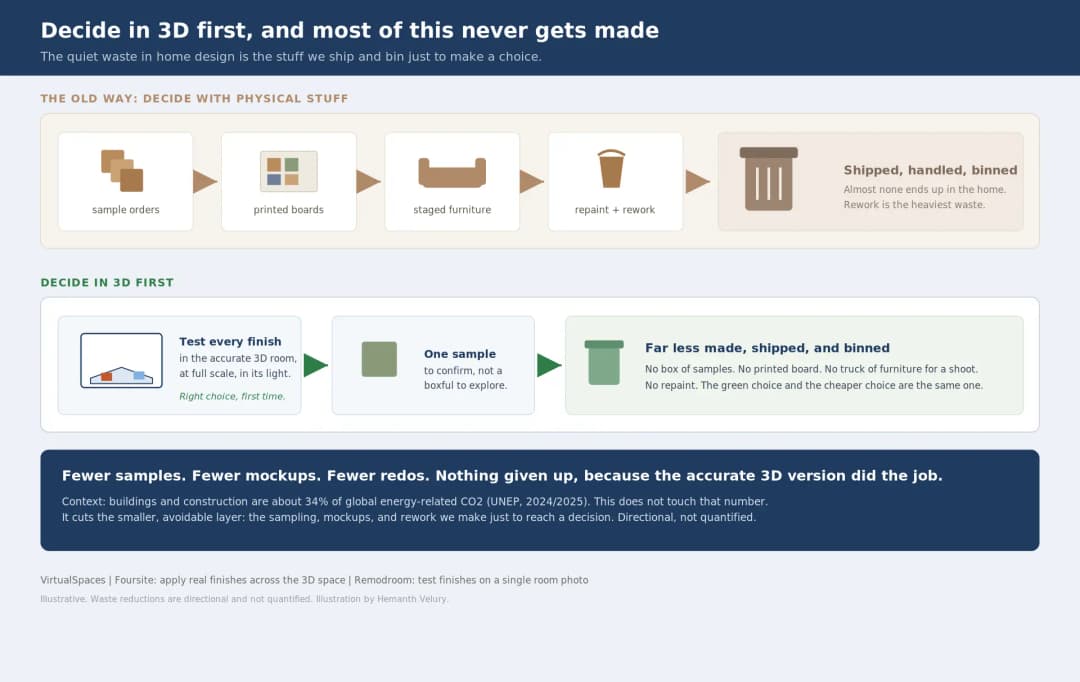
July 24, 2026
The Quiet Sustainability Win of Deciding in 3D | VirtualSpaces
HHemanth Velury
CEO & Co-Founder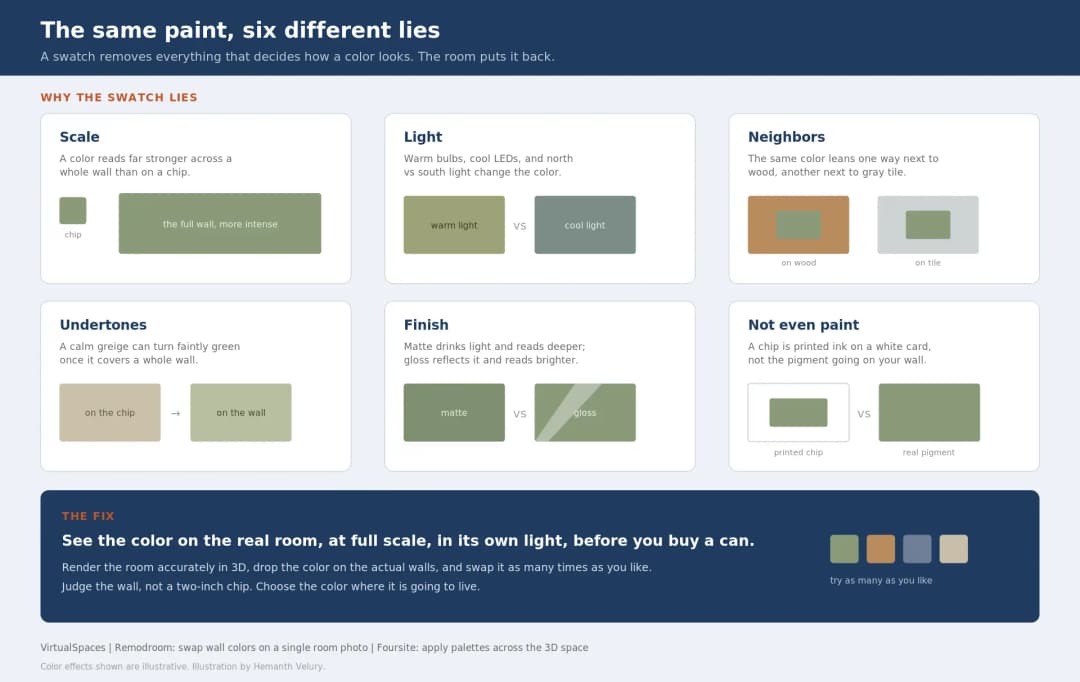
July 22, 2026
Why Paint Swatches Lie: Test Color in 3D First | VirtualSpaces
HHemanth Velury
CEO & Co-Founder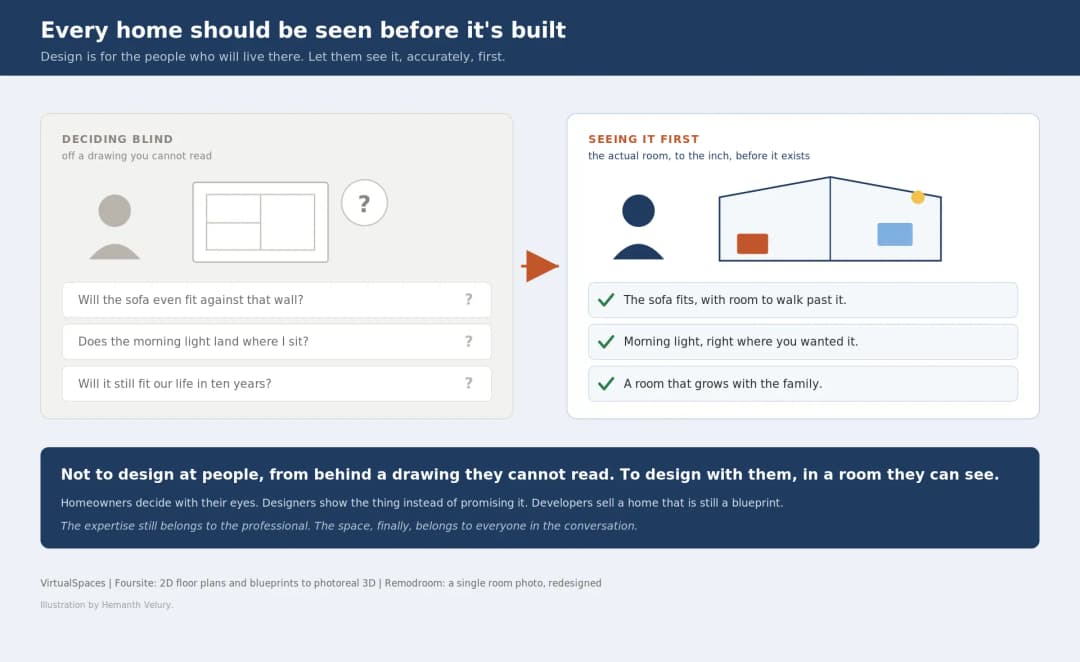
July 20, 2026
Why Every Home Should Be Seen Before It's Built | VirtualSpaces
HHemanth Velury
CEO & Co-Founder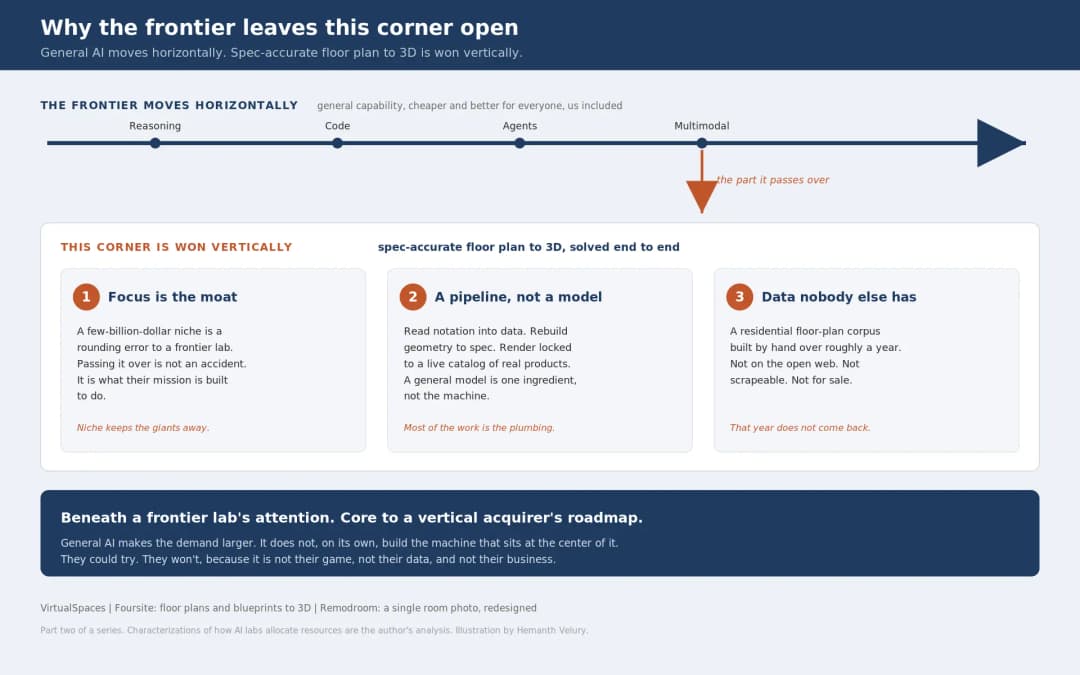
July 17, 2026
Why Big AI Labs Won't Build Floor Plan to 3D | VirtualSpaces
HHemanth Velury
CEO & Co-Founder
July 15, 2026
How We Solve Floor Plan to 3D, Accurately | VirtualSpaces
HHemanth Velury
CEO & Co-Founder
July 13, 2026
Designing Homes That Age With the People in Them | VirtualSpaces
HHemanth Velury
CEO & Co-Founder
July 10, 2026
Designing Spaces for How Light Actually Moves | VirtualSpaces
HHemanth Velury
CEO & Co-Founder
July 08, 2026
Designing Homes for Every Life Stage in 3D | VirtualSpaces
HHemanth Velury
CEO & Co-Founder
July 06, 2026
Build an Interior Design Portfolio Without Clients | VirtualSpaces
HHemanth Velury
CEO & Co-Founder
June 26, 2026
AI Interior Design: Full 3D Workflow in One Platform | VirtualSpaces
HHemanth Velury
CEO & Co-Founder
June 24, 2026
Scope Creep in Interior Design: How AI Visualization Fixes It | VirtualSpaces
HHemanth Velury
CEO & Co-Founder
June 22, 2026
What Buyers See on a Floor Plan: Your Biggest Sales Problem | VirtualSpaces
HHemanth Velury
CEO & Co-Founder
June 19, 2026
Small Design Studios vs Big Firms: The AI Advantage | VirtualSpaces
HHemanth Velury
CEO & Co-Founder
June 17, 2026
After the Mood Board: AI Interior Visualization | VirtualSpaces
HHemanth Velury
CEO & Co-Founder
June 15, 2026
Foursite Pro Editor: Full Floor Plan Control for Designers | VirtualSpaces
HHemanth Velury
CEO & Co-Founder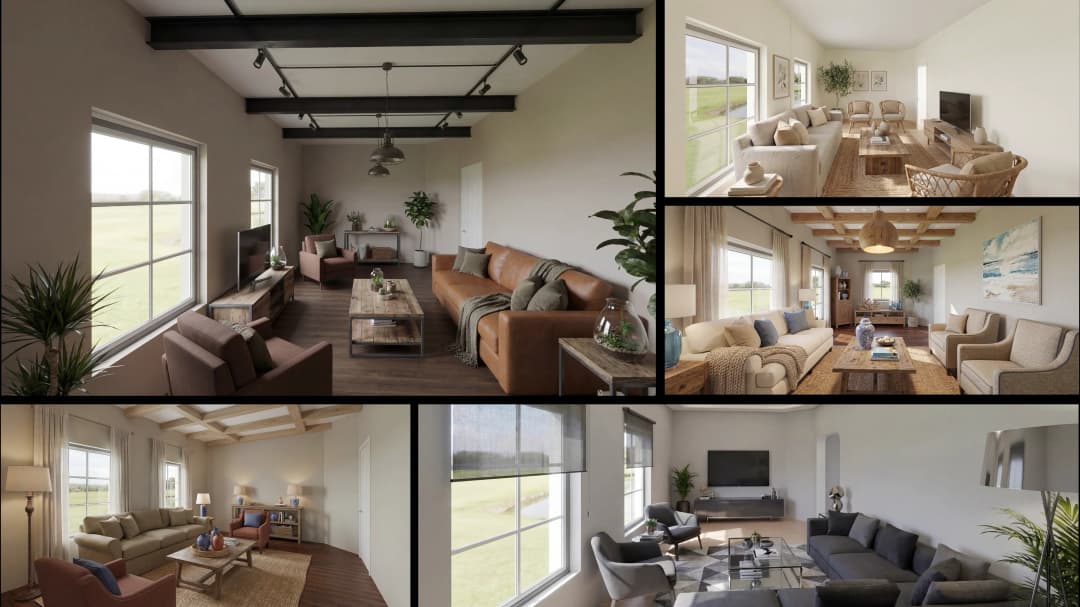
June 12, 2026
AI Interior Design: Style Any Room in Seconds with Foursite | VirtualSpaces
HHemanth Velury
CEO & Co-Founder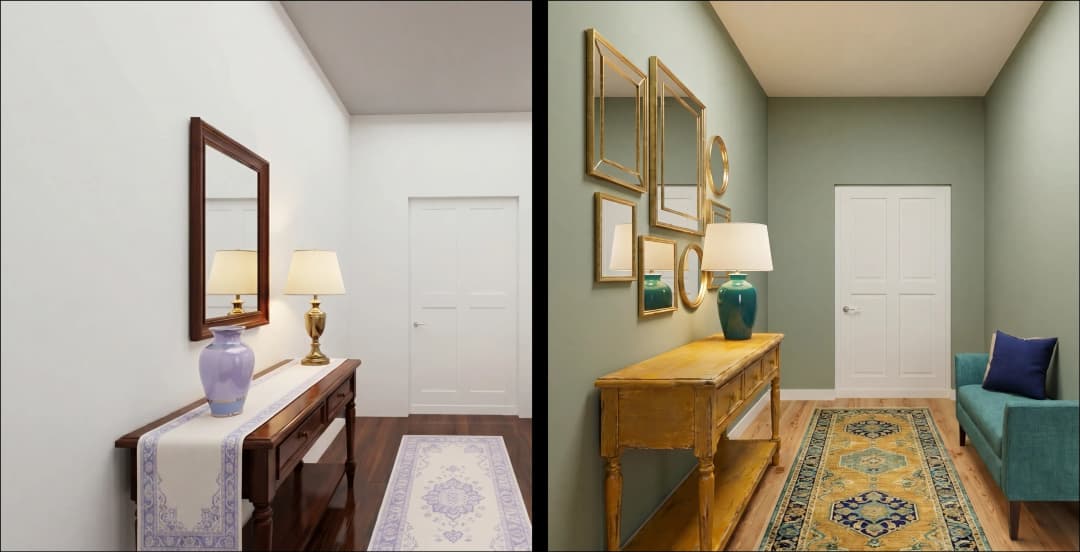
June 10, 2026
Foursite: Floor Plan to 3D Walkthrough in Minutes | VirtualSpaces
HHemanth Velury
CEO & Co-Founder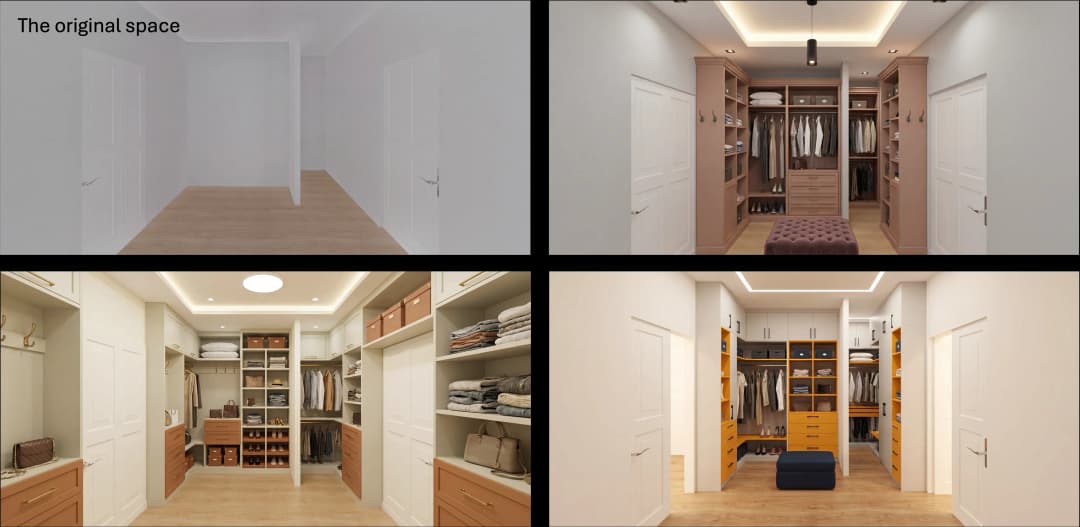
June 08, 2026
Win More Pitches With AI Renders Before the Meeting | VirtualSpaces
HHemanth Velury
CEO & Co-Founder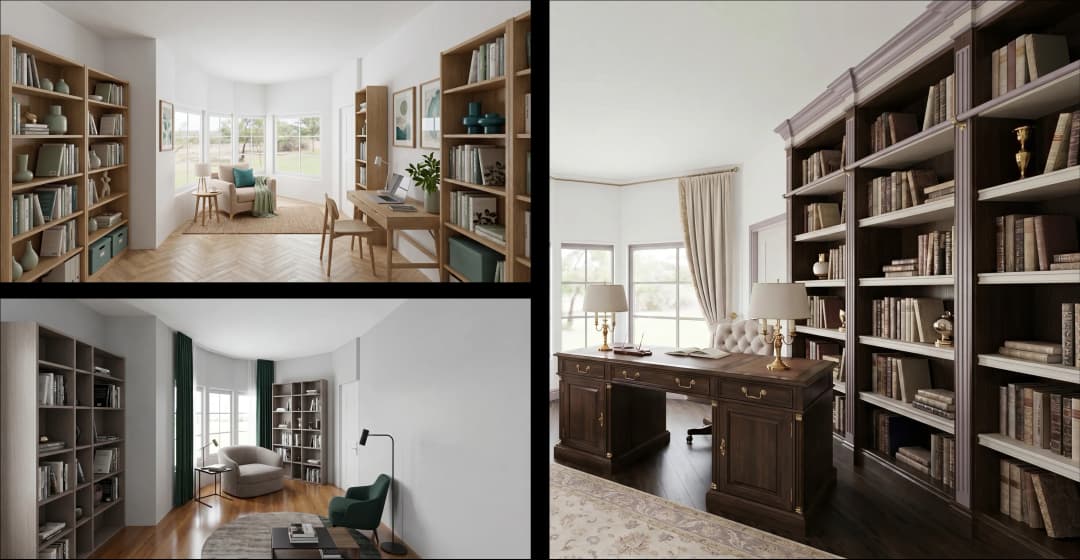
June 05, 2026
From Floor Plan to Finished Room: What AI Now Makes Possible | VirtualSpaces
HHemanth Velury
CEO & Co-Founder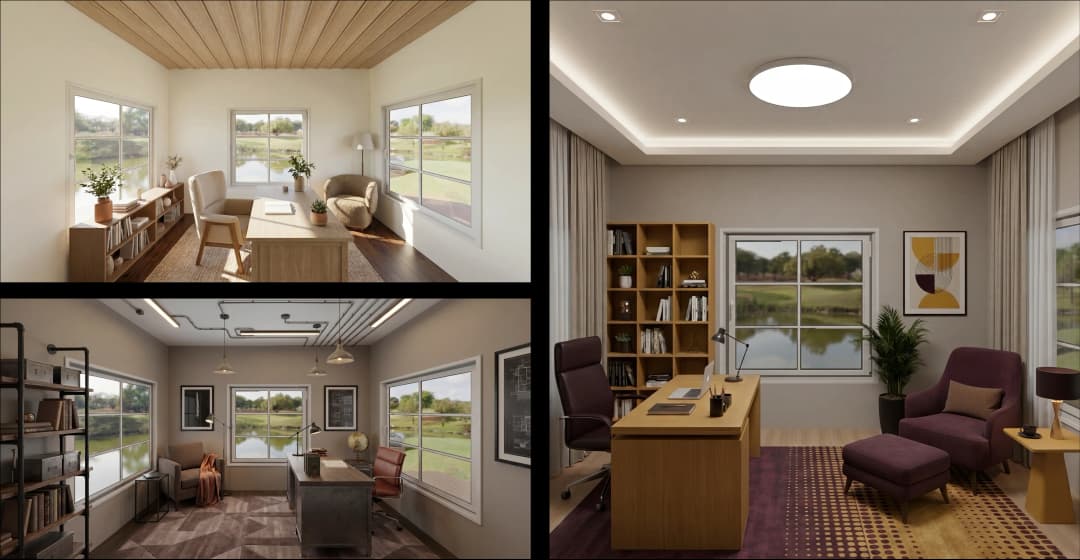
June 03, 2026
The Interior Design Brief Is Broken. AI Fixes It | VirtualSpaces
HHemanth Velury
CEO & Co-Founder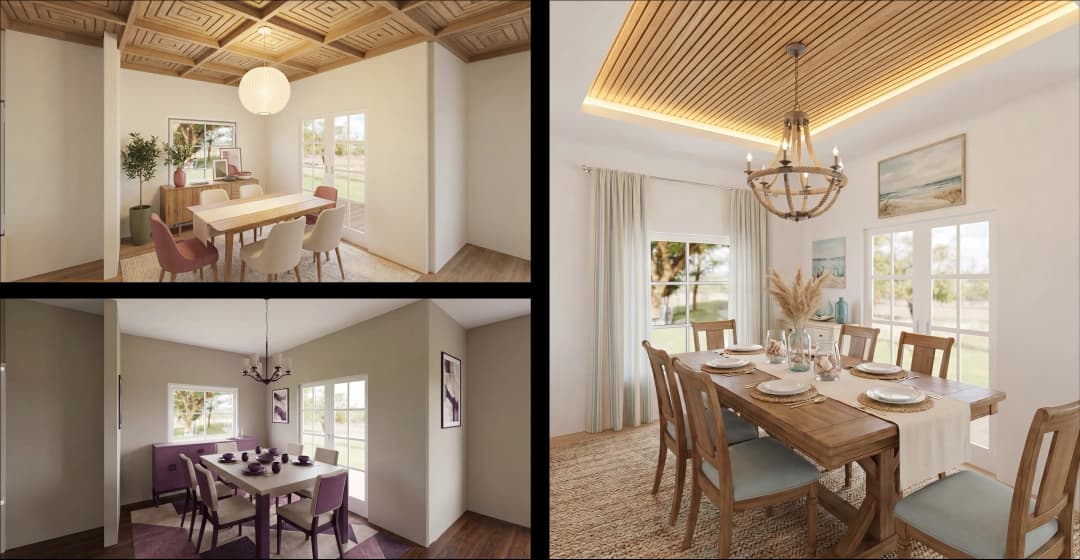
June 01, 2026
Pre-Construction Home Sales: AI Interior Visualization Guide | VirtualSpaces
HHemanth Velury
CEO & Co-Founder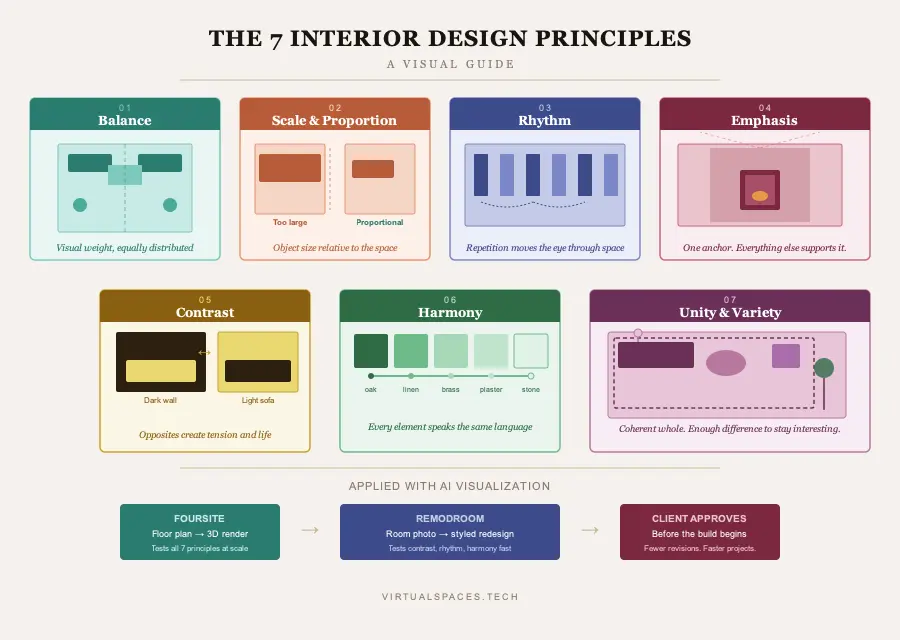
May 30, 2026
Interior Design Principles: Applied with AI | VirtualSpaces
HHemanth Velury
CEO & Co-Founder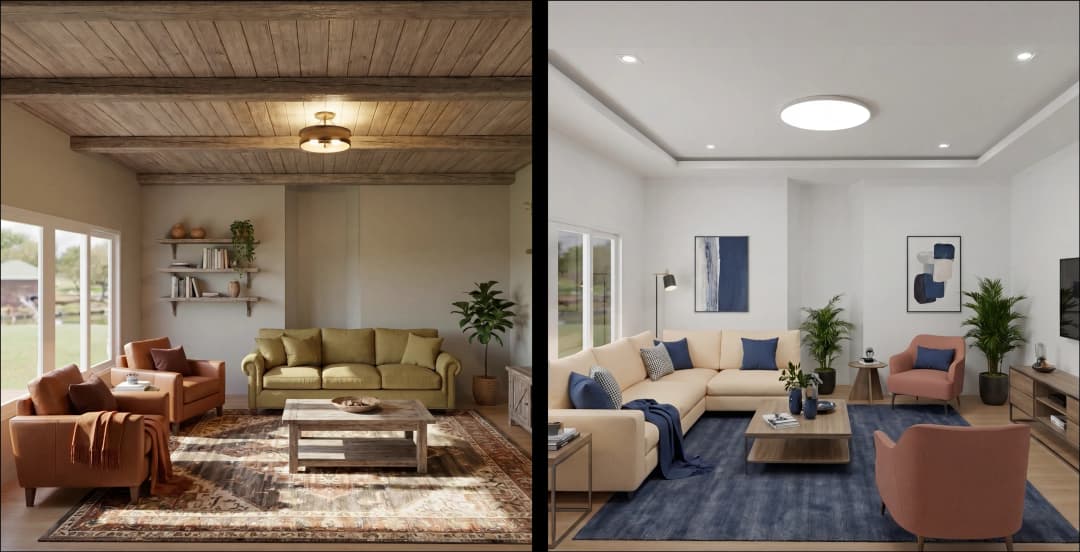
May 28, 2026
Designing Spaces for People, Not Blueprints | VirtualSpaces
HHemanth Velury
CEO & Co-Founder
May 26, 2026
The Future of Interior Design: Closing the Visualization Gap with Foursite and Remodroom | VirtualSpaces
HHemanth Velury
CEO & Co-Founder
May 18, 2026
How AI Visualization Upgrades Property Data Platforms | VirtualSpaces
HHemanth Velury
CEO & Co-Founder
May 14, 2026
How AI-First Insurers Can Use 3D Property Data to Transform Home Claims | VirtualSpaces
HHemanth Velury
CEO & Co-FounderMay 12, 2026
Why Photoreal 3D Renders Are Replacing Mood Boards | Interior Design Client Presentations | VirtualSpaces
HHemanth Velury
CEO & Co-Founder
May 08, 2026
From 2D Floor Plans To Living Worlds: The Spec‑Accurate 3D Engine | VirtualSpaces
HHemanth Velury
CEO & Co-Founder
May 06, 2026
Why Furniture Brands Need AI 3D Visualization Now | VirtualSpaces
HHemanth Velury
CEO & Co-Founder
May 4, 2026
How Property Portals Can Turn 2D Floor Plans into 3D Design Decisions | VirtualSpaces
HHemanth Velury
CEO & Co-Founder
April 29, 2026
The Home-Fit Test: Why Square Footage Misleads | VirtualSpaces
HHemanth Velury
CEO & Co-Founder
April 27, 2026
Designing Homes That Sell: 3D Visualization ROI Data | VirtualSpaces
HHemanth Velury
CEO & Co-FounderApril 24, 2026
What's Next: Foursite & Remodroom's New AI Features | VirtualSpaces
HHemanth Velury
CEO & Co-Founder
April 22, 2026
AI in Architecture: Closing the 85% Exposure Gap | VirtualSpaces
HHemanth Velury
CEO & Co-Founder
April 20, 2026
Interior Design Pricing in 2026: From Hourly to Value-Based Fees | VirtualSpaces
HHemanth Velury
CEO & Co-FounderApril 17, 2026
How Foursite and Remodroom Help Designers Win Clients | VirtualSpaces
HHemanth Velury
CEO & Co-Founder
April 15, 2026
Designing Spaces for People: Remodroom + Foursite AI Guide | VirtualSpaces
HHemanth Velury
CEO & Co-Founder
April 13, 2026
Designing for the Way People Actually Live: How AI 3D Is Finally Closing the Gap Between Floor Plan and Reality
HHemanth Velury
CEO & Co-Founder
April 11, 2026
Design in Real Time: AI Renders in Your First Client Meeting
HHemanth Velury
CEO & Co-Founder
April 06, 2026
Why Real Estate Photography Is No Longer Enough: The Shift to Spatial-First Listings
HHemanth Velury
CEO & Co-Founder
April 03, 2026
Property Management's Hidden Weapon: AI 3D Floor Plans That Cut Vacancy Time and Raise Tenant Quality
HHemanth Velury
CEO & Co-Founder
April 01, 2026
Off-Plan and Oversubscribed: How AI 3D Visualization Is Transforming Real Estate Pre-Sales
HHemanth Velury
CEO & Co-Founder
March 30, 2026
Why Foursite Beats Generic AI Tools for Interior Design 3D Visualization
HHemanth Velury
CEO & Co-Founder
March 27, 2026
7 Tenets of Interior Design: How AI Accelerates Harmony in Residential Spaces
HHemanth Velury
CEO & Co-Founder
March 25, 2026
What Is the 3-5-7 Rule in Interior Design? Foursite's AI Guide for Residential Spaces
HHemanth Velury
CEO & Co-Founder
March 23, 2026
What Is the 70/30 Rule in Interior Design? Foursite's AI Guide for Residential Spaces
HHemanth Velury
CEO & Co-Founder
March 20, 2026
How AI 3D Visualization Is Rewriting Residential Interior Design Workflows
HHemanth Velury
CEO & Co-Founder
March 16, 2026
Why AI Companies Use Token Payments (And Why VirtualSpaces Is Returning To Fiat)
HHemanth Velury
CEO & Co-Founder
March 13, 2026
Floorplan‑Native Digital Twins: Beyond BIM for Consumer‑Ready Real Estate Experiences
HHemanth Velury
CEO & Co-Founder
March 11, 2026
The Foursite Platform Thesis: Why Floor Plans, Not Photos, Are the Next Property Software Primitive
HHemanth Velury
CEO & Co-Founder
March 09, 2026
Design Systems for Space: Building Reusable 3D Component Libraries on Top of AI Floorplan‑to‑3D Engines
HHemanth Velury
CEO & Co-Founder
March 06, 2026
How to Standardize Design Quality Across Global Projects Using AI Floorplan-to-3D Tools
HHemanth Velury
CEO & Co-Founder
March 04, 2026
From CAD-First to AI-First: Reskilling Your Team for AI-Native Design Workflows
HHemanth Velury
CEO & Co-Founder
March 02, 2026
Algorithmic Ergonomics Meets Photorealistic 3D: Designing Human-Centered Smart Homes with Foursite in 2026
HHemanth Velury
CEO & Co-Founder
February 27, 2026
The Ethics of AI in Interior Design: Ownership, Originality, and Client Transparency
HHemanth Velury
CEO & Co-Founder
February 25, 2026
Designing with Empathy: Using AI 3D Visualization to Improve Client Communication and Emotional Clarity
HHemanth Velury
CEO & Co-Founder
February 23, 2026
From Tool to Infrastructure: AI Floorplan-to-3D and the Next Wave of PropTech
HHemanth Velury
CEO & Co-Founder
February 20, 2026
AI Interior Design for Holiday Homes: Turn Spare Flats into High-Demand Short-Stay Rentals with 3D Visuals
HHemanth Velury
CEO & Co-Founder
February 18, 2026
The Pre‑Purchase Power Play: How Savvy Home Buyers Use 3D Floor Plan Visualization to Negotiate Better Deals
HHemanth Velury
CEO & Co-FounderFebruary 16, 2026
AI Interior Design for Non‑Designers: How Homeowners Can Brief Like Pros
HHemanth Velury
CEO & Co-Founder
February 13, 2026
Scaling a Design Business Without Hiring a 3D Team: An Owner's Guide
HHemanth Velury
CEO & Co-Founder
February 11, 2026
From Bland to Bold: How to Rescue Builder-Grade Interiors on Any Budget
HHemanth Velury
CEO & Co-Founder
February 6, 2026
The Psychology of Space: How Room Dimensions Influence Interior Design Decisions
HHemanth Velury
CEO & Co-Founder
February 4, 2026
The Future of Interior Design Visualization: How AI Technology is Transforming 2D Concepts Into 3D Reality
HHemanth Velury
CEO & Co-Founder
February 2, 2026
AI Interior Décor: How Artificial Intelligence Generates Design Options from Your Floor Plan
HHemanth Velury
CEO & Co-Founder
January 30, 2026
Photoreal vs. Reality: What Clients Actually Expect from Interior Design Visualization
HHemanth Velury
CEO & Co-Founder
January 28, 2026
The Design Approval Conversation That Changes Everything: Communication Strategy When Using Photorealistic Visualization
HHemanth Velury
CEO & Co-Founder
January 25, 2026
Interior Design as Experience Design: How 3D Visualization Changes Your Professional Identity
HHemanth Velury
CEO & Co-Founder
January 23, 2026
The Professional Gap: How 3D Visualization Changes Interior Design Client Perception
HHemanth Velury
CEO & Co-Founder
January 21, 2026
Why Clients Fire Designers (And How 3D Visualization Could Have Saved the Project)
HHemanth Velury
CEO & Co-Founder
January 16, 2026
Blueprint to Vision: Why Seeing Is Believing in Interior Design
HHemanth Velury
CEO & Co-Founder
January 14, 2026
The Speed of Responsiveness: How AI Visualization Tools Make You Look Like You Care More
HHemanth Velury
CEO & Co-Founder
January 12, 2026
Why Interior Designers and Architects Can't Compete Without AI 3D Visualization Tools
HHemanth Velury
CEO & Co-Founder
January 07, 2026
From "Saved" to "Sold": How Homeowners Are Planning Renovations with AI
HHemanth Velury
CEO & Co-Founder
January 05, 2026
The Interior Designer's Secret Weapon: Speed as Premium Positioning
HHemanth Velury
CEO & Co-Founder
December 31, 2025
Gratitude, Growth & Game-Changing Innovation: VirtualSpaces' 2025 Journey & What's Coming in 2026
HHemanth Velury
CEO & Co-Founder
December 29, 2025
Why Interior Designers Are Switching to AI Floor Plan-to-3D Tools in 2026
HHemanth Velury
CEO & Co-Founder
December 26, 2025
AI Virtual Staging for Real Estate Agents: Sell More Homes Faster with Foursite
HHemanth Velury
CEO & Co-Founder
December 24, 2025
Why Architects Are Switching to AI 2D-to-3D: The SketchUp Alternative
HHemanth Velury
CEO & Co-Founder
December 22, 2025
Cut 3 Weeks from Real Estate Sales Cycle: The ROI of AI 2D to 3D Visualization
HHemanth Velury
CEO & Co-Founder
December 19, 2025
2D Floor Plans Are Dying: Why 3D Visualization & AI Virtual Staging Are the Future
HHemanth Velury
CEO & Co-Founder
December 17, 2025
Virtual Staging vs Physical Staging: How AI Saves Money Per Property
HHemanth Velury
CEO & Co-Founder
December 15, 2025
AI Floor Plan to Image: Revolutionizing Real Estate Marketing for Agents
HHemanth Velury
CEO & Co-Founder
December 12, 2025
Color of the Year 2026: Cloud Dancer | VirtualSpaces AI Interior Design Guide
HHemanth Velury
CEO & Co-Founder
December 10, 2025
AI Floor Plan to 3D: The New Standard for Interior Design Workflows
HHemanth Velury
CEO & Co-Founder
December 08, 2025
How Interior Design Studios Can Operationalize AI 2D-to-3D Workflows (Without Breaking Their Process)
HHemanth Velury
CEO & Co-Founder
December 06, 2025
How to Implement AI Interior Design Workflows in Your Studio
HHemanth Velury
CEO & Co-Founder
December 4, 2025
How Homeowners Can Use AI Interior Design Tools to Plan Renovations with Confidence
HHemanth Velury
CEO & Co-Founder
November 28, 2025
Interior Designers in the Age of AI: From Threat Narrative to Superpower
HHemanth Velury
CEO & Co-Founder
November 21, 2025
Foursite Launch: Embracing 'Release Early, Release Often'
HHemanth Velury
CEO & Co-Founder
November 13, 2025
Foursite by VirtSpaces: Empowering Interior Designers, Architects, and Homeowners
HHemanth Velury
CEO & Co-Founder
November 7, 2025
Reimagining Architectural Education: How AI Floorplan-to-3D Technology Can Transform Design Learning
VVirtualSpaces Research Labs
AI Research Initiative
October 27, 2025
Archisculpt AI: Turning Architectural Drawings into Photorealistic 3D Spaces
AAbhijeet Naik
Co-Founder & CTO
October 13, 2025
Home Makeover: From Floor Plan to Dream Space with AI
HHemanth Velury
CEO & Co-Founder
October 6, 2025
Real-Time Rendering & AI: Revolutionizing Interactive Property Walkthroughs with VirtSpaces
HHemanth Velury
CEO & Co-Founder
September 26, 2025
Foursite - A True AI-Native Experience in Design Visualization
AAbhijeet Naik
CTO & Co-Founder
September 18, 2025
Why PropTech Startups Are Betting on AI Interior Design
HHemanth Velury
CEO & Co-Founder
September 11, 2025
How AI Differs from Traditional 3D Rendering Software
HHemanth Velury
CEO & Co-Founder
September 2, 2025
From Client to Investor: How Nila Spaces and VirtSpaces Are Redefining Proptech with AI
HHemanth Velury
CEO & Co-Founder
August 25, 2025
VirtSpaces From Virtual Reality to AI – Transforming Real Estate Visualization.
HHemanth Velury
CEO & Co-Founder


We help teams collaborate seamlessly and reduce costs. Virtual Spaces offers cutting-edge technology with flexible plans designed to fit modern teams.
Copyright © VirtSpaces Pvt. Ltd. 2025 All Rights Reserved.
CIN: U74999KA2016PTC094921