May 18, 2026
- AI Technology
- Interior Design
How AI Visualization Upgrades Property Data Platforms | VirtualSpaces
Hemanth Velury
CEO & Co-FounderThe Missing Visual Layer in Property Data: How AI Visualization Turns Floor Plans into Business Intelligence
Property data companies know more about residential real estate than anyone. They track ownership chains, automated valuations, mortgage histories, permit records, neighborhood demographics, and transaction velocity down to the census-tract level. What most of them cannot do is show you what a specific property actually looks like - furnished, staged, and styled - from a floor plan alone.
That gap is not a content problem. It is an infrastructure problem. And it is quietly costing these platforms revenue, differentiation, and relevance at the moment their clients need them most.
VirtualSpaces has built the technology to close it. Its products, Foursite and Remodroom, convert 2D floor plans, architectural blueprints, and room photographs into photorealistic, interactive AI 3D visualization - in under two minutes, in a browser, without a render studio. For property data companies, the implications go well beyond a visual upgrade. They represent a new category of product.
What Property Data Companies Actually Sell - And What Is Still Missing
Companies like Cotality (formerly CoreLogic), ATTOM Data Solutions, CoStar Group, Black Knight (now part of ICE Mortgage Technology), First American Data and Analytics, HouseCanary, Verisk Analytics, RealPage, PropStream, and Quantarium have spent decades building the most comprehensive property intelligence infrastructure in the world.
Their clients, lenders, appraisers, brokers, developers, insurance carriers, portfolio managers, rely on these platforms for structured data: parcel records, AVM outputs, flood zone overlays, listing histories, neighborhood comps. What they cannot get from any of these platforms today is a visual representation of what a specific property looks like, furnished and staged, based on the floor plan data those same platforms already hold.
This is the gap. The floor plan is in the data. The room dimensions are in the data. The property type, the room count, the square footage: all of it already exists inside these platforms. But none of it has been connected to a visual output layer that clients can actually use.
That connection is precisely what VirtualSpaces provides.
Foursite: From Floor Plan Data to Photorealistic Intelligence
Foursite takes a 2D floor plan - the kind that property data platforms already store by the tens of millions - and converts it into a navigable, photorealistic 3D interior. The output is not a generic rendering. It is a geometry-accurate, fully furnished visual environment that reflects the actual spatial topology of the specific property.
For a property data company, this capability turns a dormant data asset into an active product. Every floor plan in the database becomes a potential 3D visualization. Every property record with dimensions attached becomes a potential visual output. The structured data that platforms have spent years collecting suddenly has a new commercial surface.
The practical applications for property data clients are direct:
-
Agents and brokers: generate AI interior design renders for listings without waiting on a render studio. The floor plan data the platform already holds becomes a pre-listing visualization tool.
-
Lenders and appraisers: validate spatial claims against a visual representation. Floor plan data becomes a cross-reference layer for desktop appraisals.
-
Residential developers: convert blueprint to 3D for pre-sales before a unit is built. Off-plan buyers see a furnished version of their specific unit, not a model-flat approximation.
-
Portfolio managers: assess renovation potential visually, across large portfolios, without commissioning physical walkthroughs or specialist renders.
The speed here matters as much as the quality. Foursite converts a 2D floor plan to a furnished 3D scene in under two minutes. That is not a marginal improvement on the render studio model. It is a different business model entirely.
Remodroom: The Last-Mile Visual Tool for Residential Transactions
Remodroom operates on a different input: a single photograph of an existing room. Upload the image, select a style, and receive a photorealistic redesign in minutes. The tool is powered by proprietary AI interior decor technology trained specifically on interior environments - it understands how light falls, how materials read at different scales, how proportion affects the perception of space.
For property data companies, Remodroom addresses the other half of the visualization problem: what the property looks like now, and what it could look like after renovation or restyling.
This has direct value for several client segments that property data platforms already serve:
-
Listing agents: show sellers a staged version of their home, room by room, before a photographer arrives. AI virtual staging from a phone photograph, delivered in minutes.
-
Buyers and their agents: visualize renovation scenarios in a property they are considering, before making an offer. The visual becomes part of the decision framework, not an afterthought.
-
Renovation lenders: use Remodroom outputs as part of the loan approval conversation - a photoreal representation of what the borrower is proposing, grounded in the actual room photograph.
-
Property managers: assess and communicate unit refresh options to owners without commissioning interior designers or render studios.
Used together, Foursite and Remodroom cover the full visual lifecycle of a residential property: from blueprint to 3D during development and pre-sale, through virtual staging during listing, to post-occupancy renovation planning via room-level redesign. That is a visualization stack, not a point tool.
Where the Value Shows Up: A Practitioner View
The table below maps the use cases against measurable outcomes. The asterisked figure is drawn from widely-cited MLS and NAR data on listing performance.
| Use Case | Without VirtualSpaces | With VirtualSpaces | Estimated Lift |
|---|---|---|---|
| Listing visualization | Static 2D floor plan + photos | Interactive 3D render in under 2 mins | +20-31% faster sale velocity* |
| Agent pre-sale pitch | Mood boards, generic renders | Client's actual floor plan, furnished | Higher close rate per consultation |
| Developer pre-sales | 3-5 day render studio turnaround | Same-session AI visualization | Faster deposit collection |
| Renovation planning | Contractor quote + imagination | Photoreal room redesign from photo | Reduced scope-change disputes |
| Data platform upsell | Raw floor plan data feed only | Visual intelligence API layer | New premium tier revenue stream |
*Listings with interactive 3D visualization consistently show faster time-to-offer across multiple MLS datasets. The figure varies by market; 20-31% is a representative range from published studies.
The IP That Makes This Defensible
What separates VirtualSpaces from a generative AI tool that produces pretty pictures is the underlying technical architecture. The system is built around a multi-stage pipeline that most property data companies and their engineering teams would significantly underestimate if they tried to build it in-house.
The first challenge is topological accuracy. A floor plan is not a clean input. Architectural drawings vary in notation, scale, symbology, and quality - from high-resolution CAD exports to hand-drawn sketches photographed on a phone. The system has to resolve walls, doors, windows, and room boundaries deterministically and with structural precision. An output that looks good but has geometry errors is worse than no output at all, because it introduces errors into downstream decisions.
VirtualSpaces has developed proprietary methods for resolving the structural ambiguity inherent in raw floor plan images - methods that do not rely on large pre-labeled training datasets and that produce deterministic, consistent outputs across arbitrary input quality. This is not a fine-tuned off-the-shelf model. It is a purpose-built pipeline with novel approaches to a genuinely hard problem.
The second challenge is inventory coherence. A photorealistic render of a furnished room is only commercially actionable if the furniture depicted is real and purchasable - not hallucinated by a generative model. The VirtualSpaces system uses a multimodal retrieval architecture that grounds generated imagery in specific real-world product catalogs. The output shows actual items that a buyer can purchase, not plausible-looking fictions.
The third is geometry locking. Generative models, unconstrained, will introduce architectural elements that do not exist - walls in the wrong place, windows that were not in the plan, proportions that drift from the source material. The VirtualSpaces synthesis stage is conditioned simultaneously on the geometric topology of the reconstructed space, ensuring the output conforms to the floor plan from which it was derived.
Together, these three components form an IP stack that is actively being developed toward formal protection. The specifics are not for public disclosure at this stage - but the architecture is purpose-built, the approach is novel relative to prior art, and the combination of topological reconstruction, multimodal retrieval, and geometry-locked synthesis does not exist anywhere else in a single integrated pipeline at this scale and speed.
For a property data company evaluating whether to build this internally: the honest answer is that the 18 to 24-month minimum timeline is not because the components are individually impossible. It is because the integration across all three stages, with sufficient robustness to handle real-world input quality at scale, requires solving a set of interdependent engineering problems that the VirtualSpaces team has already solved.
Why Property Data Companies Are the Natural Home for This Technology
There is an obvious question here: why is this conversation about property data companies specifically, rather than portals, brokerages, or proptech platforms?
The answer is data depth and distribution. A company like Cotality, ATTOM, or First American Data and Analytics already holds floor plan records, parcel geometries, property dimensions, and transaction histories for tens of millions of residential properties. They already have the relationships with lenders, appraisers, agents, and developers who are the end users of visual intelligence tools. And they already have the data licensing infrastructure to monetize a new product layer at scale.
Portals can add 3D visualization to listings. Brokerages can adopt it as a client-facing tool. But property data platforms are the ones who already hold the raw materials - the floor plans, the dimensions, the structural data - and who already have enterprise distribution into every corner of the residential transaction ecosystem.
Adding a visual AI layer to an existing property data platform is not a feature addition. It is a new product category: visual intelligence, built on top of structured property data, delivered through existing API relationships. The companies that recognize this early will have a defensible position that is genuinely difficult to replicate - because it requires both the data depth and the visualization technology, and most competitors will have one but not the other.
What the Workflow Actually Looks Like
For a property data company evaluating integration, the operational model is straightforward:
-
A floor plan record in the existing database - in whatever format it is stored, from PDF to image to raw dimensional data - is passed to the Foursite API.
-
The system performs topological reconstruction: extracting walls, doors, windows, room boundaries, and scale from the input, regardless of source quality.
-
A furnished, styled 3D environment is returned in under two minutes, navigable in a browser, with a shareable link that updates in real time as design choices are iterated.
-
For properties where a photograph exists rather than a floor plan, Remodroom accepts the image directly and returns a photorealistic redesign in the selected style.
-
Both outputs can be embedded in the existing platform UI, delivered via API to downstream client tools, or packaged as a standalone visualization product with its own access tier.
The hand-off between the property data platform and the visual output layer is clean. No specialist software is required on either end. No render studio is in the loop. The convert floor plan to 3D process is fully automated, and the quality of the output is consistent regardless of the person initiating the request.
The Property Data Company That Moves First
Property data platforms have spent twenty years building the most comprehensive structured intelligence about residential real estate in existence. The next twenty years will be defined by which of those platforms succeeds in turning structured data into visual, actionable intelligence for the practitioners who rely on them.
The technology to do that is not on a roadmap. It is running today. AI interior design visualization that converts a 2D floor plan into a furnished, photorealistic 3D environment in under two minutes - at scale, through an API, with geometry that is accurate and inventory that is real - is a product capability that property data companies can integrate now, not in 2027.
VirtualSpaces has built this infrastructure. The IP behind it is in active development toward formal protection, covering a pipeline that - based on a thorough review of prior art - has not been assembled anywhere else in this configuration. The companies that integrate it early will have a visual intelligence layer that their competitors will spend 18 to 24 months trying to catch up to.
The interior design photoreal renders produced by Foursite and Remodroom are not a cosmetic layer on top of property data. They are property data - visual, navigable, and commercially actionable in a way that a spreadsheet row or a PDF floor plan never will be.
The question for every property data company reading this is not whether to add visual intelligence. It is whether to be the platform that led on it, or one of the ones that followed.
Recommended for you

August 19, 2026
The End of the Model Home? 3D Changes the Math | VirtualSpaces
HHemanth Velury
CEO & Co-Founder
August 17, 2026
Designing Spaces That Actually Get Built | VirtualSpaces
HHemanth Velury
CEO & Co-Founder
August 12, 2026
Designing Homes for the Stuff People Actually Own | VirtualSpaces
HHemanth Velury
CEO & Co-Founder
August 07, 2026
Floor Plan to Bill of Materials: The 3D Model as Data | VirtualSpaces
HHemanth Velury
CEO & Co-Founder.png&w=1080&q=75)
August 05, 2026
Designing Homes for How People Actually Live | VirtualSpaces
HHemanth Velury
CEO & Co-Founder
August 03, 2026
Honest by Design: Trust in AI Real Estate Imagery | VirtualSpaces
HHemanth Velury
CEO & Co-Founder
July 29, 2026
Kitchen and Bath: The Two Rooms That Decide Resale | VirtualSpaces
HHemanth Velury
CEO & Co-Founder
July 27, 2026
Why Empty Rooms Don't Sell: Virtual Staging | VirtualSpaces
HHemanth Velury
CEO & Co-Founder
July 24, 2026
The Quiet Sustainability Win of Deciding in 3D | VirtualSpaces
HHemanth Velury
CEO & Co-Founder
July 22, 2026
Why Paint Swatches Lie: Test Color in 3D First | VirtualSpaces
HHemanth Velury
CEO & Co-Founder
July 20, 2026
Why Every Home Should Be Seen Before It's Built | VirtualSpaces
HHemanth Velury
CEO & Co-Founder
July 17, 2026
Why Big AI Labs Won't Build Floor Plan to 3D | VirtualSpaces
HHemanth Velury
CEO & Co-Founder
July 15, 2026
How We Solve Floor Plan to 3D, Accurately | VirtualSpaces
HHemanth Velury
CEO & Co-Founder
July 13, 2026
Designing Homes That Age With the People in Them | VirtualSpaces
HHemanth Velury
CEO & Co-Founder
July 10, 2026
Designing Spaces for How Light Actually Moves | VirtualSpaces
HHemanth Velury
CEO & Co-Founder
July 08, 2026
Designing Homes for Every Life Stage in 3D | VirtualSpaces
HHemanth Velury
CEO & Co-Founder
July 06, 2026
Build an Interior Design Portfolio Without Clients | VirtualSpaces
HHemanth Velury
CEO & Co-Founder
June 26, 2026
AI Interior Design: Full 3D Workflow in One Platform | VirtualSpaces
HHemanth Velury
CEO & Co-Founder
June 24, 2026
Scope Creep in Interior Design: How AI Visualization Fixes It | VirtualSpaces
HHemanth Velury
CEO & Co-Founder
June 22, 2026
What Buyers See on a Floor Plan: Your Biggest Sales Problem | VirtualSpaces
HHemanth Velury
CEO & Co-Founder
June 19, 2026
Small Design Studios vs Big Firms: The AI Advantage | VirtualSpaces
HHemanth Velury
CEO & Co-Founder
June 17, 2026
After the Mood Board: AI Interior Visualization | VirtualSpaces
HHemanth Velury
CEO & Co-Founder
June 15, 2026
Foursite Pro Editor: Full Floor Plan Control for Designers | VirtualSpaces
HHemanth Velury
CEO & Co-Founder
June 12, 2026
AI Interior Design: Style Any Room in Seconds with Foursite | VirtualSpaces
HHemanth Velury
CEO & Co-Founder
June 10, 2026
Foursite: Floor Plan to 3D Walkthrough in Minutes | VirtualSpaces
HHemanth Velury
CEO & Co-Founder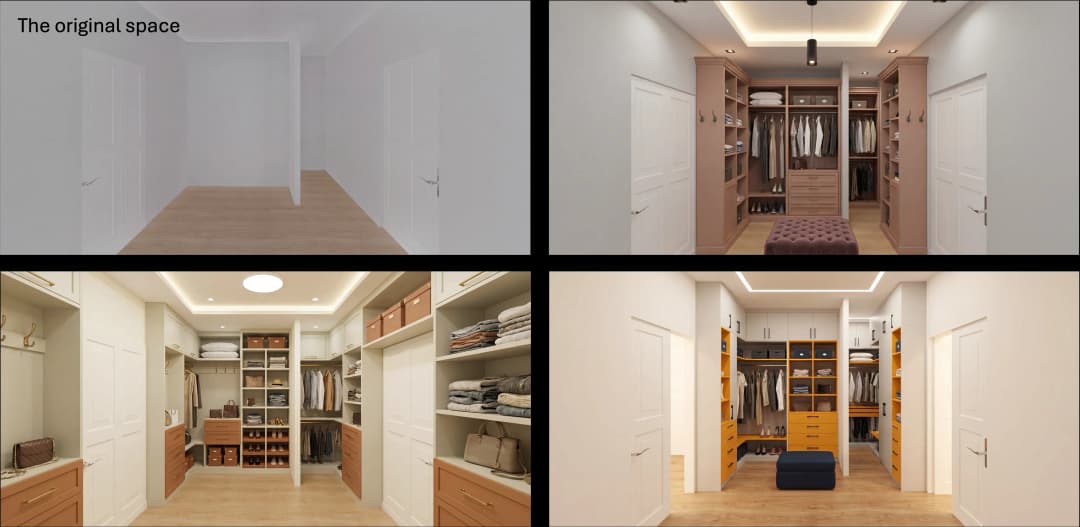
June 08, 2026
Win More Pitches With AI Renders Before the Meeting | VirtualSpaces
HHemanth Velury
CEO & Co-Founder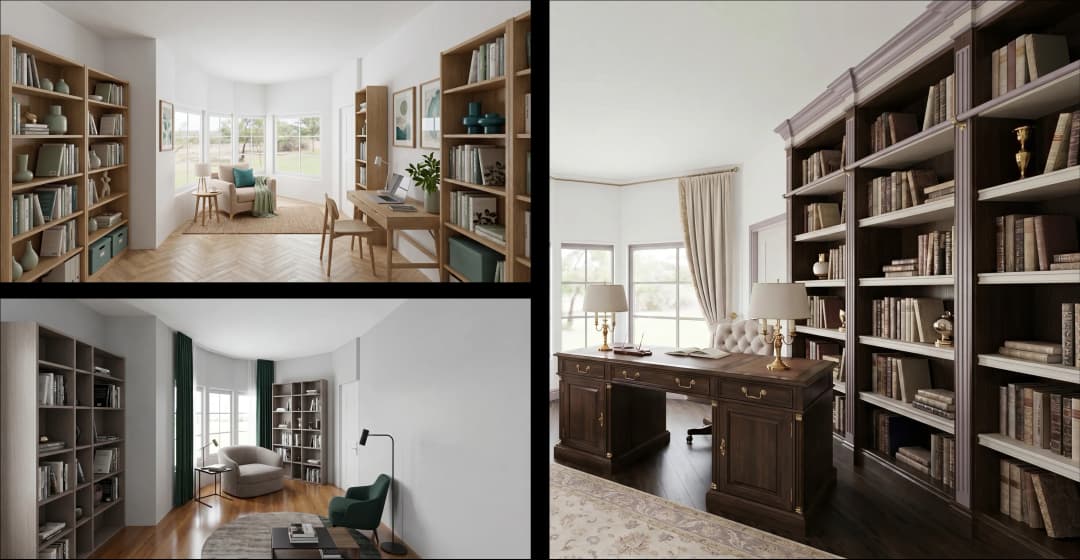
June 05, 2026
From Floor Plan to Finished Room: What AI Now Makes Possible | VirtualSpaces
HHemanth Velury
CEO & Co-Founder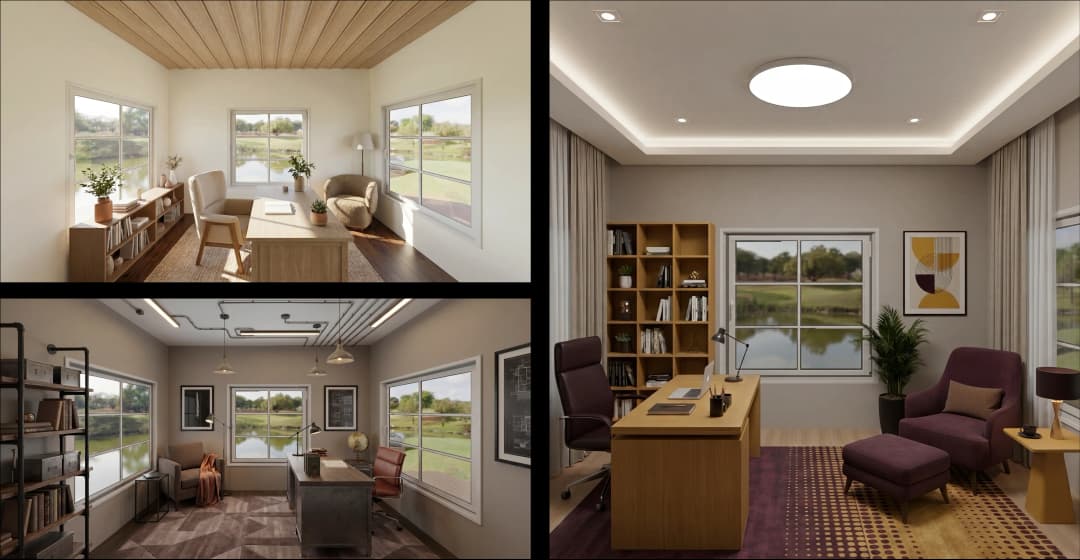
June 03, 2026
The Interior Design Brief Is Broken. AI Fixes It | VirtualSpaces
HHemanth Velury
CEO & Co-Founder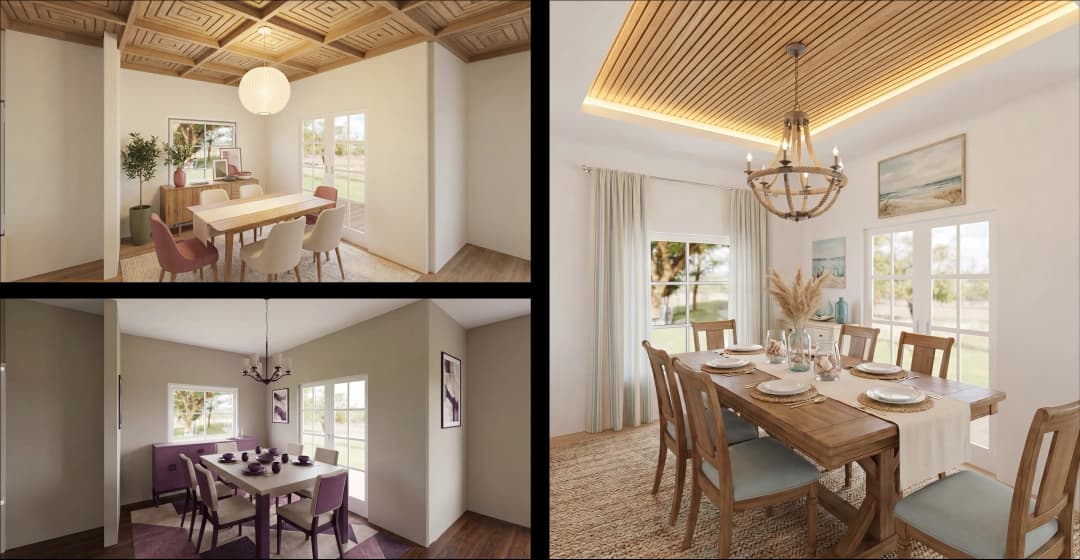
June 01, 2026
Pre-Construction Home Sales: AI Interior Visualization Guide | VirtualSpaces
HHemanth Velury
CEO & Co-Founder
May 30, 2026
Interior Design Principles: Applied with AI | VirtualSpaces
HHemanth Velury
CEO & Co-Founder
May 28, 2026
Designing Spaces for People, Not Blueprints | VirtualSpaces
HHemanth Velury
CEO & Co-Founder
May 26, 2026
The Future of Interior Design: Closing the Visualization Gap with Foursite and Remodroom | VirtualSpaces
HHemanth Velury
CEO & Co-Founder
May 14, 2026
How AI-First Insurers Can Use 3D Property Data to Transform Home Claims | VirtualSpaces
HHemanth Velury
CEO & Co-FounderMay 12, 2026
Why Photoreal 3D Renders Are Replacing Mood Boards | Interior Design Client Presentations | VirtualSpaces
HHemanth Velury
CEO & Co-Founder
May 08, 2026
From 2D Floor Plans To Living Worlds: The Spec‑Accurate 3D Engine | VirtualSpaces
HHemanth Velury
CEO & Co-Founder
May 06, 2026
Why Furniture Brands Need AI 3D Visualization Now | VirtualSpaces
HHemanth Velury
CEO & Co-Founder
May 4, 2026
How Property Portals Can Turn 2D Floor Plans into 3D Design Decisions | VirtualSpaces
HHemanth Velury
CEO & Co-Founder
April 29, 2026
The Home-Fit Test: Why Square Footage Misleads | VirtualSpaces
HHemanth Velury
CEO & Co-Founder
April 27, 2026
Designing Homes That Sell: 3D Visualization ROI Data | VirtualSpaces
HHemanth Velury
CEO & Co-FounderApril 24, 2026
What's Next: Foursite & Remodroom's New AI Features | VirtualSpaces
HHemanth Velury
CEO & Co-Founder
April 22, 2026
AI in Architecture: Closing the 85% Exposure Gap | VirtualSpaces
HHemanth Velury
CEO & Co-Founder
April 20, 2026
Interior Design Pricing in 2026: From Hourly to Value-Based Fees | VirtualSpaces
HHemanth Velury
CEO & Co-FounderApril 17, 2026
How Foursite and Remodroom Help Designers Win Clients | VirtualSpaces
HHemanth Velury
CEO & Co-Founder
April 15, 2026
Designing Spaces for People: Remodroom + Foursite AI Guide | VirtualSpaces
HHemanth Velury
CEO & Co-Founder
April 13, 2026
Designing for the Way People Actually Live: How AI 3D Is Finally Closing the Gap Between Floor Plan and Reality
HHemanth Velury
CEO & Co-Founder
April 11, 2026
Design in Real Time: AI Renders in Your First Client Meeting
HHemanth Velury
CEO & Co-Founder
April 06, 2026
Why Real Estate Photography Is No Longer Enough: The Shift to Spatial-First Listings
HHemanth Velury
CEO & Co-Founder
April 03, 2026
Property Management's Hidden Weapon: AI 3D Floor Plans That Cut Vacancy Time and Raise Tenant Quality
HHemanth Velury
CEO & Co-Founder
April 01, 2026
Off-Plan and Oversubscribed: How AI 3D Visualization Is Transforming Real Estate Pre-Sales
HHemanth Velury
CEO & Co-Founder
March 30, 2026
Why Foursite Beats Generic AI Tools for Interior Design 3D Visualization
HHemanth Velury
CEO & Co-Founder
March 27, 2026
7 Tenets of Interior Design: How AI Accelerates Harmony in Residential Spaces
HHemanth Velury
CEO & Co-Founder
March 25, 2026
What Is the 3-5-7 Rule in Interior Design? Foursite's AI Guide for Residential Spaces
HHemanth Velury
CEO & Co-Founder
March 23, 2026
What Is the 70/30 Rule in Interior Design? Foursite's AI Guide for Residential Spaces
HHemanth Velury
CEO & Co-Founder
March 20, 2026
How AI 3D Visualization Is Rewriting Residential Interior Design Workflows
HHemanth Velury
CEO & Co-Founder
March 18, 2026
Beyond Marketing: How 3D Floorplans Transform FM, Retrofit Planning & ESG Operations
HHemanth Velury
CEO & Co-Founder
March 16, 2026
Why AI Companies Use Token Payments (And Why VirtualSpaces Is Returning To Fiat)
HHemanth Velury
CEO & Co-Founder
March 13, 2026
Floorplan‑Native Digital Twins: Beyond BIM for Consumer‑Ready Real Estate Experiences
HHemanth Velury
CEO & Co-Founder
March 11, 2026
The Foursite Platform Thesis: Why Floor Plans, Not Photos, Are the Next Property Software Primitive
HHemanth Velury
CEO & Co-Founder
March 09, 2026
Design Systems for Space: Building Reusable 3D Component Libraries on Top of AI Floorplan‑to‑3D Engines
HHemanth Velury
CEO & Co-Founder
March 06, 2026
How to Standardize Design Quality Across Global Projects Using AI Floorplan-to-3D Tools
HHemanth Velury
CEO & Co-Founder
March 04, 2026
From CAD-First to AI-First: Reskilling Your Team for AI-Native Design Workflows
HHemanth Velury
CEO & Co-Founder
March 02, 2026
Algorithmic Ergonomics Meets Photorealistic 3D: Designing Human-Centered Smart Homes with Foursite in 2026
HHemanth Velury
CEO & Co-Founder
February 27, 2026
The Ethics of AI in Interior Design: Ownership, Originality, and Client Transparency
HHemanth Velury
CEO & Co-Founder
February 25, 2026
Designing with Empathy: Using AI 3D Visualization to Improve Client Communication and Emotional Clarity
HHemanth Velury
CEO & Co-Founder
February 23, 2026
From Tool to Infrastructure: AI Floorplan-to-3D and the Next Wave of PropTech
HHemanth Velury
CEO & Co-Founder
February 20, 2026
AI Interior Design for Holiday Homes: Turn Spare Flats into High-Demand Short-Stay Rentals with 3D Visuals
HHemanth Velury
CEO & Co-Founder
February 18, 2026
The Pre‑Purchase Power Play: How Savvy Home Buyers Use 3D Floor Plan Visualization to Negotiate Better Deals
HHemanth Velury
CEO & Co-FounderFebruary 16, 2026
AI Interior Design for Non‑Designers: How Homeowners Can Brief Like Pros
HHemanth Velury
CEO & Co-Founder
February 13, 2026
Scaling a Design Business Without Hiring a 3D Team: An Owner's Guide
HHemanth Velury
CEO & Co-Founder
February 11, 2026
From Bland to Bold: How to Rescue Builder-Grade Interiors on Any Budget
HHemanth Velury
CEO & Co-Founder
February 6, 2026
The Psychology of Space: How Room Dimensions Influence Interior Design Decisions
HHemanth Velury
CEO & Co-Founder
February 4, 2026
The Future of Interior Design Visualization: How AI Technology is Transforming 2D Concepts Into 3D Reality
HHemanth Velury
CEO & Co-Founder
February 2, 2026
AI Interior Décor: How Artificial Intelligence Generates Design Options from Your Floor Plan
HHemanth Velury
CEO & Co-Founder
January 30, 2026
Photoreal vs. Reality: What Clients Actually Expect from Interior Design Visualization
HHemanth Velury
CEO & Co-Founder
January 28, 2026
The Design Approval Conversation That Changes Everything: Communication Strategy When Using Photorealistic Visualization
HHemanth Velury
CEO & Co-Founder
January 25, 2026
Interior Design as Experience Design: How 3D Visualization Changes Your Professional Identity
HHemanth Velury
CEO & Co-Founder
January 23, 2026
The Professional Gap: How 3D Visualization Changes Interior Design Client Perception
HHemanth Velury
CEO & Co-Founder
January 21, 2026
Why Clients Fire Designers (And How 3D Visualization Could Have Saved the Project)
HHemanth Velury
CEO & Co-Founder
January 16, 2026
Blueprint to Vision: Why Seeing Is Believing in Interior Design
HHemanth Velury
CEO & Co-Founder
January 14, 2026
The Speed of Responsiveness: How AI Visualization Tools Make You Look Like You Care More
HHemanth Velury
CEO & Co-Founder
January 12, 2026
Why Interior Designers and Architects Can't Compete Without AI 3D Visualization Tools
HHemanth Velury
CEO & Co-Founder
January 07, 2026
From "Saved" to "Sold": How Homeowners Are Planning Renovations with AI
HHemanth Velury
CEO & Co-Founder
January 05, 2026
The Interior Designer's Secret Weapon: Speed as Premium Positioning
HHemanth Velury
CEO & Co-Founder
December 31, 2025
Gratitude, Growth & Game-Changing Innovation: VirtualSpaces' 2025 Journey & What's Coming in 2026
HHemanth Velury
CEO & Co-Founder
December 29, 2025
Why Interior Designers Are Switching to AI Floor Plan-to-3D Tools in 2026
HHemanth Velury
CEO & Co-Founder
December 26, 2025
AI Virtual Staging for Real Estate Agents: Sell More Homes Faster with Foursite
HHemanth Velury
CEO & Co-Founder
December 24, 2025
Why Architects Are Switching to AI 2D-to-3D: The SketchUp Alternative
HHemanth Velury
CEO & Co-Founder
December 22, 2025
Cut 3 Weeks from Real Estate Sales Cycle: The ROI of AI 2D to 3D Visualization
HHemanth Velury
CEO & Co-Founder
December 19, 2025
2D Floor Plans Are Dying: Why 3D Visualization & AI Virtual Staging Are the Future
HHemanth Velury
CEO & Co-Founder
December 17, 2025
Virtual Staging vs Physical Staging: How AI Saves Money Per Property
HHemanth Velury
CEO & Co-Founder
December 15, 2025
AI Floor Plan to Image: Revolutionizing Real Estate Marketing for Agents
HHemanth Velury
CEO & Co-Founder
December 12, 2025
Color of the Year 2026: Cloud Dancer | VirtualSpaces AI Interior Design Guide
HHemanth Velury
CEO & Co-Founder
December 10, 2025
AI Floor Plan to 3D: The New Standard for Interior Design Workflows
HHemanth Velury
CEO & Co-Founder
December 08, 2025
How Interior Design Studios Can Operationalize AI 2D-to-3D Workflows (Without Breaking Their Process)
HHemanth Velury
CEO & Co-Founder
December 06, 2025
How to Implement AI Interior Design Workflows in Your Studio
HHemanth Velury
CEO & Co-Founder
December 4, 2025
How Homeowners Can Use AI Interior Design Tools to Plan Renovations with Confidence
HHemanth Velury
CEO & Co-Founder
November 28, 2025
Interior Designers in the Age of AI: From Threat Narrative to Superpower
HHemanth Velury
CEO & Co-Founder
November 21, 2025
Foursite Launch: Embracing 'Release Early, Release Often'
HHemanth Velury
CEO & Co-Founder
November 13, 2025
Foursite by VirtSpaces: Empowering Interior Designers, Architects, and Homeowners
HHemanth Velury
CEO & Co-Founder
November 7, 2025
Reimagining Architectural Education: How AI Floorplan-to-3D Technology Can Transform Design Learning
VVirtualSpaces Research Labs
AI Research Initiative
October 27, 2025
Archisculpt AI: Turning Architectural Drawings into Photorealistic 3D Spaces
AAbhijeet Naik
Co-Founder & CTO
October 13, 2025
Home Makeover: From Floor Plan to Dream Space with AI
HHemanth Velury
CEO & Co-Founder
October 6, 2025
Real-Time Rendering & AI: Revolutionizing Interactive Property Walkthroughs with VirtSpaces
HHemanth Velury
CEO & Co-Founder
September 26, 2025
Foursite - A True AI-Native Experience in Design Visualization
AAbhijeet Naik
CTO & Co-Founder
September 18, 2025
Why PropTech Startups Are Betting on AI Interior Design
HHemanth Velury
CEO & Co-Founder
September 11, 2025
How AI Differs from Traditional 3D Rendering Software
HHemanth Velury
CEO & Co-Founder
September 2, 2025
From Client to Investor: How Nila Spaces and VirtSpaces Are Redefining Proptech with AI
HHemanth Velury
CEO & Co-Founder
August 25, 2025
VirtSpaces From Virtual Reality to AI – Transforming Real Estate Visualization.
HHemanth Velury
CEO & Co-Founder


We help teams collaborate seamlessly and reduce costs. Virtual Spaces offers cutting-edge technology with flexible plans designed to fit modern teams.
Copyright © VirtSpaces Pvt. Ltd. 2025 All Rights Reserved.
CIN: U74999KA2016PTC094921