
March 09, 2026
- Interior Design
- AI Technology
- Real Estate
Design Systems for Space: Building Reusable 3D Component Libraries on Top of AI Floorplan‑to‑3D Engines
Hemanth Velury
CEO & Co-FounderDesign Systems for Space: Building Reusable 3D Component Libraries on Top of AI Floorplan‑to‑3D Engines
If you're an interior designer today, you're not just designing rooms, you're effectively designing systems.
Clients expect instant visuals, photoreal 3D, and multiple options, while your studio still runs on a finite number of hours and brains.
AI floor plan to 3D engines, like Foursite from VirtualSpaces, quietly change that equation. They don't just give you faster 3D Visualization; they give you a substrate on which you can build reusable 3D component libraries that compound in value over time. In other words, once you stop thinking in terms of "one‑off renders" and start thinking in terms of "design systems for space," you unlock a different level of speed and differentiation.
From One‑Off Renders to Spatial Design Systems
Traditionally, every new project felt like a mini‑reset.
New 2D floor plans, new furniture choices, new palettes, new camera angles, new interior design renders built almost from scratch each time.
AI‑native tools flip that. Instead of treating each project as a standalone scene, you can treat it as another expression of a reusable system:
- A consistent library of room archetypes (1BHK, 2BHK, studio, open‑plan office, co‑working pods).
- A catalog of style "collections" that sit on top of those archetypes (warm minimal, new‑age luxury, playful contemporary).
- A palette of branded details: Fixtures, handles, lighting moods, that travel with you from blueprint to 3D, over and over.
The floor plan to 3D engine becomes the base layer: it turns Blueprints or 2D floor plans into an accurate 3D shell so your design system has a reliable canvas in seconds.
Why Speed and Differentiation Now Live Together
In the old world, speed often meant compromise.
Rush a render, sacrifice refinement. Add more options, accept an all‑nighter.
When you're designing on top of an AI 2D to 3D substrate, speed becomes an outcome of good system design, not a trade‑off:
- Your AI interior design engine knows how to convert floor plan to 3D with clean walls, doors, and windows.
- Your own 3D component library knows how to "dress" that shell with the right furniture families, materials, and layouts.
- Your eye brings nuance: Micro‑adjustments, storytelling, and context that no algorithm can fake.
The result: you respond to a new floor plan in hours, but the space still feels unmistakably like you.
That's exactly where speed and differentiation stop fighting and start compounding.
Understanding the New Primitive: 2D Floor Plans as Code
Think of 2D floor plans as a kind of "spatial code."
They're dense with information: Room sizes, relationships, circulation, but humans don't read them instantly the way we read photos.
AI engines that go from 2D to 3D turn that code into a living, navigable environment you can inhabit with your eyes. Upload a plan, and in a few moments, you're walking through a believable shell; the leap from floor plan to 3D is no longer a major production.
For a design system mindset, this matters because:
- The same component can appear in dozens of layouts.
- The same visual language can stretch across typologies and cities.
- The same "kit of parts" can be deployed, tested, and refined against many 2D floor plans without tedious re‑modeling.
Once the blueprint to 3D translation is handled, your 3D component library becomes the real engine of value.
What Is a 3D Component Library for Interior Designers?
In software, design systems are made of buttons, cards, grids, and typography.
In interiors, your equivalent components look more like this:
- Bedroom modules: bed + side tables + reading lights + wardrobe cluster.
- Living modules: sofa cluster + coffee table + rug + media wall.
- Kitchen modules: base cabinets + wall units + backsplash treatment + island variant.
- Micro‑moments: entry vignette, study nook, bar counter, cozy reading corner.
Each component is:
- Parametric in spirit: it can flex to different room sizes and proportions.
- Style‑aware: it knows how to look "Japandi" versus "Deco‑meets‑modern."
- Reusable across projects: from compact city apartments to larger suburban homes.
When you place these components into an AI 3D visualization environment, they stop being static assets and start acting like tokens of your brand, consistently recognizable but endlessly re-combinable.
Virtual Staging as a System, Not a Service
Most people think of Virtual Staging or AI virtual staging as a one‑time deliverable: "Take this empty room image and show it furnished." Interior designers can approach it differently.
Imagine treating virtual staging as the front‑end of your design system:
- Your AI interior décor palettes live inside the engine.
- Your favorite furniture silhouettes and custom pieces are stored as reusable assets.
- Your lighting moods and color stories can be dialed up or down, room after room.
Instead of reinventing the wheel for each listing or proposal, you're placing pre‑composed, on‑brand components into the 3D canvas.
The 2D to 3D engine, like Foursite, handles the structure; your virtual staging layer expresses your taste and judgment at high speed.
From "AI Does It for Me" to "AI Amplifies My Signature"
There's a subtle but important mental shift here.
The most interesting designers don't use AI interior design tools to automate taste; they use them to amplify their signature.
In practice, that looks like:
- Using AI visualization to push more radical options to the table because iteration is cheap.
- Treating AI 3D visualization as the sandbox where you test new combinations of materials, scales, and adjacencies.
- Building a feedback loop: noticing which interior design photoreal renders your clients respond to most, then evolving those into new components and collections.
Over time, your library gets smarter.
What began as a handful of interior design 3D visualization components becomes a system that knows how you like to balance intimacy and openness, light and shadow, calm and drama.
How Foursite Fits into This Picture
VirtualSpaces built Foursite with a bias toward speed: take Blueprints or 2D floor plans and convert them into an editable 3D environment in minutes, not weeks. That's not just convenient; it's a fertile foundation for any studio that wants to think in systems.
Because the floor plan to 3D step happens so quickly, you can:
- Treat every inbound plan as an opportunity to test and refine your 3D component library.
- Maintain a living catalog of "reference spaces" built on top of real‑world layouts.
- Move from napkin sketch to shareable interior design renders in a single afternoon.
You're not locked into the default look, either.
Foursite's strength is that it gives you a solid baseline: Walls, windows, volume, basic furniture placement, so that your true differentiation can live in the layers you add on top: your curated AI interior decor elements, your sense of proportion, your reading of the client's personality.
Component Libraries as Quiet Moats
If you zoom out for a second, a pattern emerges that's interesting well beyond any single project.
Studios that deliberately invest in reusable 3D component libraries on top of AI engines are effectively building quiet moats around their brand and expertise.
Why?
The underlying AI layer that converts blueprint to 3D, generates a shell, supports Virtual Staging will keep getting faster and more accessible.
- What remains scarce is taste encoded as a system: the recipes, combinations, and constraints that consistently lead to spaces people remember.
- Your library becomes a form of proprietary "creative infrastructure" that travels with you as tools evolve.
To an outside observer, it might look like you simply work faster than other designers using similar tools.
Under the hood, your speed is a by‑product of years of small, compounding decisions about how to structure, name, and reuse your 3D building blocks.
Differentiation in a World Where Everyone Has Great Tools
We're heading toward a near future where AI interior design platforms, AI 3D visualization, and instant interior design photoreal renders are table stakes. The question will no longer be "Can you show me my home as a 3D model?" it will be "Why does your version of this home feel so much better than anyone else's?"
Design systems for space answer that in three ways:
-
Consistency at scale: Whether you're designing ten apartments for the same developer or a series of offices for a growing brand, your 3D component library makes each space feel like part of a coherent story, without you manually policing every detail.
-
Velocity with depth: Because Foursite and similar engines handle the repetitive geometry work, you spend your limited time on deeper questions such as narrative, emotion, long‑term adaptability, rather than drawing the same base cabinets again.
-
Memory and evolution: Every successful space enriches the system. Each 2D floor plan you convert to 3D becomes another testbed; each client favorite becomes another reusable pattern.
In a market where many designers will eventually have access to similar AI tools, this "system memory" becomes a subtle but powerful differentiator.
The Language of Systems Resonates with Clients
Interestingly, clients respond well to this way of working, even if you never use the phrase "design systems for space."
They feel it when:
- You can show three plausible directions for the same room, all at a consistent level of polish.
- You confidently adapt your look to wildly different floor plans without losing your identity.
- You treat their project not as a one‑off exception, but as the next chapter in a thought‑through body of work.
When you build on AI floor plan to 3D engines, your process becomes more legible.
Clients see that virtual staging isn't a magic trick; it's one view into a deeper platform of ideas and components you've been honing for years.
Turning the Abstract into Something Tangible
So how do these ideas show up in the day‑to‑day of using a platform like VirtualSpaces?
You might:
- Develop a set of "hero spaces" inside Foursite: Signature living rooms, kitchens, bedrooms, that illustrate your core design language on top of real‑world plans.
- Create style collections that map directly to your most common briefs: "Soft Modern Rental," "Bold Luxe Home" all powered by your AI interior décor choices.
- Pair interior design photoreal renders with more diagrammatic views that explain the underlying components, so clients understand not just what they're seeing, but how it can flex over time.
In every case, the ability to instantly convert floor plan to 3D or convert blueprint to 3D is what makes the system feel alive.
You aren't pitching abstract mood-boards; you're demonstrating systems thinking inside concrete rooms.
A New Creative Posture for Designers
The tools we're talking about: AI virtual staging, AI interior design platforms, floor plan to 3D engines, are not the story on their own. They're the rails.
The real story is how interior designers use those rails to:
- Codify their intuition into reusable spatial components.
- Move at the speed of modern expectations without diluting their craft.
- Build a body of work that feels bigger than any single commission.
If you treat every plan uploaded into VirtualSpaces as a one‑off task, you'll gain some efficiency and nicer visuals.
If you treat each one as a chance to refine a design system for space, implemented through Foursite and your own 3D component libraries, you're doing something more ambitious: you're quietly constructing the operating system of your future studio.
And in a world where technology keeps compressing production time, it's those invisible systems, not the tools themselves, that will separate the truly distinctive design practices from the merely competent ones.
PS: some features may not be available and are a part of our future product roadmap
Recommended for you

August 19, 2026
The End of the Model Home? 3D Changes the Math | VirtualSpaces
HHemanth Velury
CEO & Co-Founder
August 17, 2026
Designing Spaces That Actually Get Built | VirtualSpaces
HHemanth Velury
CEO & Co-Founder
August 12, 2026
Designing Homes for the Stuff People Actually Own | VirtualSpaces
HHemanth Velury
CEO & Co-Founder
August 07, 2026
Floor Plan to Bill of Materials: The 3D Model as Data | VirtualSpaces
HHemanth Velury
CEO & Co-Founder.png&w=1080&q=75)
August 05, 2026
Designing Homes for How People Actually Live | VirtualSpaces
HHemanth Velury
CEO & Co-Founder
August 03, 2026
Honest by Design: Trust in AI Real Estate Imagery | VirtualSpaces
HHemanth Velury
CEO & Co-Founder
July 29, 2026
Kitchen and Bath: The Two Rooms That Decide Resale | VirtualSpaces
HHemanth Velury
CEO & Co-Founder
July 27, 2026
Why Empty Rooms Don't Sell: Virtual Staging | VirtualSpaces
HHemanth Velury
CEO & Co-Founder
July 24, 2026
The Quiet Sustainability Win of Deciding in 3D | VirtualSpaces
HHemanth Velury
CEO & Co-Founder
July 22, 2026
Why Paint Swatches Lie: Test Color in 3D First | VirtualSpaces
HHemanth Velury
CEO & Co-Founder
July 20, 2026
Why Every Home Should Be Seen Before It's Built | VirtualSpaces
HHemanth Velury
CEO & Co-Founder
July 17, 2026
Why Big AI Labs Won't Build Floor Plan to 3D | VirtualSpaces
HHemanth Velury
CEO & Co-Founder
July 15, 2026
How We Solve Floor Plan to 3D, Accurately | VirtualSpaces
HHemanth Velury
CEO & Co-Founder
July 13, 2026
Designing Homes That Age With the People in Them | VirtualSpaces
HHemanth Velury
CEO & Co-Founder
July 10, 2026
Designing Spaces for How Light Actually Moves | VirtualSpaces
HHemanth Velury
CEO & Co-Founder
July 08, 2026
Designing Homes for Every Life Stage in 3D | VirtualSpaces
HHemanth Velury
CEO & Co-Founder
July 06, 2026
Build an Interior Design Portfolio Without Clients | VirtualSpaces
HHemanth Velury
CEO & Co-Founder
June 26, 2026
AI Interior Design: Full 3D Workflow in One Platform | VirtualSpaces
HHemanth Velury
CEO & Co-Founder
June 24, 2026
Scope Creep in Interior Design: How AI Visualization Fixes It | VirtualSpaces
HHemanth Velury
CEO & Co-Founder
June 22, 2026
What Buyers See on a Floor Plan: Your Biggest Sales Problem | VirtualSpaces
HHemanth Velury
CEO & Co-Founder
June 19, 2026
Small Design Studios vs Big Firms: The AI Advantage | VirtualSpaces
HHemanth Velury
CEO & Co-Founder
June 17, 2026
After the Mood Board: AI Interior Visualization | VirtualSpaces
HHemanth Velury
CEO & Co-Founder
June 15, 2026
Foursite Pro Editor: Full Floor Plan Control for Designers | VirtualSpaces
HHemanth Velury
CEO & Co-Founder
June 12, 2026
AI Interior Design: Style Any Room in Seconds with Foursite | VirtualSpaces
HHemanth Velury
CEO & Co-Founder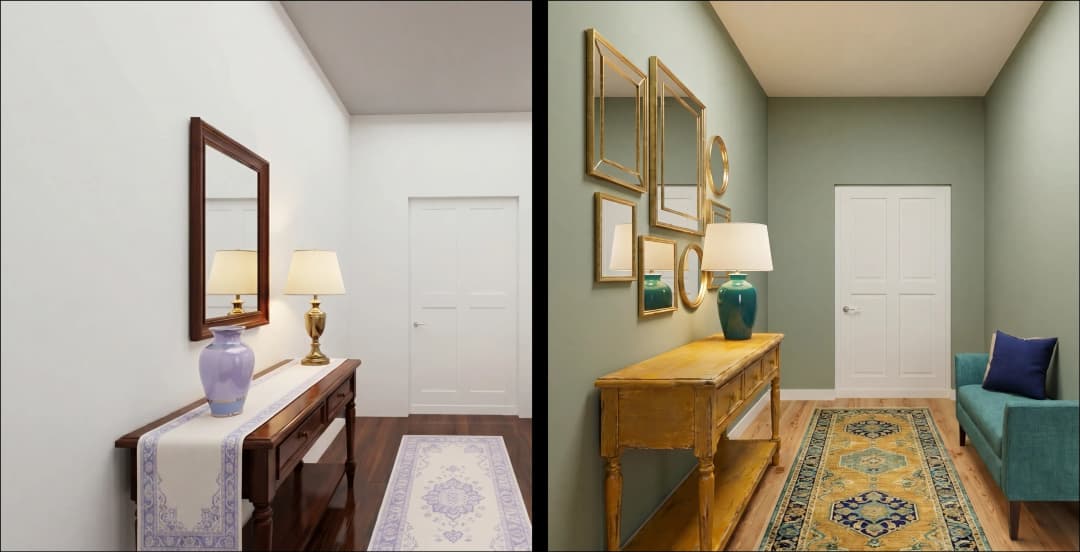
June 10, 2026
Foursite: Floor Plan to 3D Walkthrough in Minutes | VirtualSpaces
HHemanth Velury
CEO & Co-Founder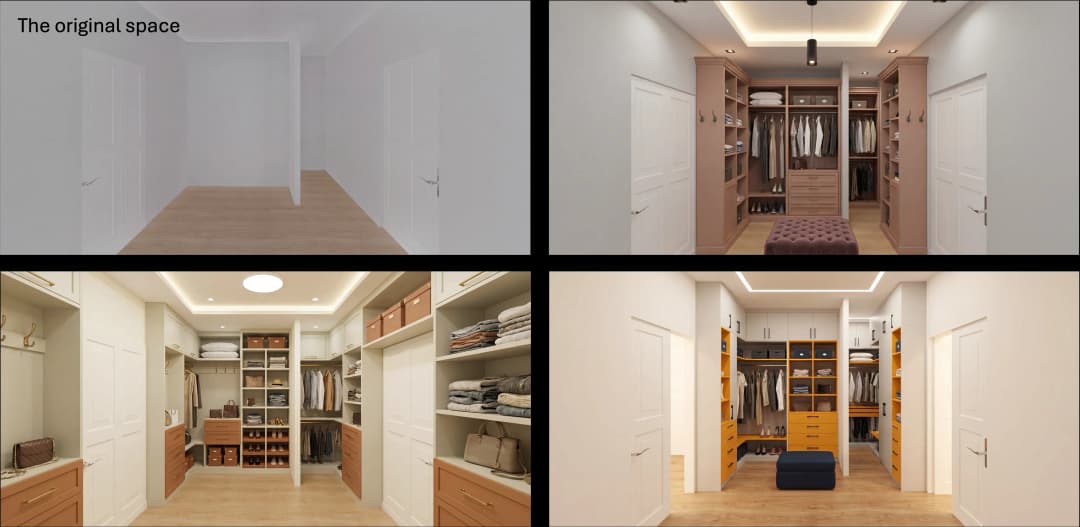
June 08, 2026
Win More Pitches With AI Renders Before the Meeting | VirtualSpaces
HHemanth Velury
CEO & Co-Founder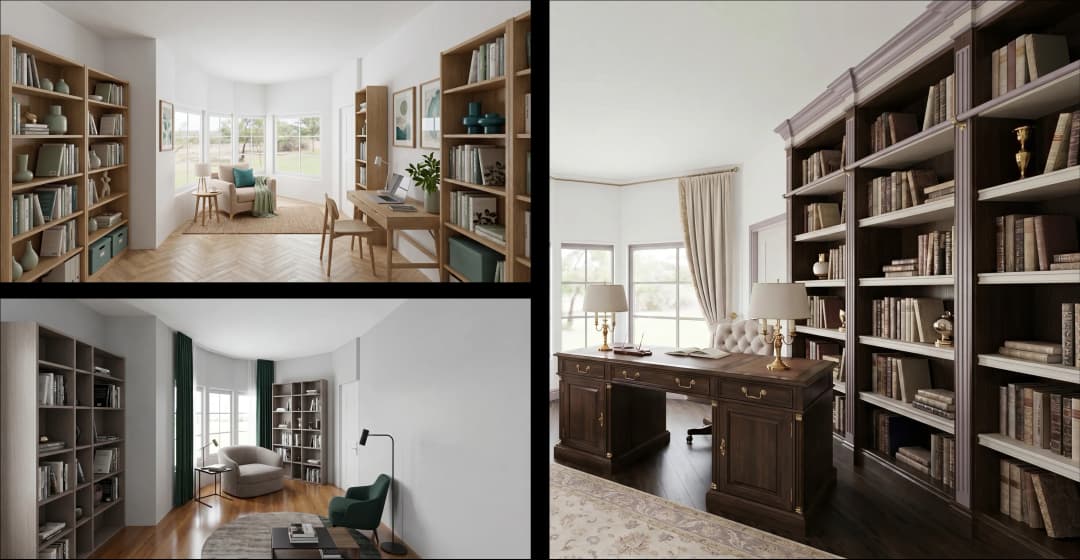
June 05, 2026
From Floor Plan to Finished Room: What AI Now Makes Possible | VirtualSpaces
HHemanth Velury
CEO & Co-Founder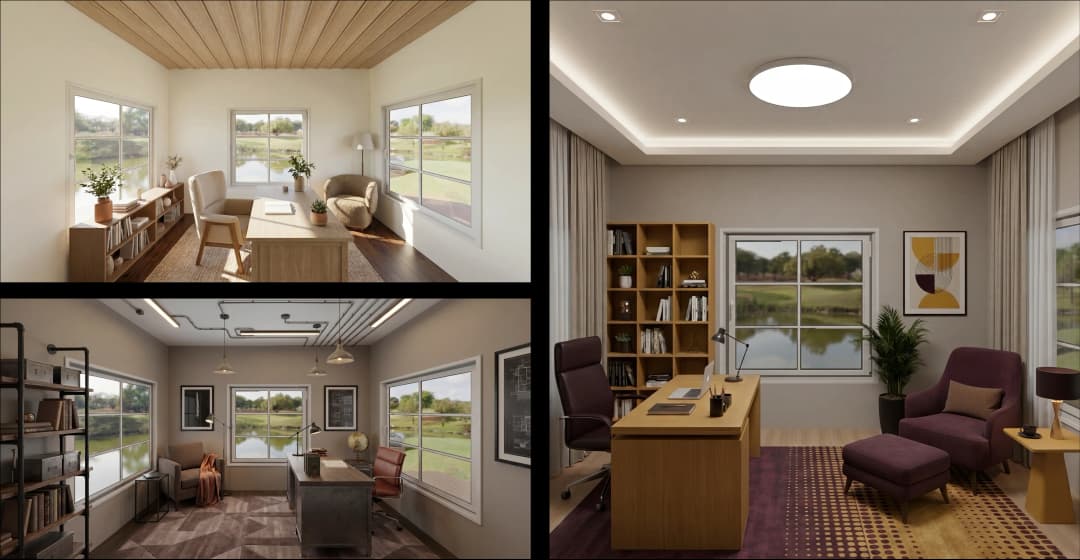
June 03, 2026
The Interior Design Brief Is Broken. AI Fixes It | VirtualSpaces
HHemanth Velury
CEO & Co-Founder
June 01, 2026
Pre-Construction Home Sales: AI Interior Visualization Guide | VirtualSpaces
HHemanth Velury
CEO & Co-Founder
May 30, 2026
Interior Design Principles: Applied with AI | VirtualSpaces
HHemanth Velury
CEO & Co-Founder
May 28, 2026
Designing Spaces for People, Not Blueprints | VirtualSpaces
HHemanth Velury
CEO & Co-Founder
May 26, 2026
The Future of Interior Design: Closing the Visualization Gap with Foursite and Remodroom | VirtualSpaces
HHemanth Velury
CEO & Co-Founder
May 18, 2026
How AI Visualization Upgrades Property Data Platforms | VirtualSpaces
HHemanth Velury
CEO & Co-Founder
May 14, 2026
How AI-First Insurers Can Use 3D Property Data to Transform Home Claims | VirtualSpaces
HHemanth Velury
CEO & Co-FounderMay 12, 2026
Why Photoreal 3D Renders Are Replacing Mood Boards | Interior Design Client Presentations | VirtualSpaces
HHemanth Velury
CEO & Co-Founder
May 08, 2026
From 2D Floor Plans To Living Worlds: The Spec‑Accurate 3D Engine | VirtualSpaces
HHemanth Velury
CEO & Co-Founder
May 06, 2026
Why Furniture Brands Need AI 3D Visualization Now | VirtualSpaces
HHemanth Velury
CEO & Co-Founder
May 4, 2026
How Property Portals Can Turn 2D Floor Plans into 3D Design Decisions | VirtualSpaces
HHemanth Velury
CEO & Co-Founder
April 29, 2026
The Home-Fit Test: Why Square Footage Misleads | VirtualSpaces
HHemanth Velury
CEO & Co-Founder
April 27, 2026
Designing Homes That Sell: 3D Visualization ROI Data | VirtualSpaces
HHemanth Velury
CEO & Co-FounderApril 24, 2026
What's Next: Foursite & Remodroom's New AI Features | VirtualSpaces
HHemanth Velury
CEO & Co-Founder
April 22, 2026
AI in Architecture: Closing the 85% Exposure Gap | VirtualSpaces
HHemanth Velury
CEO & Co-Founder
April 20, 2026
Interior Design Pricing in 2026: From Hourly to Value-Based Fees | VirtualSpaces
HHemanth Velury
CEO & Co-FounderApril 17, 2026
How Foursite and Remodroom Help Designers Win Clients | VirtualSpaces
HHemanth Velury
CEO & Co-Founder
April 15, 2026
Designing Spaces for People: Remodroom + Foursite AI Guide | VirtualSpaces
HHemanth Velury
CEO & Co-Founder
April 13, 2026
Designing for the Way People Actually Live: How AI 3D Is Finally Closing the Gap Between Floor Plan and Reality
HHemanth Velury
CEO & Co-Founder
April 11, 2026
Design in Real Time: AI Renders in Your First Client Meeting
HHemanth Velury
CEO & Co-Founder
April 06, 2026
Why Real Estate Photography Is No Longer Enough: The Shift to Spatial-First Listings
HHemanth Velury
CEO & Co-Founder
April 03, 2026
Property Management's Hidden Weapon: AI 3D Floor Plans That Cut Vacancy Time and Raise Tenant Quality
HHemanth Velury
CEO & Co-Founder
April 01, 2026
Off-Plan and Oversubscribed: How AI 3D Visualization Is Transforming Real Estate Pre-Sales
HHemanth Velury
CEO & Co-Founder
March 30, 2026
Why Foursite Beats Generic AI Tools for Interior Design 3D Visualization
HHemanth Velury
CEO & Co-Founder
March 27, 2026
7 Tenets of Interior Design: How AI Accelerates Harmony in Residential Spaces
HHemanth Velury
CEO & Co-Founder
March 25, 2026
What Is the 3-5-7 Rule in Interior Design? Foursite's AI Guide for Residential Spaces
HHemanth Velury
CEO & Co-Founder
March 23, 2026
What Is the 70/30 Rule in Interior Design? Foursite's AI Guide for Residential Spaces
HHemanth Velury
CEO & Co-Founder
March 20, 2026
How AI 3D Visualization Is Rewriting Residential Interior Design Workflows
HHemanth Velury
CEO & Co-Founder
March 18, 2026
Beyond Marketing: How 3D Floorplans Transform FM, Retrofit Planning & ESG Operations
HHemanth Velury
CEO & Co-Founder
March 16, 2026
Why AI Companies Use Token Payments (And Why VirtualSpaces Is Returning To Fiat)
HHemanth Velury
CEO & Co-Founder
March 13, 2026
Floorplan‑Native Digital Twins: Beyond BIM for Consumer‑Ready Real Estate Experiences
HHemanth Velury
CEO & Co-Founder
March 11, 2026
The Foursite Platform Thesis: Why Floor Plans, Not Photos, Are the Next Property Software Primitive
HHemanth Velury
CEO & Co-Founder
March 06, 2026
How to Standardize Design Quality Across Global Projects Using AI Floorplan-to-3D Tools
HHemanth Velury
CEO & Co-Founder
March 04, 2026
From CAD-First to AI-First: Reskilling Your Team for AI-Native Design Workflows
HHemanth Velury
CEO & Co-Founder
March 02, 2026
Algorithmic Ergonomics Meets Photorealistic 3D: Designing Human-Centered Smart Homes with Foursite in 2026
HHemanth Velury
CEO & Co-Founder
February 27, 2026
The Ethics of AI in Interior Design: Ownership, Originality, and Client Transparency
HHemanth Velury
CEO & Co-Founder
February 25, 2026
Designing with Empathy: Using AI 3D Visualization to Improve Client Communication and Emotional Clarity
HHemanth Velury
CEO & Co-Founder
February 23, 2026
From Tool to Infrastructure: AI Floorplan-to-3D and the Next Wave of PropTech
HHemanth Velury
CEO & Co-Founder
February 20, 2026
AI Interior Design for Holiday Homes: Turn Spare Flats into High-Demand Short-Stay Rentals with 3D Visuals
HHemanth Velury
CEO & Co-Founder
February 18, 2026
The Pre‑Purchase Power Play: How Savvy Home Buyers Use 3D Floor Plan Visualization to Negotiate Better Deals
HHemanth Velury
CEO & Co-FounderFebruary 16, 2026
AI Interior Design for Non‑Designers: How Homeowners Can Brief Like Pros
HHemanth Velury
CEO & Co-Founder
February 13, 2026
Scaling a Design Business Without Hiring a 3D Team: An Owner's Guide
HHemanth Velury
CEO & Co-Founder
February 11, 2026
From Bland to Bold: How to Rescue Builder-Grade Interiors on Any Budget
HHemanth Velury
CEO & Co-Founder
February 6, 2026
The Psychology of Space: How Room Dimensions Influence Interior Design Decisions
HHemanth Velury
CEO & Co-Founder
February 4, 2026
The Future of Interior Design Visualization: How AI Technology is Transforming 2D Concepts Into 3D Reality
HHemanth Velury
CEO & Co-Founder
February 2, 2026
AI Interior Décor: How Artificial Intelligence Generates Design Options from Your Floor Plan
HHemanth Velury
CEO & Co-Founder
January 30, 2026
Photoreal vs. Reality: What Clients Actually Expect from Interior Design Visualization
HHemanth Velury
CEO & Co-Founder
January 28, 2026
The Design Approval Conversation That Changes Everything: Communication Strategy When Using Photorealistic Visualization
HHemanth Velury
CEO & Co-Founder
January 25, 2026
Interior Design as Experience Design: How 3D Visualization Changes Your Professional Identity
HHemanth Velury
CEO & Co-Founder
January 23, 2026
The Professional Gap: How 3D Visualization Changes Interior Design Client Perception
HHemanth Velury
CEO & Co-Founder
January 21, 2026
Why Clients Fire Designers (And How 3D Visualization Could Have Saved the Project)
HHemanth Velury
CEO & Co-Founder
January 16, 2026
Blueprint to Vision: Why Seeing Is Believing in Interior Design
HHemanth Velury
CEO & Co-Founder
January 14, 2026
The Speed of Responsiveness: How AI Visualization Tools Make You Look Like You Care More
HHemanth Velury
CEO & Co-Founder
January 12, 2026
Why Interior Designers and Architects Can't Compete Without AI 3D Visualization Tools
HHemanth Velury
CEO & Co-Founder
January 07, 2026
From "Saved" to "Sold": How Homeowners Are Planning Renovations with AI
HHemanth Velury
CEO & Co-Founder
January 05, 2026
The Interior Designer's Secret Weapon: Speed as Premium Positioning
HHemanth Velury
CEO & Co-Founder
December 31, 2025
Gratitude, Growth & Game-Changing Innovation: VirtualSpaces' 2025 Journey & What's Coming in 2026
HHemanth Velury
CEO & Co-Founder
December 29, 2025
Why Interior Designers Are Switching to AI Floor Plan-to-3D Tools in 2026
HHemanth Velury
CEO & Co-Founder
December 26, 2025
AI Virtual Staging for Real Estate Agents: Sell More Homes Faster with Foursite
HHemanth Velury
CEO & Co-Founder
December 24, 2025
Why Architects Are Switching to AI 2D-to-3D: The SketchUp Alternative
HHemanth Velury
CEO & Co-Founder
December 22, 2025
Cut 3 Weeks from Real Estate Sales Cycle: The ROI of AI 2D to 3D Visualization
HHemanth Velury
CEO & Co-Founder
December 19, 2025
2D Floor Plans Are Dying: Why 3D Visualization & AI Virtual Staging Are the Future
HHemanth Velury
CEO & Co-Founder
December 17, 2025
Virtual Staging vs Physical Staging: How AI Saves Money Per Property
HHemanth Velury
CEO & Co-Founder
December 15, 2025
AI Floor Plan to Image: Revolutionizing Real Estate Marketing for Agents
HHemanth Velury
CEO & Co-Founder
December 12, 2025
Color of the Year 2026: Cloud Dancer | VirtualSpaces AI Interior Design Guide
HHemanth Velury
CEO & Co-Founder
December 10, 2025
AI Floor Plan to 3D: The New Standard for Interior Design Workflows
HHemanth Velury
CEO & Co-Founder
December 08, 2025
How Interior Design Studios Can Operationalize AI 2D-to-3D Workflows (Without Breaking Their Process)
HHemanth Velury
CEO & Co-Founder
December 06, 2025
How to Implement AI Interior Design Workflows in Your Studio
HHemanth Velury
CEO & Co-Founder
December 4, 2025
How Homeowners Can Use AI Interior Design Tools to Plan Renovations with Confidence
HHemanth Velury
CEO & Co-Founder
November 28, 2025
Interior Designers in the Age of AI: From Threat Narrative to Superpower
HHemanth Velury
CEO & Co-Founder
November 21, 2025
Foursite Launch: Embracing 'Release Early, Release Often'
HHemanth Velury
CEO & Co-Founder
November 13, 2025
Foursite by VirtSpaces: Empowering Interior Designers, Architects, and Homeowners
HHemanth Velury
CEO & Co-Founder
November 7, 2025
Reimagining Architectural Education: How AI Floorplan-to-3D Technology Can Transform Design Learning
VVirtualSpaces Research Labs
AI Research Initiative
October 27, 2025
Archisculpt AI: Turning Architectural Drawings into Photorealistic 3D Spaces
AAbhijeet Naik
Co-Founder & CTO
October 13, 2025
Home Makeover: From Floor Plan to Dream Space with AI
HHemanth Velury
CEO & Co-Founder
October 6, 2025
Real-Time Rendering & AI: Revolutionizing Interactive Property Walkthroughs with VirtSpaces
HHemanth Velury
CEO & Co-Founder
September 26, 2025
Foursite - A True AI-Native Experience in Design Visualization
AAbhijeet Naik
CTO & Co-Founder
September 18, 2025
Why PropTech Startups Are Betting on AI Interior Design
HHemanth Velury
CEO & Co-Founder
September 11, 2025
How AI Differs from Traditional 3D Rendering Software
HHemanth Velury
CEO & Co-Founder
September 2, 2025
From Client to Investor: How Nila Spaces and VirtSpaces Are Redefining Proptech with AI
HHemanth Velury
CEO & Co-Founder
August 25, 2025
VirtSpaces From Virtual Reality to AI – Transforming Real Estate Visualization.
HHemanth Velury
CEO & Co-Founder


We help teams collaborate seamlessly and reduce costs. Virtual Spaces offers cutting-edge technology with flexible plans designed to fit modern teams.
Copyright © VirtSpaces Pvt. Ltd. 2025 All Rights Reserved.
CIN: U74999KA2016PTC094921