
April 15, 2026
- AI Technology
- Interior Design
Designing Spaces for People: Remodroom + Foursite AI Guide | VirtualSpaces
Hemanth Velury
CEO & Co-FounderDesigning Spaces for People, Not Paper: How Remodroom and Foursite Close the Floor Plan Gap
There is a moment every interior designer, architect, and real estate marketer knows by heart.
You have done the work. The floor plan is precise, the material palette is considered, the design intent is clear. The client sits across from you, nods, and says they love it. Then six weeks later, the furniture arrives and you get the call: "This isn't what I imagined."
It is rarely about bad design. It is almost always about the same thing: the gap between a 2D floor plan and the lived, three-dimensional experience of a space.
Spatial cognition research is unambiguous on this point. Most people, including design-literate clients, cannot reliably extrapolate volume, proportion, and atmosphere from a flat drawing. A floor plan is a professional instrument. It encodes information with precision. But it was never built to be a communication tool for buyers, homeowners, or the people who will actually live inside those lines.
The industry has known this for decades. What has changed is the infrastructure now available to close that gap, not eventually, not at enterprise budget, but right now, in the first client meeting.
Two Tools, One Pipeline
VirtualSpaces has built two products that, used together, address this problem at every stage of the design and sales process.
Foursite converts 2D floor plans and architectural blueprints into photorealistic AI 3D interior design renders. Upload a blueprint, select a design direction, and within minutes you have a photorealistic 3D environment generated directly from the floor plan geometry. No render farm. No outsourced studio. No three-week turnaround. The spatial relationships in the render are true to what will actually be built, because they are derived from the actual plan.
Remodroom takes those renders, or any room photograph, and gives practitioners pinpoint control over individual design elements. Swap the sofa. Change the wall color. Replace hardwood with herringbone tile. Remodroom isolates the selected element, applies the change, and regenerates a photoreal image in seconds. The rest of the room stays exactly as it was. You are not starting over; you are iterating.
Together, they create a complete design communication pipeline. Foursite generates the spatial reality from the floor plan. Remodroom refines and iterates within that reality. For practitioners, this is not a faster version of the old workflow. It is a structurally different kind of client conversation.
Why the Gap Has Two Layers
The cognitive problem between a floor plan and a lived space actually has two distinct layers, and most tools only address one of them.
Layer 1 - Spatial translation: The buyer or client cannot read a floor plan as a three-dimensional volume. They cannot mentally furnish it, light it, or feel its proportions. Foursite solves this by doing the translation for them. A 2D floor plan goes in; a photorealistic AI 3D interior design render comes out.
Layer 2 - Decision specificity: Even when a client can see the space in 3D, they still have choices to make. Does the kitchen island look better in marble or dark stained oak? Would a sectional work better than two armchairs in that corner? Should the ceiling be coffered or flat? Remodroom solves this by making each decision visible rather than imagined.
These are sequential problems. You cannot address Layer 2 without first solving Layer 1. And addressing Layer 1 without Layer 2 leaves clients able to see the space but still uncertain about their choices, still relying on their imagination to fill in the gaps.
The Foursite-to-Remodroom pipeline addresses both layers in sequence, inside a single session, without changing software or waiting for a new render from an external studio.
For Interior Designers: The Revision Cycle Ends in the Room
Interior designers operate at the intersection of aesthetic vision and client trust. The challenge is rarely the design itself. It is communicating that design in a way that converts client hesitation into client confidence.
The traditional workflow looks something like this:
- Measure and survey the space
- Draft a floor plan and develop the concept
- Produce mood boards and material selections
- Commission renders, if the project budget allows and wait 2-3 weeks
- Present, receive feedback, revise, re-commission, repeat
Every round-trip through this cycle costs time, budget, and creative momentum. For a mid-sized residential project, a single outsourced render round can cost $800 to $2,500. If the client wants to see the space with a different sofa configuration, the clock resets entirely.
Foursite and Remodroom compress this loop into a different shape:
- Upload the floor plan to Foursite and generate photorealistic interior design renders across 4-6 design directions, in the same morning
- Bring those renders into the first client meeting, not the third
- When the client asks "can we see this with a warmer tone?" open Remodroom, isolate the walls and soft furnishings, regenerate in under a minute
- Client sees the revision while still in the room; the revision cycle closes in the conversation, not over email three weeks later
The designer who can iterate visually in a client meeting is not just faster. They are more authoritative. They are demonstrating command of the space, not just describing it.
| Metric | Traditional Workflow | Foursite + Remodroom |
|---|---|---|
| First render delivery | 2-3 weeks | Same day |
| Cost per render round | $800-$2,500 | Included in platform |
| Revision turnaround | 1-2 weeks per round | Minutes |
| Design directions shown in first meeting | 1-2 | 4-6+ |
| Software handoffs per project | 4-6 tools | 2 tools |
For Architects: Designing Homes People Can Actually Understand
Architects designing homes are asking clients to make irreversible decisions about spaces they have never been inside. The floor plan is the primary communication vehicle, and it is, by design, abstract. It communicates structure. It does not communicate atmosphere, proportion as felt experience, or the quality of light in a northwest-facing living room at 4pm in November.
Most homeowners cannot reliably simulate this from a drawing. This is not a failure of intelligence. It is a failure of spatial training. Architects spend years developing the ability to read a plan as a three-dimensional volume. Clients have not had those years.
Foursite gives architects the ability to show rather than tell. A floor plan goes in; a photorealistic interior design render comes out, accurate to the actual blueprint geometry. The client sees their living room, not a generic showroom. They see the proportions of their specific plan, with furniture that fits those proportions.
Remodroom adds a specific capability that matters enormously in residential architecture: visible material comparison. Architects regularly present clients with finish options, window placement alternatives, or furniture configurations. With Remodroom, each variation becomes a visual comparison rather than a verbal description.
Consider the practical difference:
"We could do the kitchen island in marble or in a dark stained oak, both would work well with the cabinetry."
versus
"Here is the kitchen with marble, and here it is with the dark oak. Which feels right to you?"
The second conversation closes faster. It produces better decisions. It reduces scope changes after construction begins and in residential projects, late-stage scope changes are where the real cost overruns live, for both architect and client.
Where this compounds over a project:
- Material and finish selections close 2-3 meetings earlier
- Clients arrive at construction documents with higher confidence, fewer reservations
- Post-completion surprises decrease, because the client has seen the space at multiple decision points
- The architect's design intent is communicated completely, not reconstructed imperfectly by the client
For Real Estate Marketing Professionals: Pre-Sales Without the Wait
Real estate marketing operates under a constraint that interior design and architecture do not: the space often does not exist yet or exists in a condition that actively works against the buyer's imagination.
For new developments, the traditional toolkit has been a floor plan, a physical model home if the budget allowed, and sales talent filling the cognitive gap with words and conviction. For resale properties, vacant or cluttered spaces make it genuinely difficult for buyers to visualize what they are purchasing.
AI virtual staging through Foursite addresses both problems. A 2D floor plan converts to a 3D photorealistic render that shows the space furnished, styled, and lit, before a single piece of furniture has been ordered. For off-plan residential developments, this means pre-sales collateral that communicates spatial reality rather than architectural abstraction. Buyers can see what they are buying before it exists.
Remodroom extends this for real estate marketing through buyer-facing personalization. Different buyer profiles have different aesthetic vocabularies. A young professional couple and a multigenerational family may be evaluating the same three-bedroom floor plan, but they are imagining different versions of it.
With Remodroom, a marketing team can generate multiple styled versions of the same space from the same Foursite base render:
- Contemporary minimal for the urban buyer profile
- Warm transitional for the move-up family buyer
- Classic traditional for the established household buyer
Each version generates in minutes. Each version shows a buyer a space that maps to their own aesthetic expectations. The floor plan stops being something buyers have to interpret. Foursite and Remodroom build the interpretation for them.
| Use Case | Without AI Visualization | With Foursite + Remodroom |
|---|---|---|
| Marketing renders for new development | 3-5 weeks, outsourced | 1-2 days, in-house |
| Styled variants per unit type | +1-2 weeks per variant | +30 minutes per variant |
| Virtual staging for vacant listing | $1,500-$3,000 outsourced | Fraction of cost, in-house |
| Revision to styled render | 1 week + additional cost | Minutes, no additional cost |
| Design directions per buyer profile | 1-2 (budget limited) | 4-6+ per profile |
For a developer marketing a 50-unit residential building, the ability to show 4-6 styled variants of each unit type, without outsourced studios, without weeks of lead time, without per-revision fees is a structural shift in how pre-sales pipelines operate.
The Practitioner Workflow, End to End
For a practitioner using both tools together, the workflow is straightforward:
- Ingest the plan: Upload the 2D floor plan or architectural blueprint to Foursite. The system reads the geometry and generates a 3D environment accurate to the plan.
- Generate design directions: Select style parameters or apply design directions in Foursite. Generate photorealistic interior design renders across multiple directions simultaneously. This is your baseline presentation layer.
- Present with confidence: Bring renders to the client meeting. The conversation shifts from "here is what I am proposing" to "here is what this space will look like, let's refine it together."
- Iterate in real time: When the client responds to a specific element, open that render in Remodroom. Select the element: Furniture, flooring, walls, ceiling, apply the alternative, regenerate. Show the client both versions side by side. Decision made. Move on.
- Build the final set: Once the client has locked their choices, finalize the Foursite renders with the confirmed design direction. Deliver a complete visual package: multiple angles, accurate to the floor plan, reflecting the agreed design.
No render farm. No outsourcing email chains. No software handoffs through five different platforms. The full workflow lives in two tools that are built to work together.
Designing Homes for the People Who Will Live in Them
The strongest argument for Foursite and Remodroom together is not efficiency, though the efficiency case is significant. It is fidelity: the fidelity between what a practitioner has designed and what a client understands they have agreed to.
Interior designers who use AI 3D visualization and AI virtual staging are not replacing their creative judgment. They are communicating it more completely. The space they have envisioned in three dimensions can be seen by the client in three dimensions, not reconstructed imperfectly from a floor plan and a verbal description.
Architects designing homes for people deserve tools that let those people actually understand what they are agreeing to build. Remodroom and Foursite together make that possible at a price point and speed that fits the residential market, not just high-budget commercial projects.
Real estate marketing professionals closing pre-sales on properties that are months from completion now have the infrastructure to sell spaces that feel real, because they look real, generated directly from the floor plan, styled for the buyer, iterable on demand.
The floor plan has always been a professional shorthand. Foursite converts it into a communication tool. Remodroom makes that communication iterative, specific, and responsive to what each individual client actually needs to see before they can say yes.
Designing spaces for people, and not for abstract approval, not for professional convention, but for the actual human experience of choosing and inhabiting a home has always been the goal. The tools to deliver on that goal, at the speed and economics the residential market demands, are here.
Recommended for you

August 19, 2026
The End of the Model Home? 3D Changes the Math | VirtualSpaces
HHemanth Velury
CEO & Co-Founder
August 17, 2026
Designing Spaces That Actually Get Built | VirtualSpaces
HHemanth Velury
CEO & Co-Founder
August 12, 2026
Designing Homes for the Stuff People Actually Own | VirtualSpaces
HHemanth Velury
CEO & Co-Founder
August 07, 2026
Floor Plan to Bill of Materials: The 3D Model as Data | VirtualSpaces
HHemanth Velury
CEO & Co-Founder.png&w=1080&q=75)
August 05, 2026
Designing Homes for How People Actually Live | VirtualSpaces
HHemanth Velury
CEO & Co-Founder
August 03, 2026
Honest by Design: Trust in AI Real Estate Imagery | VirtualSpaces
HHemanth Velury
CEO & Co-Founder
July 29, 2026
Kitchen and Bath: The Two Rooms That Decide Resale | VirtualSpaces
HHemanth Velury
CEO & Co-Founder
July 27, 2026
Why Empty Rooms Don't Sell: Virtual Staging | VirtualSpaces
HHemanth Velury
CEO & Co-Founder
July 24, 2026
The Quiet Sustainability Win of Deciding in 3D | VirtualSpaces
HHemanth Velury
CEO & Co-Founder
July 22, 2026
Why Paint Swatches Lie: Test Color in 3D First | VirtualSpaces
HHemanth Velury
CEO & Co-Founder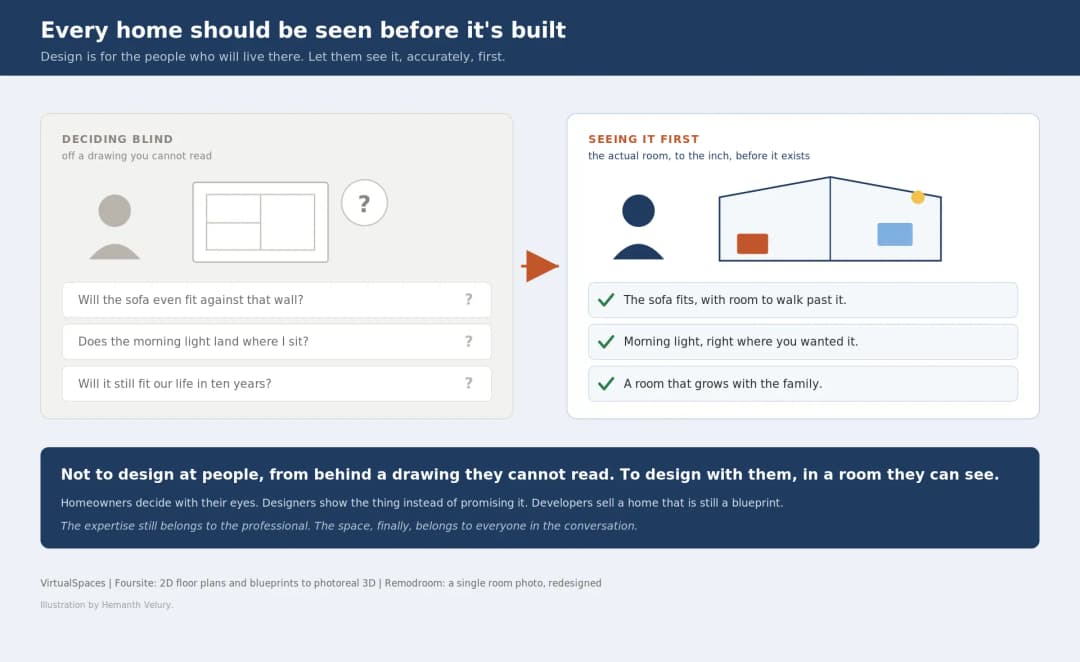
July 20, 2026
Why Every Home Should Be Seen Before It's Built | VirtualSpaces
HHemanth Velury
CEO & Co-Founder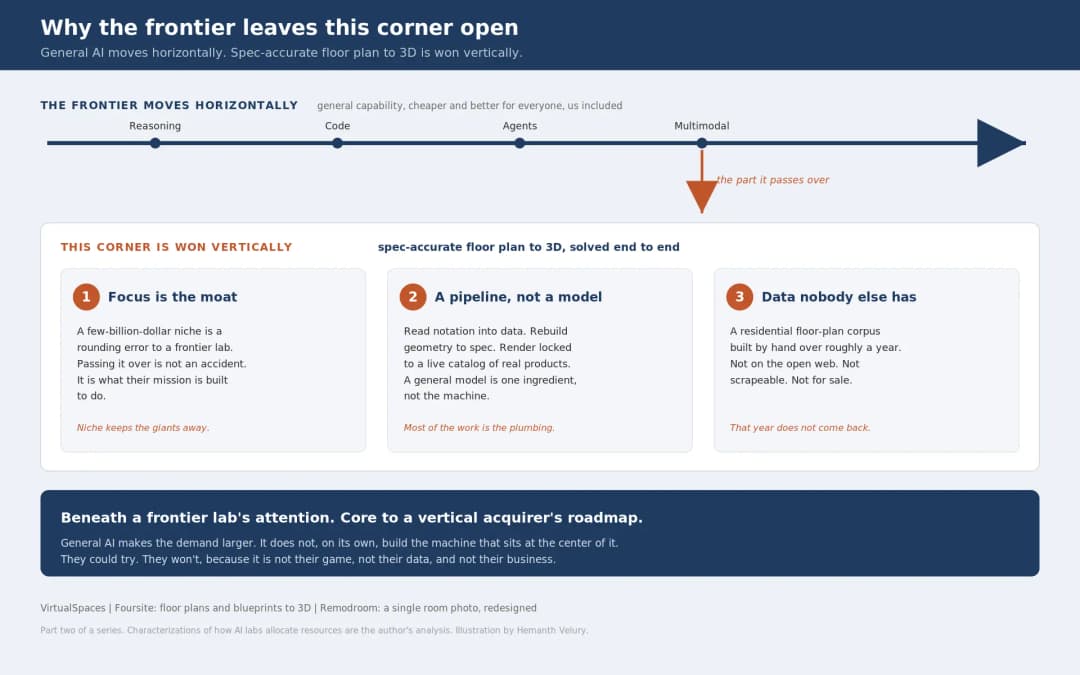
July 17, 2026
Why Big AI Labs Won't Build Floor Plan to 3D | VirtualSpaces
HHemanth Velury
CEO & Co-Founder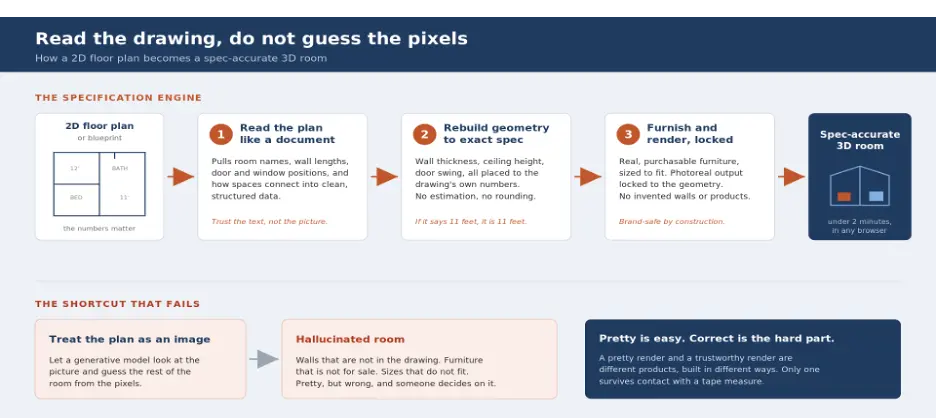
July 15, 2026
How We Solve Floor Plan to 3D, Accurately | VirtualSpaces
HHemanth Velury
CEO & Co-Founder
July 13, 2026
Designing Homes That Age With the People in Them | VirtualSpaces
HHemanth Velury
CEO & Co-Founder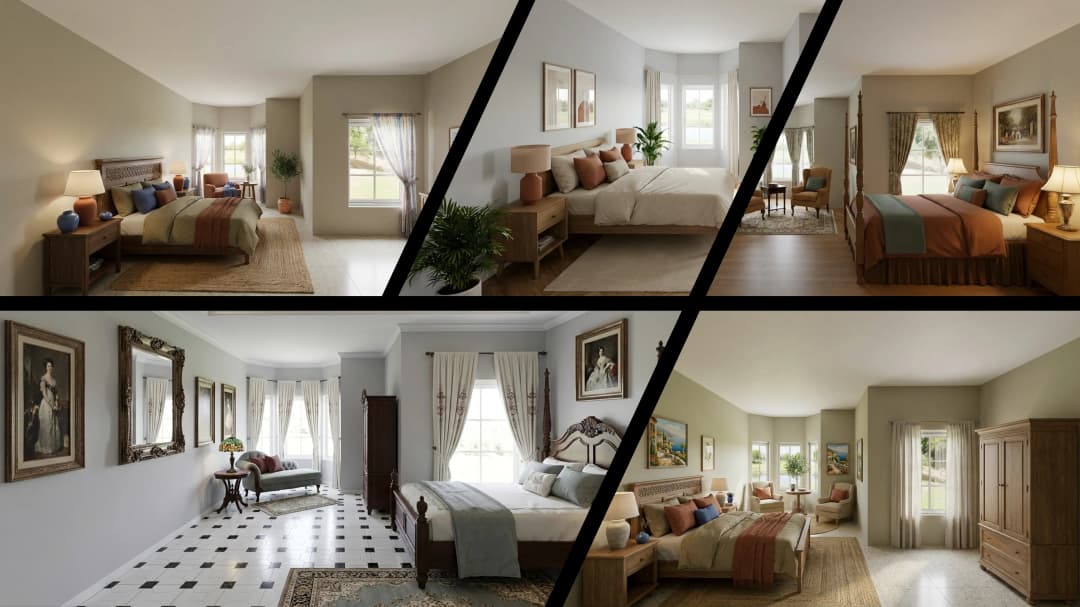
July 10, 2026
Designing Spaces for How Light Actually Moves | VirtualSpaces
HHemanth Velury
CEO & Co-Founder
July 08, 2026
Designing Homes for Every Life Stage in 3D | VirtualSpaces
HHemanth Velury
CEO & Co-Founder
July 06, 2026
Build an Interior Design Portfolio Without Clients | VirtualSpaces
HHemanth Velury
CEO & Co-Founder
June 26, 2026
AI Interior Design: Full 3D Workflow in One Platform | VirtualSpaces
HHemanth Velury
CEO & Co-Founder
June 24, 2026
Scope Creep in Interior Design: How AI Visualization Fixes It | VirtualSpaces
HHemanth Velury
CEO & Co-Founder
June 22, 2026
What Buyers See on a Floor Plan: Your Biggest Sales Problem | VirtualSpaces
HHemanth Velury
CEO & Co-Founder
June 19, 2026
Small Design Studios vs Big Firms: The AI Advantage | VirtualSpaces
HHemanth Velury
CEO & Co-Founder
June 17, 2026
After the Mood Board: AI Interior Visualization | VirtualSpaces
HHemanth Velury
CEO & Co-Founder
June 15, 2026
Foursite Pro Editor: Full Floor Plan Control for Designers | VirtualSpaces
HHemanth Velury
CEO & Co-Founder
June 12, 2026
AI Interior Design: Style Any Room in Seconds with Foursite | VirtualSpaces
HHemanth Velury
CEO & Co-Founder
June 10, 2026
Foursite: Floor Plan to 3D Walkthrough in Minutes | VirtualSpaces
HHemanth Velury
CEO & Co-Founder
June 08, 2026
Win More Pitches With AI Renders Before the Meeting | VirtualSpaces
HHemanth Velury
CEO & Co-Founder
June 05, 2026
From Floor Plan to Finished Room: What AI Now Makes Possible | VirtualSpaces
HHemanth Velury
CEO & Co-Founder
June 03, 2026
The Interior Design Brief Is Broken. AI Fixes It | VirtualSpaces
HHemanth Velury
CEO & Co-Founder
June 01, 2026
Pre-Construction Home Sales: AI Interior Visualization Guide | VirtualSpaces
HHemanth Velury
CEO & Co-Founder
May 30, 2026
Interior Design Principles: Applied with AI | VirtualSpaces
HHemanth Velury
CEO & Co-Founder
May 28, 2026
Designing Spaces for People, Not Blueprints | VirtualSpaces
HHemanth Velury
CEO & Co-Founder
May 26, 2026
The Future of Interior Design: Closing the Visualization Gap with Foursite and Remodroom | VirtualSpaces
HHemanth Velury
CEO & Co-Founder
May 18, 2026
How AI Visualization Upgrades Property Data Platforms | VirtualSpaces
HHemanth Velury
CEO & Co-Founder
May 14, 2026
How AI-First Insurers Can Use 3D Property Data to Transform Home Claims | VirtualSpaces
HHemanth Velury
CEO & Co-FounderMay 12, 2026
Why Photoreal 3D Renders Are Replacing Mood Boards | Interior Design Client Presentations | VirtualSpaces
HHemanth Velury
CEO & Co-Founder
May 08, 2026
From 2D Floor Plans To Living Worlds: The Spec‑Accurate 3D Engine | VirtualSpaces
HHemanth Velury
CEO & Co-Founder
May 06, 2026
Why Furniture Brands Need AI 3D Visualization Now | VirtualSpaces
HHemanth Velury
CEO & Co-Founder
May 4, 2026
How Property Portals Can Turn 2D Floor Plans into 3D Design Decisions | VirtualSpaces
HHemanth Velury
CEO & Co-Founder
April 29, 2026
The Home-Fit Test: Why Square Footage Misleads | VirtualSpaces
HHemanth Velury
CEO & Co-Founder
April 27, 2026
Designing Homes That Sell: 3D Visualization ROI Data | VirtualSpaces
HHemanth Velury
CEO & Co-FounderApril 24, 2026
What's Next: Foursite & Remodroom's New AI Features | VirtualSpaces
HHemanth Velury
CEO & Co-Founder
April 22, 2026
AI in Architecture: Closing the 85% Exposure Gap | VirtualSpaces
HHemanth Velury
CEO & Co-Founder
April 20, 2026
Interior Design Pricing in 2026: From Hourly to Value-Based Fees | VirtualSpaces
HHemanth Velury
CEO & Co-FounderApril 17, 2026
How Foursite and Remodroom Help Designers Win Clients | VirtualSpaces
HHemanth Velury
CEO & Co-Founder
April 13, 2026
Designing for the Way People Actually Live: How AI 3D Is Finally Closing the Gap Between Floor Plan and Reality
HHemanth Velury
CEO & Co-Founder
April 11, 2026
Design in Real Time: AI Renders in Your First Client Meeting
HHemanth Velury
CEO & Co-Founder
April 06, 2026
Why Real Estate Photography Is No Longer Enough: The Shift to Spatial-First Listings
HHemanth Velury
CEO & Co-Founder
April 03, 2026
Property Management's Hidden Weapon: AI 3D Floor Plans That Cut Vacancy Time and Raise Tenant Quality
HHemanth Velury
CEO & Co-Founder
April 01, 2026
Off-Plan and Oversubscribed: How AI 3D Visualization Is Transforming Real Estate Pre-Sales
HHemanth Velury
CEO & Co-Founder
March 30, 2026
Why Foursite Beats Generic AI Tools for Interior Design 3D Visualization
HHemanth Velury
CEO & Co-Founder
March 27, 2026
7 Tenets of Interior Design: How AI Accelerates Harmony in Residential Spaces
HHemanth Velury
CEO & Co-Founder
March 25, 2026
What Is the 3-5-7 Rule in Interior Design? Foursite's AI Guide for Residential Spaces
HHemanth Velury
CEO & Co-Founder
March 23, 2026
What Is the 70/30 Rule in Interior Design? Foursite's AI Guide for Residential Spaces
HHemanth Velury
CEO & Co-Founder
March 20, 2026
How AI 3D Visualization Is Rewriting Residential Interior Design Workflows
HHemanth Velury
CEO & Co-Founder
March 18, 2026
Beyond Marketing: How 3D Floorplans Transform FM, Retrofit Planning & ESG Operations
HHemanth Velury
CEO & Co-Founder
March 16, 2026
Why AI Companies Use Token Payments (And Why VirtualSpaces Is Returning To Fiat)
HHemanth Velury
CEO & Co-Founder
March 13, 2026
Floorplan‑Native Digital Twins: Beyond BIM for Consumer‑Ready Real Estate Experiences
HHemanth Velury
CEO & Co-Founder
March 11, 2026
The Foursite Platform Thesis: Why Floor Plans, Not Photos, Are the Next Property Software Primitive
HHemanth Velury
CEO & Co-Founder
March 09, 2026
Design Systems for Space: Building Reusable 3D Component Libraries on Top of AI Floorplan‑to‑3D Engines
HHemanth Velury
CEO & Co-Founder
March 06, 2026
How to Standardize Design Quality Across Global Projects Using AI Floorplan-to-3D Tools
HHemanth Velury
CEO & Co-Founder
March 04, 2026
From CAD-First to AI-First: Reskilling Your Team for AI-Native Design Workflows
HHemanth Velury
CEO & Co-Founder
March 02, 2026
Algorithmic Ergonomics Meets Photorealistic 3D: Designing Human-Centered Smart Homes with Foursite in 2026
HHemanth Velury
CEO & Co-Founder
February 27, 2026
The Ethics of AI in Interior Design: Ownership, Originality, and Client Transparency
HHemanth Velury
CEO & Co-Founder
February 25, 2026
Designing with Empathy: Using AI 3D Visualization to Improve Client Communication and Emotional Clarity
HHemanth Velury
CEO & Co-Founder
February 23, 2026
From Tool to Infrastructure: AI Floorplan-to-3D and the Next Wave of PropTech
HHemanth Velury
CEO & Co-Founder
February 20, 2026
AI Interior Design for Holiday Homes: Turn Spare Flats into High-Demand Short-Stay Rentals with 3D Visuals
HHemanth Velury
CEO & Co-Founder
February 18, 2026
The Pre‑Purchase Power Play: How Savvy Home Buyers Use 3D Floor Plan Visualization to Negotiate Better Deals
HHemanth Velury
CEO & Co-FounderFebruary 16, 2026
AI Interior Design for Non‑Designers: How Homeowners Can Brief Like Pros
HHemanth Velury
CEO & Co-Founder
February 13, 2026
Scaling a Design Business Without Hiring a 3D Team: An Owner's Guide
HHemanth Velury
CEO & Co-Founder
February 11, 2026
From Bland to Bold: How to Rescue Builder-Grade Interiors on Any Budget
HHemanth Velury
CEO & Co-Founder
February 6, 2026
The Psychology of Space: How Room Dimensions Influence Interior Design Decisions
HHemanth Velury
CEO & Co-Founder
February 4, 2026
The Future of Interior Design Visualization: How AI Technology is Transforming 2D Concepts Into 3D Reality
HHemanth Velury
CEO & Co-Founder
February 2, 2026
AI Interior Décor: How Artificial Intelligence Generates Design Options from Your Floor Plan
HHemanth Velury
CEO & Co-Founder
January 30, 2026
Photoreal vs. Reality: What Clients Actually Expect from Interior Design Visualization
HHemanth Velury
CEO & Co-Founder
January 28, 2026
The Design Approval Conversation That Changes Everything: Communication Strategy When Using Photorealistic Visualization
HHemanth Velury
CEO & Co-Founder
January 25, 2026
Interior Design as Experience Design: How 3D Visualization Changes Your Professional Identity
HHemanth Velury
CEO & Co-Founder
January 23, 2026
The Professional Gap: How 3D Visualization Changes Interior Design Client Perception
HHemanth Velury
CEO & Co-Founder
January 21, 2026
Why Clients Fire Designers (And How 3D Visualization Could Have Saved the Project)
HHemanth Velury
CEO & Co-Founder
January 16, 2026
Blueprint to Vision: Why Seeing Is Believing in Interior Design
HHemanth Velury
CEO & Co-Founder
January 14, 2026
The Speed of Responsiveness: How AI Visualization Tools Make You Look Like You Care More
HHemanth Velury
CEO & Co-Founder
January 12, 2026
Why Interior Designers and Architects Can't Compete Without AI 3D Visualization Tools
HHemanth Velury
CEO & Co-Founder
January 07, 2026
From "Saved" to "Sold": How Homeowners Are Planning Renovations with AI
HHemanth Velury
CEO & Co-Founder
January 05, 2026
The Interior Designer's Secret Weapon: Speed as Premium Positioning
HHemanth Velury
CEO & Co-Founder
December 31, 2025
Gratitude, Growth & Game-Changing Innovation: VirtualSpaces' 2025 Journey & What's Coming in 2026
HHemanth Velury
CEO & Co-Founder
December 29, 2025
Why Interior Designers Are Switching to AI Floor Plan-to-3D Tools in 2026
HHemanth Velury
CEO & Co-Founder
December 26, 2025
AI Virtual Staging for Real Estate Agents: Sell More Homes Faster with Foursite
HHemanth Velury
CEO & Co-Founder
December 24, 2025
Why Architects Are Switching to AI 2D-to-3D: The SketchUp Alternative
HHemanth Velury
CEO & Co-Founder
December 22, 2025
Cut 3 Weeks from Real Estate Sales Cycle: The ROI of AI 2D to 3D Visualization
HHemanth Velury
CEO & Co-Founder
December 19, 2025
2D Floor Plans Are Dying: Why 3D Visualization & AI Virtual Staging Are the Future
HHemanth Velury
CEO & Co-Founder
December 17, 2025
Virtual Staging vs Physical Staging: How AI Saves Money Per Property
HHemanth Velury
CEO & Co-Founder
December 15, 2025
AI Floor Plan to Image: Revolutionizing Real Estate Marketing for Agents
HHemanth Velury
CEO & Co-Founder
December 12, 2025
Color of the Year 2026: Cloud Dancer | VirtualSpaces AI Interior Design Guide
HHemanth Velury
CEO & Co-Founder
December 10, 2025
AI Floor Plan to 3D: The New Standard for Interior Design Workflows
HHemanth Velury
CEO & Co-Founder
December 08, 2025
How Interior Design Studios Can Operationalize AI 2D-to-3D Workflows (Without Breaking Their Process)
HHemanth Velury
CEO & Co-Founder
December 06, 2025
How to Implement AI Interior Design Workflows in Your Studio
HHemanth Velury
CEO & Co-Founder
December 4, 2025
How Homeowners Can Use AI Interior Design Tools to Plan Renovations with Confidence
HHemanth Velury
CEO & Co-Founder
November 28, 2025
Interior Designers in the Age of AI: From Threat Narrative to Superpower
HHemanth Velury
CEO & Co-Founder
November 21, 2025
Foursite Launch: Embracing 'Release Early, Release Often'
HHemanth Velury
CEO & Co-Founder
November 13, 2025
Foursite by VirtSpaces: Empowering Interior Designers, Architects, and Homeowners
HHemanth Velury
CEO & Co-Founder
November 7, 2025
Reimagining Architectural Education: How AI Floorplan-to-3D Technology Can Transform Design Learning
VVirtualSpaces Research Labs
AI Research Initiative
October 27, 2025
Archisculpt AI: Turning Architectural Drawings into Photorealistic 3D Spaces
AAbhijeet Naik
Co-Founder & CTO
October 13, 2025
Home Makeover: From Floor Plan to Dream Space with AI
HHemanth Velury
CEO & Co-Founder
October 6, 2025
Real-Time Rendering & AI: Revolutionizing Interactive Property Walkthroughs with VirtSpaces
HHemanth Velury
CEO & Co-Founder
September 26, 2025
Foursite - A True AI-Native Experience in Design Visualization
AAbhijeet Naik
CTO & Co-Founder
September 18, 2025
Why PropTech Startups Are Betting on AI Interior Design
HHemanth Velury
CEO & Co-Founder
September 11, 2025
How AI Differs from Traditional 3D Rendering Software
HHemanth Velury
CEO & Co-Founder
September 2, 2025
From Client to Investor: How Nila Spaces and VirtSpaces Are Redefining Proptech with AI
HHemanth Velury
CEO & Co-Founder
August 25, 2025
VirtSpaces From Virtual Reality to AI – Transforming Real Estate Visualization.
HHemanth Velury
CEO & Co-Founder


We help teams collaborate seamlessly and reduce costs. Virtual Spaces offers cutting-edge technology with flexible plans designed to fit modern teams.
Copyright © VirtSpaces Pvt. Ltd. 2025 All Rights Reserved.
CIN: U74999KA2016PTC094921