May 06, 2026
- AI Technology
- Interior Design
Why Furniture Brands Need AI 3D Visualization Now | VirtualSpaces
Hemanth Velury
CEO & Co-FounderWhy Every Furniture Company Needs AI 3D Visualization - And Why Building It Will Take Two Years
There is a gap at the center of every furniture purchase decision, and the industry has spent decades pretending it does not exist.
A customer walks into a showroom, or lands on a product page, and sees a sofa. It looks right in the photograph. It looks good in the staged vignette. But the customer's apartment is not that room. Their walls are a different color. Their floor is a different material. Their space is narrower, or longer, or opens to a kitchen that complicates everything. And so they leave or they buy and return it.
This is not a customer problem. It is an infrastructure problem. The companies that solve it first will own the next decade of furniture retail.
The furniture and home goods category carries return rates of 15 to 20 percent globally, with a significant share driven by one consistent failure: the product looked nothing like what the customer imagined in their space. This problem compounds upstream. Interior designers spend hours generating concepts by hand or waiting on specialist render studios. Sales cycles stretch across weeks because clients cannot visualize what is being proposed. Residential developers stage show apartments at significant cost because the only alternative, that of asking buyers to imagine, does not work.
The friction is not taste. It is tooling. And the tools have been broken for a long time. VirtualSpaces has built the infrastructure layer that changes this - not incrementally, but structurally. Its products, including Foursite for floor plan to 3D visualization and Remodroom for AI-powered room redesign, represent the clearest answer the furniture and furnishing industry has had to the visualization problem. Understanding why requires understanding exactly what has been built - and exactly what it would take to build it yourself.
What the Visualization Problem Actually Costs
Start here: a customer standing in front of a product they like but cannot commit to is a customer who either does not buy or buys and returns. The cost of that friction, multiplied across millions of transactions annually, is enormous and largely invisible in most retailers' P&Ls because it is absorbed into return logistics, remarketing spend, and conversion rate assumptions that have simply been accepted as normal.
Furniture retail has historically addressed the visualization gap with three tools: showroom staging, product photography, and more recently, AR overlays and online room planners. Each has meaningful limitations.
Showroom staging is expensive, static, and limited in configuration. It shows one interpretation of one space. It cannot adapt to a customer's specific floor plan, their existing furniture, or their color palette. And it requires the customer to transpose what they see in the store into what they need at home, a cognitive leap most people cannot reliably make.
Product photography, even at its best, shows the product in isolation or in a model room that shares nothing with the customer's actual environment. AI virtual staging tools have improved the category considerably, but most operate on photographs of empty rooms rather than the customer's own space.
AR overlays have been championed by platforms like IKEA Place and similar tools. They solve for individual product placement but require the customer to do the work: to measure, to point their camera, to drag, to imagine scale and adjacency in real time. Adoption has run lower than the category expected, and the experience breaks down quickly when more than two or three items are in play.
None of these tools address the core problem: customers cannot visualize a furnished, styled version of their own space from a 2D floor plan or a set of dimensions. That capability - the ability to convert blueprint to 3D, to go from a 2D floor plan to a fully furnished, photorealistic, interactive environment - has required a specialist studio and days or weeks of turnaround time. Until now.
What VirtualSpaces Has Built
The pipeline VirtualSpaces has assembled is genuinely differentiated. It starts with a 2D floor plan - the same input that has been the standard document in interior design for over a century - and produces an interactive 3D visualization in under two minutes.
The AI intelligence layer performs feature extraction across walls, doors, windows, and openings; semantic segmentation to identify room types; and dimension extraction for real-world scale accuracy. A spatial reasoning model maps the connectivity and adjacency relationships within the space. This feeds into a scene graph that bridges AI understanding with the 3D build engine.
From there, mesh generation produces watertight, clean geometry. Topology analysis infers surface normals and ceiling height. A validation engine checks for geometric intersections before the final environment package is assembled with geometry, materials, and lighting. The rendering engine applies PBR materials with real-time textures, Screen Space Global Illumination (SSGI) running at 30 to 60 frames per second, and style adaptation across design vocabularies - Modern, Scandinavian, Industrial, and more.
The output is an interior design 3D visualization that runs in a standard browser. No GPU hardware. No specialist software. No download. Real-time shareable links update as designs are iterated, so architects, agents, and buyers see the current state of a space the moment it changes - compressing communication cycles from days to minutes. The floor plan becomes a walkable, fully furnished environment in under two minutes.
This is not a render service. It is a live product built on infrastructure that no one else has assembled in quite this way.
Foursite: From Blueprint to Revenue
Foursite takes the 2D floor plan or architectural blueprint and rebuilds it as a photorealistic 3D interior, populated with furniture, materials, and lighting in the style the customer selects. For furniture companies, the application is direct and the impact on the sales funnel is immediate.
IKEA, Lowe's, Home Depot, West Elm, Article, Pottery Barn, Urban Ladder, Pepperfry, Wayfair, and their peers across global markets all face the same conversion challenge: a customer who is ready to furnish a space but cannot visualize how the catalog maps onto their specific dimensions. Foursite solves this at the beginning of the buying journey, not the end.
A customer provides their floor plan - from an architect's handover, from their lease documents, from a developer's package. Foursite converts it to 3D. The retailer's furniture catalog populates the space with dimensionally accurate placements, proper lighting, and a selected design style. The customer sees their apartment, furnished. Not a model apartment. Their apartment, with their dimensions, in a style they chose.
The shift in the sales motion is substantial. The first consultation becomes a design session. Revisions happen in real time, live in the browser, without waiting on a render studio. Shareable links mean the partner, the spouse, the contractor, and the interior designer can all see the same version of the space at the same moment. Sign-off arrives in the same session or within a day or two - not after multiple rounds of email and follow-up visits.
Revenue per designer increases because more consultations convert. Inventory moves faster because customers commit with greater confidence. Return rates fall because the product in the room matches exactly what the customer approved. For large-format retailers with thousands of SKUs and dozens of designers per market, these are not marginal improvements. They are structural changes in how furniture gets sold.
Remodroom: The Last-Mile Conversion Tool
Remodroom addresses the other end of the funnel: the customer who already has a space and cannot decide whether a product belongs in it.
The tool takes a single photograph of an existing room and produces a fully redesigned, photorealistic image in under two minutes. The customer photographs their living room or bedroom, selects a style direction or requests specific changes to individual elements, and receives a rendered image of what that room looks like with the new furniture, the new palette, the new materials. No empty room required. No model apartment. Their room, redesigned.
What this does for furniture retail is close the final gap in the decision process. A customer who likes a sofa in isolation but cannot commit to it in context is not a lost sale: they are a sale waiting for the right tool. AI interior design visualization for the customer's own room, powered by a model trained specifically on interior environments, eliminates the leap of faith that drives abandonment and drives returns.
For home goods categories beyond furniture - flooring, lighting, soft furnishings, window treatments, cabinetry, decorative accents - the same logic applies. Any product that changes the character of a room benefits from being shown in the customer's actual room, not in a generic lifestyle photograph shot in a studio in another city.
Remodroom produces interior design photoreal renders that hold up in client presentations, in listing pages, in proposal documents, and in social content. The output is not an approximation. It is a photorealistic image that a customer can share with a partner, show to a contractor, or publish to an inspiration board - and that accurately represents what the finished room will look like.
The Build-vs-Buy Calculation: 18 to 24 Months, Minimum
The natural response from any large retailer or platform reading this is to assess whether to build the capability internally. That assessment deserves a clear-eyed answer.
The VirtualSpaces pipeline is not a single product. It is a layered technical system built on a proprietary AI model, Archisculpt, trained specifically for interior environments. Reproducing it requires distinct capabilities that rarely coexist in a single engineering organization.
-
A computer vision team capable of semantic segmentation and dimension extraction from architectural drawings, which are considerably more complex than standard image inputs. These drawings carry unique challenges - inconsistent symbology, varying scales, non-standard notations, and quality that ranges from high-resolution CAD exports to hand-drawn scans photographed on a phone.
-
A 3D geometry pipeline that produces watertight, clean mesh generation from extracted architectural data. This is not standard 3D modeling; it is automated mesh construction from imperfect inputs, with a validation engine that catches intersections and geometric errors before they reach the renderer.
-
A real-time rendering engine capable of SSGI and Screen Space Reflection at 30 to 60 fps in a browser environment, without requiring dedicated GPU hardware on the client device. Most photorealistic rendering pipelines at this quality level require specialist hardware or extended render times. Achieving it in a standard browser, in real time, is a non-trivial engineering achievement.
-
An AI furnishing layer that places, scales, and styles furniture within the generated space with dimensional accuracy and aesthetic coherence across thousands of SKUs.
-
A product layer that ties all the above into a user experience handling arbitrary input quality and returning a usable result in under two minutes.
Assembled, this represents an 18 to 24-month program for a well-resourced team that already has relevant expertise across each component area. For a furniture retailer whose core competencies are procurement, logistics, and customer experience, not AI infrastructure, the timeline is longer, the cost is higher, and the distraction from core operations is significant. The 2D to 3D infrastructure already exists. The question is whether to use it.
Why the Window Is Now
The furniture and home furnishing market is a multi-hundred-billion-dollar global category. E-commerce conversion rates in furniture sit measurably below other consumer categories - and the visualization gap is a primary driver of that delta. Closing that gap, even partially, represents a material revenue opportunity at the margin for any significant player in the space.
The companies best positioned to capture this moment are not necessarily those with the largest R&D budgets. They are the ones that recognize AI visualization as infrastructure - not a feature - and move quickly to integrate it into their sales and design workflows.
This is precisely the kind of capability where first-mover advantage compounds. A retailer that integrates VirtualSpaces today builds customer experience data, designer workflow muscle, and conversion learnings that will be difficult to replicate for a competitor starting from scratch in 2027. The technology gap narrows over time; the operational advantage accumulates.
The market also extends well beyond traditional furniture retail. Interior designers, residential developers, real estate platforms, hospitality groups planning hotel renovations, and workspace designers outfitting commercial interiors all share the same core need: the ability to show a furnished, styled space before a single piece of furniture has been ordered. Foursite and Remodroom serve all of these verticals from the same underlying infrastructure.
The Infrastructure Is Ready
The furniture industry has spent decades selling people on products they could not fully visualize. The tools to close that gap now exist - not as a proof of concept, not as a roadmap, but as running software that delivers photorealistic, interactive AI 3D visualization in under two minutes from a 2D floor plan or a single photograph.
Foursite converts any blueprint or floor plan into a furnished, navigable, photorealistic 3D space. Remodroom converts any room photograph into a fully redesigned interior. Together, they cover the full range of visualization needs from the first consultation to the final purchase decision - at a quality level that previously required studios, days of render time, and budgets that only the largest players could sustain.
The companies that integrate this infrastructure now will build a structural advantage in conversion, return rates, and customer experience. The companies that wait to build their own version will spend 18 to 24 months reproducing what already exists - and arrive late to a market that will have moved.
The visualization problem is solved. What remains is the business decision to use the solution.
Recommended for you

August 19, 2026
The End of the Model Home? 3D Changes the Math | VirtualSpaces
HHemanth Velury
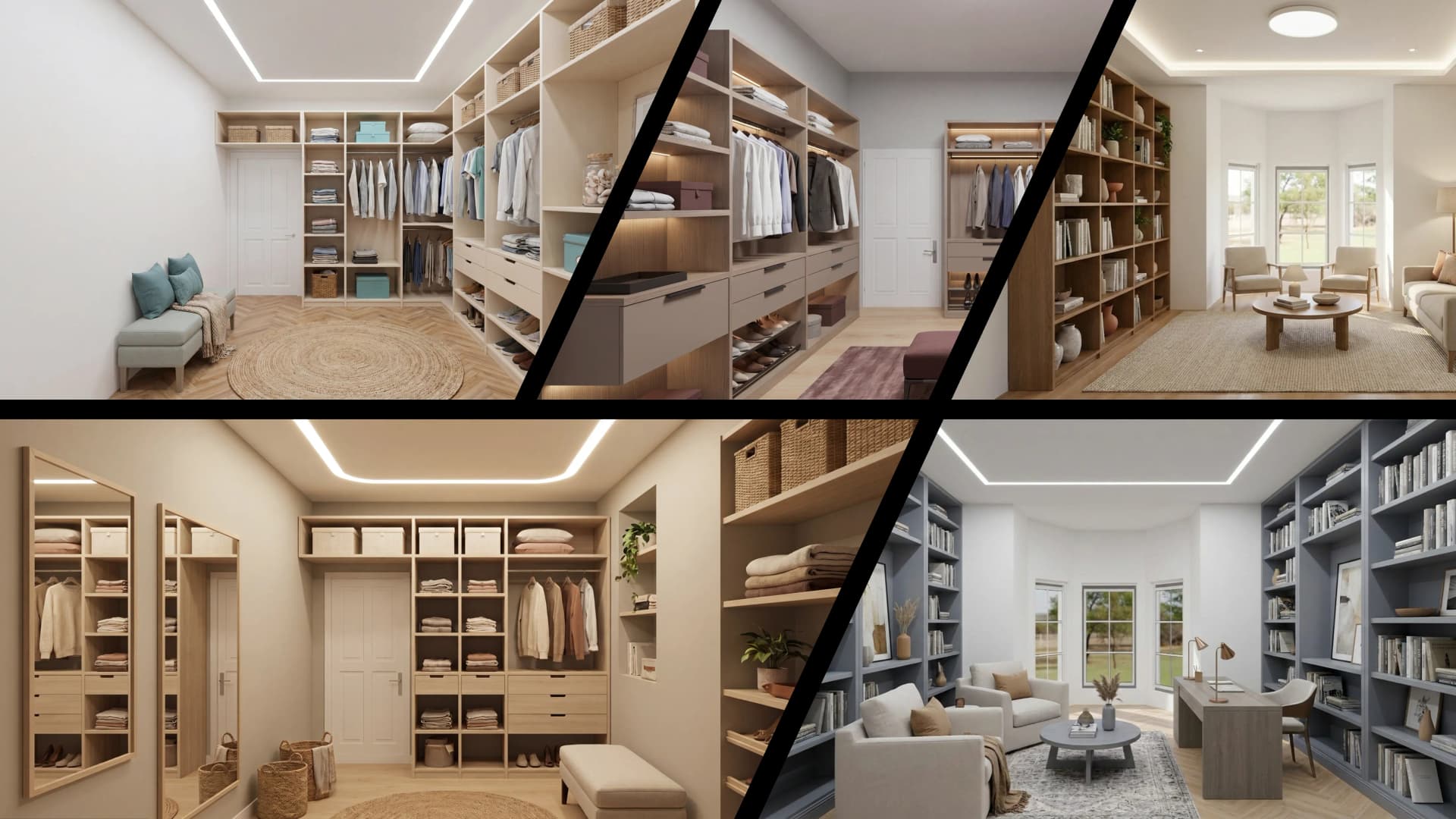
CEO & Co-Founder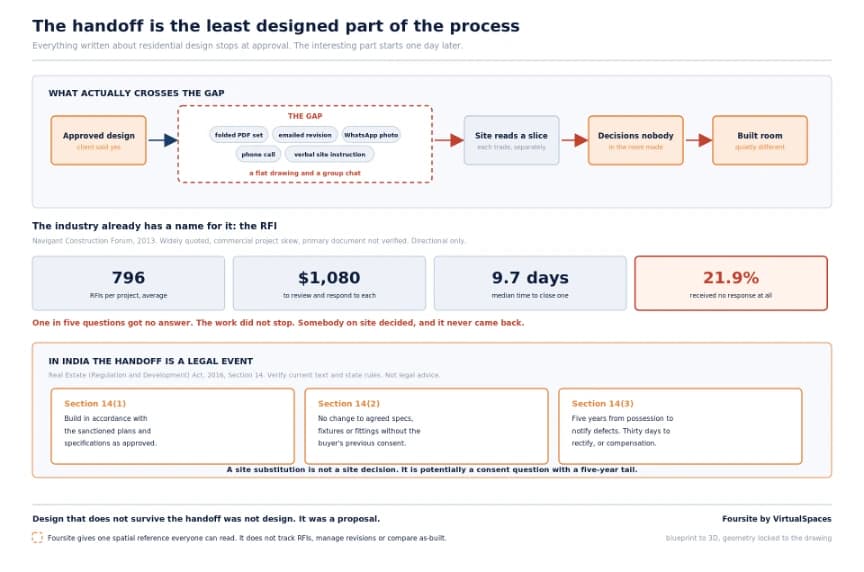
August 17, 2026
Designing Spaces That Actually Get Built | VirtualSpaces
HHemanth Velury
CEO & Co-Founder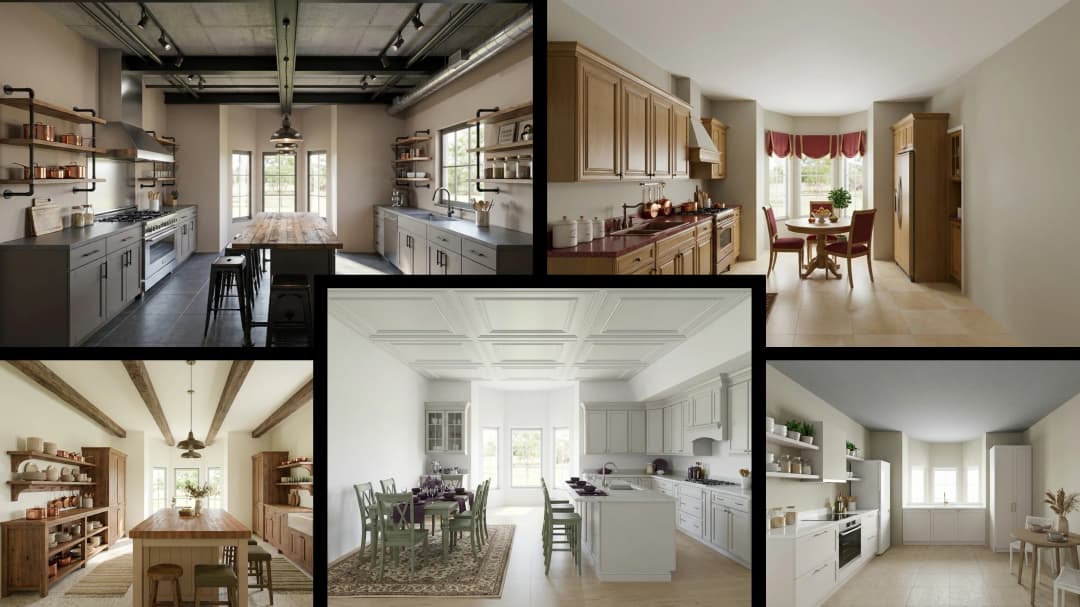
August 12, 2026
Designing Homes for the Stuff People Actually Own | VirtualSpaces
HHemanth Velury
CEO & Co-Founder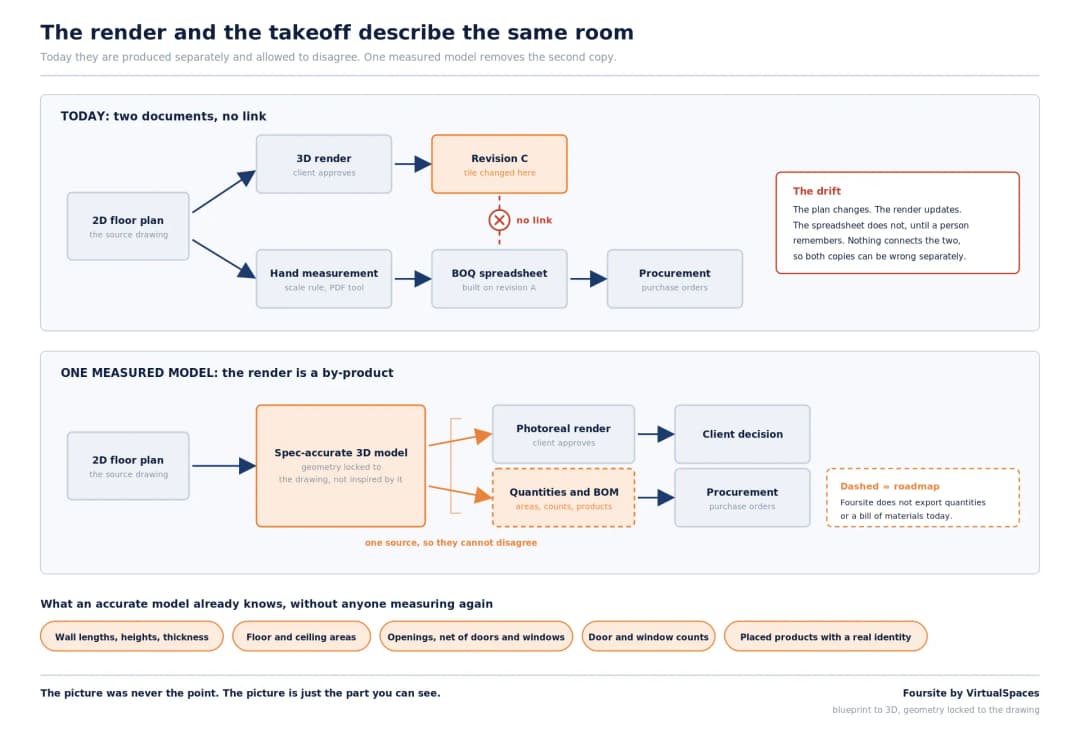
August 07, 2026
Floor Plan to Bill of Materials: The 3D Model as Data | VirtualSpaces
HHemanth Velury
CEO & Co-Founder.png&w=1080&q=75)
August 05, 2026
Designing Homes for How People Actually Live | VirtualSpaces
HHemanth Velury
CEO & Co-Founder
August 03, 2026
Honest by Design: Trust in AI Real Estate Imagery | VirtualSpaces
HHemanth Velury
CEO & Co-Founder
July 29, 2026
Kitchen and Bath: The Two Rooms That Decide Resale | VirtualSpaces
HHemanth Velury
CEO & Co-Founder
July 27, 2026
Why Empty Rooms Don't Sell: Virtual Staging | VirtualSpaces
HHemanth Velury
CEO & Co-Founder
July 24, 2026
The Quiet Sustainability Win of Deciding in 3D | VirtualSpaces
HHemanth Velury
CEO & Co-Founder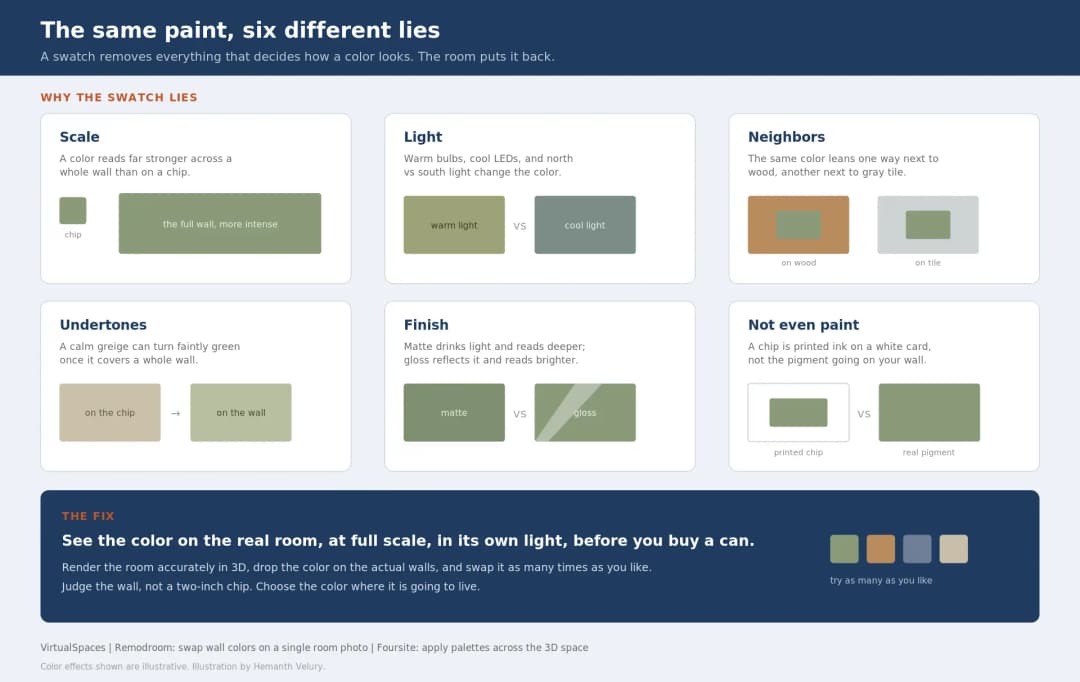
July 22, 2026
Why Paint Swatches Lie: Test Color in 3D First | VirtualSpaces
HHemanth Velury
CEO & Co-Founder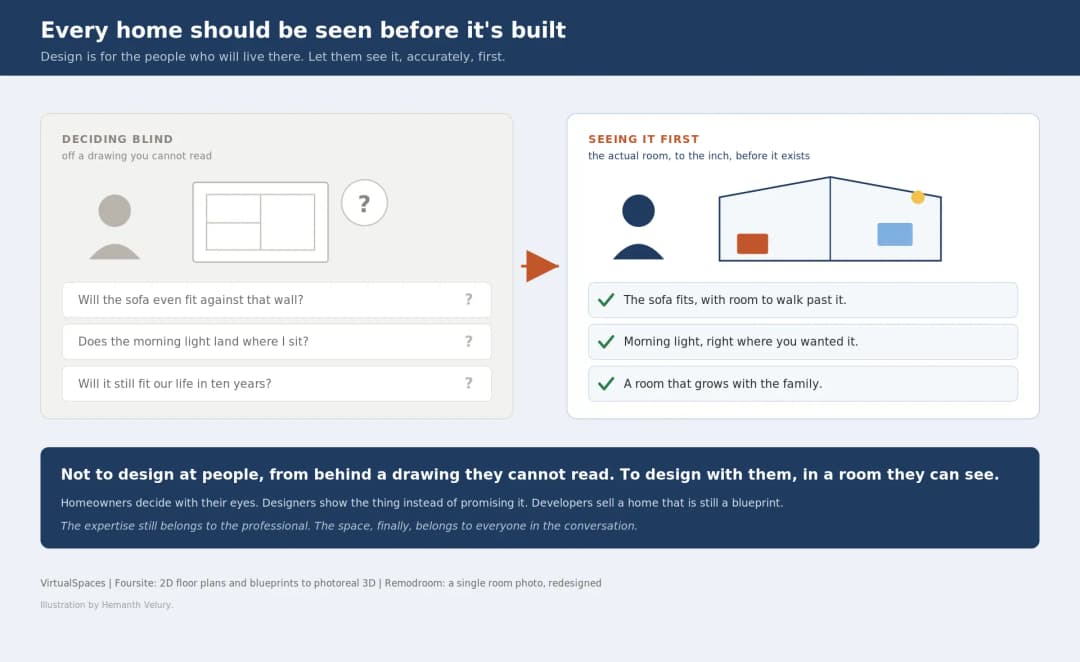
July 20, 2026
Why Every Home Should Be Seen Before It's Built | VirtualSpaces
HHemanth Velury
CEO & Co-Founder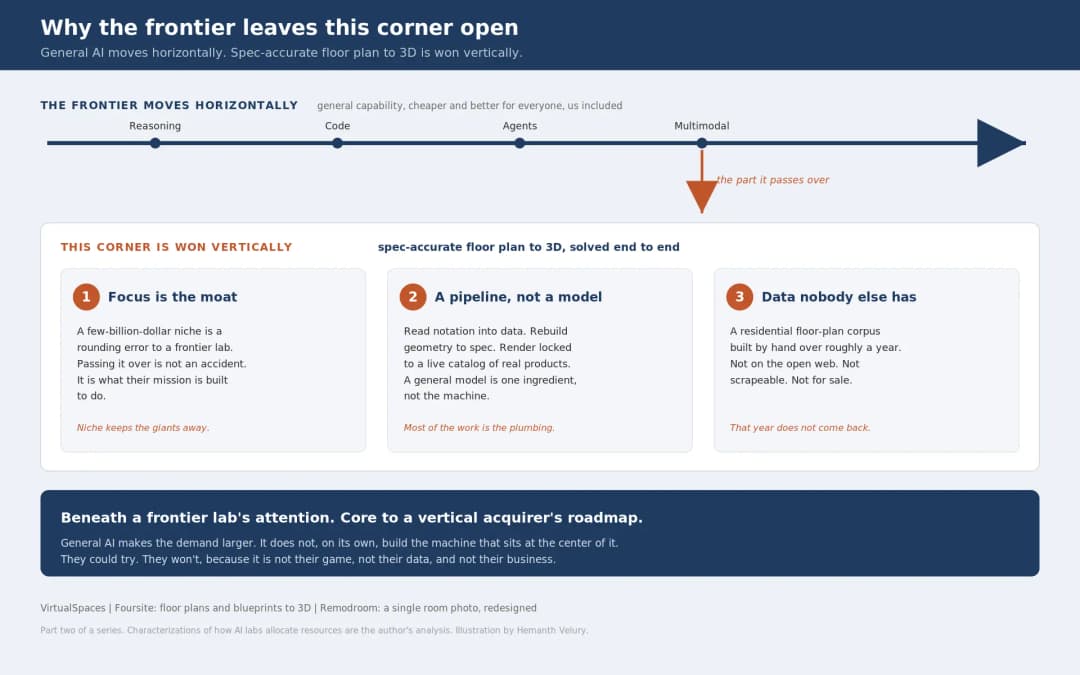
July 17, 2026
Why Big AI Labs Won't Build Floor Plan to 3D | VirtualSpaces
HHemanth Velury
CEO & Co-Founder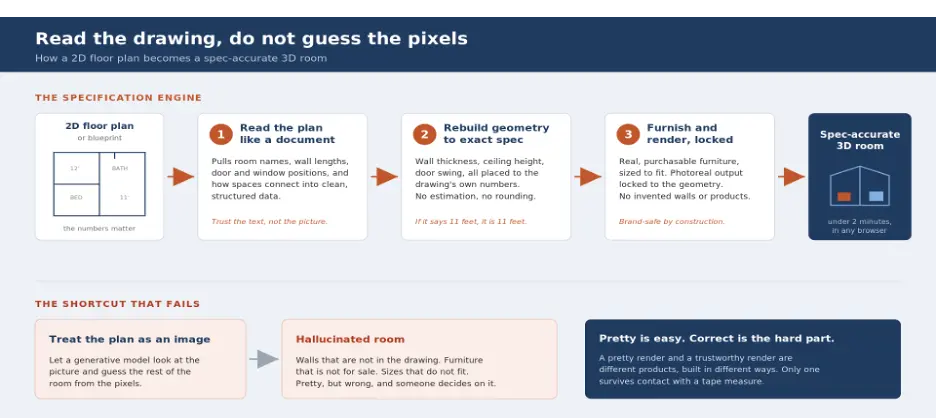
July 15, 2026
How We Solve Floor Plan to 3D, Accurately | VirtualSpaces
HHemanth Velury
CEO & Co-Founder
July 13, 2026
Designing Homes That Age With the People in Them | VirtualSpaces
HHemanth Velury
CEO & Co-Founder
July 10, 2026
Designing Spaces for How Light Actually Moves | VirtualSpaces
HHemanth Velury
CEO & Co-Founder
July 08, 2026
Designing Homes for Every Life Stage in 3D | VirtualSpaces
HHemanth Velury
CEO & Co-Founder
July 06, 2026
Build an Interior Design Portfolio Without Clients | VirtualSpaces
HHemanth Velury
CEO & Co-Founder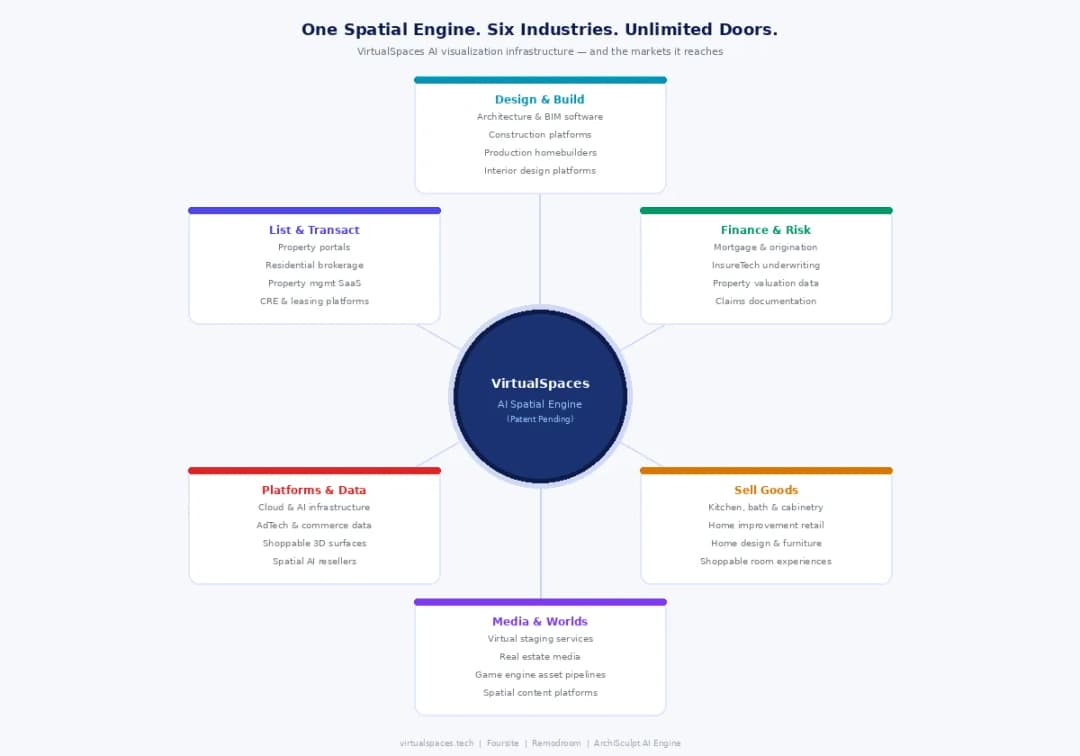
June 26, 2026
AI Interior Design: Full 3D Workflow in One Platform | VirtualSpaces
HHemanth Velury
CEO & Co-Founder
June 24, 2026
Scope Creep in Interior Design: How AI Visualization Fixes It | VirtualSpaces
HHemanth Velury
CEO & Co-Founder
June 22, 2026
What Buyers See on a Floor Plan: Your Biggest Sales Problem | VirtualSpaces
HHemanth Velury
CEO & Co-Founder
June 19, 2026
Small Design Studios vs Big Firms: The AI Advantage | VirtualSpaces
HHemanth Velury
CEO & Co-Founder
June 17, 2026
After the Mood Board: AI Interior Visualization | VirtualSpaces
HHemanth Velury
CEO & Co-Founder
June 15, 2026
Foursite Pro Editor: Full Floor Plan Control for Designers | VirtualSpaces
HHemanth Velury
CEO & Co-Founder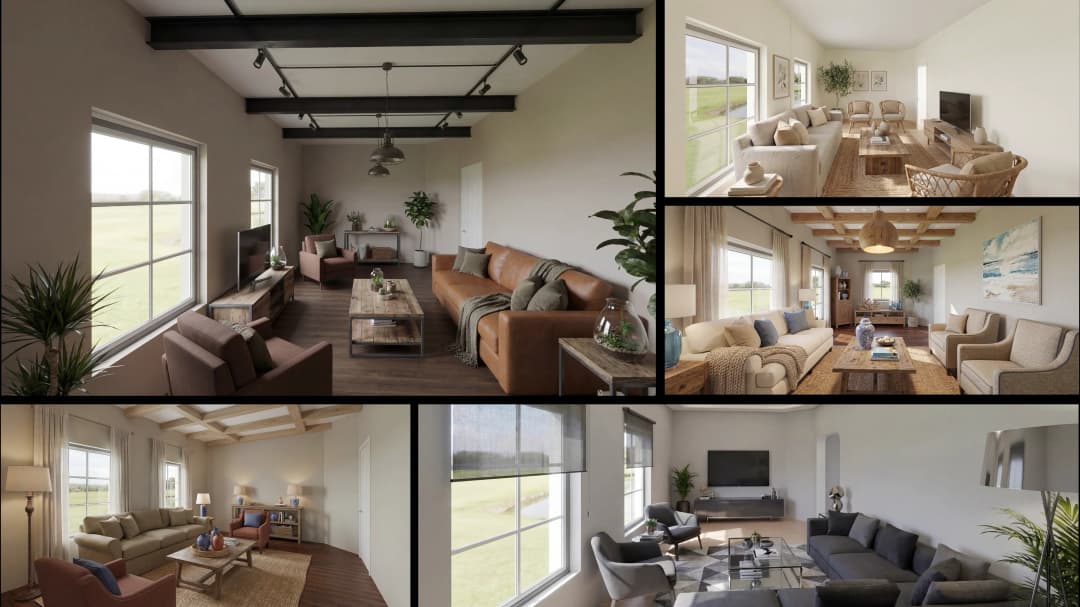
June 12, 2026
AI Interior Design: Style Any Room in Seconds with Foursite | VirtualSpaces
HHemanth Velury
CEO & Co-Founder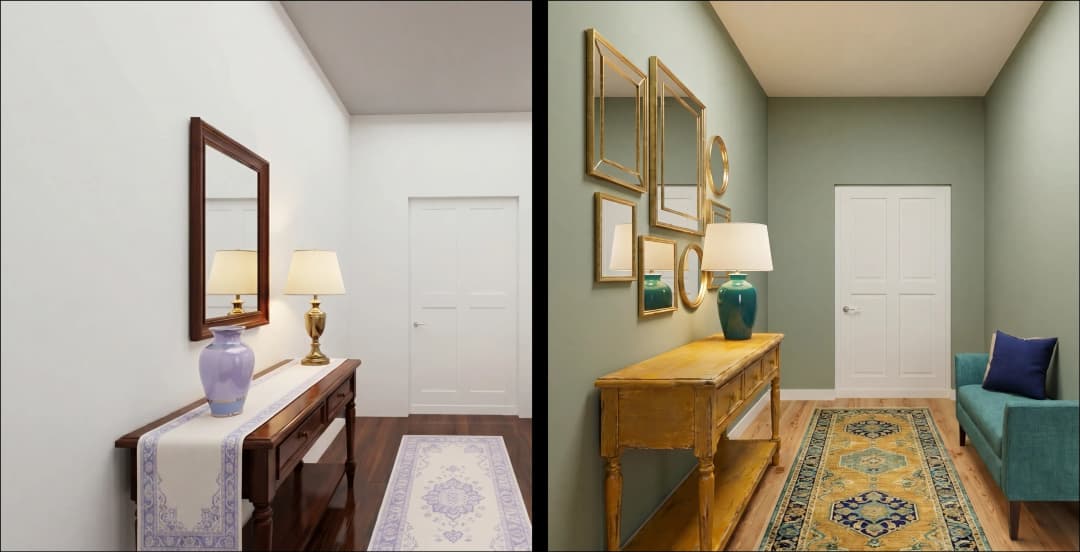
June 10, 2026
Foursite: Floor Plan to 3D Walkthrough in Minutes | VirtualSpaces
HHemanth Velury
CEO & Co-Founder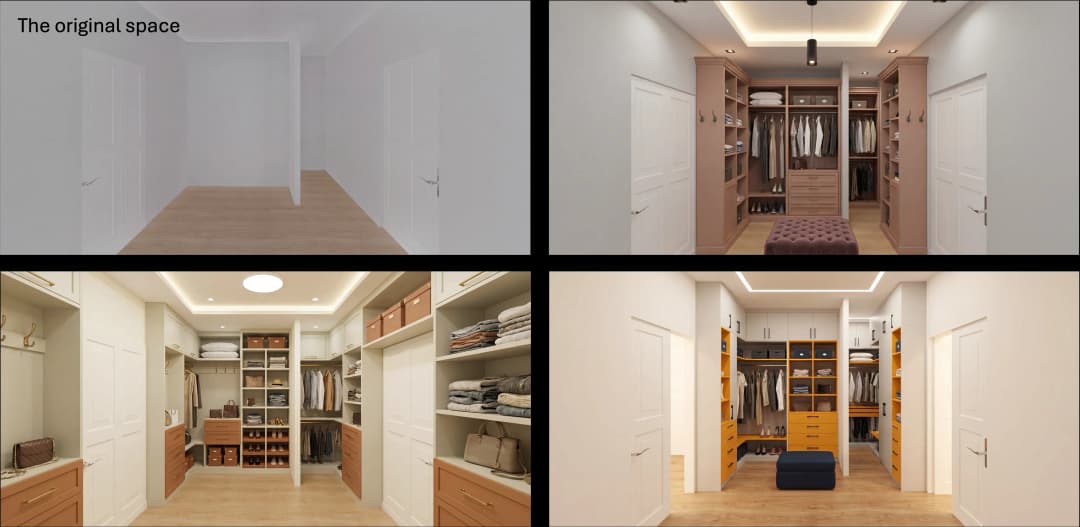
June 08, 2026
Win More Pitches With AI Renders Before the Meeting | VirtualSpaces
HHemanth Velury
CEO & Co-Founder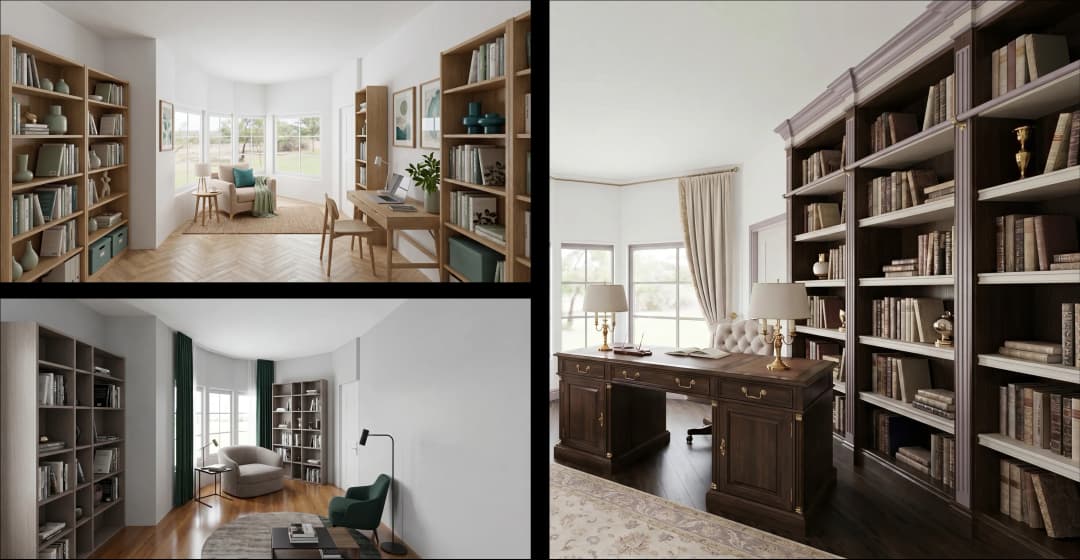
June 05, 2026
From Floor Plan to Finished Room: What AI Now Makes Possible | VirtualSpaces
HHemanth Velury
CEO & Co-Founder
June 03, 2026
The Interior Design Brief Is Broken. AI Fixes It | VirtualSpaces
HHemanth Velury
CEO & Co-Founder
June 01, 2026
Pre-Construction Home Sales: AI Interior Visualization Guide | VirtualSpaces
HHemanth Velury
CEO & Co-Founder
May 30, 2026
Interior Design Principles: Applied with AI | VirtualSpaces
HHemanth Velury
CEO & Co-Founder
May 28, 2026
Designing Spaces for People, Not Blueprints | VirtualSpaces
HHemanth Velury
CEO & Co-Founder
May 26, 2026
The Future of Interior Design: Closing the Visualization Gap with Foursite and Remodroom | VirtualSpaces
HHemanth Velury
CEO & Co-Founder
May 18, 2026
How AI Visualization Upgrades Property Data Platforms | VirtualSpaces
HHemanth Velury
CEO & Co-Founder
May 14, 2026
How AI-First Insurers Can Use 3D Property Data to Transform Home Claims | VirtualSpaces
HHemanth Velury
CEO & Co-FounderMay 12, 2026
Why Photoreal 3D Renders Are Replacing Mood Boards | Interior Design Client Presentations | VirtualSpaces
HHemanth Velury
CEO & Co-Founder
May 08, 2026
From 2D Floor Plans To Living Worlds: The Spec‑Accurate 3D Engine | VirtualSpaces
HHemanth Velury
CEO & Co-Founder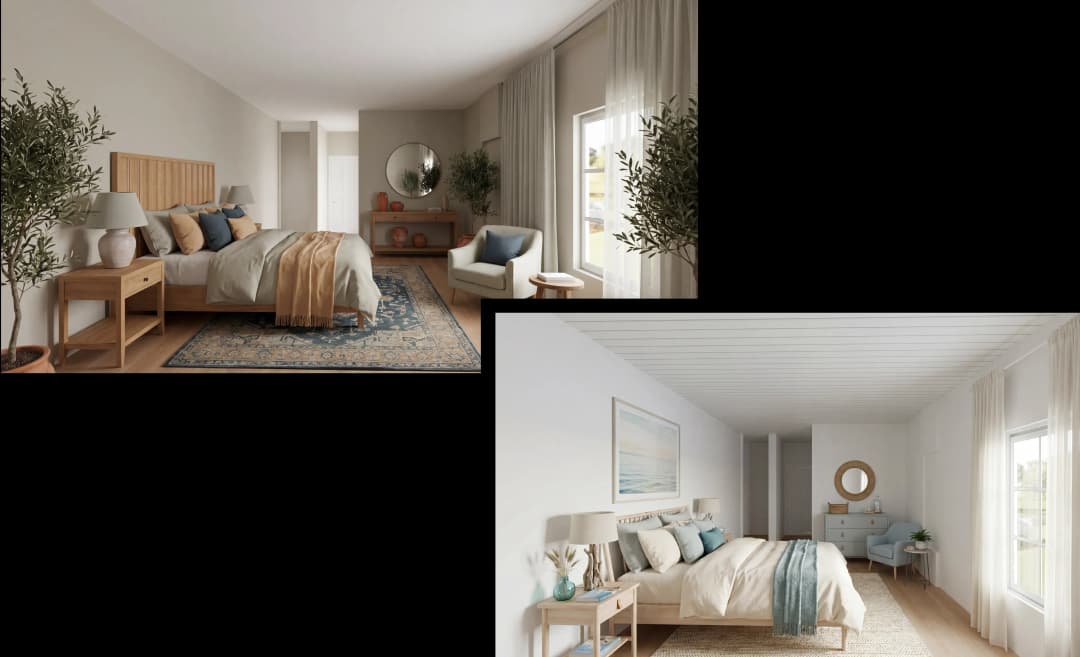
May 4, 2026
How Property Portals Can Turn 2D Floor Plans into 3D Design Decisions | VirtualSpaces
HHemanth Velury
CEO & Co-Founder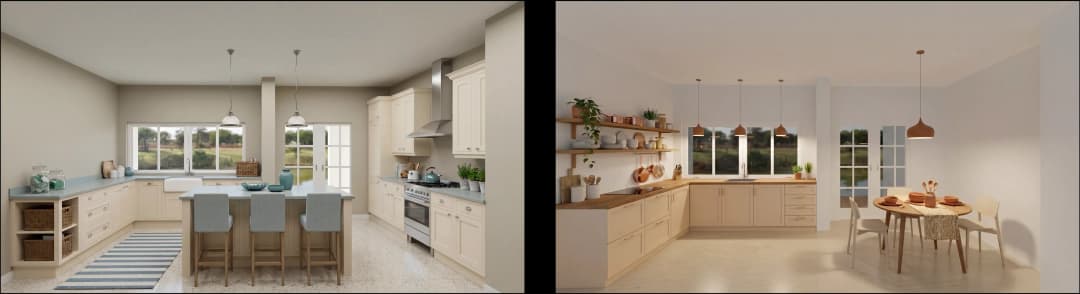
April 29, 2026
The Home-Fit Test: Why Square Footage Misleads | VirtualSpaces
HHemanth Velury
CEO & Co-Founder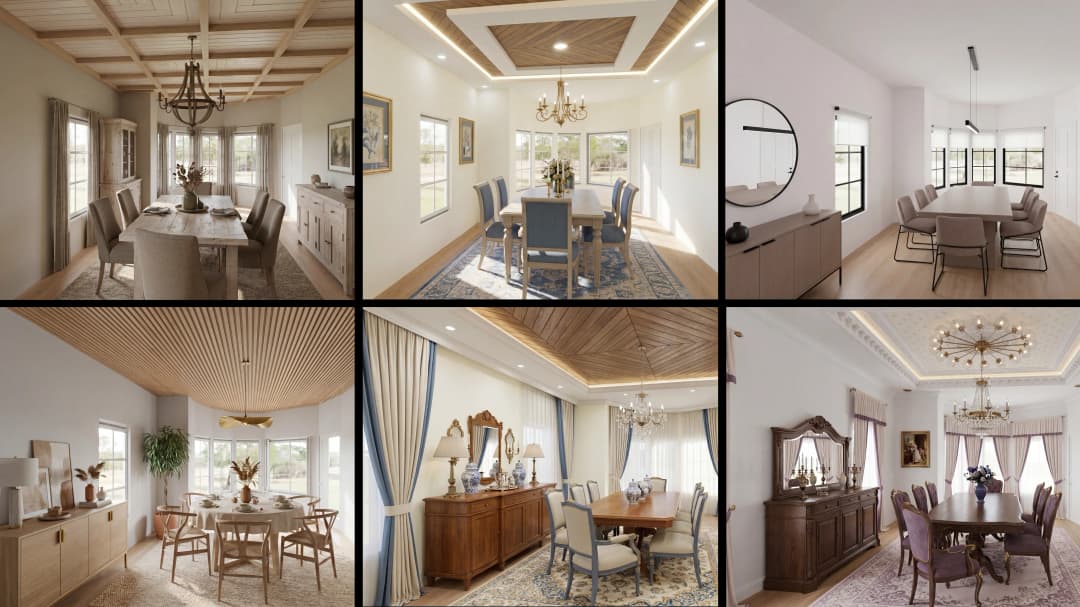
April 27, 2026
Designing Homes That Sell: 3D Visualization ROI Data | VirtualSpaces
HHemanth Velury
CEO & Co-FounderApril 24, 2026
What's Next: Foursite & Remodroom's New AI Features | VirtualSpaces
HHemanth Velury
CEO & Co-Founder
April 22, 2026
AI in Architecture: Closing the 85% Exposure Gap | VirtualSpaces
HHemanth Velury
CEO & Co-Founder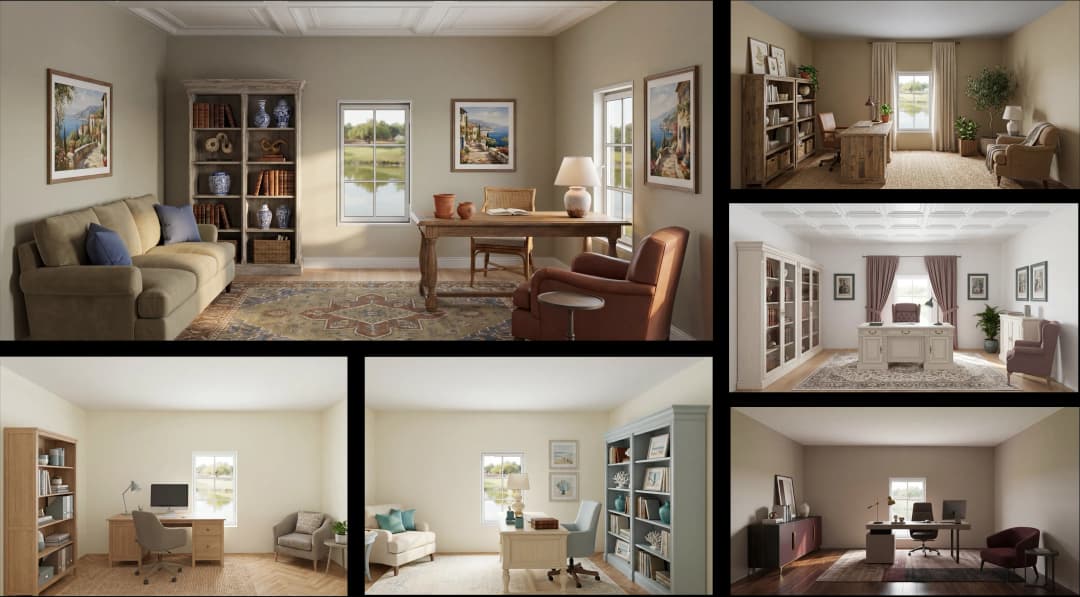
April 20, 2026
Interior Design Pricing in 2026: From Hourly to Value-Based Fees | VirtualSpaces
HHemanth Velury
CEO & Co-FounderApril 17, 2026
How Foursite and Remodroom Help Designers Win Clients | VirtualSpaces
HHemanth Velury
CEO & Co-Founder
April 15, 2026
Designing Spaces for People: Remodroom + Foursite AI Guide | VirtualSpaces
HHemanth Velury
CEO & Co-Founder
April 13, 2026
Designing for the Way People Actually Live: How AI 3D Is Finally Closing the Gap Between Floor Plan and Reality
HHemanth Velury
CEO & Co-Founder
April 11, 2026
Design in Real Time: AI Renders in Your First Client Meeting
HHemanth Velury
CEO & Co-Founder
April 06, 2026
Why Real Estate Photography Is No Longer Enough: The Shift to Spatial-First Listings
HHemanth Velury
CEO & Co-Founder
April 03, 2026
Property Management's Hidden Weapon: AI 3D Floor Plans That Cut Vacancy Time and Raise Tenant Quality
HHemanth Velury
CEO & Co-Founder
April 01, 2026
Off-Plan and Oversubscribed: How AI 3D Visualization Is Transforming Real Estate Pre-Sales
HHemanth Velury
CEO & Co-Founder
March 30, 2026
Why Foursite Beats Generic AI Tools for Interior Design 3D Visualization
HHemanth Velury
CEO & Co-Founder
March 27, 2026
7 Tenets of Interior Design: How AI Accelerates Harmony in Residential Spaces
HHemanth Velury
CEO & Co-Founder
March 25, 2026
What Is the 3-5-7 Rule in Interior Design? Foursite's AI Guide for Residential Spaces
HHemanth Velury
CEO & Co-Founder
March 23, 2026
What Is the 70/30 Rule in Interior Design? Foursite's AI Guide for Residential Spaces
HHemanth Velury
CEO & Co-Founder
March 20, 2026
How AI 3D Visualization Is Rewriting Residential Interior Design Workflows
HHemanth Velury
CEO & Co-Founder
March 18, 2026
Beyond Marketing: How 3D Floorplans Transform FM, Retrofit Planning & ESG Operations
HHemanth Velury
CEO & Co-Founder
March 16, 2026
Why AI Companies Use Token Payments (And Why VirtualSpaces Is Returning To Fiat)
HHemanth Velury
CEO & Co-Founder
March 13, 2026
Floorplan‑Native Digital Twins: Beyond BIM for Consumer‑Ready Real Estate Experiences
HHemanth Velury
CEO & Co-Founder
March 11, 2026
The Foursite Platform Thesis: Why Floor Plans, Not Photos, Are the Next Property Software Primitive
HHemanth Velury
CEO & Co-Founder
March 09, 2026
Design Systems for Space: Building Reusable 3D Component Libraries on Top of AI Floorplan‑to‑3D Engines
HHemanth Velury
CEO & Co-Founder
March 06, 2026
How to Standardize Design Quality Across Global Projects Using AI Floorplan-to-3D Tools
HHemanth Velury
CEO & Co-Founder
March 04, 2026
From CAD-First to AI-First: Reskilling Your Team for AI-Native Design Workflows
HHemanth Velury
CEO & Co-Founder
March 02, 2026
Algorithmic Ergonomics Meets Photorealistic 3D: Designing Human-Centered Smart Homes with Foursite in 2026
HHemanth Velury
CEO & Co-Founder
February 27, 2026
The Ethics of AI in Interior Design: Ownership, Originality, and Client Transparency
HHemanth Velury
CEO & Co-Founder
February 25, 2026
Designing with Empathy: Using AI 3D Visualization to Improve Client Communication and Emotional Clarity
HHemanth Velury
CEO & Co-Founder
February 23, 2026
From Tool to Infrastructure: AI Floorplan-to-3D and the Next Wave of PropTech
HHemanth Velury
CEO & Co-Founder
February 20, 2026
AI Interior Design for Holiday Homes: Turn Spare Flats into High-Demand Short-Stay Rentals with 3D Visuals
HHemanth Velury
CEO & Co-Founder
February 18, 2026
The Pre‑Purchase Power Play: How Savvy Home Buyers Use 3D Floor Plan Visualization to Negotiate Better Deals
HHemanth Velury
CEO & Co-FounderFebruary 16, 2026
AI Interior Design for Non‑Designers: How Homeowners Can Brief Like Pros
HHemanth Velury
CEO & Co-Founder
February 13, 2026
Scaling a Design Business Without Hiring a 3D Team: An Owner's Guide
HHemanth Velury
CEO & Co-Founder
February 11, 2026
From Bland to Bold: How to Rescue Builder-Grade Interiors on Any Budget
HHemanth Velury
CEO & Co-Founder
February 6, 2026
The Psychology of Space: How Room Dimensions Influence Interior Design Decisions
HHemanth Velury
CEO & Co-Founder
February 4, 2026
The Future of Interior Design Visualization: How AI Technology is Transforming 2D Concepts Into 3D Reality
HHemanth Velury
CEO & Co-Founder
February 2, 2026
AI Interior Décor: How Artificial Intelligence Generates Design Options from Your Floor Plan
HHemanth Velury
CEO & Co-Founder
January 30, 2026
Photoreal vs. Reality: What Clients Actually Expect from Interior Design Visualization
HHemanth Velury
CEO & Co-Founder
January 28, 2026
The Design Approval Conversation That Changes Everything: Communication Strategy When Using Photorealistic Visualization
HHemanth Velury
CEO & Co-Founder
January 25, 2026
Interior Design as Experience Design: How 3D Visualization Changes Your Professional Identity
HHemanth Velury
CEO & Co-Founder
January 23, 2026
The Professional Gap: How 3D Visualization Changes Interior Design Client Perception
HHemanth Velury
CEO & Co-Founder
January 21, 2026
Why Clients Fire Designers (And How 3D Visualization Could Have Saved the Project)
HHemanth Velury
CEO & Co-Founder
January 16, 2026
Blueprint to Vision: Why Seeing Is Believing in Interior Design
HHemanth Velury
CEO & Co-Founder
January 14, 2026
The Speed of Responsiveness: How AI Visualization Tools Make You Look Like You Care More
HHemanth Velury
CEO & Co-Founder
January 12, 2026
Why Interior Designers and Architects Can't Compete Without AI 3D Visualization Tools
HHemanth Velury
CEO & Co-Founder
January 07, 2026
From "Saved" to "Sold": How Homeowners Are Planning Renovations with AI
HHemanth Velury
CEO & Co-Founder
January 05, 2026
The Interior Designer's Secret Weapon: Speed as Premium Positioning
HHemanth Velury
CEO & Co-Founder
December 31, 2025
Gratitude, Growth & Game-Changing Innovation: VirtualSpaces' 2025 Journey & What's Coming in 2026
HHemanth Velury
CEO & Co-Founder
December 29, 2025
Why Interior Designers Are Switching to AI Floor Plan-to-3D Tools in 2026
HHemanth Velury
CEO & Co-Founder
December 26, 2025
AI Virtual Staging for Real Estate Agents: Sell More Homes Faster with Foursite
HHemanth Velury
CEO & Co-Founder
December 24, 2025
Why Architects Are Switching to AI 2D-to-3D: The SketchUp Alternative
HHemanth Velury
CEO & Co-Founder
December 22, 2025
Cut 3 Weeks from Real Estate Sales Cycle: The ROI of AI 2D to 3D Visualization
HHemanth Velury
CEO & Co-Founder
December 19, 2025
2D Floor Plans Are Dying: Why 3D Visualization & AI Virtual Staging Are the Future
HHemanth Velury
CEO & Co-Founder
December 17, 2025
Virtual Staging vs Physical Staging: How AI Saves Money Per Property
HHemanth Velury
CEO & Co-Founder
December 15, 2025
AI Floor Plan to Image: Revolutionizing Real Estate Marketing for Agents
HHemanth Velury
CEO & Co-Founder
December 12, 2025
Color of the Year 2026: Cloud Dancer | VirtualSpaces AI Interior Design Guide
HHemanth Velury
CEO & Co-Founder
December 10, 2025
AI Floor Plan to 3D: The New Standard for Interior Design Workflows
HHemanth Velury
CEO & Co-Founder
December 08, 2025
How Interior Design Studios Can Operationalize AI 2D-to-3D Workflows (Without Breaking Their Process)
HHemanth Velury
CEO & Co-Founder
December 06, 2025
How to Implement AI Interior Design Workflows in Your Studio
HHemanth Velury
CEO & Co-Founder
December 4, 2025
How Homeowners Can Use AI Interior Design Tools to Plan Renovations with Confidence
HHemanth Velury
CEO & Co-Founder
November 28, 2025
Interior Designers in the Age of AI: From Threat Narrative to Superpower
HHemanth Velury
CEO & Co-Founder
November 21, 2025
Foursite Launch: Embracing 'Release Early, Release Often'
HHemanth Velury
CEO & Co-Founder
November 13, 2025
Foursite by VirtSpaces: Empowering Interior Designers, Architects, and Homeowners
HHemanth Velury
CEO & Co-Founder
November 7, 2025
Reimagining Architectural Education: How AI Floorplan-to-3D Technology Can Transform Design Learning
VVirtualSpaces Research Labs
AI Research Initiative
October 27, 2025
Archisculpt AI: Turning Architectural Drawings into Photorealistic 3D Spaces
AAbhijeet Naik
Co-Founder & CTO
October 13, 2025
Home Makeover: From Floor Plan to Dream Space with AI
HHemanth Velury
CEO & Co-Founder
October 6, 2025
Real-Time Rendering & AI: Revolutionizing Interactive Property Walkthroughs with VirtSpaces
HHemanth Velury
CEO & Co-Founder
September 26, 2025
Foursite - A True AI-Native Experience in Design Visualization
AAbhijeet Naik
CTO & Co-Founder
September 18, 2025
Why PropTech Startups Are Betting on AI Interior Design
HHemanth Velury
CEO & Co-Founder
September 11, 2025
How AI Differs from Traditional 3D Rendering Software
HHemanth Velury
CEO & Co-Founder
September 2, 2025
From Client to Investor: How Nila Spaces and VirtSpaces Are Redefining Proptech with AI
HHemanth Velury
CEO & Co-Founder
August 25, 2025
VirtSpaces From Virtual Reality to AI – Transforming Real Estate Visualization.
HHemanth Velury
CEO & Co-Founder


We help teams collaborate seamlessly and reduce costs. Virtual Spaces offers cutting-edge technology with flexible plans designed to fit modern teams.
Copyright © VirtSpaces Pvt. Ltd. 2025 All Rights Reserved.
CIN: U74999KA2016PTC094921