
February 25, 2026
- Interior Design
- AI Technology
- Real Estate
Designing with Empathy: Using AI 3D Visualization to Improve Client Communication and Emotional Clarity
Hemanth Velury
CEO & Co-FounderDesigning with Empathy: Using AI 3D Visualization to Improve Client Communication and Emotional Clarity
There's a moment in every design conversation that defines everything that follows. It's the moment when a client tries to explain what they're feeling about a space, not just what they want, but how they want to feel when they're in it. And more often than not, words fall short.
I've spent years watching this dance unfold. A client gestures vaguely at a 2D floor plan, trying to articulate the warmth they imagine in their living room, or the openness they crave in their kitchen. They squint at blueprints, tilting their heads, attempting to translate flat lines into the three-dimensional reality of their future home. Meanwhile, designers frantically sketch, describe, and reassure, hoping our words bridge the gap between what exists on paper and what will eventually exist in the world.
This gap isn't just a communication problem. It's an empathy problem.
Empathy in design isn't about being nice or accommodating. It's about truly understanding what someone needs before they can fully articulate it themselves. It's about creating a shared emotional language when traditional language fails. And in 2026, we finally have the technology to close that gap in ways that were impossible just a few years ago.
The Empathy Gap in Traditional Design Communication
Let's be honest about something: the design industry has been asking clients to do something cognitively exhausting for decades. We hand them 2D floor plans and blueprints, documents created in a technical language they don't speak and expect them to mentally construct a three-dimensional space, populate it with furniture, imagine how light will move through rooms at different times of day, and then tell us whether it feels right.
That's not communication. That's translation work.
And when that translation fails, everyone suffers. Clients approve designs they don't fully understand, only to feel disappointed when the reality doesn't match their internal vision. Designers spend countless hours on revisions that could have been avoided if everyone had been looking at the same picture from the start. Trust erodes. Timelines slip. Budgets balloon.
The traditional tools we've relied on, think, mood-boards, material samples, even hand-sketched perspectives, all attempt to bridge this gap. They're better than nothing, but they still ask clients to make imaginative leaps. A mood board shows you textures and colors, but not how they'll feel in your space, with your light, at your scale.
This is where AI 3D visualization fundamentally changes the conversation.
What AI 3D Visualization Actually Means for Empathetic Design
When I talk about AI 3D visualization, I'm not talking about flashy tech for tech's sake. I'm talking about tools like Foursite that convert floor plan to 3D in minutes, transforming blueprint to 3D with artificial intelligence that understands spatial relationships, architectural conventions, and design principles.
But here's what matters: these tools don't just create pretty pictures. They create shared reality.
Imagine this scenario instead: A client walks into your office with ideas they can barely articulate. You pull up Foursite, upload their 2D floor plans, and within minutes, you're both standing inside a fully realized 3D environment. Not a wireframe. Not a sketch. A space they can navigate, explore, and most importantly, feel.
You can adjust the AI interior design in real-time. "The kitchen feels cramped," they say. You shift the island, open up the sightlines to the living area, and regenerate the interior design photoreal renders. "That's it," they say, their posture relaxing. "That's what I couldn't explain."
That's empathy in action. Not because you're a mind reader, but because you've created a tool that allows clients to respond emotionally rather than intellectually.
The Emotional Language of Space
Human beings are spatial creatures. We process space emotionally long before we process it rationally. When you walk into a room, you don't think, "This is 14 feet by 16 feet with 9-foot ceilings." You feel "This is cozy" or "This is oppressive" or "This is exactly right."
Traditional design communication forced clients to work backward, from measurements and plans to feelings. AI 3D visualization allows the natural flow: from feelings to refined design.
This shift is profound. When you convert blueprint to 3D using platforms like Foursite, you're not just visualizing architecture. You're visualizing experience. The way morning light will pool in a corner. The way a hallway will feel as you walk through it. The way a kitchen island will become the heart of family gatherings.
AI visualization and AI interior décor tools trained on thousands of real-world spaces understand these emotional dimensions. They know that certain ceiling heights create feelings of grandeur while others create intimacy. They understand how furniture arrangements affect flow and social dynamics. They can populate a space in ways that don't just look good in a render, but that feel authentically livable.
This is where VirtualSpaces' approach with Foursite becomes particularly powerful. The AI doesn't just place objects randomly. It understands the emotional narrative of a space.
From Guesswork to Clarity: The Client's Perspective
Put yourself in a client's shoes for a moment. You're about to invest significant money, possibly the most you'll ever spend on a single project, into renovating your home or designing a new space. You're shown blueprints that might as well be written in ancient Greek. You nod along, trusting the expert across the table, but that knot of anxiety in your stomach won't go away.
What if I hate it? What if it doesn't feel like I imagined? What if I'm approving something I'll regret?
Now imagine instead that you're shown AI interior design renders that let you virtually stage every room. You can walk through the space, see it from every angle, understand how rooms connect. You can experiment with different AI interior decor approaches such as modern minimalist in one version, warm traditional in another, all generated from the same floor plan to 3D conversion.
The anxiety doesn't disappear entirely (it's still a big decision), but it transforms from fear of the unknown into excitement about possibilities you can actually see and understand.
This is client empowerment. And empowerment is the highest form of empathy.
The Technical Magic That Makes Emotional Clarity Possible
Let's pull back the curtain for a moment on what's actually happening when you use tools like Foursite to convert floor plan to 3D.
The AI has been trained on vast datasets of architectural drawings, 3D models, and real-world spaces. It understands that when it sees certain symbols on a 2D floor plan, those represent walls, doors, windows, fixtures. It knows standard dimensions and proportions. It understands architectural conventions and building codes.
But more than that, and this is crucial, it understands design intent.
When you upload blueprints to generate 3D Visualization, the AI doesn't just extrude walls and call it done. It interprets the space holistically. It understands room hierarchies, circulation patterns, and functional zones. It can auto-populate spaces with appropriate furniture, fixtures, and finishes through AI virtual staging, creating interior design renders that feel designed, not randomly generated.
The sophistication of AI 3D visualization has reached a point where it can handle complex architectural features, curved walls, varying ceiling heights, custom millwork, and still deliver interior design photoreal renders that are indistinguishable from traditionally modeled scenes.
This technical capability creates something unexpected: it democratizes high-quality visualization. You no longer need a rendering specialist on staff or days of modeling time to show a client what their space will feel like. You need minutes and a good floor plan.
Real Conversations, Real Emotional Breakthroughs
The most profound moments in design aren't about aesthetics. They're about connection.
I remember working with a young couple designing their first home. They kept describing wanting a "family-forward" kitchen, but every design iteration felt wrong to them. We'd sketched, we'd shown material boards, we'd even built a physical mockup of the island height. Nothing clicked.
We converted their blueprint to 3D using Foursite and let them explore the space virtually. Within minutes, the wife stopped, pointed at the screen, and said, "The problem is we can't see the living room from here. When I'm cooking, I want to watch our kids play."
It wasn't about the kitchen at all. It was about connection, supervision, and the emotional experience of parenting while preparing meals. Once we understood that core emotional need, the design solution was obvious. But we never would have gotten there through conventional communication methods.
This is what AI visualization enables: it creates a safe sandbox for emotional truth to emerge. Clients can respond authentically to what they're seeing because they're responding to something that feels real, not to abstract concepts they're struggling to imagine.
The Designer's Role Evolves, Doesn't Diminish
There's sometimes concern that AI tools will replace designers. That's a fundamental misunderstanding of what these tools actually do.
Foursite and similar AI interior design platforms don't design for you. They translate faster. They visualize better. They create space for deeper, more meaningful conversations with clients. But they don't replace the human designer's ability to listen, interpret, and solve problems creatively.
If anything, these tools amplify your value. They free you from tedious technical modeling work and allow you to focus on what you do best: understanding human needs and crafting spaces that serve them.
When you can generate interior design 3D visualization in minutes instead of days, you can show clients ten options instead of two. You can explore wild ideas without worrying about wasted effort. You can fail fast, learn quickly, and iterate toward the perfect solution collaboratively with your client.
The AI handles the technical translation from 2D to 3D. You handle the emotional translation from inarticulate feeling to realized design.
Building Trust Through Visual Honesty
One of the most insidious problems in traditional design communication is the gap between renders and reality. We've all seen the beautifully lit, perfectly styled architectural renders that bear little resemblance to the finished space. Clients learn to distrust visualization, suspecting it's more marketing than honest representation.
AI-generated interior design photoreal renders from platforms like VirtualSpaces are changing this dynamic. Because the AI is trained on real-world photography and understands material properties, lighting behavior, and scale relationships, the renders it produces are inherently more honest. They don't look like fantasy. They look like photographs of spaces that could exist.
This visual honesty builds trust. When clients see AI interior decor staging that feels authentic, furniture at the right scale, lighting that behaves naturally, materials that look tactile and real, they trust the vision you're showing them. They believe it's achievable.
Trust is the foundation of empathy. You can't truly empathize with someone who doesn't trust you, and they can't trust what they can't understand. AI 3D visualization creates understanding, which builds trust, which enables genuine empathy.
The Speed of Empathy
There's a temporal dimension to empathy that we don't often discuss. Empathy requires presence, attention, and responsiveness. When weeks or months separate a client's question and your visual response, empathy becomes difficult to sustain.
This is where the speed of modern AI visualization tools becomes not just a productivity benefit, but an empathy enabler.
With Foursite, you can upload a floor plan and have explorable 3D environments in minutes. You can generate multiple AI virtual staging options during a single client meeting. You can respond to "What if we tried..." questions in real-time rather than scheduling another meeting in two weeks.
This immediacy keeps the emotional energy of the design process alive. Clients stay engaged, excited, and emotionally present because their questions get answers while the questions still matter to them. The conversation stays fluid and dynamic rather than becoming a slow, fragmented exchange.
Fast iteration doesn't mean rushed decisions. It means you can explore more possibilities together, fail forward faster, and arrive at a solution that truly resonates, all while the client's emotional investment is at its peak.
The Multimodal Communication Revolution
Different people process information differently. Some clients are visual thinkers who need to see space. Others are kinesthetic and need to imagine movement through space. Some are analytical and need measurements and specifications.
The beauty of converting blueprints to 3D with AI visualization is that it serves all these cognitive styles simultaneously.
The analytical client can still see the floor plans and measurements. The visual client can explore photoreal renders. The kinesthetic client can navigate through the 3D space, experiencing the sequence and flow. Everyone is looking at the same underlying truth, just through their preferred lens.
This multimodal approach is deeply empathetic because it meets people where they are cognitively. It doesn't force everyone to communicate in the designer's preferred language. It creates a shared space where multiple languages coexist.
When you use platforms like VirtualSpaces for interior design 3D visualization, you're not just showing clients a single render. You're giving them a complete vocabulary for exploring and discussing their space: 2D floor plans, 3D navigable environments, photoreal renders from any angle, material closeups, lighting studies. Whatever they need to understand and feel confident in the design.
Emotional Clarity as a Design Outcome
We talk a lot about functional requirements in design. Bathrooms need to function efficiently. Kitchens need proper workflow. Spaces need to meet building codes. All of this is non-negotiable and important.
But emotional clarity, the sense that a space feels right, is equally important and much harder to achieve through traditional methods.
AI interior design tools give us a new metric for success: does the client feel emotionally clear about the space? Not just "Do they understand it?" but "Does it resonate with them emotionally? Can they imagine their life unfolding in this space? Does it align with their values, aspirations, and sense of self?"
These aren't soft, secondary concerns. These are the questions that determine whether a client loves their space or merely tolerates it. Whether they recommend you enthusiastically to friends or hire someone else next time. Whether your work becomes a highlight of your portfolio or just another project that paid the bills.
AI 3D visualization from Foursite lets you iterate toward emotional clarity with the same precision you iterate toward functional efficiency. You can see in real-time when a design clicks for a client, when their body language relaxes, when they start pointing excitedly at details, when they stop asking anxious questions and start making confident decisions.
The Infrastructure of Empathy
Here's a perspective I don't hear discussed enough: in 2026, AI visualization isn't just a tool anymore. It's becoming infrastructure.
Just as you wouldn't consider doing serious design work without CAD software, you increasingly can't do empathetic client communication without 3D visualization capabilities. It's not a nice-to-have. It's the baseline expectation.
Clients have seen what's possible. They've seen property listings with virtual staging. They've seen renovation shows where spaces are visualized before construction. They know this technology exists. And when you can't offer it, you're not just behind technologically, you're signaling that you don't value clear communication.
Platforms like Foursite represent this infrastructure-level capability. They're not specialty tools for occasional use. They're the foundation of your modern communication stack. Just as you need email, project management software, and digital contracts, you need reliable 2D to 3D conversion and AI interior design rendering.
Building your practice on this infrastructure means empathy isn't an occasional achievement but a consistent standard.
Looking Forward: The Deepening of Digital Empathy
The trajectory is clear: these tools will only get better, faster, and more intuitive. But the fundamental shift has already happened. We've moved from a world where visualization was a luxury reserved for high-end projects to a world where visual clarity is the expected standard for all client communication.
What excites me most isn't the technology itself, though the technical capabilities are impressive. What excites me is what becomes possible when visual barriers fall away. When clients and designers can stand together in a shared virtual space and point at the same things, talking about feelings and experiences rather than struggling to decode technical drawings.
When converting floor plan to 3D takes minutes instead of days, we stop rationing visualization. We use it generously, exploratively, playfully. We can answer every "what if" question. We can pursue creative tangents without fear of wasted effort. We can be wrong ten times before we're right once, and the client gets to be wrong alongside us, learning and refining their own vision.
This is design as dialogue. Design as collaboration. Design as shared discovery.
And that's always been what empathetic design should look like. We just finally have the tools to make it real.
Practical Integration: Making Empathy Systematic
Let me be practical for a moment about how you actually integrate this approach into your workflow.
Start every project by converting the blueprint to 3D immediately. Don't wait until you've "refined" the design. Get it into Foursite or similar AI visualization tools from day one. This creates a shared reference point that you and your client can return to throughout the entire process.
Use AI virtual staging early and often. Don't just generate one "final" render. Generate options. Generate variations. Let clients see their space five different ways and respond emotionally to what they see. Their responses will tell you more than a questionnaire ever could.
Make interior design 3D visualization part of your client meetings, not just your deliverables. Pull it up on screen during conversations. Navigate through spaces together. Use it as a thinking tool, not just a presentation tool. This keeps the communication dynamic and responsive.
Generate interior design photoreal renders from multiple angles, times of day, and styling approaches. Some spaces look completely different in morning versus evening light. Some furniture arrangements create radically different feelings. Show the range of possibility.
And here's the key: stop treating visualization as the end of the design process. Treat it as the means of the design process. It's not about creating a beautiful picture to sell your idea. It's about creating a shared space where you and your client can think, feel, and decide together.
The Human Element Remains Central
After everything I've said about AI and technology, I want to be crystal clear about something: the human element hasn't disappeared. It's been amplified.
The technology doesn't replace your ability to ask the right questions, to notice when a client hesitates, to interpret what they mean versus what they say. It doesn't replace your design expertise, your understanding of materials and building systems, your creative problem-solving.
What it does is remove the friction that was preventing those human capabilities from shining through. It removes the cognitive burden of translation. It removes the weeks of waiting between question and answer. It removes the trust barriers created by miscommunication.
AI 3D visualization is an empathy amplifier. It makes your natural human empathy more effective, more immediate, and more impactful.
The best client interactions I've had recently, the ones where we achieved that rare sense of total alignment have all involved sitting together with real-time 3D visualization tools, exploring possibilities, responding to what we see, and letting the conversation flow naturally. The technology fades into the background. What remains is two people solving a problem together.
That's what empathetic design has always been. We just couldn't do it consistently because the tools got in the way. Now they don't.
The Invitation: Designing a More Empathetic Future
As the design industry continues to evolve, we have a choice. We can treat these AI visualization tools as fancy add-ons that occasionally impress clients, or we can recognize them for what they truly are: a fundamental transformation in how we communicate and collaborate.
The designers who will thrive in the coming years aren't necessarily the ones with the most technical skills or the flashiest portfolios. They're the ones who understand that design is fundamentally about human connection, and who use every available tool to deepen that connection.
When you can convert a floor plan to 3D in minutes, when AI interior design can generate dozens of options for exploration, when interior design photoreal renders can show spaces from any angle in any condition, you're not just working faster. You're working more humanely.
You're creating space for real conversation. You're reducing the anxiety clients feel when making major decisions. You're building trust through clarity. You're making sure that when someone walks into their completed space for the first time, it feels exactly like coming home, because you both knew what "home" felt like before the first nail was ever hammered.
That's the promise of designing with empathy through AI 3D visualization. Not perfect designs (perfection is subjective), but perfect understanding. Not eliminating all uncertainty, but replacing anxious uncertainty with excited anticipation.
The tools exist. Platforms like Foursite and VirtualSpaces have made the technology accessible, affordable, and remarkably easy to use. The only question now is whether we as designers will fully embrace what they make possible, not just in terms of efficiency or profitability, but in terms of the depth and quality of the relationships we build with the people we serve.
Because at the end of the day, that's what this is really about. Not buildings. Not renders. Not even beautiful spaces. It's about humans helping humans create environments where life feels better, where connection happens more naturally, where the walls around us support rather than constrain who we want to become.
And when we can see that possibility together, clearly and emotionally, before construction even begins, that's when design transcends craft and becomes care.
That's designing with empathy. And the future of our industry depends on how seriously we take that responsibility.
The evolution of design technology isn't about replacing human creativity, it's about amplifying human connection. With AI 3D visualization tools like Foursite transforming how we communicate spatial ideas, we're finally able to practice the kind of empathetic, collaborative design we've always aspired to. The question isn't whether to adopt these tools, but how quickly we can integrate them into the heart of our practice.
Recommended for you

August 19, 2026
The End of the Model Home? 3D Changes the Math | VirtualSpaces
HHemanth Velury
CEO & Co-Founder
August 17, 2026
Designing Spaces That Actually Get Built | VirtualSpaces
HHemanth Velury
CEO & Co-Founder
August 12, 2026
Designing Homes for the Stuff People Actually Own | VirtualSpaces
HHemanth Velury
CEO & Co-Founder
August 07, 2026
Floor Plan to Bill of Materials: The 3D Model as Data | VirtualSpaces
HHemanth Velury
CEO & Co-Founder.png&w=1080&q=75)
August 05, 2026
Designing Homes for How People Actually Live | VirtualSpaces
HHemanth Velury
CEO & Co-Founder
August 03, 2026
Honest by Design: Trust in AI Real Estate Imagery | VirtualSpaces
HHemanth Velury
CEO & Co-Founder
July 29, 2026
Kitchen and Bath: The Two Rooms That Decide Resale | VirtualSpaces
HHemanth Velury
CEO & Co-Founder
July 27, 2026
Why Empty Rooms Don't Sell: Virtual Staging | VirtualSpaces
HHemanth Velury
CEO & Co-Founder
July 24, 2026
The Quiet Sustainability Win of Deciding in 3D | VirtualSpaces
HHemanth Velury
CEO & Co-Founder
July 22, 2026
Why Paint Swatches Lie: Test Color in 3D First | VirtualSpaces
HHemanth Velury
CEO & Co-Founder
July 20, 2026
Why Every Home Should Be Seen Before It's Built | VirtualSpaces
HHemanth Velury
CEO & Co-Founder
July 17, 2026
Why Big AI Labs Won't Build Floor Plan to 3D | VirtualSpaces
HHemanth Velury
CEO & Co-Founder
July 15, 2026
How We Solve Floor Plan to 3D, Accurately | VirtualSpaces
HHemanth Velury
CEO & Co-Founder
July 13, 2026
Designing Homes That Age With the People in Them | VirtualSpaces
HHemanth Velury
CEO & Co-Founder
July 10, 2026
Designing Spaces for How Light Actually Moves | VirtualSpaces
HHemanth Velury
CEO & Co-Founder
July 08, 2026
Designing Homes for Every Life Stage in 3D | VirtualSpaces
HHemanth Velury
CEO & Co-Founder
July 06, 2026
Build an Interior Design Portfolio Without Clients | VirtualSpaces
HHemanth Velury
CEO & Co-Founder
June 26, 2026
AI Interior Design: Full 3D Workflow in One Platform | VirtualSpaces
HHemanth Velury
CEO & Co-Founder
June 24, 2026
Scope Creep in Interior Design: How AI Visualization Fixes It | VirtualSpaces
HHemanth Velury
CEO & Co-Founder
June 22, 2026
What Buyers See on a Floor Plan: Your Biggest Sales Problem | VirtualSpaces
HHemanth Velury
CEO & Co-Founder
June 19, 2026
Small Design Studios vs Big Firms: The AI Advantage | VirtualSpaces
HHemanth Velury
CEO & Co-Founder
June 17, 2026
After the Mood Board: AI Interior Visualization | VirtualSpaces
HHemanth Velury
CEO & Co-Founder
June 15, 2026
Foursite Pro Editor: Full Floor Plan Control for Designers | VirtualSpaces
HHemanth Velury
CEO & Co-Founder
June 12, 2026
AI Interior Design: Style Any Room in Seconds with Foursite | VirtualSpaces
HHemanth Velury
CEO & Co-Founder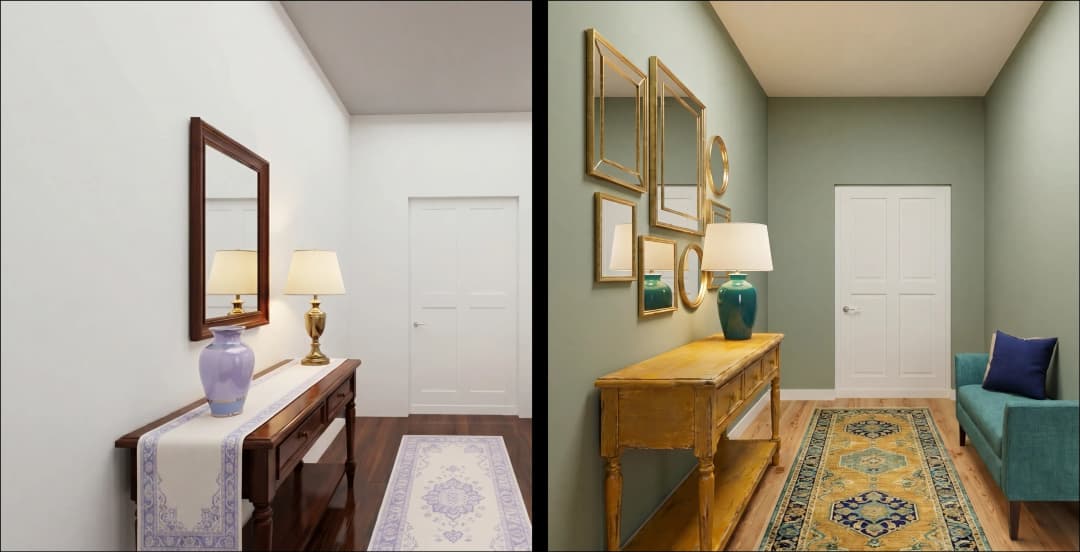
June 10, 2026
Foursite: Floor Plan to 3D Walkthrough in Minutes | VirtualSpaces
HHemanth Velury
CEO & Co-Founder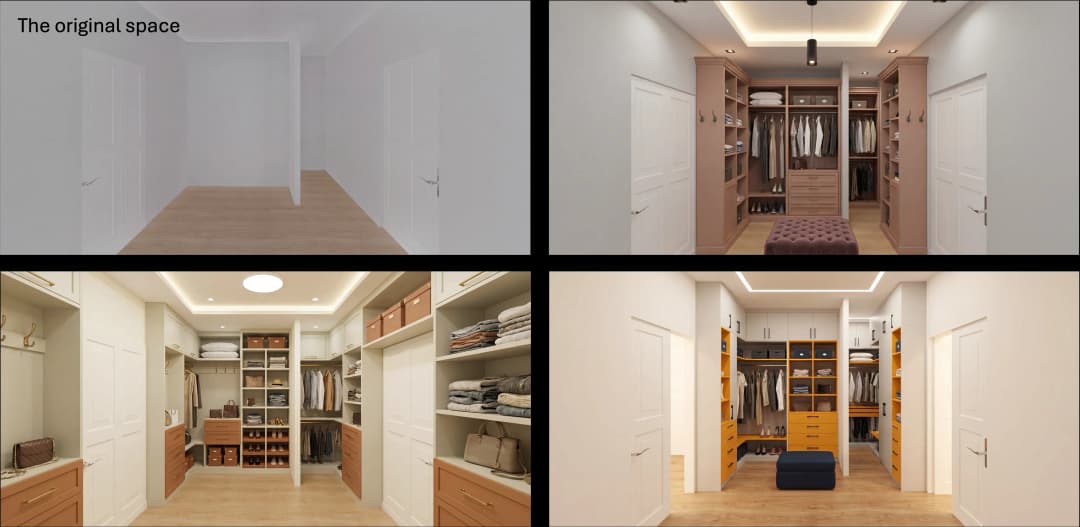
June 08, 2026
Win More Pitches With AI Renders Before the Meeting | VirtualSpaces
HHemanth Velury
CEO & Co-Founder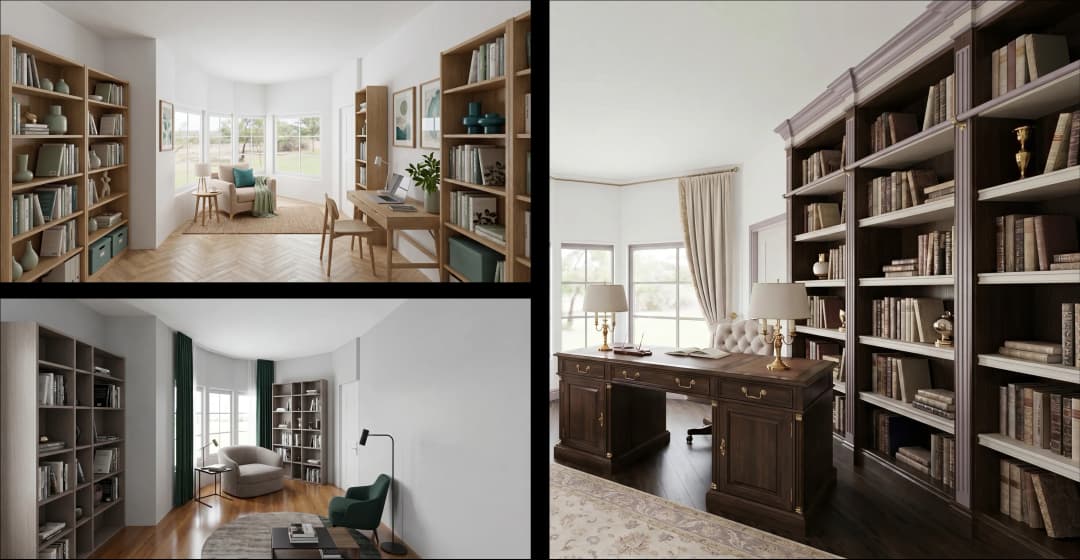
June 05, 2026
From Floor Plan to Finished Room: What AI Now Makes Possible | VirtualSpaces
HHemanth Velury
CEO & Co-Founder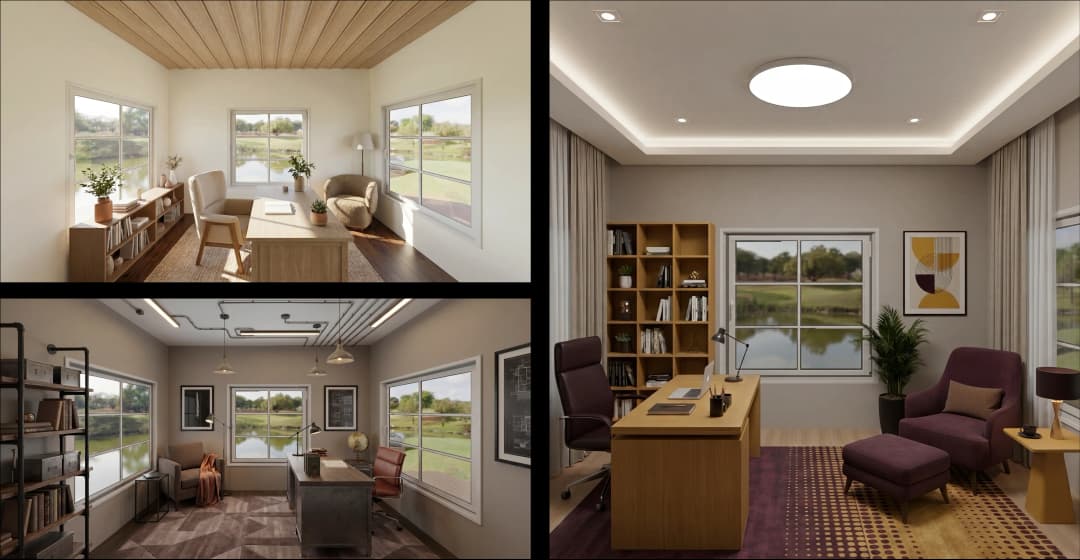
June 03, 2026
The Interior Design Brief Is Broken. AI Fixes It | VirtualSpaces
HHemanth Velury
CEO & Co-Founder
June 01, 2026
Pre-Construction Home Sales: AI Interior Visualization Guide | VirtualSpaces
HHemanth Velury
CEO & Co-Founder
May 30, 2026
Interior Design Principles: Applied with AI | VirtualSpaces
HHemanth Velury
CEO & Co-Founder
May 28, 2026
Designing Spaces for People, Not Blueprints | VirtualSpaces
HHemanth Velury
CEO & Co-Founder
May 26, 2026
The Future of Interior Design: Closing the Visualization Gap with Foursite and Remodroom | VirtualSpaces
HHemanth Velury
CEO & Co-Founder
May 18, 2026
How AI Visualization Upgrades Property Data Platforms | VirtualSpaces
HHemanth Velury
CEO & Co-Founder
May 14, 2026
How AI-First Insurers Can Use 3D Property Data to Transform Home Claims | VirtualSpaces
HHemanth Velury
CEO & Co-FounderMay 12, 2026
Why Photoreal 3D Renders Are Replacing Mood Boards | Interior Design Client Presentations | VirtualSpaces
HHemanth Velury
CEO & Co-Founder
May 08, 2026
From 2D Floor Plans To Living Worlds: The Spec‑Accurate 3D Engine | VirtualSpaces
HHemanth Velury
CEO & Co-Founder
May 06, 2026
Why Furniture Brands Need AI 3D Visualization Now | VirtualSpaces
HHemanth Velury
CEO & Co-Founder
May 4, 2026
How Property Portals Can Turn 2D Floor Plans into 3D Design Decisions | VirtualSpaces
HHemanth Velury
CEO & Co-Founder
April 29, 2026
The Home-Fit Test: Why Square Footage Misleads | VirtualSpaces
HHemanth Velury
CEO & Co-Founder
April 27, 2026
Designing Homes That Sell: 3D Visualization ROI Data | VirtualSpaces
HHemanth Velury
CEO & Co-FounderApril 24, 2026
What's Next: Foursite & Remodroom's New AI Features | VirtualSpaces
HHemanth Velury
CEO & Co-Founder
April 22, 2026
AI in Architecture: Closing the 85% Exposure Gap | VirtualSpaces
HHemanth Velury
CEO & Co-Founder
April 20, 2026
Interior Design Pricing in 2026: From Hourly to Value-Based Fees | VirtualSpaces
HHemanth Velury
CEO & Co-FounderApril 17, 2026
How Foursite and Remodroom Help Designers Win Clients | VirtualSpaces
HHemanth Velury
CEO & Co-Founder
April 15, 2026
Designing Spaces for People: Remodroom + Foursite AI Guide | VirtualSpaces
HHemanth Velury
CEO & Co-Founder
April 13, 2026
Designing for the Way People Actually Live: How AI 3D Is Finally Closing the Gap Between Floor Plan and Reality
HHemanth Velury
CEO & Co-Founder
April 11, 2026
Design in Real Time: AI Renders in Your First Client Meeting
HHemanth Velury
CEO & Co-Founder
April 06, 2026
Why Real Estate Photography Is No Longer Enough: The Shift to Spatial-First Listings
HHemanth Velury
CEO & Co-Founder
April 03, 2026
Property Management's Hidden Weapon: AI 3D Floor Plans That Cut Vacancy Time and Raise Tenant Quality
HHemanth Velury
CEO & Co-Founder
April 01, 2026
Off-Plan and Oversubscribed: How AI 3D Visualization Is Transforming Real Estate Pre-Sales
HHemanth Velury
CEO & Co-Founder
March 30, 2026
Why Foursite Beats Generic AI Tools for Interior Design 3D Visualization
HHemanth Velury
CEO & Co-Founder
March 27, 2026
7 Tenets of Interior Design: How AI Accelerates Harmony in Residential Spaces
HHemanth Velury
CEO & Co-Founder
March 25, 2026
What Is the 3-5-7 Rule in Interior Design? Foursite's AI Guide for Residential Spaces
HHemanth Velury
CEO & Co-Founder
March 23, 2026
What Is the 70/30 Rule in Interior Design? Foursite's AI Guide for Residential Spaces
HHemanth Velury
CEO & Co-Founder
March 20, 2026
How AI 3D Visualization Is Rewriting Residential Interior Design Workflows
HHemanth Velury
CEO & Co-Founder
March 18, 2026
Beyond Marketing: How 3D Floorplans Transform FM, Retrofit Planning & ESG Operations
HHemanth Velury
CEO & Co-Founder
March 16, 2026
Why AI Companies Use Token Payments (And Why VirtualSpaces Is Returning To Fiat)
HHemanth Velury
CEO & Co-Founder
March 13, 2026
Floorplan‑Native Digital Twins: Beyond BIM for Consumer‑Ready Real Estate Experiences
HHemanth Velury
CEO & Co-Founder
March 11, 2026
The Foursite Platform Thesis: Why Floor Plans, Not Photos, Are the Next Property Software Primitive
HHemanth Velury
CEO & Co-Founder
March 09, 2026
Design Systems for Space: Building Reusable 3D Component Libraries on Top of AI Floorplan‑to‑3D Engines
HHemanth Velury
CEO & Co-Founder
March 06, 2026
How to Standardize Design Quality Across Global Projects Using AI Floorplan-to-3D Tools
HHemanth Velury
CEO & Co-Founder
March 04, 2026
From CAD-First to AI-First: Reskilling Your Team for AI-Native Design Workflows
HHemanth Velury
CEO & Co-Founder
March 02, 2026
Algorithmic Ergonomics Meets Photorealistic 3D: Designing Human-Centered Smart Homes with Foursite in 2026
HHemanth Velury
CEO & Co-Founder
February 27, 2026
The Ethics of AI in Interior Design: Ownership, Originality, and Client Transparency
HHemanth Velury
CEO & Co-Founder
February 23, 2026
From Tool to Infrastructure: AI Floorplan-to-3D and the Next Wave of PropTech
HHemanth Velury
CEO & Co-Founder
February 20, 2026
AI Interior Design for Holiday Homes: Turn Spare Flats into High-Demand Short-Stay Rentals with 3D Visuals
HHemanth Velury
CEO & Co-Founder
February 18, 2026
The Pre‑Purchase Power Play: How Savvy Home Buyers Use 3D Floor Plan Visualization to Negotiate Better Deals
HHemanth Velury
CEO & Co-FounderFebruary 16, 2026
AI Interior Design for Non‑Designers: How Homeowners Can Brief Like Pros
HHemanth Velury
CEO & Co-Founder
February 13, 2026
Scaling a Design Business Without Hiring a 3D Team: An Owner's Guide
HHemanth Velury
CEO & Co-Founder
February 11, 2026
From Bland to Bold: How to Rescue Builder-Grade Interiors on Any Budget
HHemanth Velury
CEO & Co-Founder
February 6, 2026
The Psychology of Space: How Room Dimensions Influence Interior Design Decisions
HHemanth Velury
CEO & Co-Founder
February 4, 2026
The Future of Interior Design Visualization: How AI Technology is Transforming 2D Concepts Into 3D Reality
HHemanth Velury
CEO & Co-Founder
February 2, 2026
AI Interior Décor: How Artificial Intelligence Generates Design Options from Your Floor Plan
HHemanth Velury
CEO & Co-Founder
January 30, 2026
Photoreal vs. Reality: What Clients Actually Expect from Interior Design Visualization
HHemanth Velury
CEO & Co-Founder
January 28, 2026
The Design Approval Conversation That Changes Everything: Communication Strategy When Using Photorealistic Visualization
HHemanth Velury
CEO & Co-Founder
January 25, 2026
Interior Design as Experience Design: How 3D Visualization Changes Your Professional Identity
HHemanth Velury
CEO & Co-Founder
January 23, 2026
The Professional Gap: How 3D Visualization Changes Interior Design Client Perception
HHemanth Velury
CEO & Co-Founder
January 21, 2026
Why Clients Fire Designers (And How 3D Visualization Could Have Saved the Project)
HHemanth Velury
CEO & Co-Founder
January 16, 2026
Blueprint to Vision: Why Seeing Is Believing in Interior Design
HHemanth Velury
CEO & Co-Founder
January 14, 2026
The Speed of Responsiveness: How AI Visualization Tools Make You Look Like You Care More
HHemanth Velury
CEO & Co-Founder
January 12, 2026
Why Interior Designers and Architects Can't Compete Without AI 3D Visualization Tools
HHemanth Velury
CEO & Co-Founder
January 07, 2026
From "Saved" to "Sold": How Homeowners Are Planning Renovations with AI
HHemanth Velury
CEO & Co-Founder
January 05, 2026
The Interior Designer's Secret Weapon: Speed as Premium Positioning
HHemanth Velury
CEO & Co-Founder
December 31, 2025
Gratitude, Growth & Game-Changing Innovation: VirtualSpaces' 2025 Journey & What's Coming in 2026
HHemanth Velury
CEO & Co-Founder
December 29, 2025
Why Interior Designers Are Switching to AI Floor Plan-to-3D Tools in 2026
HHemanth Velury
CEO & Co-Founder
December 26, 2025
AI Virtual Staging for Real Estate Agents: Sell More Homes Faster with Foursite
HHemanth Velury
CEO & Co-Founder
December 24, 2025
Why Architects Are Switching to AI 2D-to-3D: The SketchUp Alternative
HHemanth Velury
CEO & Co-Founder
December 22, 2025
Cut 3 Weeks from Real Estate Sales Cycle: The ROI of AI 2D to 3D Visualization
HHemanth Velury
CEO & Co-Founder
December 19, 2025
2D Floor Plans Are Dying: Why 3D Visualization & AI Virtual Staging Are the Future
HHemanth Velury
CEO & Co-Founder
December 17, 2025
Virtual Staging vs Physical Staging: How AI Saves Money Per Property
HHemanth Velury
CEO & Co-Founder
December 15, 2025
AI Floor Plan to Image: Revolutionizing Real Estate Marketing for Agents
HHemanth Velury
CEO & Co-Founder
December 12, 2025
Color of the Year 2026: Cloud Dancer | VirtualSpaces AI Interior Design Guide
HHemanth Velury
CEO & Co-Founder
December 10, 2025
AI Floor Plan to 3D: The New Standard for Interior Design Workflows
HHemanth Velury
CEO & Co-Founder
December 08, 2025
How Interior Design Studios Can Operationalize AI 2D-to-3D Workflows (Without Breaking Their Process)
HHemanth Velury
CEO & Co-Founder
December 06, 2025
How to Implement AI Interior Design Workflows in Your Studio
HHemanth Velury
CEO & Co-Founder
December 4, 2025
How Homeowners Can Use AI Interior Design Tools to Plan Renovations with Confidence
HHemanth Velury
CEO & Co-Founder
November 28, 2025
Interior Designers in the Age of AI: From Threat Narrative to Superpower
HHemanth Velury
CEO & Co-Founder
November 21, 2025
Foursite Launch: Embracing 'Release Early, Release Often'
HHemanth Velury
CEO & Co-Founder
November 13, 2025
Foursite by VirtSpaces: Empowering Interior Designers, Architects, and Homeowners
HHemanth Velury
CEO & Co-Founder
November 7, 2025
Reimagining Architectural Education: How AI Floorplan-to-3D Technology Can Transform Design Learning
VVirtualSpaces Research Labs
AI Research Initiative
October 27, 2025
Archisculpt AI: Turning Architectural Drawings into Photorealistic 3D Spaces
AAbhijeet Naik
Co-Founder & CTO
October 13, 2025
Home Makeover: From Floor Plan to Dream Space with AI
HHemanth Velury
CEO & Co-Founder
October 6, 2025
Real-Time Rendering & AI: Revolutionizing Interactive Property Walkthroughs with VirtSpaces
HHemanth Velury
CEO & Co-Founder
September 26, 2025
Foursite - A True AI-Native Experience in Design Visualization
AAbhijeet Naik
CTO & Co-Founder
September 18, 2025
Why PropTech Startups Are Betting on AI Interior Design
HHemanth Velury
CEO & Co-Founder
September 11, 2025
How AI Differs from Traditional 3D Rendering Software
HHemanth Velury
CEO & Co-Founder
September 2, 2025
From Client to Investor: How Nila Spaces and VirtSpaces Are Redefining Proptech with AI
HHemanth Velury
CEO & Co-Founder
August 25, 2025
VirtSpaces From Virtual Reality to AI – Transforming Real Estate Visualization.
HHemanth Velury
CEO & Co-Founder


We help teams collaborate seamlessly and reduce costs. Virtual Spaces offers cutting-edge technology with flexible plans designed to fit modern teams.
Copyright © VirtSpaces Pvt. Ltd. 2025 All Rights Reserved.
CIN: U74999KA2016PTC094921