
January 19, 2026
- Virtual Staging
- Real Estate
- AI Technology
Virtual Staging as a Relationship Tool
Hemanth Velury
CEO & Co-FounderVirtual Staging as a Relationship Tool
The Connection Between Vision and Trust: Why Real Estate is Built on More Than Blueprints
When you're helping a client make one of the biggest financial decisions of their life, something becomes immediately clear: real estate transactions are deeply emotional experiences, not just transactions. A buyer isn't simply purchasing square footage and wall paint. They're buying a future, a place to build memories, raise families, host celebrations, and create their life story. That emotional weight changes everything about how we should communicate design and space.
This is where virtual staging enters the conversation in a way that transcends traditional marketing. It's not just about making a property look pretty. It's about opening a real dialogue between you, the design, and your client's dreams. When a real estate agent or developer can show a buyer exactly what a space will feel like, not just what it looks like on a 2D floor plan, but how they'll experience living in it, something magical happens. The invisible becomes visible. The uncertain becomes confident. And that confidence is the foundation of loyalty.
The real estate industry has long relied on imagination. Buyers would walk through empty rooms and try to envision furniture, layout possibilities, and how natural light would change throughout the day. Agents would do their best to paint pictures with words, pointing out "great bones" and "potential." But potential is abstract. Buyers need clarity, and clarity builds trust.
Research confirms this truth: 95% of buyers report that staging or visualization tools are crucial to picturing a property as their future home. Even more compelling, 77% of buyers say that virtually staged photos help them visualize a property better than seeing an empty room in person. This isn't because AI interior design renders are magical tricks. It's because they transform the communication from abstract to concrete and interactive dialogue.
The Speed Advantage: Why Real Estate Professionals Can't Afford to Slow Down
In today's market, speed isn't just nice to have, it's the difference between closing a deal and losing it to a competitor. Properties that sit on listings for weeks lose momentum. Buyers who can't quickly visualize a property move on to the next option. Agents who wait for weeks to stage properties physically lose opportunities. Developers who can't efficiently present multiple design options to investors miss windows of funding and buyer interest.
This is where the conversion from 2D floor plans and blueprints into 3D visualizations becomes a competitive weapon. Traditional floor plan to 3D conversion used to take weeks of manual work, requiring expensive architects and 3D modelers. Today's AI-powered technology has fundamentally changed the game. What once took weeks now takes hours or even minutes. A real estate agent can upload a 2D floor plan in the morning and have photorealistic 3D visualizations ready for client presentations by afternoon.
Consider the practical implications: when a prospective buyer asks "Can I see how this would look with modern furnishings?" agents using AI interior design visualization tools can provide answers instantly. No waiting. No vague promises. Just real-time, visual answers. This speed of response does something subtle but powerful: it signals professionalism, capability, and respect for the client's time.
The numbers tell the story. Listings enhanced with 3D visualizations sell 20-30% faster than those relying solely on traditional photography and floor plans. Properties marketed with 3D visuals receive 118% more online views and sell 32% faster than traditional listings. For agents and developers, the impact is substantial: the virtual staging market, valued at $1.2 billion in 2024, is projected to reach $5.5 billion by 2033, growing at a compound annual rate of 18.5%.
Buyers are moving fast, and professionals equipped with instant blueprint to 3D conversion capabilities move faster.
The Emotional Intelligence of Design Communication
Here's what most real estate professionals understand intuitively but rarely articulate: the way you communicate about space is deeply emotional work. When you show a client a living room, you're not showing them drywall and flooring. You're showing them a possibility. You're inviting them to imagine holidays gathered around a table, children playing on a rug, or a quiet morning with coffee by the window.
Emotional intelligence in design communication means understanding that different clients envision space differently. A young professional moving to the city alone sees a studio apartment differently than a family of five. A luxury investor evaluates a property through a different lens than a first-time homebuyer. Yet many real estate professionals have treated property visualization like a one-size-fits-all proposition: the same photos, the same floor plan descriptions, the same staged model unit.
AI-powered interior décor and interior design visualization tools enable something revolutionary: personalized communication at scale. A developer can show a young professional a sleek, minimalist version of the same unit: with clean lines, modern kitchen fixtures, and minimalist furniture. Simultaneously, that same developer can show a family the same space furnished with comfortable seating, warm lighting, storage solutions, and a play area. Both are the same property. Both are realistic. Both speak directly to what each client cares about.
This capability—the ability to generate custom interior design renders for different audience segments in real time—is where emotional intelligence meets technology. Photorealistic 3D visualizations trigger similar cognitive and emotional reactions as physical visits, allowing buyers to connect with properties on a deeper level, even before stepping inside. When you invest in showing clients what actually matters to them, you're not just marketing a property. You're communicating respect, understanding, and genuine care about their vision.
Building Client Loyalty Through Transparency and Collaboration
One of the most underrated aspects of virtual staging and AI 3D visualization is the collaborative element. When a client can interact with a floor plan to 3D visualization in real time: changing the colors or wallpapers, repositioning furniture, they're no longer passive observers. They're active participants in the design process.
This shift from passive to active is where genuine loyalty begins to form. Clients who have a hand in shaping the visual presentation of a property feel more ownership over it. They feel heard. They feel like their preferences and vision actually matter. When a real estate agent or developer asks, "What if we tried this layout instead?" and can instantly generate a new interior design render showing exactly what they mean, the client experiences something they rarely get: transparency combined with expertise.
The collaborative advantage extends beyond single listings. Developers using AI 3D visualization and interior design tools report significantly stronger pre-sale performance because buyers can interact with the design. They can test different finishes, explore furniture arrangements, and envision themselves in the space before making a commitment. This hands-on engagement deepens the emotional connection and accelerates decision-making.
Real estate professionals who leverage virtual staging and 3D visualization tools report not just faster sales, but stronger client relationships. These clients become repeat customers and referral sources because the entire transaction experience was built on clear communication, quick responses, and respect for their vision. That's client loyalty in its purest form.
Real Estate Agents: Speed and Differentiation in a Crowded Market
For individual real estate agents, the pressure to differentiate is constant. You're competing not just with other agents but with online marketplaces, For-Sale-By-Owner listings, and discount brokerages. What you have that algorithms don't is human judgment, relationship-building skill, and the ability to advocate for your clients. But you can't leverage those advantages if you're slow.
When a potential client interviews three agents, what's going to make them choose you? Your listings need to stand out online. Your responses to inquiries need to be fast. Your presentations need to demonstrate expertise and forward-thinking. Virtual staging tools and AI 3D visualization platforms allow you to deliver all of this immediately. You can convert a standard floor plan to 3D in minutes, create multiple design scenarios for a client meeting, and generate interior design photoreal renders that would have cost hundreds of dollars just a few years ago.
But the real competitive advantage happens after the listing goes live. When buyers contact you with questions or customization requests, agents equipped with AI visualization tools can respond within hours, not days. Buyers get what they need: information, clarity, confidence, immediately. That responsiveness, combined with emotionally intelligent communication, builds trust faster than traditional methods ever could.
Over 70% of real estate professionals are already using digital visualization tools. The gap isn't between those using technology and those who aren't: it's between those using it strategically to deepen relationships and those treating it as a checkbox. Speed is the bare minimum now. What separates successful agents is whether they're using that speed to communicate better, listen more effectively, and build stronger client relationships.
Real Estate Developers: Launching Projects Faster with Investor Confidence
For developers, the stakes are even higher. You're managing large capital projects, coordinating multiple stakeholders, and trying to secure early buyer commitments often before construction begins. The ability to present properties through blueprint to 3D conversion and AI interior décor visualization becomes a direct driver of project success.
Consider the timeline advantage: developers can now take architectural blueprints and generate photorealistic 3D visualizations within days, not weeks. This means earlier marketing launches, faster investor presentations, and quicker buyer pre-sales. But beyond speed, there's the confidence factor. Investors and buyers purchasing sight-unseen need absolute clarity about what they're buying. A traditional floor plan leaves too much to imagination. An interior design render using AI tools shows exactly what the developer intends, eliminating ambiguity.
Developers who invest in professional 3D visualization and AI interior design capabilities signal credibility and professionalism to the market. You're saying, "We've thought this through so thoroughly that we can show you exactly what you're getting." That transparency, delivered through high-quality interior design renders, is how you command premium pricing. Research shows that properties with 3D visualizations achieve price premiums of 3-7%, and some developments using advanced visualization tools report even higher returns.
Moreover, virtual staging and AI visualization create an engagement loop that directly impacts buyer emotional connection to the project. When buyers can interactively customize finishes and layouts using AI tools, they're not just buying a floor plan; they're designing their future with your guidance. That's a fundamentally different relationship than traditional developer-buyer dynamics, and it builds loyalty from the earliest stages of the project.
The Data: Results That Justify the Investment
The numbers tell a compelling story. Over 80% of real estate professionals planned to increase their technology budgets in the coming years. That's not a trend; that's an industry-wide shift. Virtual staging can reduce presentation costs by up to 97% compared to physical staging, while delivering better results. AI virtual staging has been shown to increase property inquiries by up to 200% compared to traditional methods.
The transparency advantage is equally substantial. Research shows that 54% of buyers now prefer to delay in-person tours until they've explored a 3D virtual tour first. This means faster decision-making cycles and reduced unnecessary property showings. For agents and developers, this translates directly to efficiency gains and higher conversion rates.
When 77% of buyers report feeling more confident after experiencing a 3D virtual tour, you're not just making a sale but building the trust foundation for a smooth transaction and future referrals. Properties sell 33-50% faster when virtually staged compared to non-staged homes. Listings with 3D floor plans get more clicks and inquiries than listings with just 2D drawings or photos.
The Framework: Speed Plus Emotional Intelligence
The most successful real estate professionals understand that speed and efficiency aren't cold, transactional concepts. They're acts of respect. When you respond quickly to a client's question with a visual answer: whether it's an instantly generated 3D visualization or an AI interior décor mockup, you're saying, "Your time matters. Your vision matters. I'm equipped to serve you at the level you deserve."
This is where emotional intelligence and technology converge. Tools like AI 3D visualization and blueprint to 3D conversion technology aren't replacing the human element of real estate; they're amplifying it. They free you from administrative friction so you can focus on what you do best: understanding clients' needs, communicating their vision, and building trust through clarity.
A client who experiences responsive, visually eloquent communication that is supported by real-time AI interior design renders and instant blueprint to 3D conversions doesn't just feel served. They feel understood. They feel respected. That's the emotional foundation of client loyalty in the modern real estate market.
The Future Belongs to Those Who Move Fast While Staying Human
The conversation about virtual staging and AI 3D visualization is no longer about whether to adopt these tools. The question is simply whether you're going to use them strategically to deepen client relationships or let faster-moving competitors grab that advantage.
For agents and developers who understand that real estate is fundamentally about relationships, understanding what clients want, communicating it clearly, and delivering it dependably, virtual staging represents an opportunity to strengthen every dimension of the client relationship. It's speed without coldness. It's technology in service of human connection.
The future of real estate belongs to professionals who can master this combination: rapid response times powered by AI visualization tools, combined with genuine emotional intelligence and a commitment to understanding client needs. That's not a nice-to-have capability anymore. In competitive markets, it's becoming the baseline for success.
Are you ready to build client loyalty through the clarity, speed, and emotional intelligence that modern virtual staging and AI visualization tools make possible?
Recommended for you

August 19, 2026
The End of the Model Home? 3D Changes the Math | VirtualSpaces
HHemanth Velury
CEO & Co-Founder
August 17, 2026
Designing Spaces That Actually Get Built | VirtualSpaces
HHemanth Velury
CEO & Co-Founder
August 12, 2026
Designing Homes for the Stuff People Actually Own | VirtualSpaces
HHemanth Velury
CEO & Co-Founder
August 07, 2026
Floor Plan to Bill of Materials: The 3D Model as Data | VirtualSpaces
HHemanth Velury
CEO & Co-Founder.png&w=1080&q=75)
August 05, 2026
Designing Homes for How People Actually Live | VirtualSpaces
HHemanth Velury
CEO & Co-Founder
August 03, 2026
Honest by Design: Trust in AI Real Estate Imagery | VirtualSpaces
HHemanth Velury
CEO & Co-Founder
July 29, 2026
Kitchen and Bath: The Two Rooms That Decide Resale | VirtualSpaces
HHemanth Velury
CEO & Co-Founder
July 27, 2026
Why Empty Rooms Don't Sell: Virtual Staging | VirtualSpaces
HHemanth Velury
CEO & Co-Founder
July 24, 2026
The Quiet Sustainability Win of Deciding in 3D | VirtualSpaces
HHemanth Velury
CEO & Co-Founder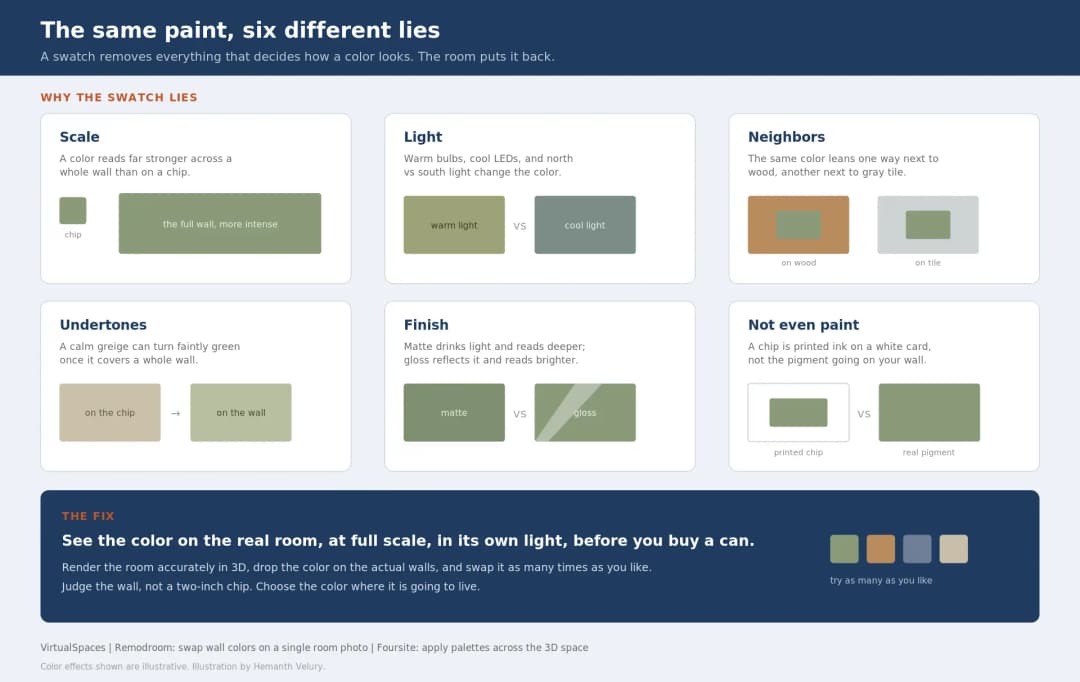
July 22, 2026
Why Paint Swatches Lie: Test Color in 3D First | VirtualSpaces
HHemanth Velury
CEO & Co-Founder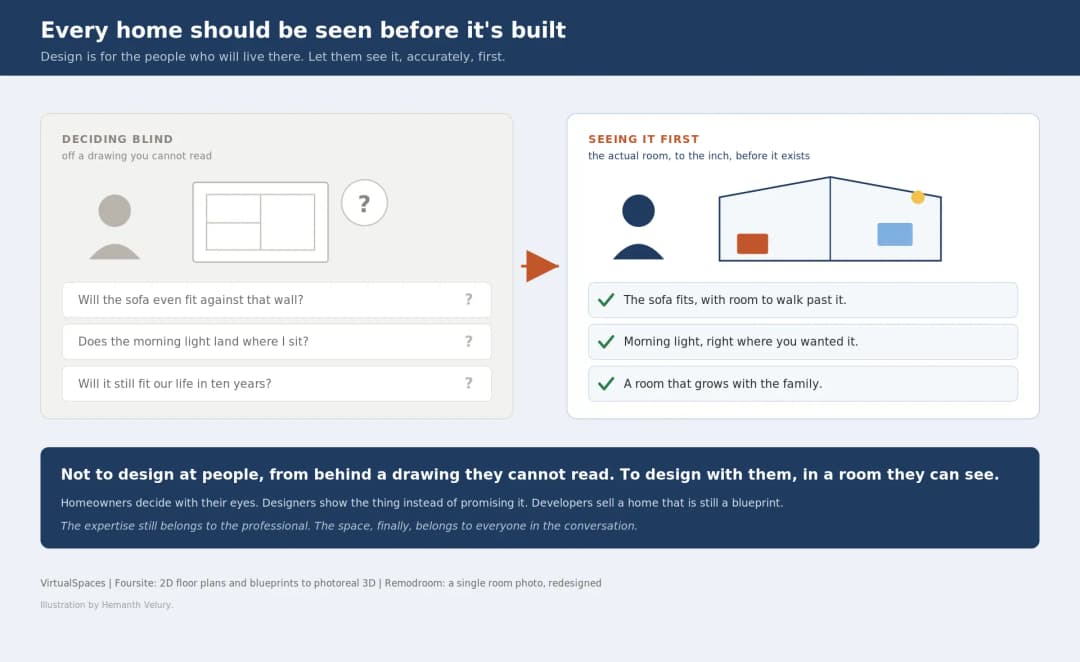
July 20, 2026
Why Every Home Should Be Seen Before It's Built | VirtualSpaces
HHemanth Velury
CEO & Co-Founder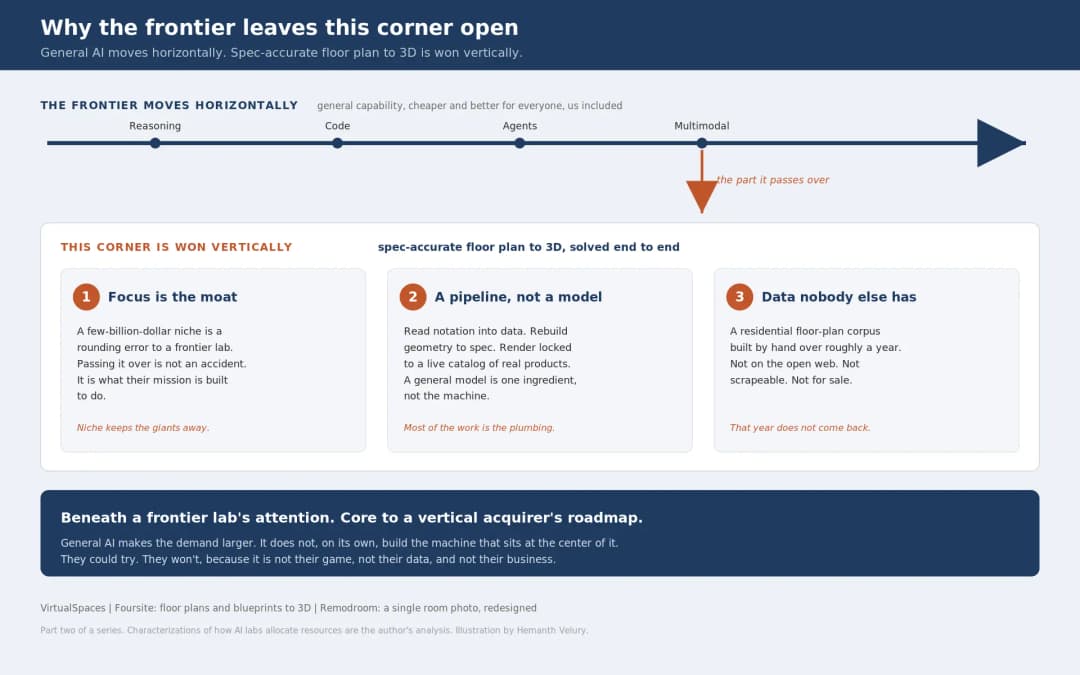
July 17, 2026
Why Big AI Labs Won't Build Floor Plan to 3D | VirtualSpaces
HHemanth Velury
CEO & Co-Founder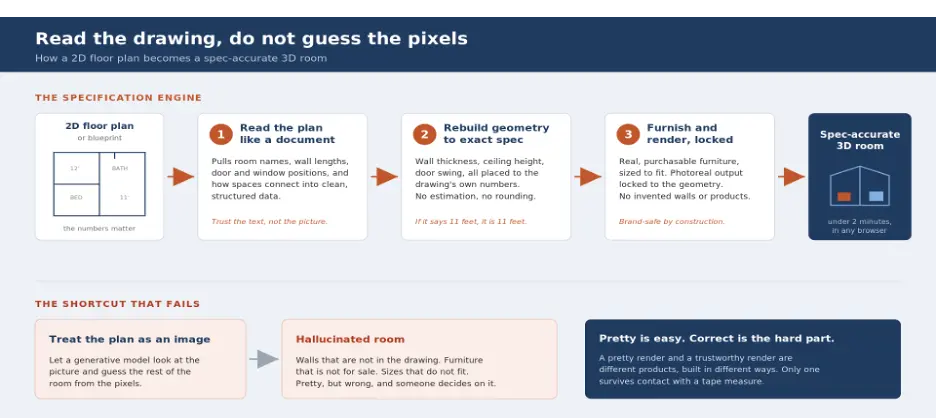
July 15, 2026
How We Solve Floor Plan to 3D, Accurately | VirtualSpaces
HHemanth Velury
CEO & Co-Founder
July 13, 2026
Designing Homes That Age With the People in Them | VirtualSpaces
HHemanth Velury
CEO & Co-Founder
July 10, 2026
Designing Spaces for How Light Actually Moves | VirtualSpaces
HHemanth Velury
CEO & Co-Founder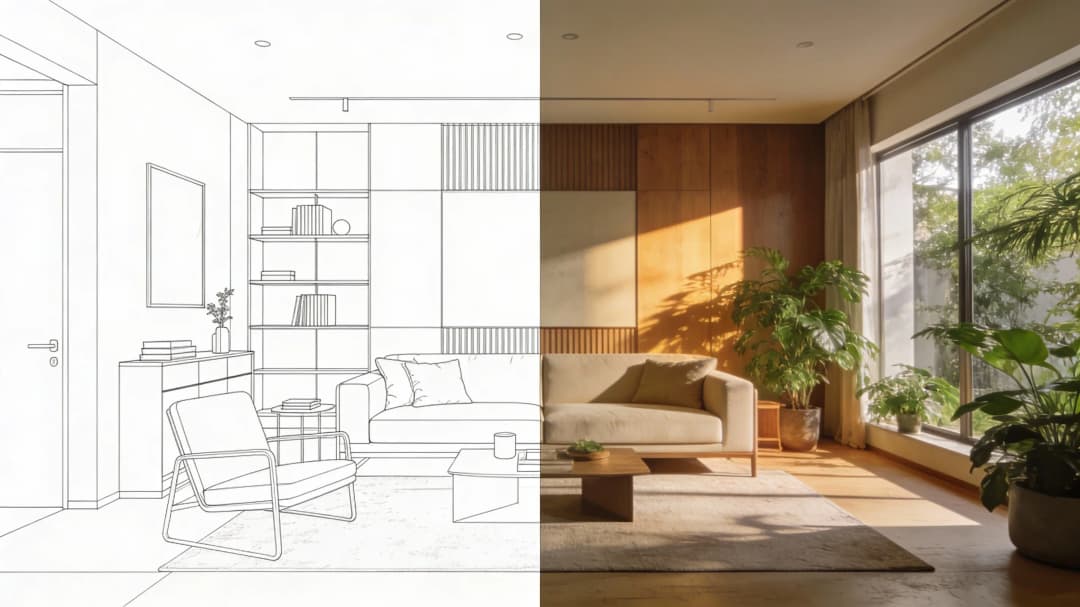
July 08, 2026
Designing Homes for Every Life Stage in 3D | VirtualSpaces
HHemanth Velury
CEO & Co-Founder
July 06, 2026
Build an Interior Design Portfolio Without Clients | VirtualSpaces
HHemanth Velury
CEO & Co-Founder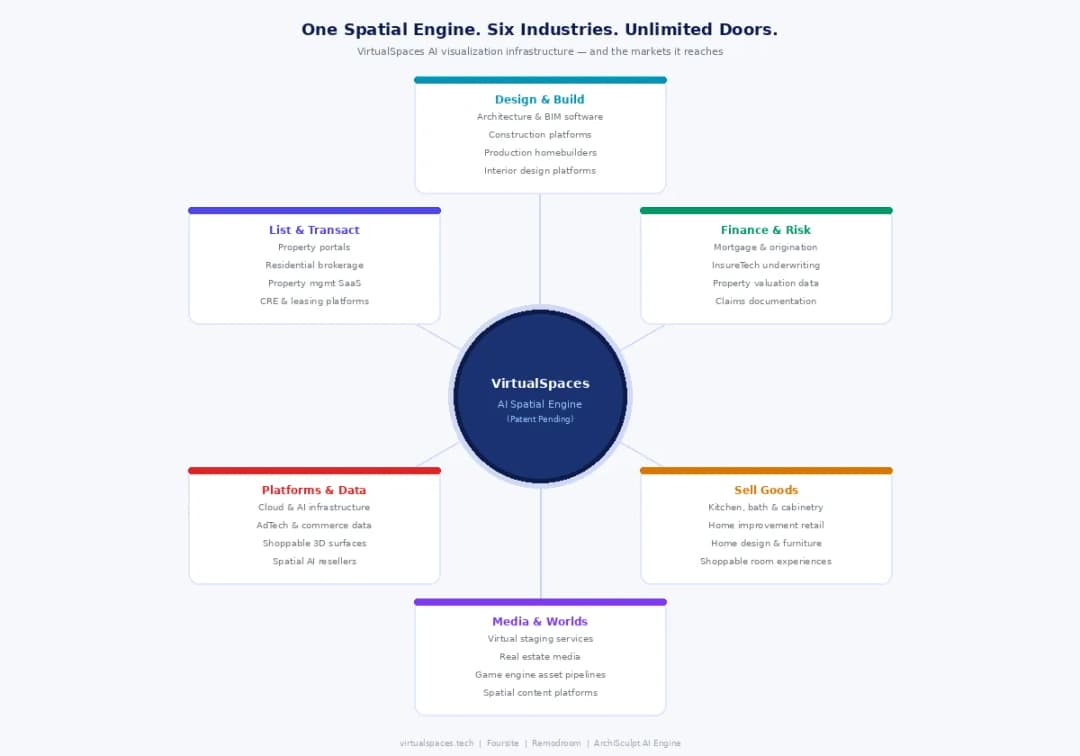
June 26, 2026
AI Interior Design: Full 3D Workflow in One Platform | VirtualSpaces
HHemanth Velury
CEO & Co-Founder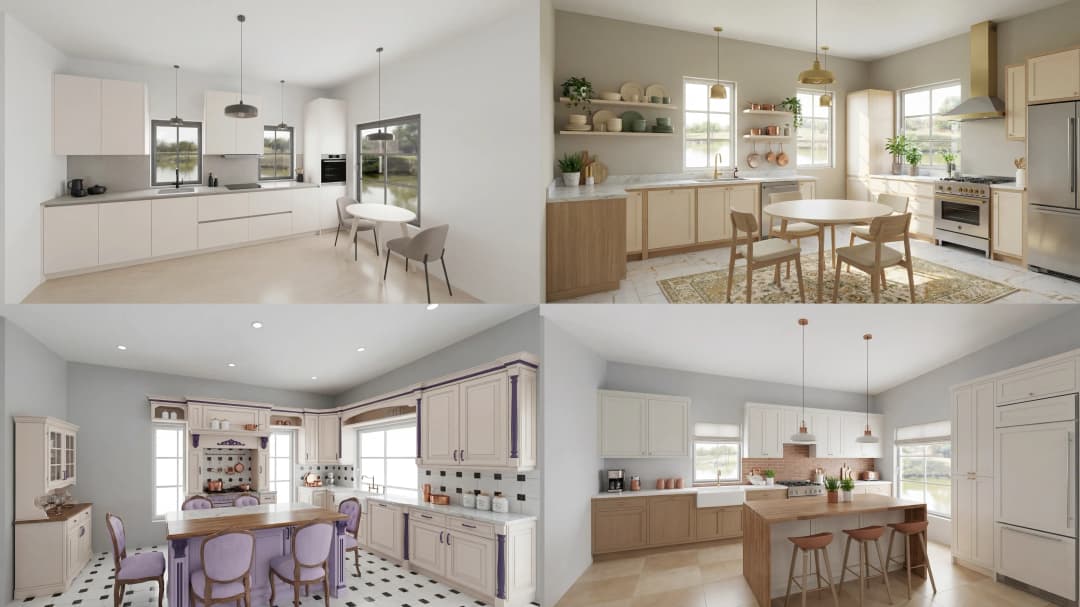
June 24, 2026
Scope Creep in Interior Design: How AI Visualization Fixes It | VirtualSpaces
HHemanth Velury
CEO & Co-Founder
June 22, 2026
What Buyers See on a Floor Plan: Your Biggest Sales Problem | VirtualSpaces
HHemanth Velury
CEO & Co-Founder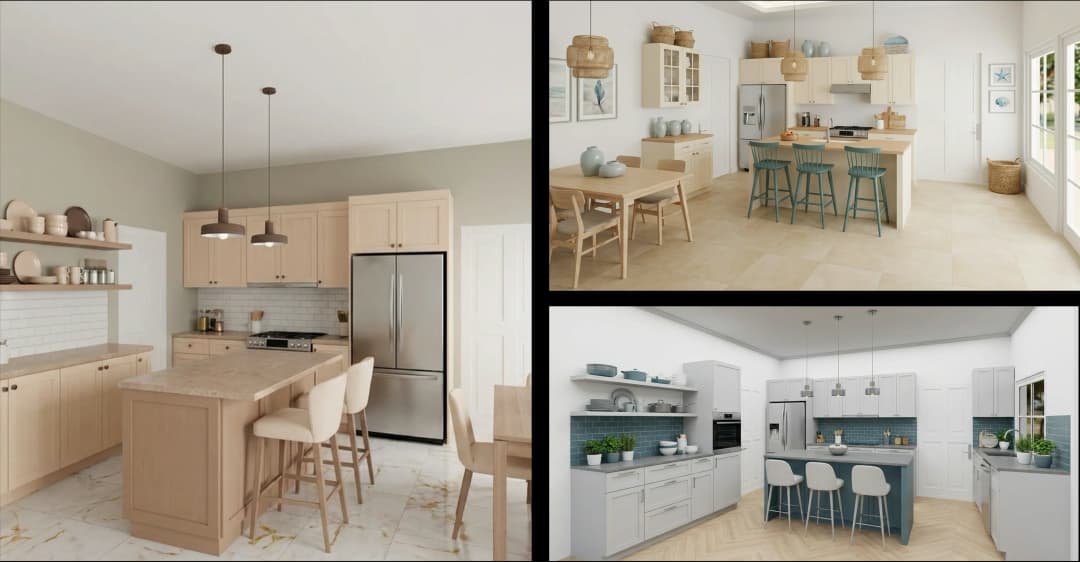
June 19, 2026
Small Design Studios vs Big Firms: The AI Advantage | VirtualSpaces
HHemanth Velury
CEO & Co-Founder
June 17, 2026
After the Mood Board: AI Interior Visualization | VirtualSpaces
HHemanth Velury
CEO & Co-Founder
June 15, 2026
Foursite Pro Editor: Full Floor Plan Control for Designers | VirtualSpaces
HHemanth Velury
CEO & Co-Founder
June 12, 2026
AI Interior Design: Style Any Room in Seconds with Foursite | VirtualSpaces
HHemanth Velury
CEO & Co-Founder
June 10, 2026
Foursite: Floor Plan to 3D Walkthrough in Minutes | VirtualSpaces
HHemanth Velury
CEO & Co-Founder
June 08, 2026
Win More Pitches With AI Renders Before the Meeting | VirtualSpaces
HHemanth Velury
CEO & Co-Founder
June 05, 2026
From Floor Plan to Finished Room: What AI Now Makes Possible | VirtualSpaces
HHemanth Velury
CEO & Co-Founder
June 03, 2026
The Interior Design Brief Is Broken. AI Fixes It | VirtualSpaces
HHemanth Velury
CEO & Co-Founder
June 01, 2026
Pre-Construction Home Sales: AI Interior Visualization Guide | VirtualSpaces
HHemanth Velury
CEO & Co-Founder
May 30, 2026
Interior Design Principles: Applied with AI | VirtualSpaces
HHemanth Velury
CEO & Co-Founder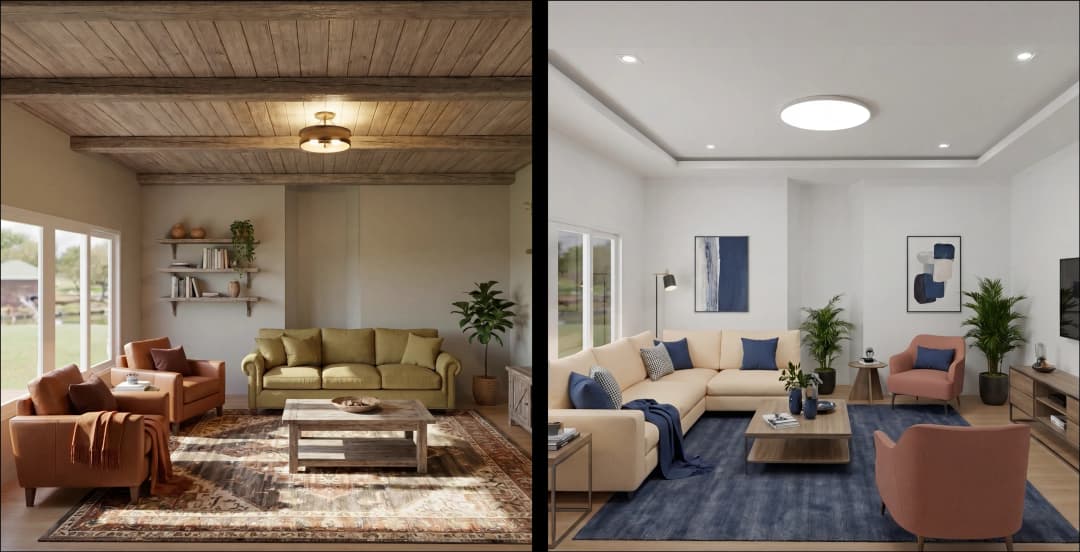
May 28, 2026
Designing Spaces for People, Not Blueprints | VirtualSpaces
HHemanth Velury
CEO & Co-Founder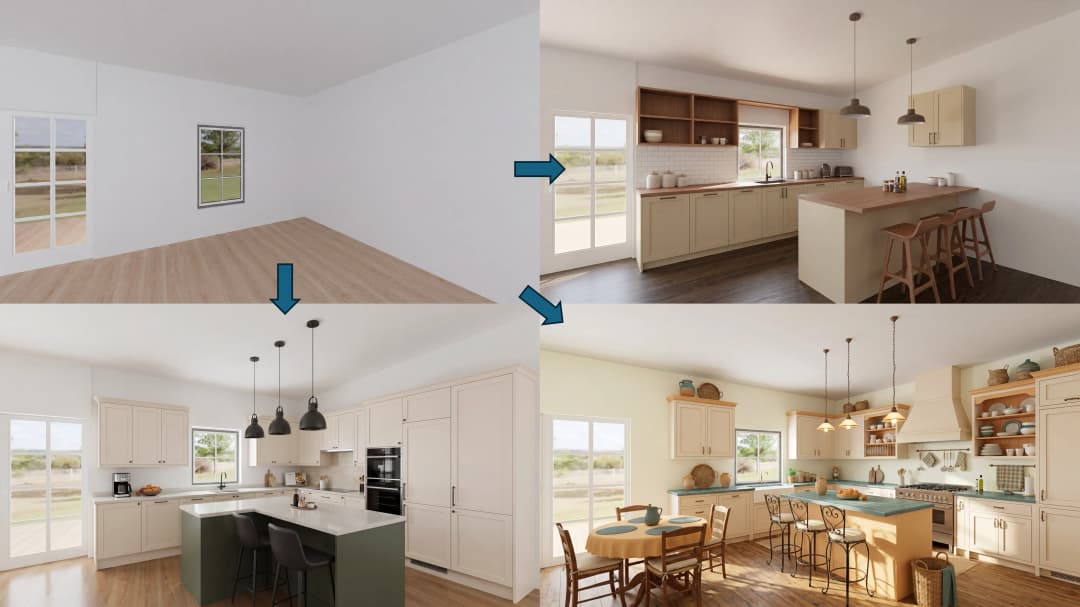
May 26, 2026
The Future of Interior Design: Closing the Visualization Gap with Foursite and Remodroom | VirtualSpaces
HHemanth Velury
CEO & Co-Founder
May 18, 2026
How AI Visualization Upgrades Property Data Platforms | VirtualSpaces
HHemanth Velury
CEO & Co-Founder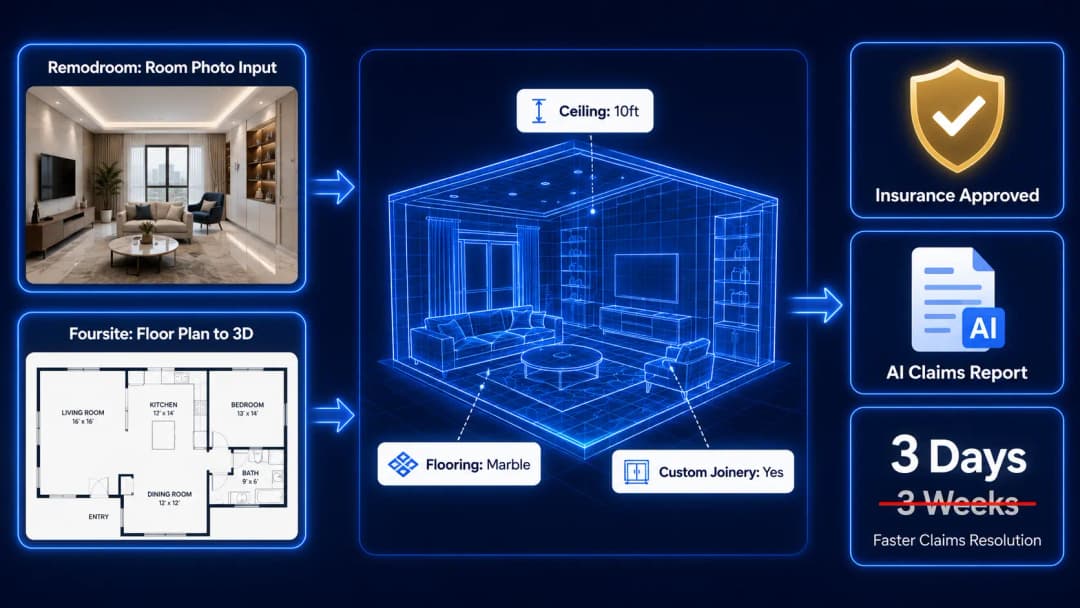
May 14, 2026
How AI-First Insurers Can Use 3D Property Data to Transform Home Claims | VirtualSpaces
HHemanth Velury
CEO & Co-FounderMay 12, 2026
Why Photoreal 3D Renders Are Replacing Mood Boards | Interior Design Client Presentations | VirtualSpaces
HHemanth Velury
CEO & Co-Founder
May 08, 2026
From 2D Floor Plans To Living Worlds: The Spec‑Accurate 3D Engine | VirtualSpaces
HHemanth Velury
CEO & Co-Founder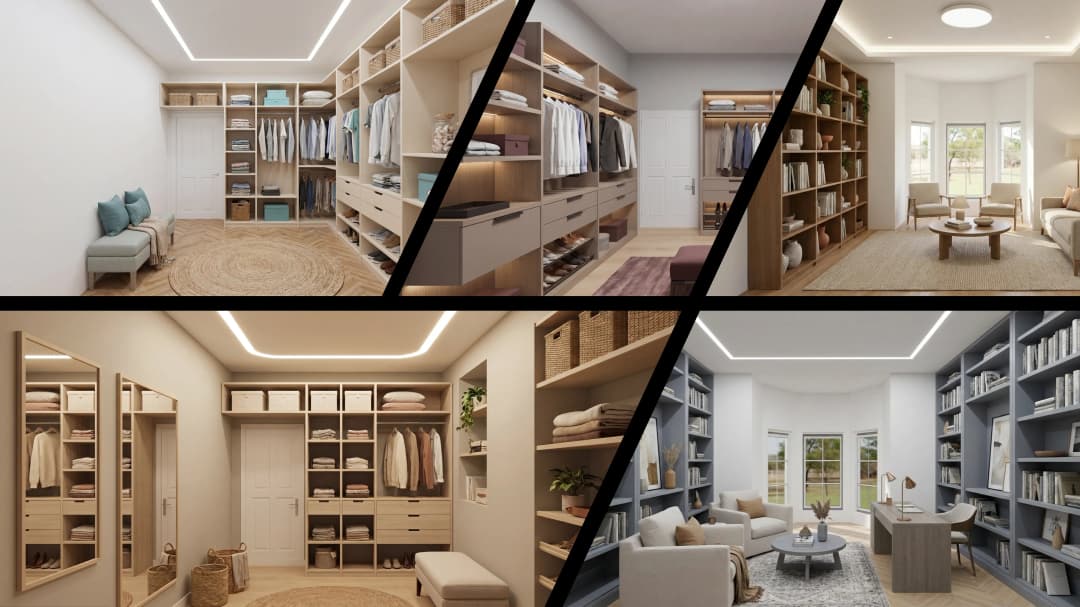
May 06, 2026
Why Furniture Brands Need AI 3D Visualization Now | VirtualSpaces
HHemanth Velury
CEO & Co-Founder
May 4, 2026
How Property Portals Can Turn 2D Floor Plans into 3D Design Decisions | VirtualSpaces
HHemanth Velury
CEO & Co-Founder
April 29, 2026
The Home-Fit Test: Why Square Footage Misleads | VirtualSpaces
HHemanth Velury
CEO & Co-Founder
April 27, 2026
Designing Homes That Sell: 3D Visualization ROI Data | VirtualSpaces
HHemanth Velury
CEO & Co-FounderApril 24, 2026
What's Next: Foursite & Remodroom's New AI Features | VirtualSpaces
HHemanth Velury
CEO & Co-Founder
April 22, 2026
AI in Architecture: Closing the 85% Exposure Gap | VirtualSpaces
HHemanth Velury
CEO & Co-Founder
April 20, 2026
Interior Design Pricing in 2026: From Hourly to Value-Based Fees | VirtualSpaces
HHemanth Velury
CEO & Co-FounderApril 17, 2026
How Foursite and Remodroom Help Designers Win Clients | VirtualSpaces
HHemanth Velury
CEO & Co-Founder
April 15, 2026
Designing Spaces for People: Remodroom + Foursite AI Guide | VirtualSpaces
HHemanth Velury
CEO & Co-Founder
April 13, 2026
Designing for the Way People Actually Live: How AI 3D Is Finally Closing the Gap Between Floor Plan and Reality
HHemanth Velury
CEO & Co-Founder
April 11, 2026
Design in Real Time: AI Renders in Your First Client Meeting
HHemanth Velury
CEO & Co-Founder
April 06, 2026
Why Real Estate Photography Is No Longer Enough: The Shift to Spatial-First Listings
HHemanth Velury
CEO & Co-Founder
April 03, 2026
Property Management's Hidden Weapon: AI 3D Floor Plans That Cut Vacancy Time and Raise Tenant Quality
HHemanth Velury
CEO & Co-Founder
April 01, 2026
Off-Plan and Oversubscribed: How AI 3D Visualization Is Transforming Real Estate Pre-Sales
HHemanth Velury
CEO & Co-Founder
March 30, 2026
Why Foursite Beats Generic AI Tools for Interior Design 3D Visualization
HHemanth Velury
CEO & Co-Founder
March 27, 2026
7 Tenets of Interior Design: How AI Accelerates Harmony in Residential Spaces
HHemanth Velury
CEO & Co-Founder
March 25, 2026
What Is the 3-5-7 Rule in Interior Design? Foursite's AI Guide for Residential Spaces
HHemanth Velury
CEO & Co-Founder
March 23, 2026
What Is the 70/30 Rule in Interior Design? Foursite's AI Guide for Residential Spaces
HHemanth Velury
CEO & Co-Founder
March 20, 2026
How AI 3D Visualization Is Rewriting Residential Interior Design Workflows
HHemanth Velury
CEO & Co-Founder
March 18, 2026
Beyond Marketing: How 3D Floorplans Transform FM, Retrofit Planning & ESG Operations
HHemanth Velury
CEO & Co-Founder
March 16, 2026
Why AI Companies Use Token Payments (And Why VirtualSpaces Is Returning To Fiat)
HHemanth Velury
CEO & Co-Founder
March 13, 2026
Floorplan‑Native Digital Twins: Beyond BIM for Consumer‑Ready Real Estate Experiences
HHemanth Velury
CEO & Co-Founder
March 11, 2026
The Foursite Platform Thesis: Why Floor Plans, Not Photos, Are the Next Property Software Primitive
HHemanth Velury
CEO & Co-Founder
March 09, 2026
Design Systems for Space: Building Reusable 3D Component Libraries on Top of AI Floorplan‑to‑3D Engines
HHemanth Velury
CEO & Co-Founder
March 06, 2026
How to Standardize Design Quality Across Global Projects Using AI Floorplan-to-3D Tools
HHemanth Velury
CEO & Co-Founder
March 04, 2026
From CAD-First to AI-First: Reskilling Your Team for AI-Native Design Workflows
HHemanth Velury
CEO & Co-Founder
March 02, 2026
Algorithmic Ergonomics Meets Photorealistic 3D: Designing Human-Centered Smart Homes with Foursite in 2026
HHemanth Velury
CEO & Co-Founder
February 27, 2026
The Ethics of AI in Interior Design: Ownership, Originality, and Client Transparency
HHemanth Velury
CEO & Co-Founder
February 25, 2026
Designing with Empathy: Using AI 3D Visualization to Improve Client Communication and Emotional Clarity
HHemanth Velury
CEO & Co-Founder
February 23, 2026
From Tool to Infrastructure: AI Floorplan-to-3D and the Next Wave of PropTech
HHemanth Velury
CEO & Co-Founder
February 20, 2026
AI Interior Design for Holiday Homes: Turn Spare Flats into High-Demand Short-Stay Rentals with 3D Visuals
HHemanth Velury
CEO & Co-Founder
February 18, 2026
The Pre‑Purchase Power Play: How Savvy Home Buyers Use 3D Floor Plan Visualization to Negotiate Better Deals
HHemanth Velury
CEO & Co-FounderFebruary 16, 2026
AI Interior Design for Non‑Designers: How Homeowners Can Brief Like Pros
HHemanth Velury
CEO & Co-Founder
February 13, 2026
Scaling a Design Business Without Hiring a 3D Team: An Owner's Guide
HHemanth Velury
CEO & Co-Founder
February 11, 2026
From Bland to Bold: How to Rescue Builder-Grade Interiors on Any Budget
HHemanth Velury
CEO & Co-Founder
February 6, 2026
The Psychology of Space: How Room Dimensions Influence Interior Design Decisions
HHemanth Velury
CEO & Co-Founder
February 4, 2026
The Future of Interior Design Visualization: How AI Technology is Transforming 2D Concepts Into 3D Reality
HHemanth Velury
CEO & Co-Founder
February 2, 2026
AI Interior Décor: How Artificial Intelligence Generates Design Options from Your Floor Plan
HHemanth Velury
CEO & Co-Founder
January 30, 2026
Photoreal vs. Reality: What Clients Actually Expect from Interior Design Visualization
HHemanth Velury
CEO & Co-Founder
January 28, 2026
The Design Approval Conversation That Changes Everything: Communication Strategy When Using Photorealistic Visualization
HHemanth Velury
CEO & Co-Founder
January 25, 2026
Interior Design as Experience Design: How 3D Visualization Changes Your Professional Identity
HHemanth Velury
CEO & Co-Founder
January 23, 2026
The Professional Gap: How 3D Visualization Changes Interior Design Client Perception
HHemanth Velury
CEO & Co-Founder
January 21, 2026
Why Clients Fire Designers (And How 3D Visualization Could Have Saved the Project)
HHemanth Velury
CEO & Co-Founder
January 16, 2026
Blueprint to Vision: Why Seeing Is Believing in Interior Design
HHemanth Velury
CEO & Co-Founder
January 14, 2026
The Speed of Responsiveness: How AI Visualization Tools Make You Look Like You Care More
HHemanth Velury
CEO & Co-Founder
January 12, 2026
Why Interior Designers and Architects Can't Compete Without AI 3D Visualization Tools
HHemanth Velury
CEO & Co-Founder
January 07, 2026
From "Saved" to "Sold": How Homeowners Are Planning Renovations with AI
HHemanth Velury
CEO & Co-Founder
January 05, 2026
The Interior Designer's Secret Weapon: Speed as Premium Positioning
HHemanth Velury
CEO & Co-Founder
December 31, 2025
Gratitude, Growth & Game-Changing Innovation: VirtualSpaces' 2025 Journey & What's Coming in 2026
HHemanth Velury
CEO & Co-Founder
December 29, 2025
Why Interior Designers Are Switching to AI Floor Plan-to-3D Tools in 2026
HHemanth Velury
CEO & Co-Founder
December 26, 2025
AI Virtual Staging for Real Estate Agents: Sell More Homes Faster with Foursite
HHemanth Velury
CEO & Co-Founder
December 24, 2025
Why Architects Are Switching to AI 2D-to-3D: The SketchUp Alternative
HHemanth Velury
CEO & Co-Founder
December 22, 2025
Cut 3 Weeks from Real Estate Sales Cycle: The ROI of AI 2D to 3D Visualization
HHemanth Velury
CEO & Co-Founder
December 19, 2025
2D Floor Plans Are Dying: Why 3D Visualization & AI Virtual Staging Are the Future
HHemanth Velury
CEO & Co-Founder
December 17, 2025
Virtual Staging vs Physical Staging: How AI Saves Money Per Property
HHemanth Velury
CEO & Co-Founder
December 15, 2025
AI Floor Plan to Image: Revolutionizing Real Estate Marketing for Agents
HHemanth Velury
CEO & Co-Founder
December 12, 2025
Color of the Year 2026: Cloud Dancer | VirtualSpaces AI Interior Design Guide
HHemanth Velury
CEO & Co-Founder
December 10, 2025
AI Floor Plan to 3D: The New Standard for Interior Design Workflows
HHemanth Velury
CEO & Co-Founder
December 08, 2025
How Interior Design Studios Can Operationalize AI 2D-to-3D Workflows (Without Breaking Their Process)
HHemanth Velury
CEO & Co-Founder
December 06, 2025
How to Implement AI Interior Design Workflows in Your Studio
HHemanth Velury
CEO & Co-Founder
December 4, 2025
How Homeowners Can Use AI Interior Design Tools to Plan Renovations with Confidence
HHemanth Velury
CEO & Co-Founder
November 28, 2025
Interior Designers in the Age of AI: From Threat Narrative to Superpower
HHemanth Velury
CEO & Co-Founder
November 21, 2025
Foursite Launch: Embracing 'Release Early, Release Often'
HHemanth Velury
CEO & Co-Founder
November 13, 2025
Foursite by VirtSpaces: Empowering Interior Designers, Architects, and Homeowners
HHemanth Velury
CEO & Co-Founder
November 7, 2025
Reimagining Architectural Education: How AI Floorplan-to-3D Technology Can Transform Design Learning
VVirtualSpaces Research Labs
AI Research Initiative
October 27, 2025
Archisculpt AI: Turning Architectural Drawings into Photorealistic 3D Spaces
AAbhijeet Naik
Co-Founder & CTO
October 13, 2025
Home Makeover: From Floor Plan to Dream Space with AI
HHemanth Velury
CEO & Co-Founder
October 6, 2025
Real-Time Rendering & AI: Revolutionizing Interactive Property Walkthroughs with VirtSpaces
HHemanth Velury
CEO & Co-Founder
September 26, 2025
Foursite - A True AI-Native Experience in Design Visualization
AAbhijeet Naik
CTO & Co-Founder
September 18, 2025
Why PropTech Startups Are Betting on AI Interior Design
HHemanth Velury
CEO & Co-Founder
September 11, 2025
How AI Differs from Traditional 3D Rendering Software
HHemanth Velury
CEO & Co-Founder
September 2, 2025
From Client to Investor: How Nila Spaces and VirtSpaces Are Redefining Proptech with AI
HHemanth Velury
CEO & Co-Founder
August 25, 2025
VirtSpaces From Virtual Reality to AI – Transforming Real Estate Visualization.
HHemanth Velury
CEO & Co-Founder


We help teams collaborate seamlessly and reduce costs. Virtual Spaces offers cutting-edge technology with flexible plans designed to fit modern teams.
Copyright © VirtSpaces Pvt. Ltd. 2025 All Rights Reserved.
CIN: U74999KA2016PTC094921