
November 28, 2025
- AI Technology
- Interior Design
Interior Designers in the Age of AI: From Threat Narrative to Superpower
Hemanth Velury
CEO & Co-FounderInterior Designers in the Age of AI: From Threat Narrative to Superpower
The conversation around AI and creative professions often drifts toward displacement. For interior designers, the fear is concrete: if a client can upload a floor plan and receive photorealistic visuals in minutes, where does that leave the designer? The answer lies not in replacement, but in amplification. Tools like Foursite, which generate ideation images from floor plans, do not erase the designer's role. They shift it from execution to orchestration, from manual rendering to strategic design thinking. This post examines how AI-generated ideation images transform practice, what designers uniquely contribute, and how to integrate these tools into sustainable business models.
The Threat Narrative: Why Designers Worry
The anxiety is not unfounded. Clients now encounter AI visualization tools through property portals, social media, and direct-to-consumer platforms. A homeowner can upload a floor plan and receive a staged 3D view in minutes. A developer can generate multiple style options for a sales gallery without calling a designer. The perceived threat follows a simple logic: if clients can generate visuals themselves, they will bypass designers to save time and cost.
This logic breaks down when examined closely. AI-generated ideation images are starting points, not endpoints. They represent plausible arrangements of walls, furniture, and lighting based on statistical patterns in training data. They do not understand lifestyle nuances, cultural context, material authenticity, or the subtle psychology of how a space should feel. The threat is not that AI replaces designers, but that designers who use AI will replace those who do not.
What AI-Generated Ideation Images Actually Do
Foursite converts 2D floor plans into photorealistic 3D interiors through a pipeline that detects geometry, infers room functions, and applies stylistic parameters. The output is an ideation image: a visual hypothesis of what a space could become. This process involves several technical layers:
Geometry detection: The AI reads the floor plan image, identifies walls, doors, windows, and openings, and reconstructs a 3D shell. It handles common variations: scanned PDFs, hand-drawn sketches, and CAD exports. The model learns to infer wall thickness, ceiling height, and spatial connectivity from context cues.
Semantic labeling: Once the shell exists, the AI assigns functional labels to each zone: living area, bedroom, kitchen, circulation. This is not merely classification; it involves understanding adjacency and flow. A kitchen adjacent to a dining area receives different treatment than a kitchen opening to a balcony.
Style application: The designer selects a style preset—modern minimalist, warm traditional, industrial loft. The AI maps this to material libraries, furniture catalogs, and lighting setups. It places sofas, tables, and decor items according to learned patterns of proportion and composition.
Rendering: The system generates a photorealistic image with simulated lighting, shadows, and material textures. The result looks like a finished design, but it is a simulation based on statistical likelihoods, not deliberate curation.
The entire process takes minutes. A designer can generate five distinct style directions before a client arrives for a meeting. This speed changes the economics of ideation. Instead of spending days on initial renders, the designer spends minutes. The saved time reallocates to higher-value work: understanding client psychology, sourcing unique pieces, and orchestrating cohesive narratives.
What Designers Uniquely Bring: Beyond the Algorithm
AI excels at pattern replication. It struggles with meaning, context, and intention. The designer's value proposition shifts to these domains.
Taste and curation: AI can place a sofa in a living room based on popular arrangements. It cannot explain why a particular vintage piece from the 1970s belongs in a contemporary apartment because of its story, patina, and emotional resonance. Designers curate objects with history, craftsmanship, and narrative weight. This curation is not data-driven; it is sense-driven.
Client psychology: A couple renovating their first home has different anxieties than a developer staging a luxury penthouse. One fears making expensive mistakes; the other needs to maximize perceived value. Designers read between the lines of client comments: "modern but warm" might mean "I want minimalism but fear it will feel cold." AI interprets "modern but warm" as a weighted average of modern and warm style parameters. The designer translates it into material choices: warm oak floors, textured linen upholstery, brass accents, and dimmable layered lighting.
Cultural and contextual knowledge: An Indian family's living room serves multiple functions: seating guests, festivals, daily prayer. A Scandinavian client prioritizes hygge and natural light. AI trained on global datasets may average these contexts into a bland middle ground. The designer grounds the design in lived culture, climate, and tradition.
Material authenticity: AI can apply a marble texture to a countertop. It cannot verify that the specific marble slab has the right veining pattern to complement the adjacent wood grain. Designers visit quarries, touch fabrics, and build material palettes that interact in physical space. The ideation image is a placeholder; the designer's material specification is the reality.
Problem-solving within constraints: A narrow bedroom with a structural column is a constraint. AI might ignore the column or place furniture that clips through it. The designer sees the column as an opportunity: a built-in wardrobe, a reading nook, a vertical garden. This reframing is creative problem-solving, not statistical inference.
New Service Models Enabled by AI Ideation
The speed of AI visualization allows designers to package services differently. Instead of billing for hours spent rendering, you bill for outcomes, expertise, and strategic guidance.
Tiered service packages:
-
Concept tier: For budget-conscious clients, offer a 90-minute workshop. Upload their floor plan, generate three style directions in real time, and deliver a PDF with images and a shopping list. Fixed fee, fast turnaround, no full-service commitment.
-
Design direction tier: For clients who want guidance but manage execution themselves. Provide AI-generated visuals, material palette, and vendor list. Include one revision cycle. Price based on square footage, not hours.
-
Full-service tier: Traditional end-to-end design, but AI accelerates the concept phase. You still handle procurement, project management, and styling. The value is in orchestration, not rendering.
Subscription model: Offer developers or property managers a monthly retainer for unlimited AI visualizations. They upload floor plans as new units become available; you generate fresh ideation images for marketing. This creates recurring revenue and deepens the client relationship.
Workshop model: Host group sessions where multiple clients bring their floor plans. You demonstrate AI ideation live, answer questions, and participants leave with visuals and actionable ideas. Charge per seat. This scales your expertise and builds community.
Co-design platform: Give clients limited access to the AI tool under your guidance. They explore options between meetings; you provide curation and refinement. This collaborative model increases engagement and reduces your rendering burden.

Practical Workflow Integration
Integrating AI ideation into daily practice requires small adjustments, not a complete overhaul.
Initial client intake:
- Request a floor plan at the first inquiry
- Upload to Foursite before the discovery call
- Generate three style directions as a conversation starter
Discovery meeting:
- Instead of asking "What style do you like?" show them three AI-generated options
- "This is modern minimalist with cool tones. This is warm traditional with wood and brass. This is industrial with concrete and black steel. Which direction feels closer to your vision?"
- This visual prompt elicits more precise feedback than abstract questions
Design development:
- Use AI to test layout variations quickly. "Should the kitchen island be parallel or perpendicular? Let me show you both."
- Generate options for furniture arrangement, lighting schemes, and material combinations
- Export each iteration and label clearly: "Option A_Living_LayoutV1"
Client presentations:
- Project the 3D walkthrough live. Navigate together. Pause at key views
- Capture screenshots of approved directions during the meeting
- Send a summary PDF with images and notes within 24 hours
Documentation:
- Maintain a library of successful projects with their AI-generated starting points
- Tag projects by style, client type, square footage
- Over time, you build a reusable asset bank that speeds future work
Quality control:
- Always review AI-generated images before showing clients
- Check for logical errors: furniture floating, doors blocked, unrealistic proportions
- Manually adjust materials and lighting if the AI's defaults feel off
- The AI produces a first draft; you produce the final vision
Pricing and Packaging Strategies
Pricing must reflect value, not effort. Since AI reduces rendering time, hourly billing no longer makes sense.
When presenting pricing, emphasize the shift from time to outcome: "Traditional concept development takes two weeks and costs $X. Our AI-assisted process delivers the same clarity in two days for $Y. You get faster decisions and lower risk."
Overcoming Client Objections
Some clients will resist AI-generated visuals, fearing they look generic or "computer-generated." Address this proactively.
"Will my home look like everyone else's?" Explain that AI is a starting point. Your curation, material selection, and styling create uniqueness. Show before/after examples: AI-generated base vs. your final design.
"I want something custom, not template-driven." Demonstrate how you modify AI outputs: custom furniture, bespoke materials, personal artifacts. The AI handles the shell; you handle the soul.
"Is this really design, or just rendering?" Reframe: AI is a tool, like SketchUp or AutoCAD. Design is the thinking behind the tool. You are not selling renders; you are selling vision, curation, and execution.
"What if I don't like any of the AI options?" Use that as diagnostic input. "The AI learned from millions of designs. If none resonate, we need to dig deeper into your preferences." This becomes a value-add conversation, not a failure.
Future-Proofing Your Practice
AI tools will improve. They will generate more photorealistic images, handle more complex plans, and offer finer control. Your strategy must evolve with them.
Stay current: Dedicate two hours per week to testing new features in Foursite. Understand what the tool can and cannot do. This knowledge lets you advise clients accurately.
Develop proprietary libraries: Build your own material, furniture, and accessory libraries within the AI tool. If you have a signature style, create presets that reflect it. This makes AI output feel like your work, not generic output.
Focus on integration: The next frontier is connecting AI visualization to procurement, project management, and installation. Tools that link ideation images to real product catalogs and vendor quotes will streamline your workflow further. Position yourself as an integrator of these systems.
Deepen soft skills: As AI handles technical rendering, your value concentrates in empathy, communication, and storytelling. Invest in client psychology, negotiation, and presentation skills. These are harder to automate.
Build a brand around curation: Your Instagram, portfolio, and client meetings should emphasize not just the final visuals, but the process of curation. Show the AI base, your material board, the site visit, the final styling. This narrative differentiates you from AI-only platforms.
Measuring Success
Track metrics that reflect the new model:
- Time to concept: Days from first contact to approved direction. Target: under 5 days
- Revision cycles: Number of major revisions before sign-off. Target: under 2
- Client satisfaction: "How well did the AI visuals capture your vision?" (1-5 scale)
- Conversion rate: % of inquiries that become paying clients
- Revenue per hour: Since AI reduces hours, measure revenue efficiency. Target: 20-30% increase
Review these metrics quarterly. Adjust pricing, packages, and workflow based on data.
Final Thoughts
AI-generated ideation images are not a threat to interior designers. They are a force multiplier. They automate the repetitive work of generating base visuals, freeing designers to focus on curation, client psychology, and creative problem-solving. The designers who thrive will be those who adopt AI as a collaborative tool, restructure their services around outcomes, and deepen their expertise in the human elements of design.
The question is not whether AI will replace designers. The question is which designers will use AI to deliver better client experiences, faster decisions, and more cohesive spaces. The answer depends on your willingness to shift from renderer to orchestrator, from technician to curator. The tools are ready. The opportunity is open. The next move is yours.
Recommended for you

August 19, 2026
The End of the Model Home? 3D Changes the Math | VirtualSpaces
HHemanth Velury
CEO & Co-Founder
August 17, 2026
Designing Spaces That Actually Get Built | VirtualSpaces
HHemanth Velury
CEO & Co-Founder
August 12, 2026
Designing Homes for the Stuff People Actually Own | VirtualSpaces
HHemanth Velury
CEO & Co-Founder
August 07, 2026
Floor Plan to Bill of Materials: The 3D Model as Data | VirtualSpaces
HHemanth Velury
CEO & Co-Founder.png&w=1080&q=75)
August 05, 2026
Designing Homes for How People Actually Live | VirtualSpaces
HHemanth Velury
CEO & Co-Founder
August 03, 2026
Honest by Design: Trust in AI Real Estate Imagery | VirtualSpaces
HHemanth Velury
CEO & Co-Founder
July 29, 2026
Kitchen and Bath: The Two Rooms That Decide Resale | VirtualSpaces
HHemanth Velury
CEO & Co-Founder
July 27, 2026
Why Empty Rooms Don't Sell: Virtual Staging | VirtualSpaces
HHemanth Velury
CEO & Co-Founder
July 24, 2026
The Quiet Sustainability Win of Deciding in 3D | VirtualSpaces
HHemanth Velury
CEO & Co-Founder
July 22, 2026
Why Paint Swatches Lie: Test Color in 3D First | VirtualSpaces
HHemanth Velury
CEO & Co-Founder
July 20, 2026
Why Every Home Should Be Seen Before It's Built | VirtualSpaces
HHemanth Velury
CEO & Co-Founder
July 17, 2026
Why Big AI Labs Won't Build Floor Plan to 3D | VirtualSpaces
HHemanth Velury
CEO & Co-Founder
July 15, 2026
How We Solve Floor Plan to 3D, Accurately | VirtualSpaces
HHemanth Velury
CEO & Co-Founder
July 13, 2026
Designing Homes That Age With the People in Them | VirtualSpaces
HHemanth Velury
CEO & Co-Founder
July 10, 2026
Designing Spaces for How Light Actually Moves | VirtualSpaces
HHemanth Velury
CEO & Co-Founder
July 08, 2026
Designing Homes for Every Life Stage in 3D | VirtualSpaces
HHemanth Velury
CEO & Co-Founder
July 06, 2026
Build an Interior Design Portfolio Without Clients | VirtualSpaces
HHemanth Velury
CEO & Co-Founder
June 26, 2026
AI Interior Design: Full 3D Workflow in One Platform | VirtualSpaces
HHemanth Velury
CEO & Co-Founder
June 24, 2026
Scope Creep in Interior Design: How AI Visualization Fixes It | VirtualSpaces
HHemanth Velury
CEO & Co-Founder
June 22, 2026
What Buyers See on a Floor Plan: Your Biggest Sales Problem | VirtualSpaces
HHemanth Velury
CEO & Co-Founder
June 19, 2026
Small Design Studios vs Big Firms: The AI Advantage | VirtualSpaces
HHemanth Velury
CEO & Co-Founder
June 17, 2026
After the Mood Board: AI Interior Visualization | VirtualSpaces
HHemanth Velury
CEO & Co-Founder
June 15, 2026
Foursite Pro Editor: Full Floor Plan Control for Designers | VirtualSpaces
HHemanth Velury
CEO & Co-Founder
June 12, 2026
AI Interior Design: Style Any Room in Seconds with Foursite | VirtualSpaces
HHemanth Velury
CEO & Co-Founder
June 10, 2026
Foursite: Floor Plan to 3D Walkthrough in Minutes | VirtualSpaces
HHemanth Velury
CEO & Co-Founder
June 08, 2026
Win More Pitches With AI Renders Before the Meeting | VirtualSpaces
HHemanth Velury
CEO & Co-Founder
June 05, 2026
From Floor Plan to Finished Room: What AI Now Makes Possible | VirtualSpaces
HHemanth Velury
CEO & Co-Founder
June 03, 2026
The Interior Design Brief Is Broken. AI Fixes It | VirtualSpaces
HHemanth Velury
CEO & Co-Founder
June 01, 2026
Pre-Construction Home Sales: AI Interior Visualization Guide | VirtualSpaces
HHemanth Velury
CEO & Co-Founder
May 30, 2026
Interior Design Principles: Applied with AI | VirtualSpaces
HHemanth Velury
CEO & Co-Founder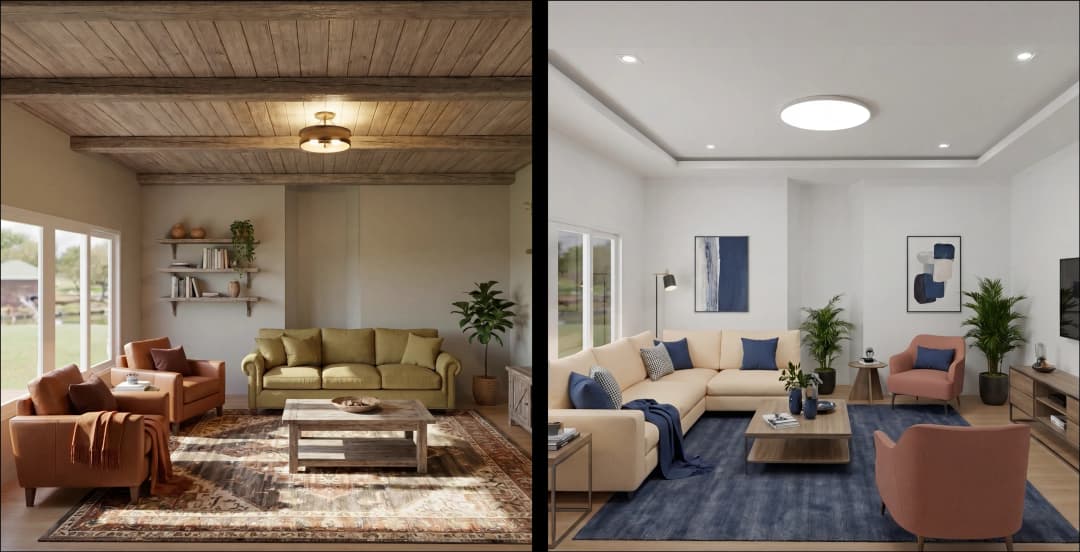
May 28, 2026
Designing Spaces for People, Not Blueprints | VirtualSpaces
HHemanth Velury
CEO & Co-Founder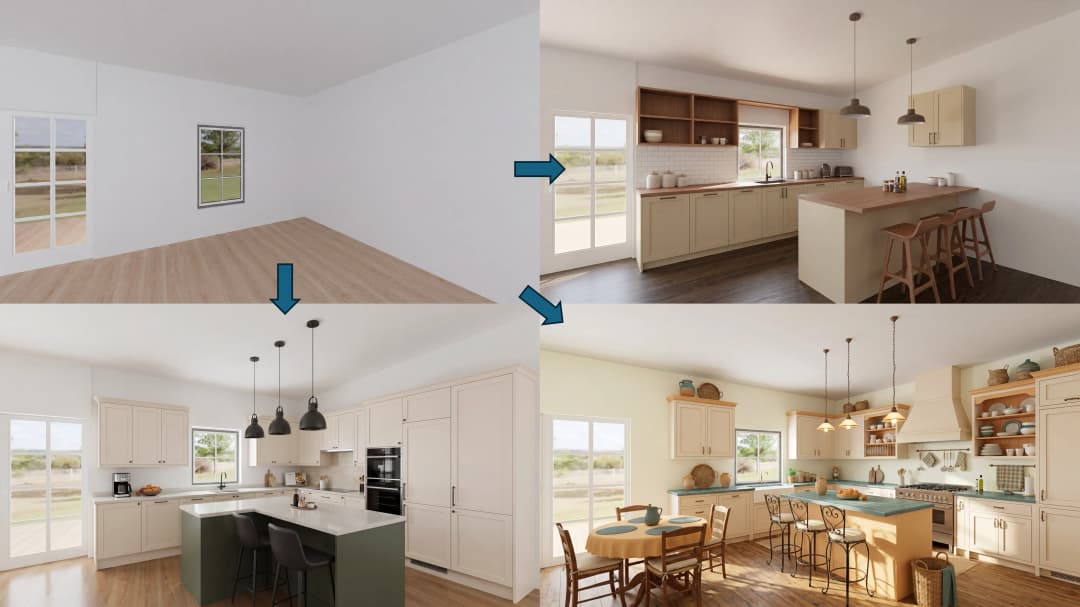
May 26, 2026
The Future of Interior Design: Closing the Visualization Gap with Foursite and Remodroom | VirtualSpaces
HHemanth Velury
CEO & Co-Founder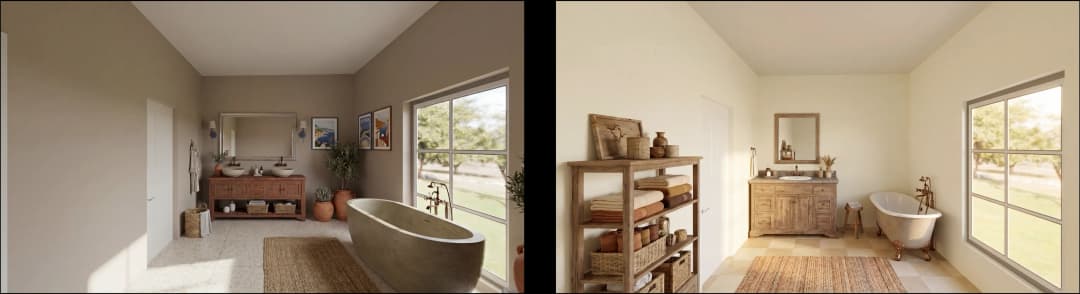
May 18, 2026
How AI Visualization Upgrades Property Data Platforms | VirtualSpaces
HHemanth Velury
CEO & Co-Founder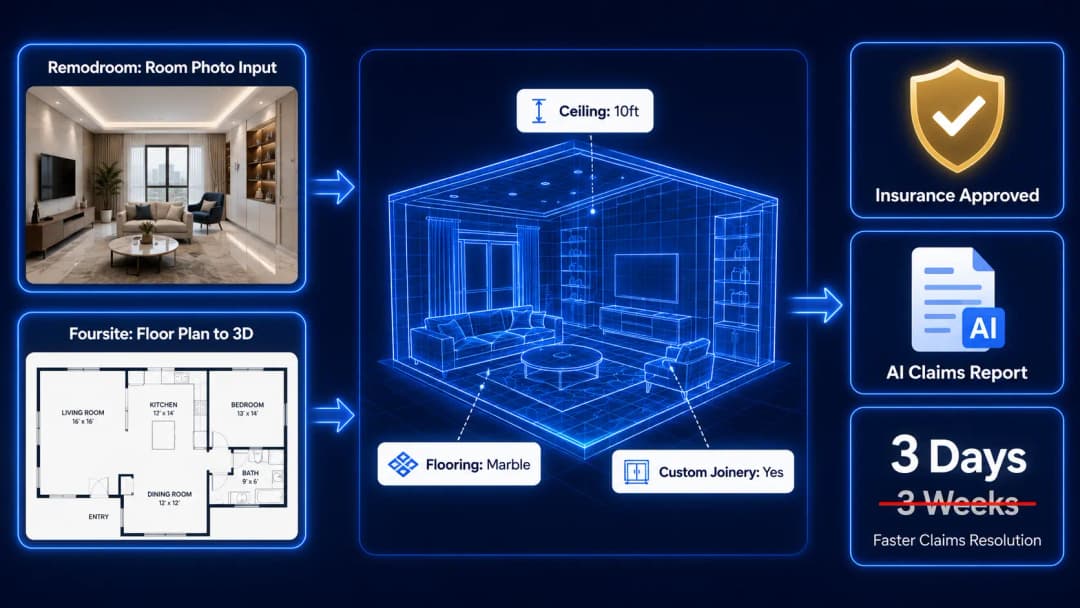
May 14, 2026
How AI-First Insurers Can Use 3D Property Data to Transform Home Claims | VirtualSpaces
HHemanth Velury
CEO & Co-FounderMay 12, 2026
Why Photoreal 3D Renders Are Replacing Mood Boards | Interior Design Client Presentations | VirtualSpaces
HHemanth Velury
CEO & Co-Founder
May 08, 2026
From 2D Floor Plans To Living Worlds: The Spec‑Accurate 3D Engine | VirtualSpaces
HHemanth Velury
CEO & Co-Founder
May 06, 2026
Why Furniture Brands Need AI 3D Visualization Now | VirtualSpaces
HHemanth Velury
CEO & Co-Founder
May 4, 2026
How Property Portals Can Turn 2D Floor Plans into 3D Design Decisions | VirtualSpaces
HHemanth Velury
CEO & Co-Founder
April 29, 2026
The Home-Fit Test: Why Square Footage Misleads | VirtualSpaces
HHemanth Velury
CEO & Co-Founder
April 27, 2026
Designing Homes That Sell: 3D Visualization ROI Data | VirtualSpaces
HHemanth Velury
CEO & Co-FounderApril 24, 2026
What's Next: Foursite & Remodroom's New AI Features | VirtualSpaces
HHemanth Velury
CEO & Co-Founder
April 22, 2026
AI in Architecture: Closing the 85% Exposure Gap | VirtualSpaces
HHemanth Velury
CEO & Co-Founder
April 20, 2026
Interior Design Pricing in 2026: From Hourly to Value-Based Fees | VirtualSpaces
HHemanth Velury
CEO & Co-FounderApril 17, 2026
How Foursite and Remodroom Help Designers Win Clients | VirtualSpaces
HHemanth Velury
CEO & Co-Founder
April 15, 2026
Designing Spaces for People: Remodroom + Foursite AI Guide | VirtualSpaces
HHemanth Velury
CEO & Co-Founder
April 13, 2026
Designing for the Way People Actually Live: How AI 3D Is Finally Closing the Gap Between Floor Plan and Reality
HHemanth Velury
CEO & Co-Founder
April 11, 2026
Design in Real Time: AI Renders in Your First Client Meeting
HHemanth Velury
CEO & Co-Founder
April 06, 2026
Why Real Estate Photography Is No Longer Enough: The Shift to Spatial-First Listings
HHemanth Velury
CEO & Co-Founder
April 03, 2026
Property Management's Hidden Weapon: AI 3D Floor Plans That Cut Vacancy Time and Raise Tenant Quality
HHemanth Velury
CEO & Co-Founder
April 01, 2026
Off-Plan and Oversubscribed: How AI 3D Visualization Is Transforming Real Estate Pre-Sales
HHemanth Velury
CEO & Co-Founder
March 30, 2026
Why Foursite Beats Generic AI Tools for Interior Design 3D Visualization
HHemanth Velury
CEO & Co-Founder
March 27, 2026
7 Tenets of Interior Design: How AI Accelerates Harmony in Residential Spaces
HHemanth Velury
CEO & Co-Founder
March 25, 2026
What Is the 3-5-7 Rule in Interior Design? Foursite's AI Guide for Residential Spaces
HHemanth Velury
CEO & Co-Founder
March 23, 2026
What Is the 70/30 Rule in Interior Design? Foursite's AI Guide for Residential Spaces
HHemanth Velury
CEO & Co-Founder
March 20, 2026
How AI 3D Visualization Is Rewriting Residential Interior Design Workflows
HHemanth Velury
CEO & Co-Founder
March 18, 2026
Beyond Marketing: How 3D Floorplans Transform FM, Retrofit Planning & ESG Operations
HHemanth Velury
CEO & Co-Founder
March 16, 2026
Why AI Companies Use Token Payments (And Why VirtualSpaces Is Returning To Fiat)
HHemanth Velury
CEO & Co-Founder
March 13, 2026
Floorplan‑Native Digital Twins: Beyond BIM for Consumer‑Ready Real Estate Experiences
HHemanth Velury
CEO & Co-Founder
March 11, 2026
The Foursite Platform Thesis: Why Floor Plans, Not Photos, Are the Next Property Software Primitive
HHemanth Velury
CEO & Co-Founder
March 09, 2026
Design Systems for Space: Building Reusable 3D Component Libraries on Top of AI Floorplan‑to‑3D Engines
HHemanth Velury
CEO & Co-Founder
March 06, 2026
How to Standardize Design Quality Across Global Projects Using AI Floorplan-to-3D Tools
HHemanth Velury
CEO & Co-Founder
March 04, 2026
From CAD-First to AI-First: Reskilling Your Team for AI-Native Design Workflows
HHemanth Velury
CEO & Co-Founder
March 02, 2026
Algorithmic Ergonomics Meets Photorealistic 3D: Designing Human-Centered Smart Homes with Foursite in 2026
HHemanth Velury
CEO & Co-Founder
February 27, 2026
The Ethics of AI in Interior Design: Ownership, Originality, and Client Transparency
HHemanth Velury
CEO & Co-Founder
February 25, 2026
Designing with Empathy: Using AI 3D Visualization to Improve Client Communication and Emotional Clarity
HHemanth Velury
CEO & Co-Founder
February 23, 2026
From Tool to Infrastructure: AI Floorplan-to-3D and the Next Wave of PropTech
HHemanth Velury
CEO & Co-Founder
February 20, 2026
AI Interior Design for Holiday Homes: Turn Spare Flats into High-Demand Short-Stay Rentals with 3D Visuals
HHemanth Velury
CEO & Co-Founder
February 18, 2026
The Pre‑Purchase Power Play: How Savvy Home Buyers Use 3D Floor Plan Visualization to Negotiate Better Deals
HHemanth Velury
CEO & Co-FounderFebruary 16, 2026
AI Interior Design for Non‑Designers: How Homeowners Can Brief Like Pros
HHemanth Velury
CEO & Co-Founder
February 13, 2026
Scaling a Design Business Without Hiring a 3D Team: An Owner's Guide
HHemanth Velury
CEO & Co-Founder
February 11, 2026
From Bland to Bold: How to Rescue Builder-Grade Interiors on Any Budget
HHemanth Velury
CEO & Co-Founder
February 6, 2026
The Psychology of Space: How Room Dimensions Influence Interior Design Decisions
HHemanth Velury
CEO & Co-Founder
February 4, 2026
The Future of Interior Design Visualization: How AI Technology is Transforming 2D Concepts Into 3D Reality
HHemanth Velury
CEO & Co-Founder
February 2, 2026
AI Interior Décor: How Artificial Intelligence Generates Design Options from Your Floor Plan
HHemanth Velury
CEO & Co-Founder
January 30, 2026
Photoreal vs. Reality: What Clients Actually Expect from Interior Design Visualization
HHemanth Velury
CEO & Co-Founder
January 28, 2026
The Design Approval Conversation That Changes Everything: Communication Strategy When Using Photorealistic Visualization
HHemanth Velury
CEO & Co-Founder
January 25, 2026
Interior Design as Experience Design: How 3D Visualization Changes Your Professional Identity
HHemanth Velury
CEO & Co-Founder
January 23, 2026
The Professional Gap: How 3D Visualization Changes Interior Design Client Perception
HHemanth Velury
CEO & Co-Founder
January 21, 2026
Why Clients Fire Designers (And How 3D Visualization Could Have Saved the Project)
HHemanth Velury
CEO & Co-Founder
January 16, 2026
Blueprint to Vision: Why Seeing Is Believing in Interior Design
HHemanth Velury
CEO & Co-Founder
January 14, 2026
The Speed of Responsiveness: How AI Visualization Tools Make You Look Like You Care More
HHemanth Velury
CEO & Co-Founder
January 12, 2026
Why Interior Designers and Architects Can't Compete Without AI 3D Visualization Tools
HHemanth Velury
CEO & Co-Founder
January 07, 2026
From "Saved" to "Sold": How Homeowners Are Planning Renovations with AI
HHemanth Velury
CEO & Co-Founder
January 05, 2026
The Interior Designer's Secret Weapon: Speed as Premium Positioning
HHemanth Velury
CEO & Co-Founder
December 31, 2025
Gratitude, Growth & Game-Changing Innovation: VirtualSpaces' 2025 Journey & What's Coming in 2026
HHemanth Velury
CEO & Co-Founder
December 29, 2025
Why Interior Designers Are Switching to AI Floor Plan-to-3D Tools in 2026
HHemanth Velury
CEO & Co-Founder
December 26, 2025
AI Virtual Staging for Real Estate Agents: Sell More Homes Faster with Foursite
HHemanth Velury
CEO & Co-Founder
December 24, 2025
Why Architects Are Switching to AI 2D-to-3D: The SketchUp Alternative
HHemanth Velury
CEO & Co-Founder
December 22, 2025
Cut 3 Weeks from Real Estate Sales Cycle: The ROI of AI 2D to 3D Visualization
HHemanth Velury
CEO & Co-Founder
December 19, 2025
2D Floor Plans Are Dying: Why 3D Visualization & AI Virtual Staging Are the Future
HHemanth Velury
CEO & Co-Founder
December 17, 2025
Virtual Staging vs Physical Staging: How AI Saves Money Per Property
HHemanth Velury
CEO & Co-Founder
December 15, 2025
AI Floor Plan to Image: Revolutionizing Real Estate Marketing for Agents
HHemanth Velury
CEO & Co-Founder
December 12, 2025
Color of the Year 2026: Cloud Dancer | VirtualSpaces AI Interior Design Guide
HHemanth Velury
CEO & Co-Founder
December 10, 2025
AI Floor Plan to 3D: The New Standard for Interior Design Workflows
HHemanth Velury
CEO & Co-Founder
December 08, 2025
How Interior Design Studios Can Operationalize AI 2D-to-3D Workflows (Without Breaking Their Process)
HHemanth Velury
CEO & Co-Founder
December 06, 2025
How to Implement AI Interior Design Workflows in Your Studio
HHemanth Velury
CEO & Co-Founder
December 4, 2025
How Homeowners Can Use AI Interior Design Tools to Plan Renovations with Confidence
HHemanth Velury
CEO & Co-Founder
November 21, 2025
Foursite Launch: Embracing 'Release Early, Release Often'
HHemanth Velury
CEO & Co-Founder
November 13, 2025
Foursite by VirtSpaces: Empowering Interior Designers, Architects, and Homeowners
HHemanth Velury
CEO & Co-Founder
November 7, 2025
Reimagining Architectural Education: How AI Floorplan-to-3D Technology Can Transform Design Learning
VVirtualSpaces Research Labs
AI Research Initiative
October 27, 2025
Archisculpt AI: Turning Architectural Drawings into Photorealistic 3D Spaces
AAbhijeet Naik
Co-Founder & CTO
October 13, 2025
Home Makeover: From Floor Plan to Dream Space with AI
HHemanth Velury
CEO & Co-Founder
October 6, 2025
Real-Time Rendering & AI: Revolutionizing Interactive Property Walkthroughs with VirtSpaces
HHemanth Velury
CEO & Co-Founder
September 26, 2025
Foursite - A True AI-Native Experience in Design Visualization
AAbhijeet Naik
CTO & Co-Founder
September 18, 2025
Why PropTech Startups Are Betting on AI Interior Design
HHemanth Velury
CEO & Co-Founder
September 11, 2025
How AI Differs from Traditional 3D Rendering Software
HHemanth Velury
CEO & Co-Founder
September 2, 2025
From Client to Investor: How Nila Spaces and VirtSpaces Are Redefining Proptech with AI
HHemanth Velury
CEO & Co-Founder
August 25, 2025
VirtSpaces From Virtual Reality to AI – Transforming Real Estate Visualization.
HHemanth Velury
CEO & Co-Founder


We help teams collaborate seamlessly and reduce costs. Virtual Spaces offers cutting-edge technology with flexible plans designed to fit modern teams.
Copyright © VirtSpaces Pvt. Ltd. 2025 All Rights Reserved.
CIN: U74999KA2016PTC094921