
March 30, 2026
- Interior Design
- AI Technology
- Real Estate
Why Foursite Beats Generic AI Tools for Interior Design 3D Visualization
Hemanth Velury
CEO & Co-FounderWhy Foursite Beats Generic AI Tools for Interior Design Creativity
Introduction: Interior Design Meets Purpose-Built AI
Interior designers are being promised "AI for everything" every day, but most generic tools still treat design as text on a screen rather than as space, light, and movement. Chat-based models like ChatGPT and Gemini excel at generating words, summaries, and ideas, not at understanding the spatial logic of a living room, the circulation of a lobby, or the relationship between a plan and a 3D volume.
Foursite by VirtualSpaces starts from a very different place: it is designed around 2D floor plans and blueprints, and built to convert them into navigable 3D environments, AI virtual staging, and photoreal interior design renders with minimal friction for interior designers and architects. Instead of asking designers to learn complex 3D software or wrestle with abstract prompts, it speaks the native language of the profession: floor plans, elevations, finishes, and mood.
What Generic AI Tools Actually Do Well
ChatGPT and Gemini are formidable when it comes to language: they summarize briefs, draft emails, brainstorm concepts, and help structure documentation or presentations. For design teams, they are great companions for writing specifications, refining proposals, or turning scattered meeting notes into clear action items.
But their core architecture is built to predict and generate text, not to build and manage structured spatial models of interiors. They can describe a Scandinavian living room in warm, minimal language, yet they cannot natively read a plan, infer wall positions, or maintain consistency as you move a virtual camera through a space.
This is where a vertical tool like Foursite stands out: it treats spatial reasoning and interior context as first-class citizens rather than as side effects of a text prompt.
Foursite's Core Shift: From 2D to 3D Spatial Intelligence
At the heart of Foursite is the ability to take 2D floor plans and Blueprints and transform them into accurate 3D environments in minutes, without asking designers to model every wall or mullion by hand. Designers upload 2D floor plans or blueprints, and the system automatically interprets walls, doors, and openings, effectively converting a 2D to 3D representation that can be explored, edited, and staged.
This 2D to 3D pipeline means that design intent, adjacencies, and circulation patterns in floor plans are preserved as volumetric space, not lost in translation. Instead of starting from scratch in a generic rendering tool, designers can move almost immediately to AI interior design decisions in a live 3D Visualization context.
Where a general-purpose AI will talk about a room, Foursite lets designers walk through it.
From Blueprint to 3D: Speaking the Designer's Language
Floor plans and blueprints are more than technical documents; they are the narrative backbone of an interior project. Foursite is engineered to go directly from blueprint to 3D and floor plan to 3D, reflecting the way design work actually starts in studios and firms.
When designers convert floor plan to 3D or convert blueprint to 3D inside Foursite, they are not just seeing a generic massing model. They are stepping into a space that already understands room boundaries, circulation, and key openings, and is ready for AI interior decor choices.
This blueprint to 3D capability matters because it respects the upstream work designers already do. Rather than forcing them into a new format or workflow, Foursite acts as a spatial interpreter, extending the value of 2D documents into 3D Visualization and AI 3D visualization.
AI Virtual Staging with Design Intent, Not Just Decoration
Virtual Staging and AI virtual staging are often presented as quick ways to make empty rooms look furnished. Many tools focus on speed: drop in a sofa, add a rug, and call it done. But for interior designers, staging is not about decoration; it is about intent, narrative, and how a space will truly be used.
Foursite approaches AI virtual staging as a design instrument, not a marketing gimmick. Because the platform understands the underlying 3D structure of the room, it can propose layouts that make sense for circulation, sightlines, and focal points, while still leaving room for the designer's hand.
This is a crucial difference from generic image-generation tools. A text model can describe "a cozy reading corner by the window," and an image generator can paint one perspective, but only a space-aware system like Foursite can keep that reading corner coherent as the designer changes viewpoints, moves the camera, or adjusts the furniture set across a sequence of interior design renders.
Photorealism as a Conversation, Not a Final Deliverable
Interior design photoreal renders have traditionally been the end of a long process: modeling, texturing, lighting, and post-production. By the time those images are ready, changing the sofa or shifting the feature wall often means restarting an expensive workflow.
Foursite flips this dynamic. Because it builds an editable 3D environment from 2D floor plans and supports AI interior design on top of that model, photoreal interior design renders become part of the conversation, not just the final output.
Designers can iterate through multiple interior design 3D visualization options: Different materials, layouts, or décor directions, in a fraction of the time it would take to rebuild models in traditional pipelines. The result is a higher volume of serious, testable ideas, without treating the designer as a mere prompt writer.
Why Foursite Outperforms Generic AI for Interior Creativity
Generic AI tools like ChatGPT and Gemini are powerful for words and, increasingly, for broad-purpose image generation. They are excellent at assisting with research, documentation, and content-heavy tasks. But they lack domain-specific priors about architectural space, code constraints, or ergonomic realities.
Foursite, by contrast, is grounded in the practical realities of interiors: it starts from floor plans, blueprints, and room photography and is tuned to convert that input into usable 3D visualization, AI 3D visualization, and AI virtual staging that aligns with how designers actually make decisions.
For a design leader, this means Foursite is not just "another AI tool"; it is a specialized layer in the studio stack that understands both the language of space and the language of clients.
Augmenting, Not Replacing, the Designer's Eye
One of the quiet anxieties in the profession is whether AI interior design tools are trying to replace the designer. The reality is that generic AI tools cannot hold a client's history, the nuance of local craftsmanship, or the tacit knowledge that comes from years of practice.
Foursite is most valuable when it is treated as an augmentation layer: a way to externalize more options faster, not to make decisions in isolation. Designers still define the concept, set the brief, choose the palette, and curate the furniture. Foursite simply compresses the time between idea and visualization so that more energy can be spent on refinement and storytelling.
For example, instead of spending days building a model from 2D floor plans, a team can move directly into comparing multiple layouts, lighting moods, and AI interior décor directions across interior design photoreal renders generated from the same underlying space model.
VirtualSpaces Ecosystem: Beyond a Single Feature
Foursite sits within the broader VirtualSpaces ecosystem, which focuses on transforming 2D inputs into rich, navigable 3D interior experiences for designers, real estate, and architecture teams. This matters for two reasons.
First, it means the platform is being shaped by real-world feedback from practitioners who live and breathe interiors. Second, it positions Foursite as more than a single-feature app; it is part of a long-term shift from CAD-first workflows to AI-first spatial workflows that still respect professional standards.
For studios and product leaders thinking in terms of defensibility, this combination of specialized data, spatial models, and workflow integration creates a foundation that generic, horizontal AI tools struggle to replicate.
How Foursite Changes Collaboration with Clients
Clients often struggle to read 2D floor plans, even when they nod along in meetings. The mental leap from 2D to 3D is a skill built over years; it should not be a prerequisite for giving good feedback.
By enabling a nearly immediate move from 2D floor plans and Blueprints into navigable interior design 3D visualization, Foursite shortens that cognitive gap. Clients can see, in a literal sense, how a decision about storage, circulation, or seating plays out in space.
Instead of sharing a static PDF, designers can walk clients through VirtualSpaces, supported by interior design photoreal renders that match the proposed concept far more closely than quick sketches ever could.
Why This Matters for the Future of Design Tools
For interior designers, the most valuable tools are not the ones that shout the loudest about AI, but the ones that quietly remove friction while respecting craft. Foursite sits in that category: it understands floor plans, blueprints, and 2D inputs; it takes them 2D to 3D with minimal effort; and it layers on AI interior design, AI interior decor, and AI virtual staging in a way that enhances rather than flattens human creativity.
As studios think about the next decade, the tools that will matter most are likely those that combine:
- Deep domain knowledge of spatial design and construction documentation.
- Robust 3D Visualization and AI 3D visualization capabilities directly connected to 2D floor plans.
- Fast, editable interior design renders and interior design photoreal renders that keep pace with real-world iteration cycles.
- Ecosystem thinking, where VirtualSpaces are not just files but living design assets.
Generic AI tools like ChatGPT and Gemini will remain essential for language, research, and ideation, and they deserve a place in every studio's toolbox. But for teams serious about interior design excellence, platforms like Foursite that are purpose-built around blueprints, floor plans, and spatial intelligence will increasingly define the new baseline for creative work.
In that sense, Foursite is not simply "better" than generic AI; it is playing a different game: one where the measure of success is not how many words can be generated, but how effortlessly ideas can move from floor plan to 3D, from blueprint to 3D, and from intent to immersive, believable space.
PS: some features may not be available and are a part of our future product roadmap
Recommended for you

August 19, 2026
The End of the Model Home? 3D Changes the Math | VirtualSpaces
HHemanth Velury
CEO & Co-Founder
August 17, 2026
Designing Spaces That Actually Get Built | VirtualSpaces
HHemanth Velury
CEO & Co-Founder
August 12, 2026
Designing Homes for the Stuff People Actually Own | VirtualSpaces
HHemanth Velury
CEO & Co-Founder
August 07, 2026
Floor Plan to Bill of Materials: The 3D Model as Data | VirtualSpaces
HHemanth Velury
CEO & Co-Founder.png&w=1080&q=75)
August 05, 2026
Designing Homes for How People Actually Live | VirtualSpaces
HHemanth Velury
CEO & Co-Founder
August 03, 2026
Honest by Design: Trust in AI Real Estate Imagery | VirtualSpaces
HHemanth Velury
CEO & Co-Founder
July 29, 2026
Kitchen and Bath: The Two Rooms That Decide Resale | VirtualSpaces
HHemanth Velury
CEO & Co-Founder
July 27, 2026
Why Empty Rooms Don't Sell: Virtual Staging | VirtualSpaces
HHemanth Velury
CEO & Co-Founder
July 24, 2026
The Quiet Sustainability Win of Deciding in 3D | VirtualSpaces
HHemanth Velury
CEO & Co-Founder
July 22, 2026
Why Paint Swatches Lie: Test Color in 3D First | VirtualSpaces
HHemanth Velury
CEO & Co-Founder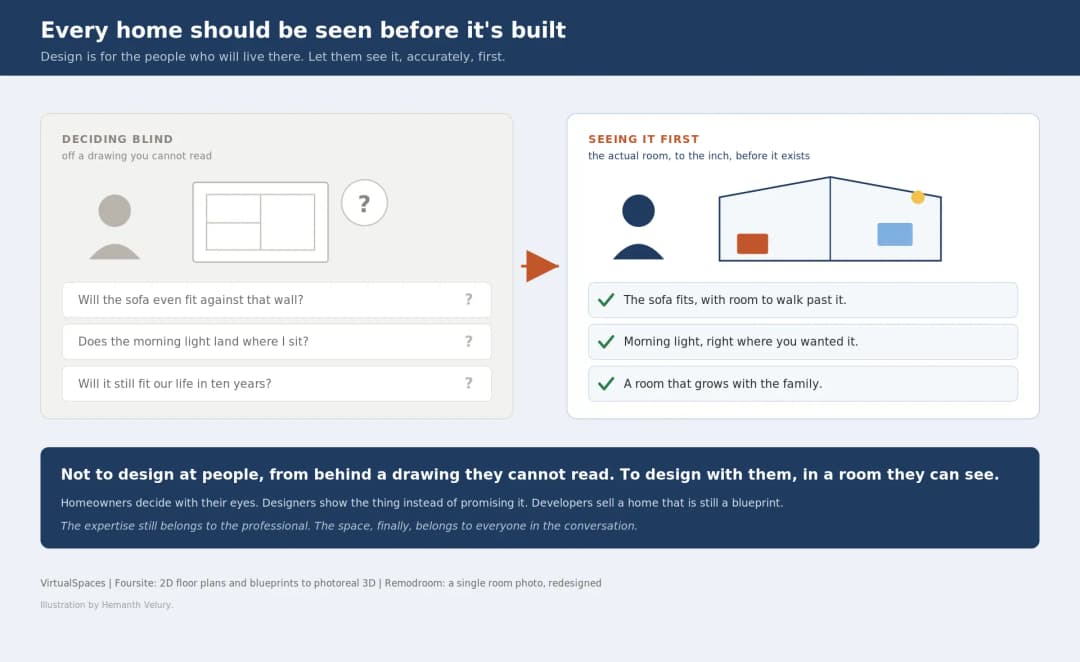
July 20, 2026
Why Every Home Should Be Seen Before It's Built | VirtualSpaces
HHemanth Velury
CEO & Co-Founder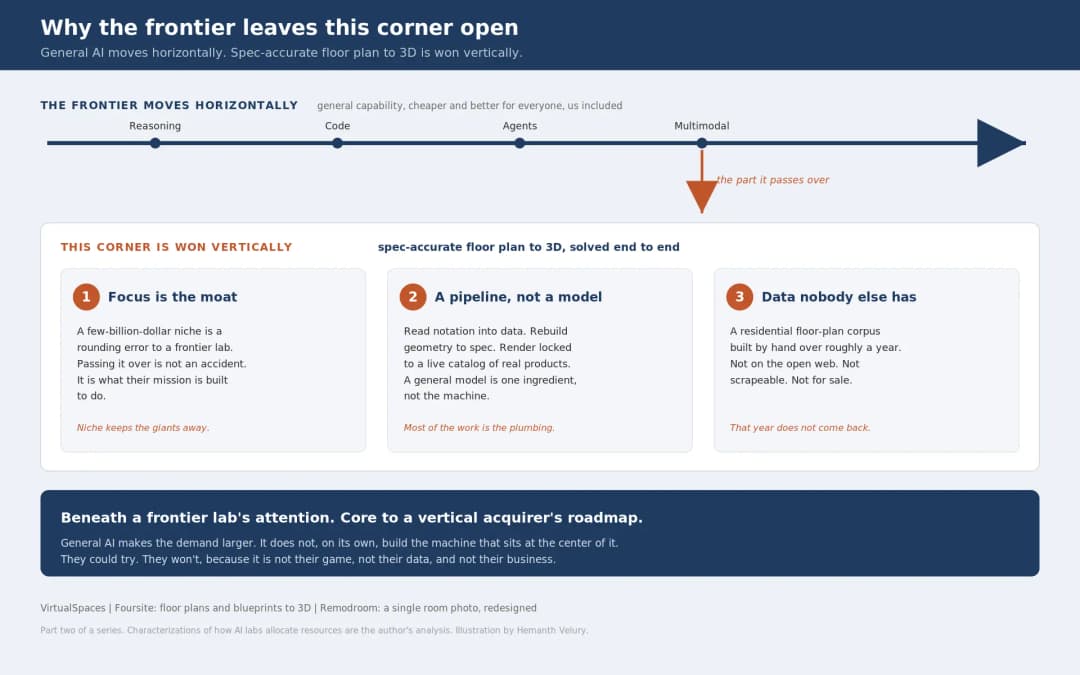
July 17, 2026
Why Big AI Labs Won't Build Floor Plan to 3D | VirtualSpaces
HHemanth Velury
CEO & Co-Founder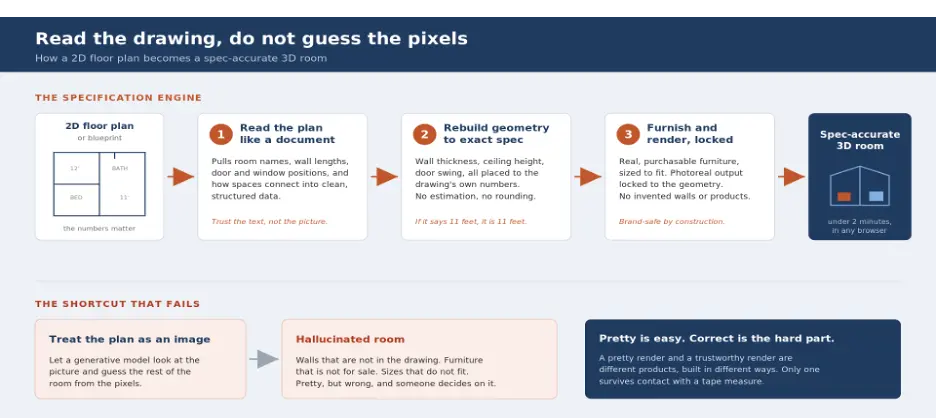
July 15, 2026
How We Solve Floor Plan to 3D, Accurately | VirtualSpaces
HHemanth Velury
CEO & Co-Founder
July 13, 2026
Designing Homes That Age With the People in Them | VirtualSpaces
HHemanth Velury
CEO & Co-Founder
July 10, 2026
Designing Spaces for How Light Actually Moves | VirtualSpaces
HHemanth Velury
CEO & Co-Founder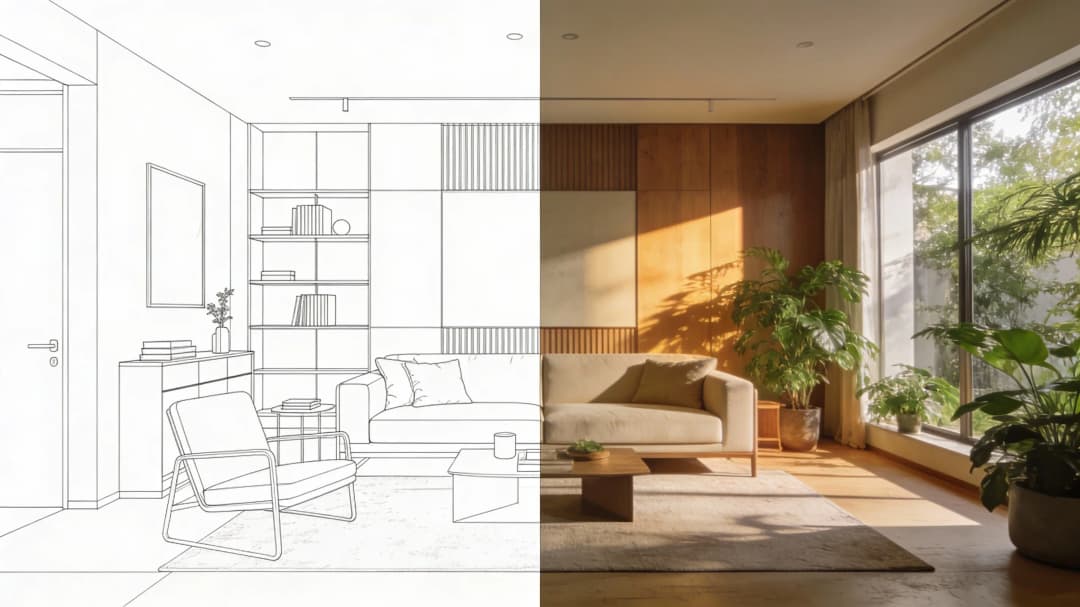
July 08, 2026
Designing Homes for Every Life Stage in 3D | VirtualSpaces
HHemanth Velury
CEO & Co-Founder
July 06, 2026
Build an Interior Design Portfolio Without Clients | VirtualSpaces
HHemanth Velury
CEO & Co-Founder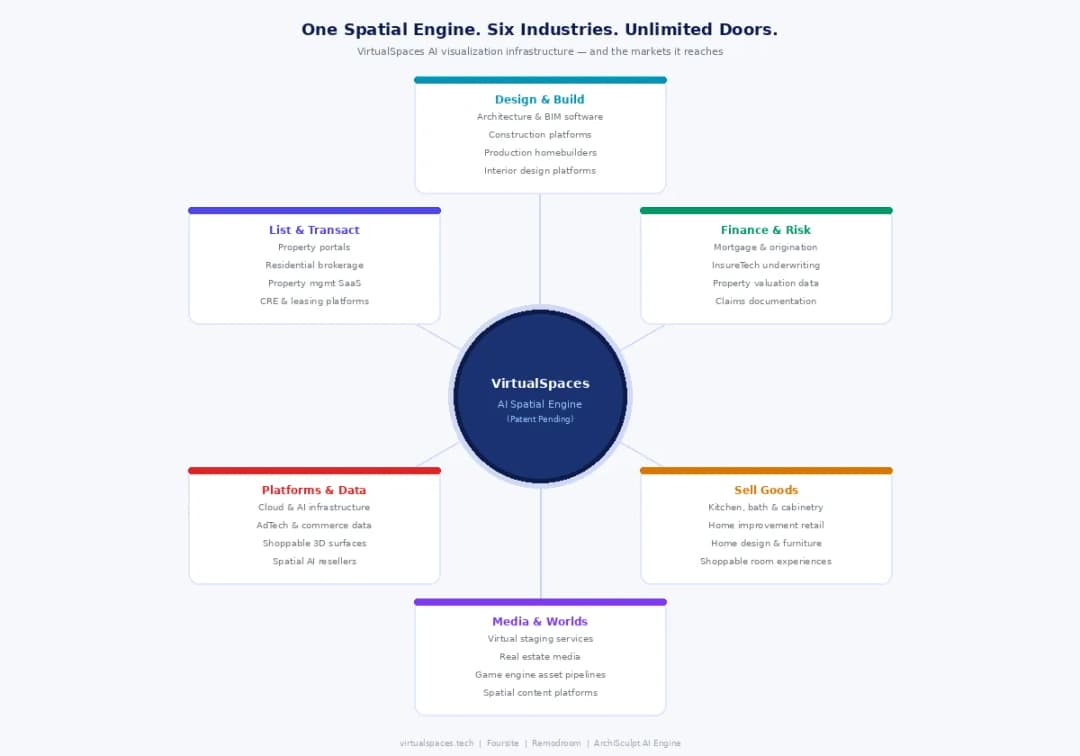
June 26, 2026
AI Interior Design: Full 3D Workflow in One Platform | VirtualSpaces
HHemanth Velury
CEO & Co-Founder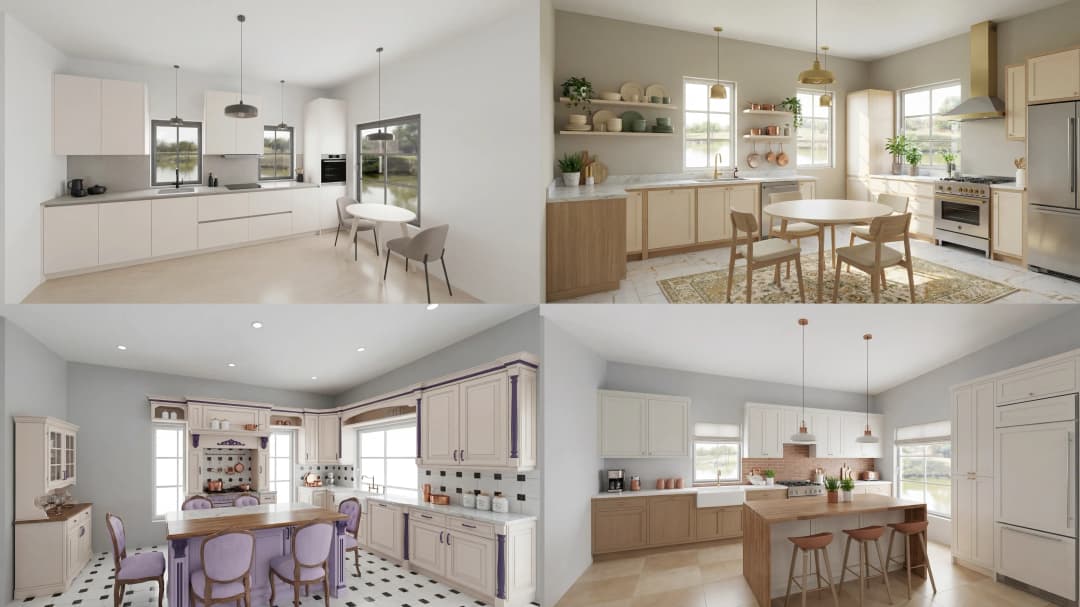
June 24, 2026
Scope Creep in Interior Design: How AI Visualization Fixes It | VirtualSpaces
HHemanth Velury
CEO & Co-Founder
June 22, 2026
What Buyers See on a Floor Plan: Your Biggest Sales Problem | VirtualSpaces
HHemanth Velury
CEO & Co-Founder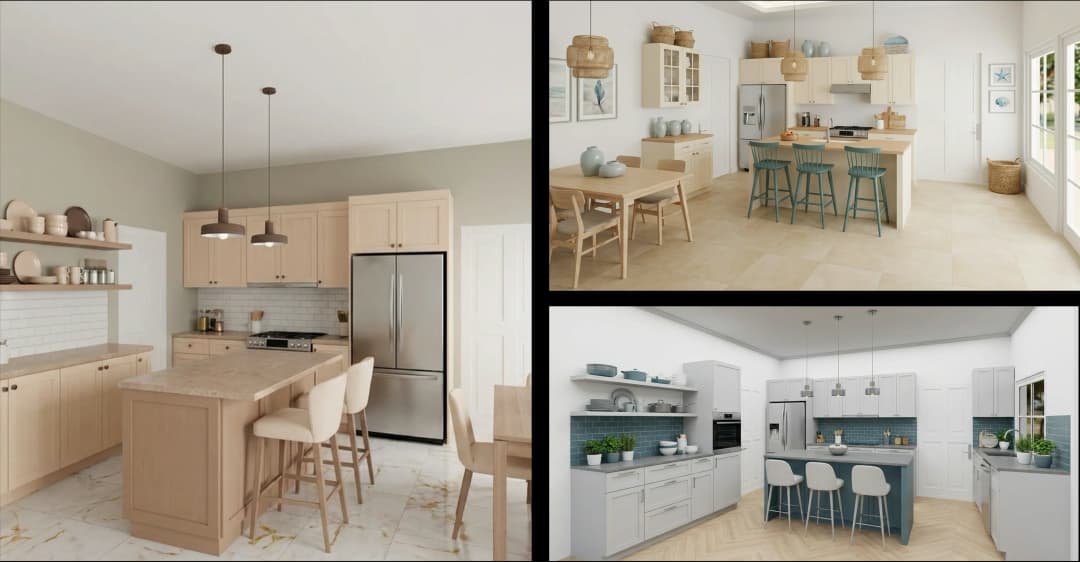
June 19, 2026
Small Design Studios vs Big Firms: The AI Advantage | VirtualSpaces
HHemanth Velury
CEO & Co-Founder
June 17, 2026
After the Mood Board: AI Interior Visualization | VirtualSpaces
HHemanth Velury
CEO & Co-Founder
June 15, 2026
Foursite Pro Editor: Full Floor Plan Control for Designers | VirtualSpaces
HHemanth Velury
CEO & Co-Founder
June 12, 2026
AI Interior Design: Style Any Room in Seconds with Foursite | VirtualSpaces
HHemanth Velury
CEO & Co-Founder
June 10, 2026
Foursite: Floor Plan to 3D Walkthrough in Minutes | VirtualSpaces
HHemanth Velury
CEO & Co-Founder
June 08, 2026
Win More Pitches With AI Renders Before the Meeting | VirtualSpaces
HHemanth Velury
CEO & Co-Founder
June 05, 2026
From Floor Plan to Finished Room: What AI Now Makes Possible | VirtualSpaces
HHemanth Velury
CEO & Co-Founder
June 03, 2026
The Interior Design Brief Is Broken. AI Fixes It | VirtualSpaces
HHemanth Velury
CEO & Co-Founder
June 01, 2026
Pre-Construction Home Sales: AI Interior Visualization Guide | VirtualSpaces
HHemanth Velury
CEO & Co-Founder
May 30, 2026
Interior Design Principles: Applied with AI | VirtualSpaces
HHemanth Velury
CEO & Co-Founder
May 28, 2026
Designing Spaces for People, Not Blueprints | VirtualSpaces
HHemanth Velury
CEO & Co-Founder
May 26, 2026
The Future of Interior Design: Closing the Visualization Gap with Foursite and Remodroom | VirtualSpaces
HHemanth Velury
CEO & Co-Founder
May 18, 2026
How AI Visualization Upgrades Property Data Platforms | VirtualSpaces
HHemanth Velury
CEO & Co-Founder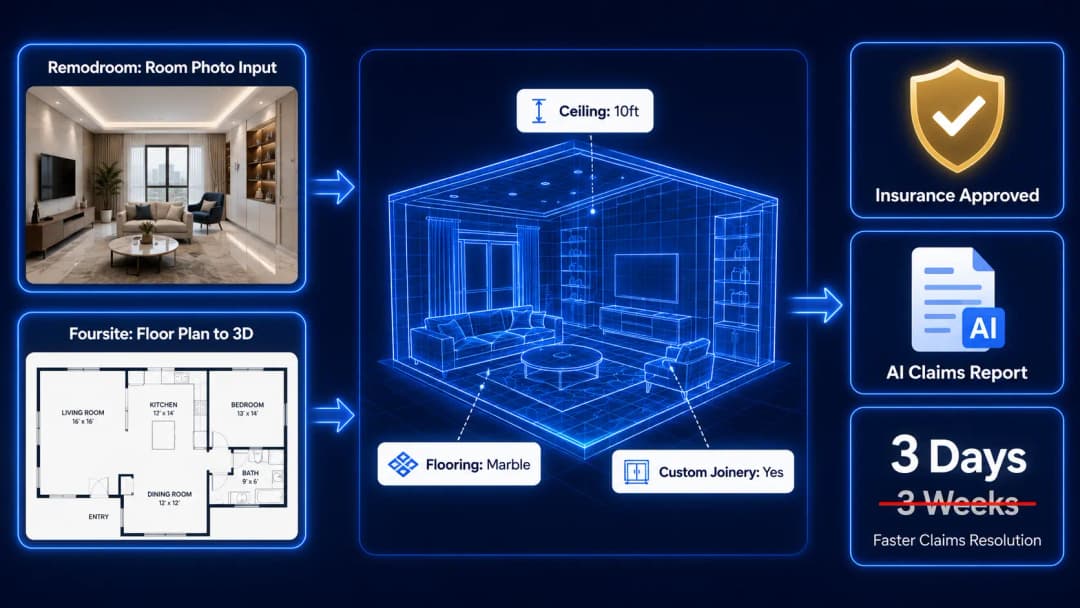
May 14, 2026
How AI-First Insurers Can Use 3D Property Data to Transform Home Claims | VirtualSpaces
HHemanth Velury
CEO & Co-FounderMay 12, 2026
Why Photoreal 3D Renders Are Replacing Mood Boards | Interior Design Client Presentations | VirtualSpaces
HHemanth Velury
CEO & Co-Founder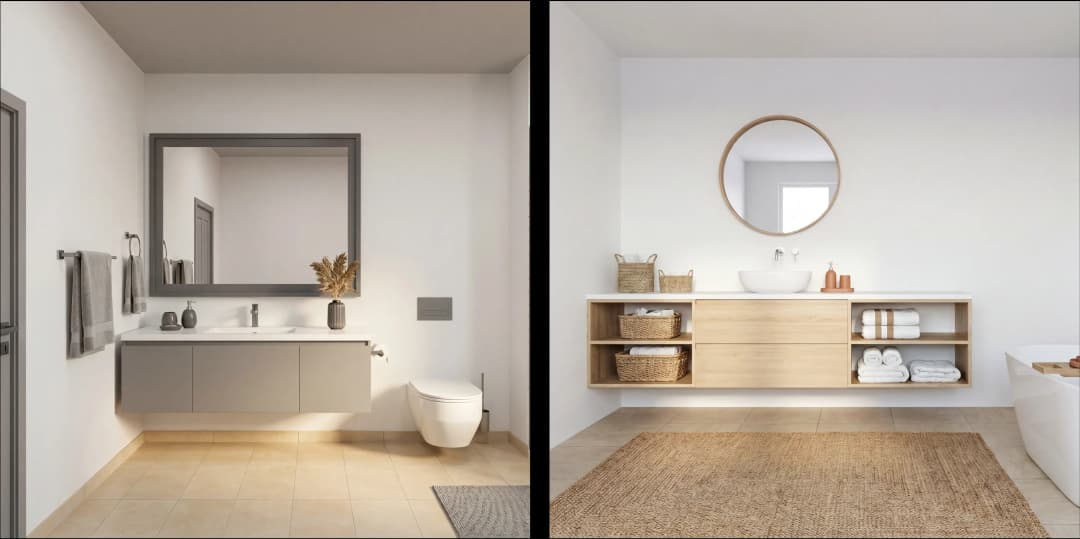
May 08, 2026
From 2D Floor Plans To Living Worlds: The Spec‑Accurate 3D Engine | VirtualSpaces
HHemanth Velury
CEO & Co-Founder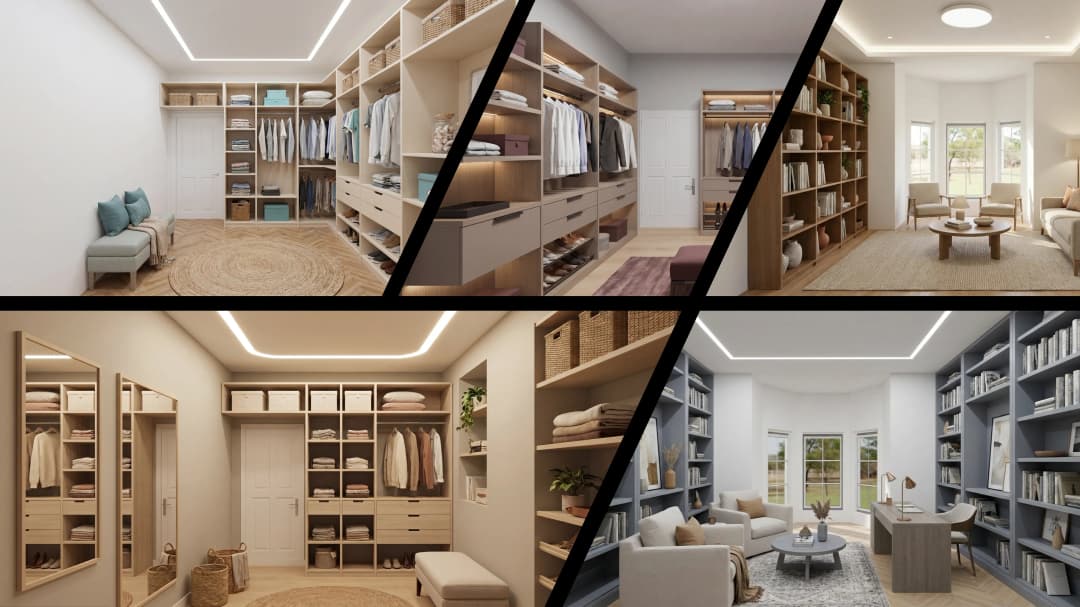
May 06, 2026
Why Furniture Brands Need AI 3D Visualization Now | VirtualSpaces
HHemanth Velury
CEO & Co-Founder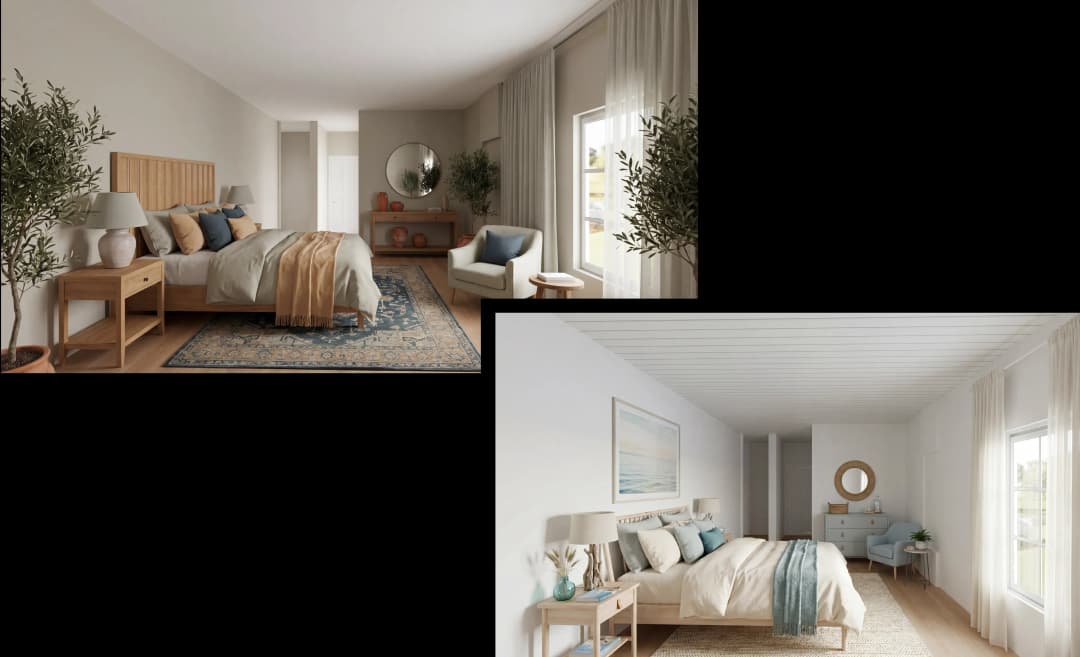
May 4, 2026
How Property Portals Can Turn 2D Floor Plans into 3D Design Decisions | VirtualSpaces
HHemanth Velury
CEO & Co-Founder
April 29, 2026
The Home-Fit Test: Why Square Footage Misleads | VirtualSpaces
HHemanth Velury
CEO & Co-Founder
April 27, 2026
Designing Homes That Sell: 3D Visualization ROI Data | VirtualSpaces
HHemanth Velury
CEO & Co-FounderApril 24, 2026
What's Next: Foursite & Remodroom's New AI Features | VirtualSpaces
HHemanth Velury
CEO & Co-Founder
April 22, 2026
AI in Architecture: Closing the 85% Exposure Gap | VirtualSpaces
HHemanth Velury
CEO & Co-Founder
April 20, 2026
Interior Design Pricing in 2026: From Hourly to Value-Based Fees | VirtualSpaces
HHemanth Velury
CEO & Co-FounderApril 17, 2026
How Foursite and Remodroom Help Designers Win Clients | VirtualSpaces
HHemanth Velury
CEO & Co-Founder
April 15, 2026
Designing Spaces for People: Remodroom + Foursite AI Guide | VirtualSpaces
HHemanth Velury
CEO & Co-Founder
April 13, 2026
Designing for the Way People Actually Live: How AI 3D Is Finally Closing the Gap Between Floor Plan and Reality
HHemanth Velury
CEO & Co-Founder
April 11, 2026
Design in Real Time: AI Renders in Your First Client Meeting
HHemanth Velury
CEO & Co-Founder
April 06, 2026
Why Real Estate Photography Is No Longer Enough: The Shift to Spatial-First Listings
HHemanth Velury
CEO & Co-Founder
April 03, 2026
Property Management's Hidden Weapon: AI 3D Floor Plans That Cut Vacancy Time and Raise Tenant Quality
HHemanth Velury
CEO & Co-Founder
April 01, 2026
Off-Plan and Oversubscribed: How AI 3D Visualization Is Transforming Real Estate Pre-Sales
HHemanth Velury
CEO & Co-Founder
March 27, 2026
7 Tenets of Interior Design: How AI Accelerates Harmony in Residential Spaces
HHemanth Velury
CEO & Co-Founder
March 25, 2026
What Is the 3-5-7 Rule in Interior Design? Foursite's AI Guide for Residential Spaces
HHemanth Velury
CEO & Co-Founder
March 23, 2026
What Is the 70/30 Rule in Interior Design? Foursite's AI Guide for Residential Spaces
HHemanth Velury
CEO & Co-Founder
March 20, 2026
How AI 3D Visualization Is Rewriting Residential Interior Design Workflows
HHemanth Velury
CEO & Co-Founder
March 18, 2026
Beyond Marketing: How 3D Floorplans Transform FM, Retrofit Planning & ESG Operations
HHemanth Velury
CEO & Co-Founder
March 16, 2026
Why AI Companies Use Token Payments (And Why VirtualSpaces Is Returning To Fiat)
HHemanth Velury
CEO & Co-Founder
March 13, 2026
Floorplan‑Native Digital Twins: Beyond BIM for Consumer‑Ready Real Estate Experiences
HHemanth Velury
CEO & Co-Founder
March 11, 2026
The Foursite Platform Thesis: Why Floor Plans, Not Photos, Are the Next Property Software Primitive
HHemanth Velury
CEO & Co-Founder
March 09, 2026
Design Systems for Space: Building Reusable 3D Component Libraries on Top of AI Floorplan‑to‑3D Engines
HHemanth Velury
CEO & Co-Founder
March 06, 2026
How to Standardize Design Quality Across Global Projects Using AI Floorplan-to-3D Tools
HHemanth Velury
CEO & Co-Founder
March 04, 2026
From CAD-First to AI-First: Reskilling Your Team for AI-Native Design Workflows
HHemanth Velury
CEO & Co-Founder
March 02, 2026
Algorithmic Ergonomics Meets Photorealistic 3D: Designing Human-Centered Smart Homes with Foursite in 2026
HHemanth Velury
CEO & Co-Founder
February 27, 2026
The Ethics of AI in Interior Design: Ownership, Originality, and Client Transparency
HHemanth Velury
CEO & Co-Founder
February 25, 2026
Designing with Empathy: Using AI 3D Visualization to Improve Client Communication and Emotional Clarity
HHemanth Velury
CEO & Co-Founder
February 23, 2026
From Tool to Infrastructure: AI Floorplan-to-3D and the Next Wave of PropTech
HHemanth Velury
CEO & Co-Founder
February 20, 2026
AI Interior Design for Holiday Homes: Turn Spare Flats into High-Demand Short-Stay Rentals with 3D Visuals
HHemanth Velury
CEO & Co-Founder
February 18, 2026
The Pre‑Purchase Power Play: How Savvy Home Buyers Use 3D Floor Plan Visualization to Negotiate Better Deals
HHemanth Velury
CEO & Co-FounderFebruary 16, 2026
AI Interior Design for Non‑Designers: How Homeowners Can Brief Like Pros
HHemanth Velury
CEO & Co-Founder
February 13, 2026
Scaling a Design Business Without Hiring a 3D Team: An Owner's Guide
HHemanth Velury
CEO & Co-Founder
February 11, 2026
From Bland to Bold: How to Rescue Builder-Grade Interiors on Any Budget
HHemanth Velury
CEO & Co-Founder
February 6, 2026
The Psychology of Space: How Room Dimensions Influence Interior Design Decisions
HHemanth Velury
CEO & Co-Founder
February 4, 2026
The Future of Interior Design Visualization: How AI Technology is Transforming 2D Concepts Into 3D Reality
HHemanth Velury
CEO & Co-Founder
February 2, 2026
AI Interior Décor: How Artificial Intelligence Generates Design Options from Your Floor Plan
HHemanth Velury
CEO & Co-Founder
January 30, 2026
Photoreal vs. Reality: What Clients Actually Expect from Interior Design Visualization
HHemanth Velury
CEO & Co-Founder
January 28, 2026
The Design Approval Conversation That Changes Everything: Communication Strategy When Using Photorealistic Visualization
HHemanth Velury
CEO & Co-Founder
January 25, 2026
Interior Design as Experience Design: How 3D Visualization Changes Your Professional Identity
HHemanth Velury
CEO & Co-Founder
January 23, 2026
The Professional Gap: How 3D Visualization Changes Interior Design Client Perception
HHemanth Velury
CEO & Co-Founder
January 21, 2026
Why Clients Fire Designers (And How 3D Visualization Could Have Saved the Project)
HHemanth Velury
CEO & Co-Founder
January 16, 2026
Blueprint to Vision: Why Seeing Is Believing in Interior Design
HHemanth Velury
CEO & Co-Founder
January 14, 2026
The Speed of Responsiveness: How AI Visualization Tools Make You Look Like You Care More
HHemanth Velury
CEO & Co-Founder
January 12, 2026
Why Interior Designers and Architects Can't Compete Without AI 3D Visualization Tools
HHemanth Velury
CEO & Co-Founder
January 07, 2026
From "Saved" to "Sold": How Homeowners Are Planning Renovations with AI
HHemanth Velury
CEO & Co-Founder
January 05, 2026
The Interior Designer's Secret Weapon: Speed as Premium Positioning
HHemanth Velury
CEO & Co-Founder
December 31, 2025
Gratitude, Growth & Game-Changing Innovation: VirtualSpaces' 2025 Journey & What's Coming in 2026
HHemanth Velury
CEO & Co-Founder
December 29, 2025
Why Interior Designers Are Switching to AI Floor Plan-to-3D Tools in 2026
HHemanth Velury
CEO & Co-Founder
December 26, 2025
AI Virtual Staging for Real Estate Agents: Sell More Homes Faster with Foursite
HHemanth Velury
CEO & Co-Founder
December 24, 2025
Why Architects Are Switching to AI 2D-to-3D: The SketchUp Alternative
HHemanth Velury
CEO & Co-Founder
December 22, 2025
Cut 3 Weeks from Real Estate Sales Cycle: The ROI of AI 2D to 3D Visualization
HHemanth Velury
CEO & Co-Founder
December 19, 2025
2D Floor Plans Are Dying: Why 3D Visualization & AI Virtual Staging Are the Future
HHemanth Velury
CEO & Co-Founder
December 17, 2025
Virtual Staging vs Physical Staging: How AI Saves Money Per Property
HHemanth Velury
CEO & Co-Founder
December 15, 2025
AI Floor Plan to Image: Revolutionizing Real Estate Marketing for Agents
HHemanth Velury
CEO & Co-Founder
December 12, 2025
Color of the Year 2026: Cloud Dancer | VirtualSpaces AI Interior Design Guide
HHemanth Velury
CEO & Co-Founder
December 10, 2025
AI Floor Plan to 3D: The New Standard for Interior Design Workflows
HHemanth Velury
CEO & Co-Founder
December 08, 2025
How Interior Design Studios Can Operationalize AI 2D-to-3D Workflows (Without Breaking Their Process)
HHemanth Velury
CEO & Co-Founder
December 06, 2025
How to Implement AI Interior Design Workflows in Your Studio
HHemanth Velury
CEO & Co-Founder
December 4, 2025
How Homeowners Can Use AI Interior Design Tools to Plan Renovations with Confidence
HHemanth Velury
CEO & Co-Founder
November 28, 2025
Interior Designers in the Age of AI: From Threat Narrative to Superpower
HHemanth Velury
CEO & Co-Founder
November 21, 2025
Foursite Launch: Embracing 'Release Early, Release Often'
HHemanth Velury
CEO & Co-Founder
November 13, 2025
Foursite by VirtSpaces: Empowering Interior Designers, Architects, and Homeowners
HHemanth Velury
CEO & Co-Founder
November 7, 2025
Reimagining Architectural Education: How AI Floorplan-to-3D Technology Can Transform Design Learning
VVirtualSpaces Research Labs
AI Research Initiative
October 27, 2025
Archisculpt AI: Turning Architectural Drawings into Photorealistic 3D Spaces
AAbhijeet Naik
Co-Founder & CTO
October 13, 2025
Home Makeover: From Floor Plan to Dream Space with AI
HHemanth Velury
CEO & Co-Founder
October 6, 2025
Real-Time Rendering & AI: Revolutionizing Interactive Property Walkthroughs with VirtSpaces
HHemanth Velury
CEO & Co-Founder
September 26, 2025
Foursite - A True AI-Native Experience in Design Visualization
AAbhijeet Naik
CTO & Co-Founder
September 18, 2025
Why PropTech Startups Are Betting on AI Interior Design
HHemanth Velury
CEO & Co-Founder
September 11, 2025
How AI Differs from Traditional 3D Rendering Software
HHemanth Velury
CEO & Co-Founder
September 2, 2025
From Client to Investor: How Nila Spaces and VirtSpaces Are Redefining Proptech with AI
HHemanth Velury
CEO & Co-Founder
August 25, 2025
VirtSpaces From Virtual Reality to AI – Transforming Real Estate Visualization.
HHemanth Velury
CEO & Co-Founder


We help teams collaborate seamlessly and reduce costs. Virtual Spaces offers cutting-edge technology with flexible plans designed to fit modern teams.
Copyright © VirtSpaces Pvt. Ltd. 2025 All Rights Reserved.
CIN: U74999KA2016PTC094921