
March 27, 2026
- Interior Design
- AI Technology
- Real Estate
7 Tenets of Interior Design: How AI Accelerates Harmony in Residential Spaces
Hemanth Velury
CEO & Co-FounderIntroduction: The Timeless 7-Tenet Interior Design Framework Meets Modern Technology
Let me be honest with you: interior design has always been built on principles, not hunches. For decades, designers have relied on seven foundational tenets: Balance, unity, rhythm, emphasis, contrast, scale & proportion, and details to create spaces that feel right. These are not arbitrary rules; they are the difference between a room that feels chaotic and one that feels like home.
What has changed is not the principles, but the way we work with them. Creating harmonious spaces used to demand months of iteration, multiple software hand-offs, and countless revisions. Today, with AI-powered tools like Foursite by VirtualSpaces, designers can turn 2D floor plans and Blueprints into rich 3D Visualization in minutes using 2D to 3D and floor plan to 3D workflows.
As AI interior design and AI visualization become mainstream, designers who know how to harness them are not "going tech" for the sake of it. They are capturing more mandates, increasing revenue per project, and building a defensible edge in a crowded residential market.
This piece looks at how the seven timeless principles of interior design form the standards for harmonious, character-rich homes and how AI interior design, AI interior décor, AI virtual staging, and AI 3D visualization (with Foursite as the core example) quietly supercharge a designer's creativity, speed, and bottom line.
Why These Seven Principles Still Matter
The seven tenets of interior design are universal, almost like the grammar of spatial harmony. When they are respected, a room stops feeling like a collection of objects and starts behaving like a coherent experience.
They ensure that:
- A space feels stable rather than uneasy.
- The visual story is coherent rather than noisy.
- The eye knows where to go first, and how to move next.
- Interest and drama exist, but not at the cost of comfort.
- Objects relate to the room and to each other in a natural way.
- The finishing touches give the space its soul.
The problem has never been the principles; it has always been the friction around applying them. Translating 2D floor plans into lived, 3D experiences is where the effort piles up: multiple tools, specialists, and endless revision loops.
AI interior design tools like Foursite do not rewrite the principles. They remove the friction around applying them at speed and at scale especially in residential real estate, where decisions are emotional, visual, and time-bound.
Let's go principle by principle.
Principle 1: Balance - Creating Stability in Your Space
Balance is that quiet sense of "this room feels right." It's not always about perfect symmetry, but about visual stability.
Designers typically work with three types of balance:
- Symmetrical balance: Mirroring elements across a central axis like identical bedside tables and lamps framing a bed.
- Asymmetrical balance: Equal visual weight using different objects, for example, a large artwork balanced by a cluster of smaller pieces.
- Radial balance: Elements radiating from a focal point, like seating arranged around a fireplace or a circular rug around a central coffee table.
In a traditional workflow, testing these variations means reworking drawings, adjusting CAD layouts, and sometimes literally moving furniture around on site. With AI 3D visualization in Foursite, you upload a 2D floor plan, convert floor plan to 3D, and instantly explore multiple furniture layouts that reflect different balancing strategies.
This is where AI interior design becomes a genuine creative partner. Designers do not stop making decisions; instead, they ask, "Show me three balanced layouts for this living room" and get usable starting points in minutes. They can test symmetrical, asymmetrical, and radial options without burning days in production work.
For a residential client, that translates into a powerful pre-sales moment: seeing five different balanced living room options, rendered as interior design photoreal renders, before they've even signed the contract.
Principle 2: Unity - Creating a Coherent Visual Story
Unity is what makes a room feel like it belongs to one person, one family, one story. It shows up in consistent color palettes, material choices, and stylistic language.
Unity is built from:
- Color harmony: Palettes that flow across walls, furniture, textiles, and décor.
- Material coherence: Wood tones, metals, and fabrics that talk to each other.
- Stylistic consistency: A modern, boho, or classic language that doesn't get randomly interrupted.
- Repetition: Motifs or shapes that recur just enough to feel intentional.
The old way of designing for unity involved mood-boards, sourcing, physical samples, and a long gap between concept and visualization. You hoped that what looked good in a board would feel unified once installed.
With AI virtual staging, Foursite lets you jump straight from 2D floor plans or Blueprints to complete, styled 3D scenes. You can apply a unified design direction: Say warm minimalism, Japandi, or urban industrial and let the AI engine maintain cohesion across furniture, finishes, and accessories.
Want to see the same apartment in three different unified styles? You don't need three outsourced render cycles. You generate three AI interior design variants, all on the same 3D model, and show them side by side. That single capability turns "I'm not sure what I like" into "I want this one."
Unity becomes something you demonstrate visually, not just promise verbally.
Principle 3: Rhythm - Creating Movement and Flow
Rhythm is why your eye doesn't get stuck in one corner of the room. It's the logic behind how your attention moves from the sofa to the art, to the window, to the reading nook.
It can be created by:
- Repetition: Recurring colors, shapes, or patterns.
- Progression: Gradual changes in size, tone, or spacing.
- Alternation: Structured back-and-forth between two elements.
- Transition: Soft, continuous changes that avoid jarring breaks.
On paper, rhythm is easy to describe and hard to test. You need to see it in context: Does the repeated arch motif across openings, mirrors, and lamps feel elegant or overdone? Does a progression of picture frames actually draw the eye across the wall, or does it feel random?
Here's where AI 3D visualization and interior design 3D visualization inside Foursite is a quiet superpower. Because you can convert blueprint to 3D or use a floor plan to 3D model in minutes, you can rapidly mock multiple rhythmic compositions and see them all in fully lit, textured 3D.
You aren't trapped in one direction because it took you a week to produce it. You can explore ten rhythm ideas in the time a traditional pipeline would yield one. The designer's creative bandwidth expands, without expanding their workday.
Principle 4: Emphasis - Creating the Focal Point
Every successful room has a clear "hero." It might be a sculptural staircase, a view through a large window, a textured accent wall, or a bold art piece.
Emphasis is created through:
- Scale: Making one element larger or more dominant.
- Color: Contrasting the focal element with its surroundings.
- Light: Directing illumination to where you want the eye to land.
- Placement: Positioning the focal point along natural sightlines.
- Texture: Using materials that stand out against smoother surfaces.
In residential design, getting emphasis right on the first attempt is huge. Clients often invest emotionally and financially in focal elements. If the stone-clad fireplace wall doesn't land as envisioned, that disappointment can color the entire project.
Foursite's AI 3D visualization allows designers to test focal points in a virtual environment before a single tile is purchased. You load your 2D floor plans, convert floor plan to 3D, and then experiment: dark stone versus light stucco, artwork versus shelving, understated versus dramatic lighting.
Because the platform delivers interior design photoreal renders, the client is not guessing. They're reacting to a believable, finished-looking version of their future living room. That clarity makes emphasis an intentional decision, not a gamble.
Principle 5: Contrast - Creating Interest and Drama
Contrast is what keeps a room from feeling flat. It is the interplay of differences: Light/dark, smooth/rough, soft/hard that gives a space depth and character.
Common forms of contrast include:
- Color: Warm vs cool, saturated vs neutral.
- Texture: Matte vs glossy, coarse vs smooth.
- Form: Organic curves vs strict geometry.
- Scale: Oversized vs delicate.
- Style: Mixing vintage and contemporary in a controlled way.
The danger with contrast is overuse. Too little, and the room feels bland. Too much, and it feels exhausting. Fine-tuning contrast is where experienced designers earn their keep.
AI interior design and AI interior decor tools in Foursite let you experiment with different contrast levels quickly. You can generate three takes on the same room:
- Low contrast: Soft transitions, tonal palette, minimal drama.
- Medium contrast: A bolder rug, accent chairs, or art for interest.
- High contrast: Sharp blacks and whites, strong materials, and sculptural lighting.
All three are generated on the same 3D model derived from 2D floor plans or Blueprints. The designer chooses which version to lead with, but crucially, the client can see the spectrum. This helps avoid regretful "I wish we had gone bolder" or "This feels too intense" feedback after installation.
In business terms, contrast becomes a controlled, visual discussion instead of a back-and-forth of abstract words.
Principle 6: Scale & Proportion - Making Things Feel Right
Scale and proportion are about relationships: Between furniture and room, décor and furniture, and humans and everything around them. If a dining table is too small for a large open-plan space, it looks apologetic. If a pendant is too small above an island, it feels like a mistake.
Designers rely on rules of thumb, but every home, every client, every ceiling height is different. This is where AI 3D visualization tightly coupled to structural data really shines.
With Foursite, you start with accurate 2D floor plans or architectural Blueprints, convert them via blueprint to 3D or 2D to 3D, and then place furniture at realistic scales. The platform understands room dimensions, ceiling heights, and window positions. You see instantly whether a 3-seater sofa or a sectional is better balanced, or whether the artwork needs to span 60% or 80% of the wall.
Instead of using imagination plus a tape measure, you use interior design 3D visualization as a testbed. You avoid costly misorders and return cycles. And because you get interior design renders that are nearly photo-true, clients are less likely to second-guess decisions later.
Principle 7: Details - Craft, Character, and Emotion
Details are where design moves from "nice" to "I could live here." Throws, cushions, books, art, plants, lamps, hardware - they all contribute to the emotional tone of a room.
Styling each detail traditionally takes time and a specific kind of visual patience, especially when preparing realistic visuals for residential proposals or marketing. This is one reason many studios outsource 3D styling and rendering.
AI virtual staging in Foursite changes that equation. Once you have your 3D model (via floor plan to 3D or convert blueprint to 3D), the AI can stage the room with furniture and décor that respects your chosen style and principle set. It doesn't just drop in generic props; it composes scenes in a way that reflects balance, unity, rhythm, emphasis, contrast, and proportion.
Designers remain in control. They can swap items, adjust palettes, and tweak layouts but the baseline styling burden is dramatically reduced. The result: fast, high-quality interior design photoreal renders that already feel "lived in," without hiring a separate visualizer or stylist.
AI's Real Role: Amplifier, Not Replacement
It's important to state clearly: AI does not decide what a home should feel like. People do.
What AI does uniquely well is:
- Eliminate mechanical, repetitive work: rebuilding the same walls and windows in yet another tool.
- Compress time: Going from 2D to 3D and from floor plans to interior design renders in a single flow.
- Multiply options: Generating multiple credible concepts instead of just one or two.
- Reduce errors: Visualizing scale, light, and color before committing.
For interior designers, that means more time spent on strategy, storytelling, and human conversations and less time nudging vertices around a 3D model or chasing different vendors for updated files.
Foursite's angle is very specific: make floor plans and Blueprints the starting point, and then use AI to handle everything from 2D to 3D reconstruction, to AI interior design, to AI 3D visualization, to final virtual staging and photoreal rendering. One pipeline, fewer hand-offs, and far less friction.
Faster Revenue, Lower Costs, Same (or Better) Craft
When you put all of this together, the business impact on residential interior design is hard to ignore.
- Faster project velocity: If you can prepare pre-sales visuals in hours instead of weeks, you can handle more leads and more mandates.
- Higher close rates: Clients are more confident saying yes when they can see their future home as a set of believable interior design photoreal renders.
- Lower outsourcing spend: Converting 2D floor plans to 3D, staging, and rendering in-house through Foursite reduces the need for external 3D vendors.
- Fewer software hand-offs: Designers aren't bouncing between CAD, a separate visualizer, and a separate rendering farm. That reduces cost and risk.
- Stronger perceived value: AI interior design and AI visualization become part of your brand story: "We don't ask you to imagine. We show you."
For individual designers and boutique studios, that can mean doing more projects per year, at higher perceived value, while maintaining a small and focused team.
Foursite as an AI-First Interior Design Rail
Zooming out, Foursite is less about "one more tool" and more about a new backbone for residential design workflows. By centering everything on 2D floor plans and blueprints, and then offering an end-to-end 2D to 3D to interior design renders pipeline, it turns a fragmented process into a single continuous flow.
For homeowners, that means faster clarity.
For real estate stakeholders, that means more informed decisions before renovation or purchase.
For interior designers, that means more time spent doing the work that only they can do: Interpreting people, context, and culture and less time wrestling with files.
PS: some features may not be available and are a part of our future product roadmap
Recommended for you

August 19, 2026
The End of the Model Home? 3D Changes the Math | VirtualSpaces
HHemanth Velury
CEO & Co-Founder
August 17, 2026
Designing Spaces That Actually Get Built | VirtualSpaces
HHemanth Velury
CEO & Co-Founder
August 12, 2026
Designing Homes for the Stuff People Actually Own | VirtualSpaces
HHemanth Velury
CEO & Co-Founder
August 07, 2026
Floor Plan to Bill of Materials: The 3D Model as Data | VirtualSpaces
HHemanth Velury
CEO & Co-Founder.png&w=1080&q=75)
August 05, 2026
Designing Homes for How People Actually Live | VirtualSpaces
HHemanth Velury
CEO & Co-Founder
August 03, 2026
Honest by Design: Trust in AI Real Estate Imagery | VirtualSpaces
HHemanth Velury
CEO & Co-Founder
July 29, 2026
Kitchen and Bath: The Two Rooms That Decide Resale | VirtualSpaces
HHemanth Velury
CEO & Co-Founder
July 27, 2026
Why Empty Rooms Don't Sell: Virtual Staging | VirtualSpaces
HHemanth Velury
CEO & Co-Founder
July 24, 2026
The Quiet Sustainability Win of Deciding in 3D | VirtualSpaces
HHemanth Velury
CEO & Co-Founder
July 22, 2026
Why Paint Swatches Lie: Test Color in 3D First | VirtualSpaces
HHemanth Velury
CEO & Co-Founder
July 20, 2026
Why Every Home Should Be Seen Before It's Built | VirtualSpaces
HHemanth Velury
CEO & Co-Founder
July 17, 2026
Why Big AI Labs Won't Build Floor Plan to 3D | VirtualSpaces
HHemanth Velury
CEO & Co-Founder
July 15, 2026
How We Solve Floor Plan to 3D, Accurately | VirtualSpaces
HHemanth Velury
CEO & Co-Founder
July 13, 2026
Designing Homes That Age With the People in Them | VirtualSpaces
HHemanth Velury
CEO & Co-Founder
July 10, 2026
Designing Spaces for How Light Actually Moves | VirtualSpaces
HHemanth Velury
CEO & Co-Founder
July 08, 2026
Designing Homes for Every Life Stage in 3D | VirtualSpaces
HHemanth Velury
CEO & Co-Founder
July 06, 2026
Build an Interior Design Portfolio Without Clients | VirtualSpaces
HHemanth Velury
CEO & Co-Founder
June 26, 2026
AI Interior Design: Full 3D Workflow in One Platform | VirtualSpaces
HHemanth Velury
CEO & Co-Founder
June 24, 2026
Scope Creep in Interior Design: How AI Visualization Fixes It | VirtualSpaces
HHemanth Velury
CEO & Co-Founder
June 22, 2026
What Buyers See on a Floor Plan: Your Biggest Sales Problem | VirtualSpaces
HHemanth Velury
CEO & Co-Founder
June 19, 2026
Small Design Studios vs Big Firms: The AI Advantage | VirtualSpaces
HHemanth Velury
CEO & Co-Founder
June 17, 2026
After the Mood Board: AI Interior Visualization | VirtualSpaces
HHemanth Velury
CEO & Co-Founder
June 15, 2026
Foursite Pro Editor: Full Floor Plan Control for Designers | VirtualSpaces
HHemanth Velury
CEO & Co-Founder
June 12, 2026
AI Interior Design: Style Any Room in Seconds with Foursite | VirtualSpaces
HHemanth Velury
CEO & Co-Founder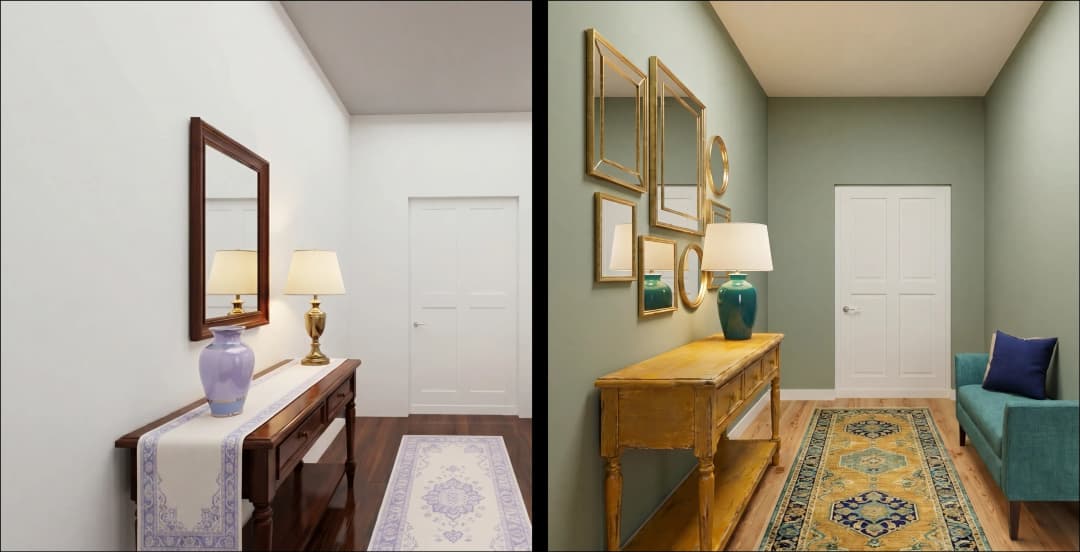
June 10, 2026
Foursite: Floor Plan to 3D Walkthrough in Minutes | VirtualSpaces
HHemanth Velury
CEO & Co-Founder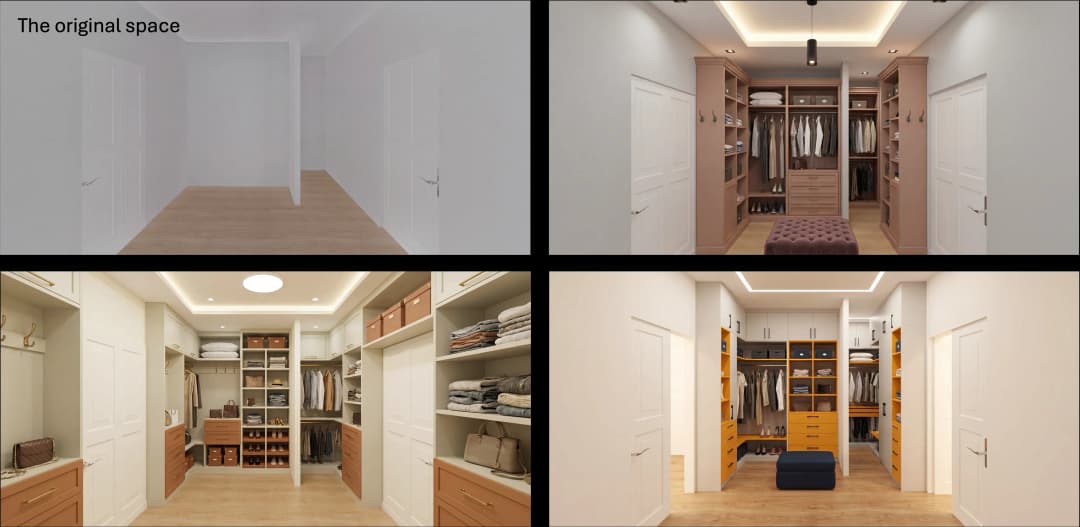
June 08, 2026
Win More Pitches With AI Renders Before the Meeting | VirtualSpaces
HHemanth Velury
CEO & Co-Founder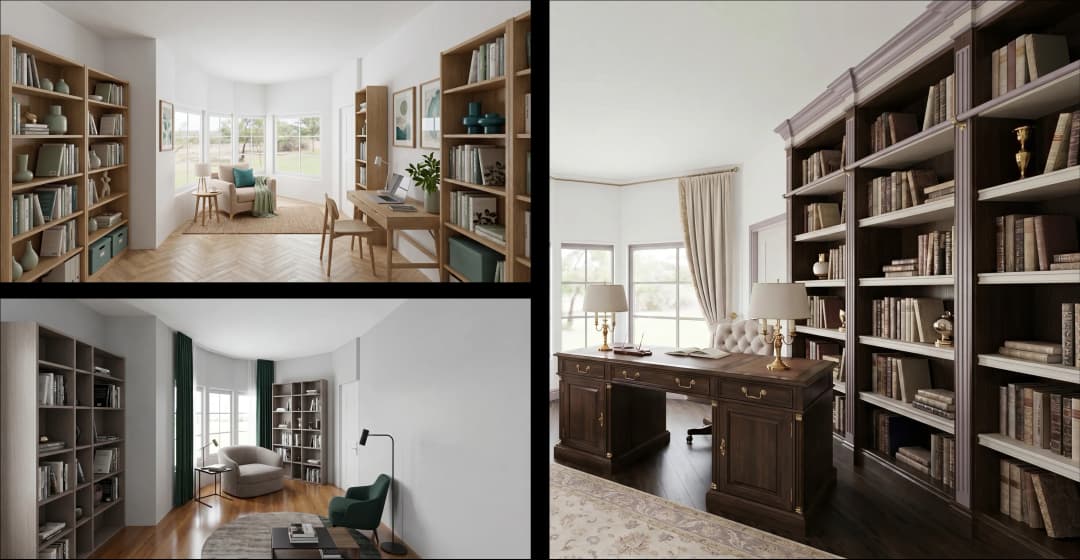
June 05, 2026
From Floor Plan to Finished Room: What AI Now Makes Possible | VirtualSpaces
HHemanth Velury
CEO & Co-Founder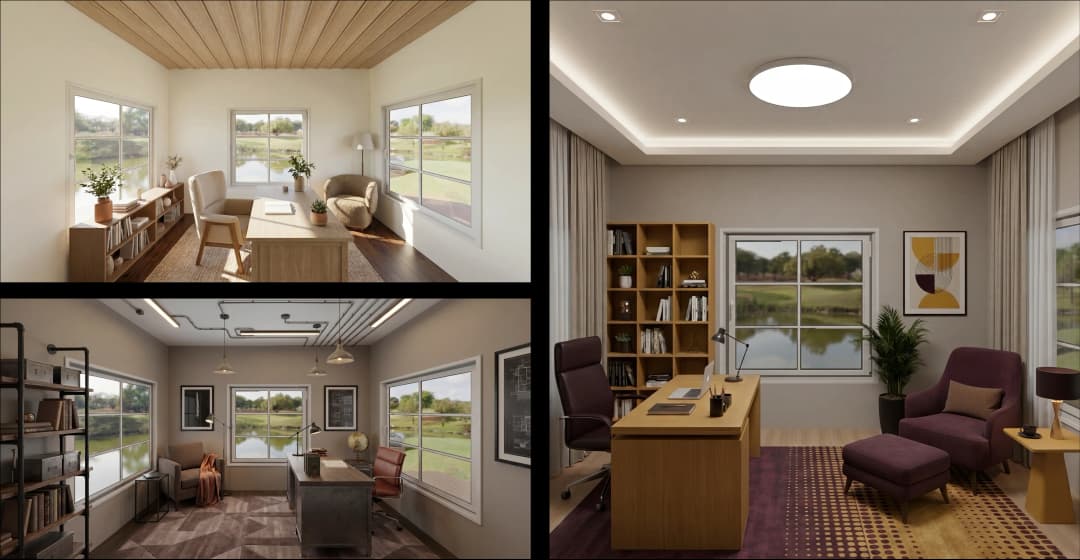
June 03, 2026
The Interior Design Brief Is Broken. AI Fixes It | VirtualSpaces
HHemanth Velury
CEO & Co-Founder
June 01, 2026
Pre-Construction Home Sales: AI Interior Visualization Guide | VirtualSpaces
HHemanth Velury
CEO & Co-Founder
May 30, 2026
Interior Design Principles: Applied with AI | VirtualSpaces
HHemanth Velury
CEO & Co-Founder
May 28, 2026
Designing Spaces for People, Not Blueprints | VirtualSpaces
HHemanth Velury
CEO & Co-Founder
May 26, 2026
The Future of Interior Design: Closing the Visualization Gap with Foursite and Remodroom | VirtualSpaces
HHemanth Velury
CEO & Co-Founder
May 18, 2026
How AI Visualization Upgrades Property Data Platforms | VirtualSpaces
HHemanth Velury
CEO & Co-Founder
May 14, 2026
How AI-First Insurers Can Use 3D Property Data to Transform Home Claims | VirtualSpaces
HHemanth Velury
CEO & Co-FounderMay 12, 2026
Why Photoreal 3D Renders Are Replacing Mood Boards | Interior Design Client Presentations | VirtualSpaces
HHemanth Velury
CEO & Co-Founder
May 08, 2026
From 2D Floor Plans To Living Worlds: The Spec‑Accurate 3D Engine | VirtualSpaces
HHemanth Velury
CEO & Co-Founder
May 06, 2026
Why Furniture Brands Need AI 3D Visualization Now | VirtualSpaces
HHemanth Velury
CEO & Co-Founder
May 4, 2026
How Property Portals Can Turn 2D Floor Plans into 3D Design Decisions | VirtualSpaces
HHemanth Velury
CEO & Co-Founder
April 29, 2026
The Home-Fit Test: Why Square Footage Misleads | VirtualSpaces
HHemanth Velury
CEO & Co-Founder
April 27, 2026
Designing Homes That Sell: 3D Visualization ROI Data | VirtualSpaces
HHemanth Velury
CEO & Co-FounderApril 24, 2026
What's Next: Foursite & Remodroom's New AI Features | VirtualSpaces
HHemanth Velury
CEO & Co-Founder
April 22, 2026
AI in Architecture: Closing the 85% Exposure Gap | VirtualSpaces
HHemanth Velury
CEO & Co-Founder
April 20, 2026
Interior Design Pricing in 2026: From Hourly to Value-Based Fees | VirtualSpaces
HHemanth Velury
CEO & Co-FounderApril 17, 2026
How Foursite and Remodroom Help Designers Win Clients | VirtualSpaces
HHemanth Velury
CEO & Co-Founder
April 15, 2026
Designing Spaces for People: Remodroom + Foursite AI Guide | VirtualSpaces
HHemanth Velury
CEO & Co-Founder
April 13, 2026
Designing for the Way People Actually Live: How AI 3D Is Finally Closing the Gap Between Floor Plan and Reality
HHemanth Velury
CEO & Co-Founder
April 11, 2026
Design in Real Time: AI Renders in Your First Client Meeting
HHemanth Velury
CEO & Co-Founder
April 06, 2026
Why Real Estate Photography Is No Longer Enough: The Shift to Spatial-First Listings
HHemanth Velury
CEO & Co-Founder
April 03, 2026
Property Management's Hidden Weapon: AI 3D Floor Plans That Cut Vacancy Time and Raise Tenant Quality
HHemanth Velury
CEO & Co-Founder
April 01, 2026
Off-Plan and Oversubscribed: How AI 3D Visualization Is Transforming Real Estate Pre-Sales
HHemanth Velury
CEO & Co-Founder
March 30, 2026
Why Foursite Beats Generic AI Tools for Interior Design 3D Visualization
HHemanth Velury
CEO & Co-Founder
March 25, 2026
What Is the 3-5-7 Rule in Interior Design? Foursite's AI Guide for Residential Spaces
HHemanth Velury
CEO & Co-Founder
March 23, 2026
What Is the 70/30 Rule in Interior Design? Foursite's AI Guide for Residential Spaces
HHemanth Velury
CEO & Co-Founder
March 20, 2026
How AI 3D Visualization Is Rewriting Residential Interior Design Workflows
HHemanth Velury
CEO & Co-Founder
March 18, 2026
Beyond Marketing: How 3D Floorplans Transform FM, Retrofit Planning & ESG Operations
HHemanth Velury
CEO & Co-Founder
March 16, 2026
Why AI Companies Use Token Payments (And Why VirtualSpaces Is Returning To Fiat)
HHemanth Velury
CEO & Co-Founder
March 13, 2026
Floorplan‑Native Digital Twins: Beyond BIM for Consumer‑Ready Real Estate Experiences
HHemanth Velury
CEO & Co-Founder
March 11, 2026
The Foursite Platform Thesis: Why Floor Plans, Not Photos, Are the Next Property Software Primitive
HHemanth Velury
CEO & Co-Founder
March 09, 2026
Design Systems for Space: Building Reusable 3D Component Libraries on Top of AI Floorplan‑to‑3D Engines
HHemanth Velury
CEO & Co-Founder
March 06, 2026
How to Standardize Design Quality Across Global Projects Using AI Floorplan-to-3D Tools
HHemanth Velury
CEO & Co-Founder
March 04, 2026
From CAD-First to AI-First: Reskilling Your Team for AI-Native Design Workflows
HHemanth Velury
CEO & Co-Founder
March 02, 2026
Algorithmic Ergonomics Meets Photorealistic 3D: Designing Human-Centered Smart Homes with Foursite in 2026
HHemanth Velury
CEO & Co-Founder
February 27, 2026
The Ethics of AI in Interior Design: Ownership, Originality, and Client Transparency
HHemanth Velury
CEO & Co-Founder
February 25, 2026
Designing with Empathy: Using AI 3D Visualization to Improve Client Communication and Emotional Clarity
HHemanth Velury
CEO & Co-Founder
February 23, 2026
From Tool to Infrastructure: AI Floorplan-to-3D and the Next Wave of PropTech
HHemanth Velury
CEO & Co-Founder
February 20, 2026
AI Interior Design for Holiday Homes: Turn Spare Flats into High-Demand Short-Stay Rentals with 3D Visuals
HHemanth Velury
CEO & Co-Founder
February 18, 2026
The Pre‑Purchase Power Play: How Savvy Home Buyers Use 3D Floor Plan Visualization to Negotiate Better Deals
HHemanth Velury
CEO & Co-FounderFebruary 16, 2026
AI Interior Design for Non‑Designers: How Homeowners Can Brief Like Pros
HHemanth Velury
CEO & Co-Founder
February 13, 2026
Scaling a Design Business Without Hiring a 3D Team: An Owner's Guide
HHemanth Velury
CEO & Co-Founder
February 11, 2026
From Bland to Bold: How to Rescue Builder-Grade Interiors on Any Budget
HHemanth Velury
CEO & Co-Founder
February 6, 2026
The Psychology of Space: How Room Dimensions Influence Interior Design Decisions
HHemanth Velury
CEO & Co-Founder
February 4, 2026
The Future of Interior Design Visualization: How AI Technology is Transforming 2D Concepts Into 3D Reality
HHemanth Velury
CEO & Co-Founder
February 2, 2026
AI Interior Décor: How Artificial Intelligence Generates Design Options from Your Floor Plan
HHemanth Velury
CEO & Co-Founder
January 30, 2026
Photoreal vs. Reality: What Clients Actually Expect from Interior Design Visualization
HHemanth Velury
CEO & Co-Founder
January 28, 2026
The Design Approval Conversation That Changes Everything: Communication Strategy When Using Photorealistic Visualization
HHemanth Velury
CEO & Co-Founder
January 25, 2026
Interior Design as Experience Design: How 3D Visualization Changes Your Professional Identity
HHemanth Velury
CEO & Co-Founder
January 23, 2026
The Professional Gap: How 3D Visualization Changes Interior Design Client Perception
HHemanth Velury
CEO & Co-Founder
January 21, 2026
Why Clients Fire Designers (And How 3D Visualization Could Have Saved the Project)
HHemanth Velury
CEO & Co-Founder
January 16, 2026
Blueprint to Vision: Why Seeing Is Believing in Interior Design
HHemanth Velury
CEO & Co-Founder
January 14, 2026
The Speed of Responsiveness: How AI Visualization Tools Make You Look Like You Care More
HHemanth Velury
CEO & Co-Founder
January 12, 2026
Why Interior Designers and Architects Can't Compete Without AI 3D Visualization Tools
HHemanth Velury
CEO & Co-Founder
January 07, 2026
From "Saved" to "Sold": How Homeowners Are Planning Renovations with AI
HHemanth Velury
CEO & Co-Founder
January 05, 2026
The Interior Designer's Secret Weapon: Speed as Premium Positioning
HHemanth Velury
CEO & Co-Founder
December 31, 2025
Gratitude, Growth & Game-Changing Innovation: VirtualSpaces' 2025 Journey & What's Coming in 2026
HHemanth Velury
CEO & Co-Founder
December 29, 2025
Why Interior Designers Are Switching to AI Floor Plan-to-3D Tools in 2026
HHemanth Velury
CEO & Co-Founder
December 26, 2025
AI Virtual Staging for Real Estate Agents: Sell More Homes Faster with Foursite
HHemanth Velury
CEO & Co-Founder
December 24, 2025
Why Architects Are Switching to AI 2D-to-3D: The SketchUp Alternative
HHemanth Velury
CEO & Co-Founder
December 22, 2025
Cut 3 Weeks from Real Estate Sales Cycle: The ROI of AI 2D to 3D Visualization
HHemanth Velury
CEO & Co-Founder
December 19, 2025
2D Floor Plans Are Dying: Why 3D Visualization & AI Virtual Staging Are the Future
HHemanth Velury
CEO & Co-Founder
December 17, 2025
Virtual Staging vs Physical Staging: How AI Saves Money Per Property
HHemanth Velury
CEO & Co-Founder
December 15, 2025
AI Floor Plan to Image: Revolutionizing Real Estate Marketing for Agents
HHemanth Velury
CEO & Co-Founder
December 12, 2025
Color of the Year 2026: Cloud Dancer | VirtualSpaces AI Interior Design Guide
HHemanth Velury
CEO & Co-Founder
December 10, 2025
AI Floor Plan to 3D: The New Standard for Interior Design Workflows
HHemanth Velury
CEO & Co-Founder
December 08, 2025
How Interior Design Studios Can Operationalize AI 2D-to-3D Workflows (Without Breaking Their Process)
HHemanth Velury
CEO & Co-Founder
December 06, 2025
How to Implement AI Interior Design Workflows in Your Studio
HHemanth Velury
CEO & Co-Founder
December 4, 2025
How Homeowners Can Use AI Interior Design Tools to Plan Renovations with Confidence
HHemanth Velury
CEO & Co-Founder
November 28, 2025
Interior Designers in the Age of AI: From Threat Narrative to Superpower
HHemanth Velury
CEO & Co-Founder
November 21, 2025
Foursite Launch: Embracing 'Release Early, Release Often'
HHemanth Velury
CEO & Co-Founder
November 13, 2025
Foursite by VirtSpaces: Empowering Interior Designers, Architects, and Homeowners
HHemanth Velury
CEO & Co-Founder
November 7, 2025
Reimagining Architectural Education: How AI Floorplan-to-3D Technology Can Transform Design Learning
VVirtualSpaces Research Labs
AI Research Initiative
October 27, 2025
Archisculpt AI: Turning Architectural Drawings into Photorealistic 3D Spaces
AAbhijeet Naik
Co-Founder & CTO
October 13, 2025
Home Makeover: From Floor Plan to Dream Space with AI
HHemanth Velury
CEO & Co-Founder
October 6, 2025
Real-Time Rendering & AI: Revolutionizing Interactive Property Walkthroughs with VirtSpaces
HHemanth Velury
CEO & Co-Founder
September 26, 2025
Foursite - A True AI-Native Experience in Design Visualization
AAbhijeet Naik
CTO & Co-Founder
September 18, 2025
Why PropTech Startups Are Betting on AI Interior Design
HHemanth Velury
CEO & Co-Founder
September 11, 2025
How AI Differs from Traditional 3D Rendering Software
HHemanth Velury
CEO & Co-Founder
September 2, 2025
From Client to Investor: How Nila Spaces and VirtSpaces Are Redefining Proptech with AI
HHemanth Velury
CEO & Co-Founder
August 25, 2025
VirtSpaces From Virtual Reality to AI – Transforming Real Estate Visualization.
HHemanth Velury
CEO & Co-Founder


We help teams collaborate seamlessly and reduce costs. Virtual Spaces offers cutting-edge technology with flexible plans designed to fit modern teams.
Copyright © VirtSpaces Pvt. Ltd. 2025 All Rights Reserved.
CIN: U74999KA2016PTC094921