June 22, 2026
- AI Technology
- Interior Design
What Buyers See on a Floor Plan: Your Biggest Sales Problem | VirtualSpaces
Hemanth Velury
CEO & Co-FounderWhat Buyers Actually See When They Look at a Floor Plan (And Why That's Your Biggest Sales Problem)
Hand a floor plan to someone who is not trained in architecture or interior design and watch what happens.
They tilt it. They squint at the room labels. They trace the walls with a finger and try to orient themselves relative to the front door. They ask which direction north is, then realize that is not the question they actually needed answered. They nod slowly, say something like 'it's a good size,' and hand it back.
They have not understood the space. They have understood that there is a space. That is not the same thing, and for anyone selling residential property or design services, the difference is the gap between a sale that closes confidently and one that drags, stalls, or falls through.
The floor plan is the most important document in residential real estate. It contains every meaningful fact about the space: dimensions, flow, relationships between rooms, orientation, light, proportion. And the vast majority of the people who receive it cannot extract any of that information in a way that produces a real decision.
What a Floor Plan Communicates to a Professional
A trained eye reads a floor plan the way an experienced reader reads a dense paragraph: quickly, completely, and with strong spatial inferencing running alongside the literal content.
A developer's sales director looks at a floor plan and sees the morning light position relative to the master bedroom. An architect sees the structural implications of the open kitchen layout. An interior designer sees where the furniture will work and where it will fight the space. They see the actual home, in three dimensions, assembled in real time from two-dimensional information.
This skill is real, it is trained, and it is not natural. It takes years of working with built spaces and comparing them to their plans to develop the visual processing that makes a floor plan legible as a spatial experience.
The buyers and clients sitting across from you do not have it. Most of them have looked at only a handful of floor plans in their entire lives, under conditions of mild stress, trying to make one of the largest financial decisions they will ever make.
What a Buyer Actually Sees
When a buyer looks at a floor plan, they are performing a translation task they have not been trained for. Here is what the process actually looks like, based on the consistent pattern of questions buyers ask when presented with a plan:
-
They find the front door first, using it as an anchor for orientation
-
They read room labels rather than room shapes, because labels are the only legible information
-
They try to assess size by comparing rooms to each other, rather than reading dimensions accurately
-
They cannot reliably visualize ceiling height, natural light, or the feeling of moving through the space
-
They cannot place furniture mentally with any accuracy
-
They cannot resolve how adjacent rooms connect or flow without walking the space physically
The result: buyers hold a document that contains the definitive answer to every question they have about the space, and they cannot read it. So they fall back on proxies.
They ask about square footage, even though square footage alone tells them almost nothing about how a space feels to live in. They ask to see photographs of similar properties. They ask to visit competing units that are already built. They delay decisions until they can see something physical, even when the product they are evaluating is demonstrably strong.
That delay is your sales problem. It is not a buyer motivation problem. It is a visualization gap.
The Cost of the Gap: What Gets Lost While Buyers Are Trying to Picture It
When buyers cannot form a clear mental image of a space from a floor plan, several specific and costly things happen.
Decisions stall. A buyer who cannot picture the space clearly defaults to caution. They want more time, another site visit, another conversation. Sales cycles lengthen. The carrying cost of unsold inventory or uncommitted project phases grows. Resources stay tied to prospects who are close to a decision but unable to get there without more input.
Price negotiations increase. A buyer who is uncertain about what they are purchasing defaults to discounting as a risk hedge. If they cannot fully commit to the value of the space because they cannot visualize it, they negotiate on price. This is not irrational behavior; it is a rational response to incomplete information. The developer or agent absorbs the cost of the visualization gap in the form of reduced margin.
Competitors with show units win. If a competing project has a physical show unit and yours does not, a buyer who cannot read a floor plan will choose to visit the project where they can see and feel the space. The quality of your design is not the deciding factor. The accessibility of the experience is.
Post-sale satisfaction drops. When buyers do commit based on a floor plan they could not fully interpret, surprises at handover are common. 'The bedroom feels smaller than I expected.' 'The kitchen is darker than I imagined.' These are not complaints about the space; they are the result of a mismatch between the floor plan and the mental model the buyer formed from it. Satisfaction scores, referrals, and repeat business suffer.
The Solution Is Not a Better Floor Plan
Floor plans have improved over the decades. Software has made them cleaner and more precise. Labels are clearer. Furniture layout overlays are common. Some developers include 3D isometric views alongside traditional plans.
None of this solves the core problem, because the core problem is not the floor plan itself. It is the translation required to move from a two-dimensional representation to a three-dimensional spatial understanding. That translation demands a cognitive skill most buyers do not have and cannot acquire during a sales meeting.
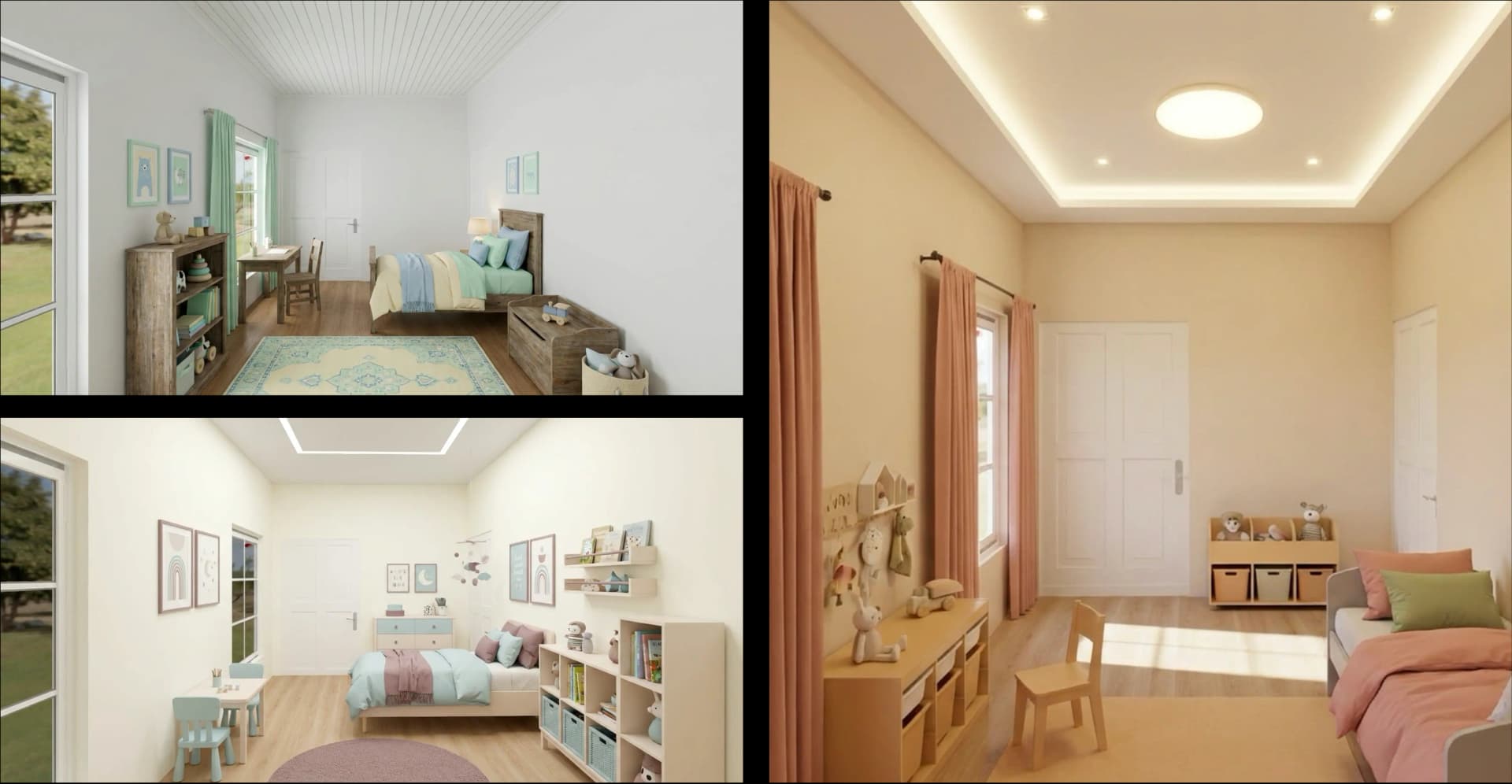
The only solution that works is removing the translation requirement entirely: showing the buyer the space in three dimensions, photorealistically, before it is built.
What Changes When Buyers Can See the Space
The behavioral shift that happens when a buyer is shown a photorealistic 3D interior render of the space they are evaluating is consistent and well-documented by sales teams who have made the switch.
The questions change. Instead of 'how big is the master bedroom?' the buyer asks 'is there room for a king bed and two bedside tables?' Instead of 'which way does the living room face?' they ask 'will the afternoon light hit the sofa directly or come in at an angle?' These are not questions about facts they can read from a floor plan. They are questions about a space they can already see.
The timeline compresses. A buyer who can see the space makes decisions faster, because the uncertainty that extends decision timelines has been removed. They are not waiting to visit a competing show unit. They are not asking for more time to think. They have already thought; they did it while looking at the render.
The negotiation dynamic changes. A buyer who can see exactly what they are purchasing and is satisfied with what they see negotiates less aggressively on price. The risk hedge discount disappears when the risk disappears. Value is legible.
AI Floor Plan to 3D: The Practical Version of This Solution
Foursite by VirtualSpaces is built on patent-pending AI visualization technology that converts 2D floor plans and architectural blueprints into photorealistic interior design 3D renders in minutes. Not generic renders. Not 'typical unit' visualizations. The actual floor plan, with the actual dimensions, rendered with the material finishes, furniture placement, and lighting that matches the design intent for that specific unit.
For a developer selling pre-construction, this means every unit type in a building can be visualized before the foundation is poured. Buyers receive a photorealistic render of their specific unit, in their chosen finish package, showing their actual floor and orientation. The gap that has been losing sales closes.
For an interior designer presenting a brief to a residential client, the same capability means the client sees their home, not a reference to someone else's. The approval conversation changes from 'does this direction feel right?' to 'do you want to adjust anything before we proceed?'
For a real estate agent marketing an existing home, Remodroom addresses a different but related version of the same problem: a buyer looking at a room that is furnished in someone else's taste cannot easily picture it as their own. Upload a photograph of the room, apply a different styling direction, and show the buyer the space remade in a way they can own mentally.
The floor plan has always contained the answer to every question a buyer has about a space. VirtualSpaces' patent-pending AI visualization technology finally makes those answers legible to the people who most need to act on them.
What This Means at Scale
The floor plan literacy gap is not a niche problem. It affects every residential sale that involves a buyer who has not lived in the specific property being sold. That is, effectively, every residential sale.
The aggregate cost of longer sales cycles, price compression from uncertainty, lost sales to competitors with show units, and post-sale dissatisfaction is significant across the residential development and real estate market. It is a structural drag that the industry has largely normalized because, until recently, there was no practical alternative.
AI floor plan to 3D visualization tools change the calculus. The developer who can show every buyer exactly what they are buying, in a meeting, before construction starts, is not just running a better sales process. They are removing a systemic inefficiency from a market that has never had a tool capable of removing it at scale and at speed.
That is not a marginal product improvement. That is a different category of solution. And the residential sales market is large enough that even a fraction of the drag it eliminates represents a meaningful shift in how projects are funded, sold, and delivered.
Show them the space. Everything else gets easier.
Recommended for you

August 19, 2026
The End of the Model Home? 3D Changes the Math | VirtualSpaces
HHemanth Velury
CEO & Co-Founder
August 17, 2026
Designing Spaces That Actually Get Built | VirtualSpaces
HHemanth Velury
CEO & Co-Founder
August 12, 2026
Designing Homes for the Stuff People Actually Own | VirtualSpaces
HHemanth Velury
CEO & Co-Founder
August 07, 2026
Floor Plan to Bill of Materials: The 3D Model as Data | VirtualSpaces
HHemanth Velury
CEO & Co-Founder.png&w=1080&q=75)
August 05, 2026
Designing Homes for How People Actually Live | VirtualSpaces
HHemanth Velury
CEO & Co-Founder
August 03, 2026
Honest by Design: Trust in AI Real Estate Imagery | VirtualSpaces
HHemanth Velury
CEO & Co-Founder
July 29, 2026
Kitchen and Bath: The Two Rooms That Decide Resale | VirtualSpaces
HHemanth Velury
CEO & Co-Founder
July 27, 2026
Why Empty Rooms Don't Sell: Virtual Staging | VirtualSpaces
HHemanth Velury
CEO & Co-Founder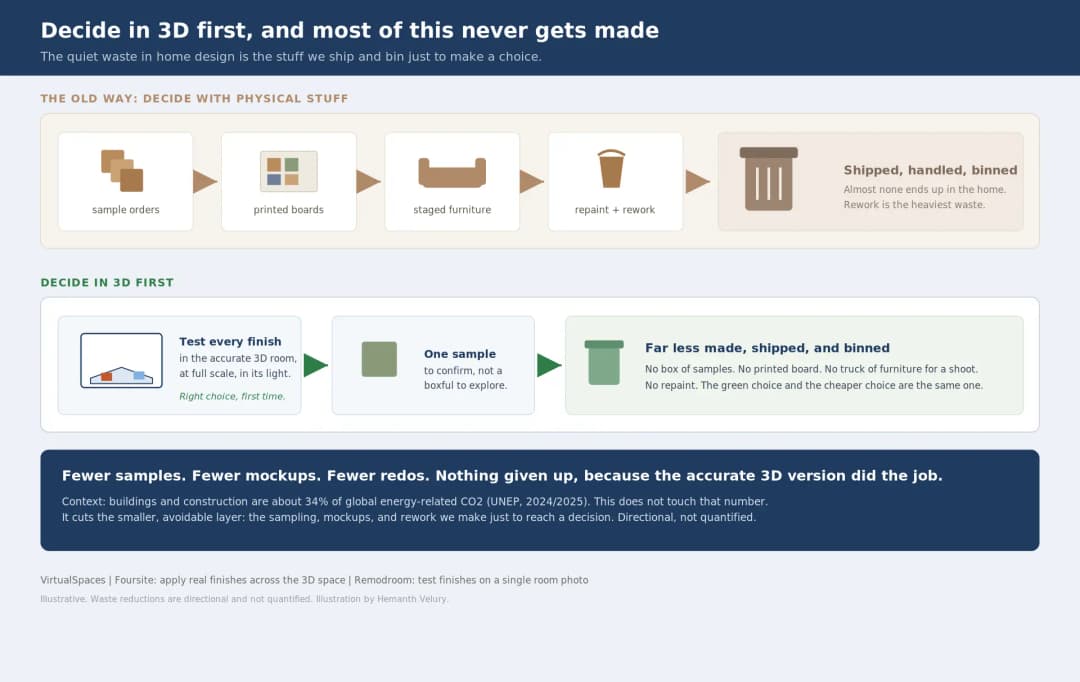
July 24, 2026
The Quiet Sustainability Win of Deciding in 3D | VirtualSpaces
HHemanth Velury
CEO & Co-Founder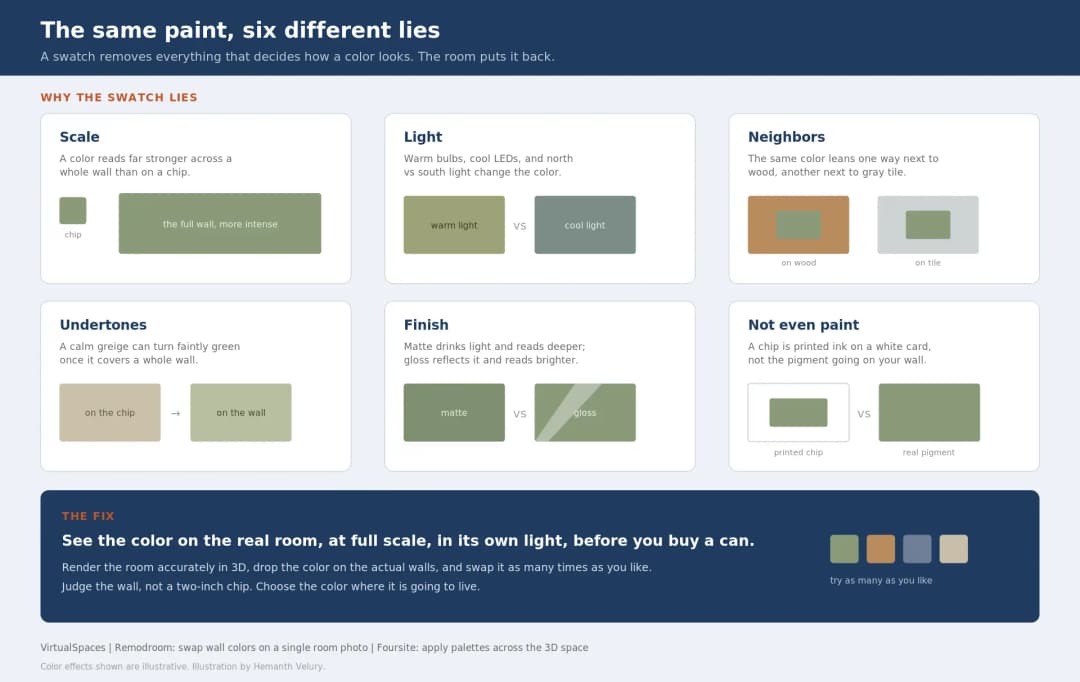
July 22, 2026
Why Paint Swatches Lie: Test Color in 3D First | VirtualSpaces
HHemanth Velury
CEO & Co-Founder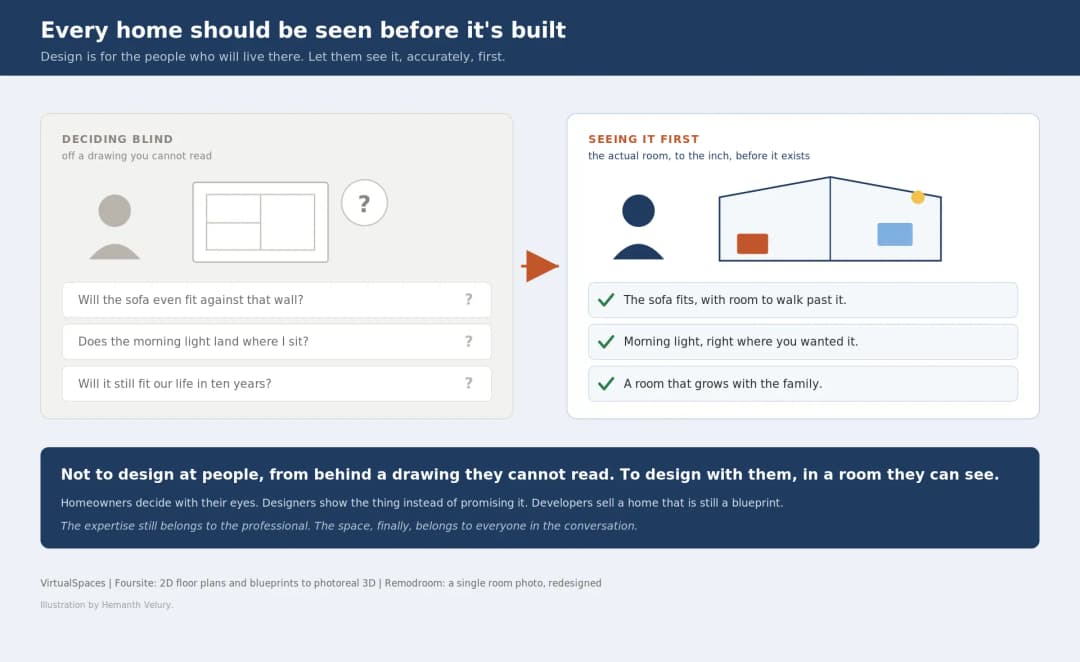
July 20, 2026
Why Every Home Should Be Seen Before It's Built | VirtualSpaces
HHemanth Velury
CEO & Co-Founder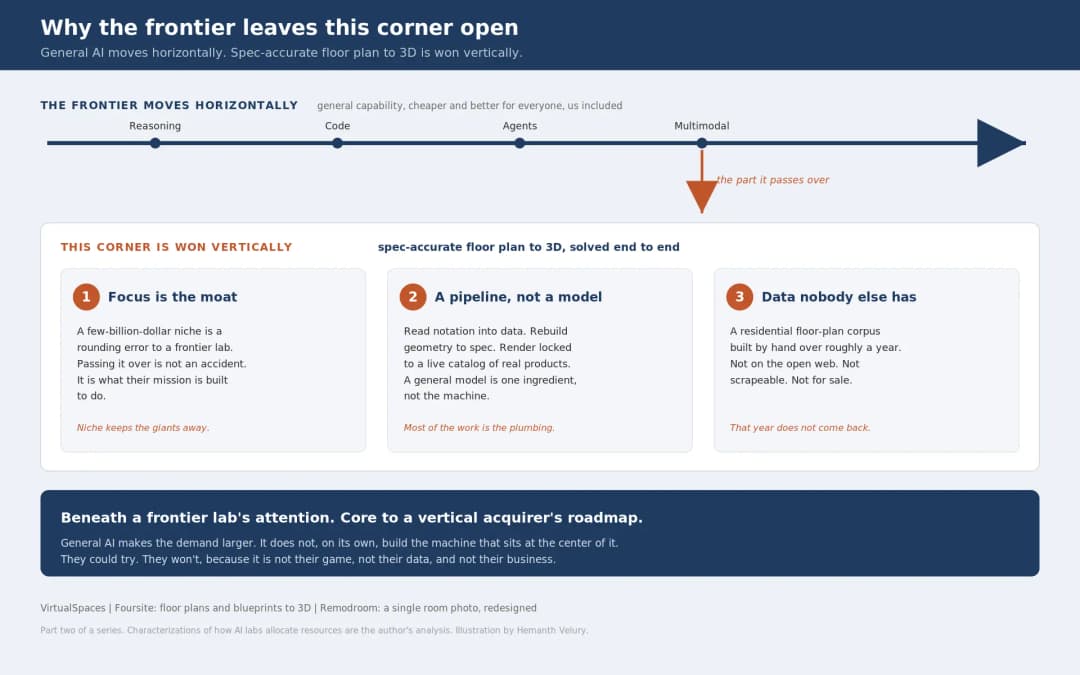
July 17, 2026
Why Big AI Labs Won't Build Floor Plan to 3D | VirtualSpaces
HHemanth Velury
CEO & Co-Founder
July 15, 2026
How We Solve Floor Plan to 3D, Accurately | VirtualSpaces
HHemanth Velury
CEO & Co-Founder
July 13, 2026
Designing Homes That Age With the People in Them | VirtualSpaces
HHemanth Velury
CEO & Co-Founder
July 10, 2026
Designing Spaces for How Light Actually Moves | VirtualSpaces
HHemanth Velury
CEO & Co-Founder
July 08, 2026
Designing Homes for Every Life Stage in 3D | VirtualSpaces
HHemanth Velury
CEO & Co-Founder
July 06, 2026
Build an Interior Design Portfolio Without Clients | VirtualSpaces
HHemanth Velury
CEO & Co-Founder
June 26, 2026
AI Interior Design: Full 3D Workflow in One Platform | VirtualSpaces
HHemanth Velury
CEO & Co-Founder
June 24, 2026
Scope Creep in Interior Design: How AI Visualization Fixes It | VirtualSpaces
HHemanth Velury
CEO & Co-Founder
June 19, 2026
Small Design Studios vs Big Firms: The AI Advantage | VirtualSpaces
HHemanth Velury
CEO & Co-Founder
June 17, 2026
After the Mood Board: AI Interior Visualization | VirtualSpaces
HHemanth Velury
CEO & Co-Founder
June 15, 2026
Foursite Pro Editor: Full Floor Plan Control for Designers | VirtualSpaces
HHemanth Velury
CEO & Co-Founder
June 12, 2026
AI Interior Design: Style Any Room in Seconds with Foursite | VirtualSpaces
HHemanth Velury
CEO & Co-Founder
June 10, 2026
Foursite: Floor Plan to 3D Walkthrough in Minutes | VirtualSpaces
HHemanth Velury
CEO & Co-Founder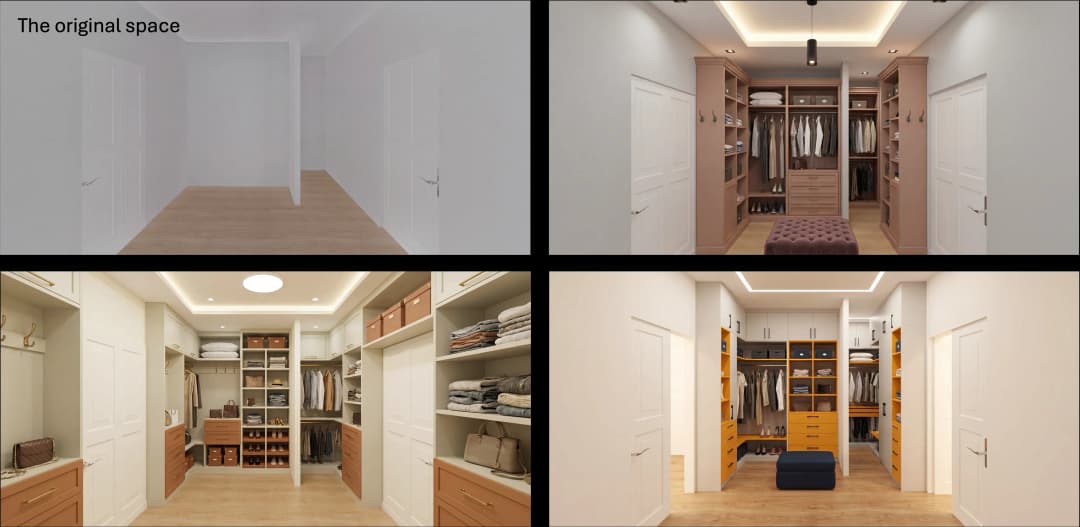
June 08, 2026
Win More Pitches With AI Renders Before the Meeting | VirtualSpaces
HHemanth Velury
CEO & Co-Founder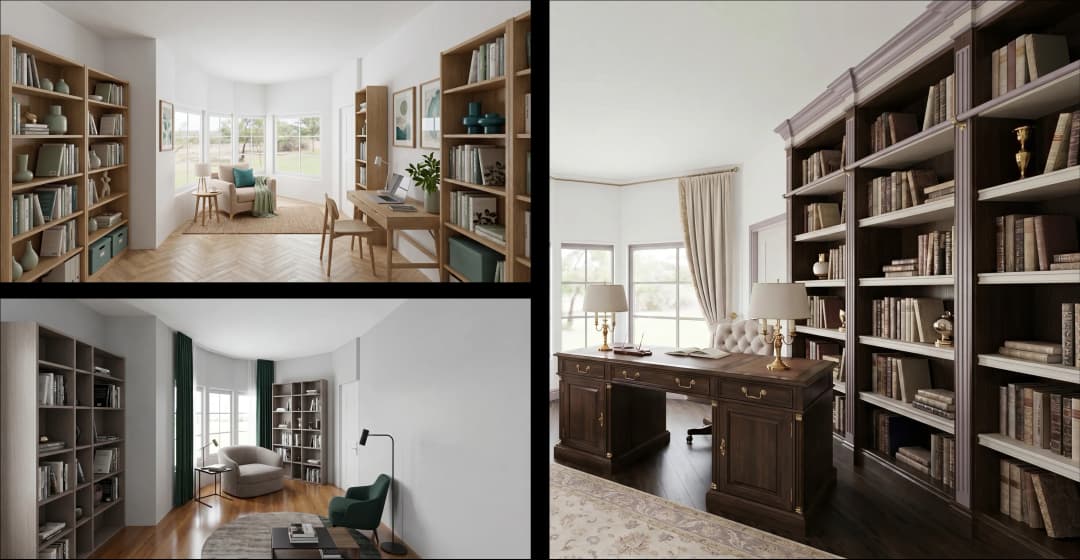
June 05, 2026
From Floor Plan to Finished Room: What AI Now Makes Possible | VirtualSpaces
HHemanth Velury
CEO & Co-Founder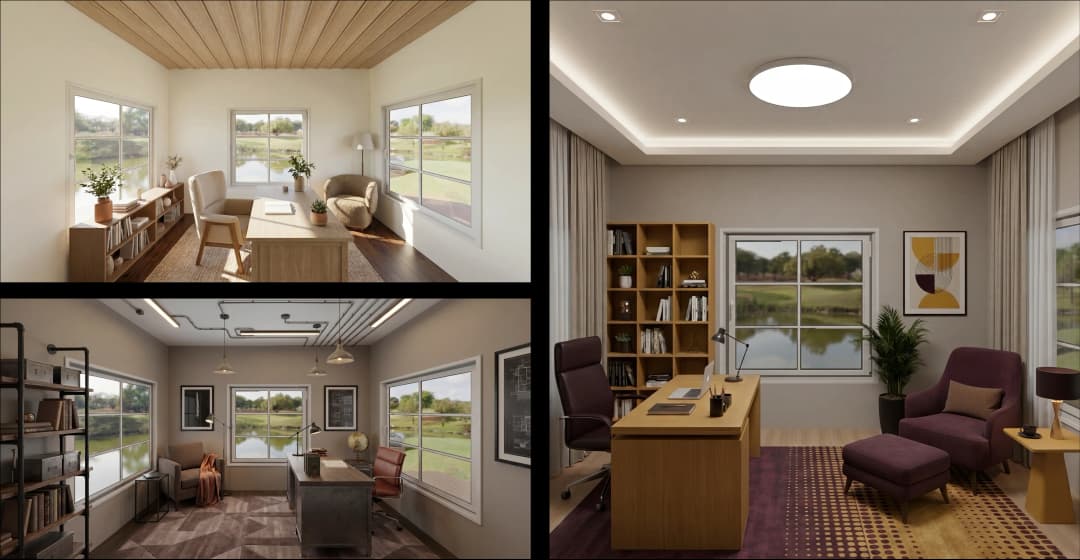
June 03, 2026
The Interior Design Brief Is Broken. AI Fixes It | VirtualSpaces
HHemanth Velury
CEO & Co-Founder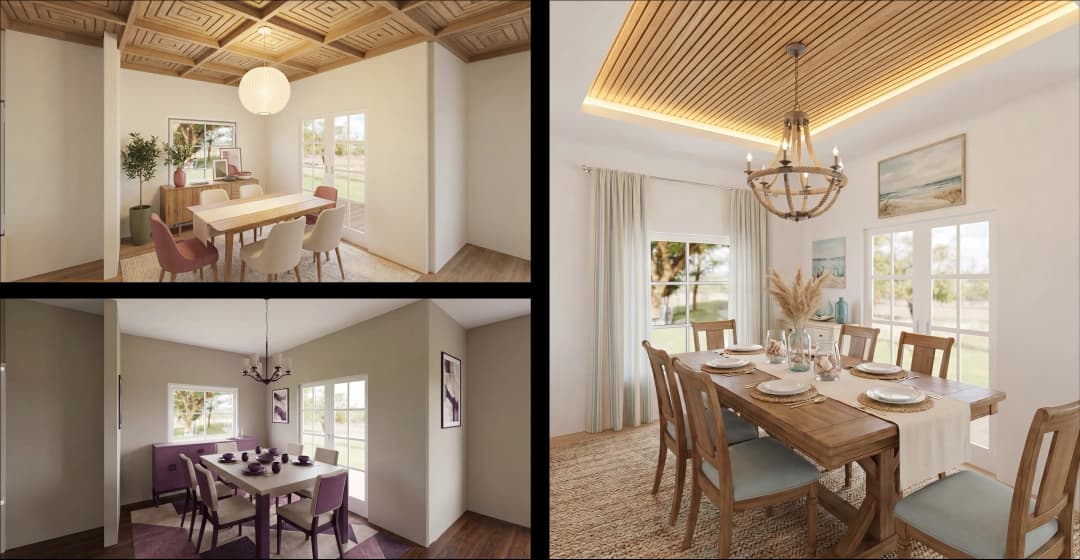
June 01, 2026
Pre-Construction Home Sales: AI Interior Visualization Guide | VirtualSpaces
HHemanth Velury
CEO & Co-Founder
May 30, 2026
Interior Design Principles: Applied with AI | VirtualSpaces
HHemanth Velury
CEO & Co-Founder
May 28, 2026
Designing Spaces for People, Not Blueprints | VirtualSpaces
HHemanth Velury
CEO & Co-Founder
May 26, 2026
The Future of Interior Design: Closing the Visualization Gap with Foursite and Remodroom | VirtualSpaces
HHemanth Velury
CEO & Co-Founder
May 18, 2026
How AI Visualization Upgrades Property Data Platforms | VirtualSpaces
HHemanth Velury
CEO & Co-Founder
May 14, 2026
How AI-First Insurers Can Use 3D Property Data to Transform Home Claims | VirtualSpaces
HHemanth Velury
CEO & Co-FounderMay 12, 2026
Why Photoreal 3D Renders Are Replacing Mood Boards | Interior Design Client Presentations | VirtualSpaces
HHemanth Velury
CEO & Co-Founder
May 08, 2026
From 2D Floor Plans To Living Worlds: The Spec‑Accurate 3D Engine | VirtualSpaces
HHemanth Velury
CEO & Co-Founder
May 06, 2026
Why Furniture Brands Need AI 3D Visualization Now | VirtualSpaces
HHemanth Velury
CEO & Co-Founder
May 4, 2026
How Property Portals Can Turn 2D Floor Plans into 3D Design Decisions | VirtualSpaces
HHemanth Velury
CEO & Co-Founder
April 29, 2026
The Home-Fit Test: Why Square Footage Misleads | VirtualSpaces
HHemanth Velury
CEO & Co-Founder
April 27, 2026
Designing Homes That Sell: 3D Visualization ROI Data | VirtualSpaces
HHemanth Velury
CEO & Co-FounderApril 24, 2026
What's Next: Foursite & Remodroom's New AI Features | VirtualSpaces
HHemanth Velury
CEO & Co-Founder
April 22, 2026
AI in Architecture: Closing the 85% Exposure Gap | VirtualSpaces
HHemanth Velury
CEO & Co-Founder
April 20, 2026
Interior Design Pricing in 2026: From Hourly to Value-Based Fees | VirtualSpaces
HHemanth Velury
CEO & Co-FounderApril 17, 2026
How Foursite and Remodroom Help Designers Win Clients | VirtualSpaces
HHemanth Velury
CEO & Co-Founder
April 15, 2026
Designing Spaces for People: Remodroom + Foursite AI Guide | VirtualSpaces
HHemanth Velury
CEO & Co-Founder
April 13, 2026
Designing for the Way People Actually Live: How AI 3D Is Finally Closing the Gap Between Floor Plan and Reality
HHemanth Velury
CEO & Co-Founder
April 11, 2026
Design in Real Time: AI Renders in Your First Client Meeting
HHemanth Velury
CEO & Co-Founder
April 06, 2026
Why Real Estate Photography Is No Longer Enough: The Shift to Spatial-First Listings
HHemanth Velury
CEO & Co-Founder
April 03, 2026
Property Management's Hidden Weapon: AI 3D Floor Plans That Cut Vacancy Time and Raise Tenant Quality
HHemanth Velury
CEO & Co-Founder
April 01, 2026
Off-Plan and Oversubscribed: How AI 3D Visualization Is Transforming Real Estate Pre-Sales
HHemanth Velury
CEO & Co-Founder
March 30, 2026
Why Foursite Beats Generic AI Tools for Interior Design 3D Visualization
HHemanth Velury
CEO & Co-Founder
March 27, 2026
7 Tenets of Interior Design: How AI Accelerates Harmony in Residential Spaces
HHemanth Velury
CEO & Co-Founder
March 25, 2026
What Is the 3-5-7 Rule in Interior Design? Foursite's AI Guide for Residential Spaces
HHemanth Velury
CEO & Co-Founder
March 23, 2026
What Is the 70/30 Rule in Interior Design? Foursite's AI Guide for Residential Spaces
HHemanth Velury
CEO & Co-Founder
March 20, 2026
How AI 3D Visualization Is Rewriting Residential Interior Design Workflows
HHemanth Velury
CEO & Co-Founder
March 18, 2026
Beyond Marketing: How 3D Floorplans Transform FM, Retrofit Planning & ESG Operations
HHemanth Velury
CEO & Co-Founder
March 16, 2026
Why AI Companies Use Token Payments (And Why VirtualSpaces Is Returning To Fiat)
HHemanth Velury
CEO & Co-Founder
March 13, 2026
Floorplan‑Native Digital Twins: Beyond BIM for Consumer‑Ready Real Estate Experiences
HHemanth Velury
CEO & Co-Founder
March 11, 2026
The Foursite Platform Thesis: Why Floor Plans, Not Photos, Are the Next Property Software Primitive
HHemanth Velury
CEO & Co-Founder
March 09, 2026
Design Systems for Space: Building Reusable 3D Component Libraries on Top of AI Floorplan‑to‑3D Engines
HHemanth Velury
CEO & Co-Founder
March 06, 2026
How to Standardize Design Quality Across Global Projects Using AI Floorplan-to-3D Tools
HHemanth Velury
CEO & Co-Founder
March 04, 2026
From CAD-First to AI-First: Reskilling Your Team for AI-Native Design Workflows
HHemanth Velury
CEO & Co-Founder
March 02, 2026
Algorithmic Ergonomics Meets Photorealistic 3D: Designing Human-Centered Smart Homes with Foursite in 2026
HHemanth Velury
CEO & Co-Founder
February 27, 2026
The Ethics of AI in Interior Design: Ownership, Originality, and Client Transparency
HHemanth Velury
CEO & Co-Founder
February 25, 2026
Designing with Empathy: Using AI 3D Visualization to Improve Client Communication and Emotional Clarity
HHemanth Velury
CEO & Co-Founder
February 23, 2026
From Tool to Infrastructure: AI Floorplan-to-3D and the Next Wave of PropTech
HHemanth Velury
CEO & Co-Founder
February 20, 2026
AI Interior Design for Holiday Homes: Turn Spare Flats into High-Demand Short-Stay Rentals with 3D Visuals
HHemanth Velury
CEO & Co-Founder
February 18, 2026
The Pre‑Purchase Power Play: How Savvy Home Buyers Use 3D Floor Plan Visualization to Negotiate Better Deals
HHemanth Velury
CEO & Co-FounderFebruary 16, 2026
AI Interior Design for Non‑Designers: How Homeowners Can Brief Like Pros
HHemanth Velury
CEO & Co-Founder
February 13, 2026
Scaling a Design Business Without Hiring a 3D Team: An Owner's Guide
HHemanth Velury
CEO & Co-Founder
February 11, 2026
From Bland to Bold: How to Rescue Builder-Grade Interiors on Any Budget
HHemanth Velury
CEO & Co-Founder
February 6, 2026
The Psychology of Space: How Room Dimensions Influence Interior Design Decisions
HHemanth Velury
CEO & Co-Founder
February 4, 2026
The Future of Interior Design Visualization: How AI Technology is Transforming 2D Concepts Into 3D Reality
HHemanth Velury
CEO & Co-Founder
February 2, 2026
AI Interior Décor: How Artificial Intelligence Generates Design Options from Your Floor Plan
HHemanth Velury
CEO & Co-Founder
January 30, 2026
Photoreal vs. Reality: What Clients Actually Expect from Interior Design Visualization
HHemanth Velury
CEO & Co-Founder
January 28, 2026
The Design Approval Conversation That Changes Everything: Communication Strategy When Using Photorealistic Visualization
HHemanth Velury
CEO & Co-Founder
January 25, 2026
Interior Design as Experience Design: How 3D Visualization Changes Your Professional Identity
HHemanth Velury
CEO & Co-Founder
January 23, 2026
The Professional Gap: How 3D Visualization Changes Interior Design Client Perception
HHemanth Velury
CEO & Co-Founder
January 21, 2026
Why Clients Fire Designers (And How 3D Visualization Could Have Saved the Project)
HHemanth Velury
CEO & Co-Founder
January 16, 2026
Blueprint to Vision: Why Seeing Is Believing in Interior Design
HHemanth Velury
CEO & Co-Founder
January 14, 2026
The Speed of Responsiveness: How AI Visualization Tools Make You Look Like You Care More
HHemanth Velury
CEO & Co-Founder
January 12, 2026
Why Interior Designers and Architects Can't Compete Without AI 3D Visualization Tools
HHemanth Velury
CEO & Co-Founder
January 07, 2026
From "Saved" to "Sold": How Homeowners Are Planning Renovations with AI
HHemanth Velury
CEO & Co-Founder
January 05, 2026
The Interior Designer's Secret Weapon: Speed as Premium Positioning
HHemanth Velury
CEO & Co-Founder
December 31, 2025
Gratitude, Growth & Game-Changing Innovation: VirtualSpaces' 2025 Journey & What's Coming in 2026
HHemanth Velury
CEO & Co-Founder
December 29, 2025
Why Interior Designers Are Switching to AI Floor Plan-to-3D Tools in 2026
HHemanth Velury
CEO & Co-Founder
December 26, 2025
AI Virtual Staging for Real Estate Agents: Sell More Homes Faster with Foursite
HHemanth Velury
CEO & Co-Founder
December 24, 2025
Why Architects Are Switching to AI 2D-to-3D: The SketchUp Alternative
HHemanth Velury
CEO & Co-Founder
December 22, 2025
Cut 3 Weeks from Real Estate Sales Cycle: The ROI of AI 2D to 3D Visualization
HHemanth Velury
CEO & Co-Founder
December 19, 2025
2D Floor Plans Are Dying: Why 3D Visualization & AI Virtual Staging Are the Future
HHemanth Velury
CEO & Co-Founder
December 17, 2025
Virtual Staging vs Physical Staging: How AI Saves Money Per Property
HHemanth Velury
CEO & Co-Founder
December 15, 2025
AI Floor Plan to Image: Revolutionizing Real Estate Marketing for Agents
HHemanth Velury
CEO & Co-Founder
December 12, 2025
Color of the Year 2026: Cloud Dancer | VirtualSpaces AI Interior Design Guide
HHemanth Velury
CEO & Co-Founder
December 10, 2025
AI Floor Plan to 3D: The New Standard for Interior Design Workflows
HHemanth Velury
CEO & Co-Founder
December 08, 2025
How Interior Design Studios Can Operationalize AI 2D-to-3D Workflows (Without Breaking Their Process)
HHemanth Velury
CEO & Co-Founder
December 06, 2025
How to Implement AI Interior Design Workflows in Your Studio
HHemanth Velury
CEO & Co-Founder
December 4, 2025
How Homeowners Can Use AI Interior Design Tools to Plan Renovations with Confidence
HHemanth Velury
CEO & Co-Founder
November 28, 2025
Interior Designers in the Age of AI: From Threat Narrative to Superpower
HHemanth Velury
CEO & Co-Founder
November 21, 2025
Foursite Launch: Embracing 'Release Early, Release Often'
HHemanth Velury
CEO & Co-Founder
November 13, 2025
Foursite by VirtSpaces: Empowering Interior Designers, Architects, and Homeowners
HHemanth Velury
CEO & Co-Founder
November 7, 2025
Reimagining Architectural Education: How AI Floorplan-to-3D Technology Can Transform Design Learning
VVirtualSpaces Research Labs
AI Research Initiative
October 27, 2025
Archisculpt AI: Turning Architectural Drawings into Photorealistic 3D Spaces
AAbhijeet Naik
Co-Founder & CTO
October 13, 2025
Home Makeover: From Floor Plan to Dream Space with AI
HHemanth Velury
CEO & Co-Founder
October 6, 2025
Real-Time Rendering & AI: Revolutionizing Interactive Property Walkthroughs with VirtSpaces
HHemanth Velury
CEO & Co-Founder
September 26, 2025
Foursite - A True AI-Native Experience in Design Visualization
AAbhijeet Naik
CTO & Co-Founder
September 18, 2025
Why PropTech Startups Are Betting on AI Interior Design
HHemanth Velury
CEO & Co-Founder
September 11, 2025
How AI Differs from Traditional 3D Rendering Software
HHemanth Velury
CEO & Co-Founder
September 2, 2025
From Client to Investor: How Nila Spaces and VirtSpaces Are Redefining Proptech with AI
HHemanth Velury
CEO & Co-Founder
August 25, 2025
VirtSpaces From Virtual Reality to AI – Transforming Real Estate Visualization.
HHemanth Velury
CEO & Co-Founder


We help teams collaborate seamlessly and reduce costs. Virtual Spaces offers cutting-edge technology with flexible plans designed to fit modern teams.
Copyright © VirtSpaces Pvt. Ltd. 2025 All Rights Reserved.
CIN: U74999KA2016PTC094921