
July 27, 2026
- Real Estate
- AI Technology
Why Empty Rooms Don't Sell: Virtual Staging | VirtualSpaces
Hemanth Velury
CEO & Co-FounderWhy Empty Rooms Don't Sell, and What Virtual Staging Does About It
The photos are fine. Clean floors, good light, straight lines, nothing broken. The room is empty, and it sits. Weeks pass, the price gets cut, and everyone wonders why a perfectly nice home is not moving. The answer is usually hiding in plain sight: an empty room does not sell a home. It sells square footage, and nobody falls in love with square footage.
This is one of the most common and most fixable problems in residential real estate. A vacant listing photographs as a set of blank boxes, and blank boxes ask the buyer to do the hardest thing there is: imagine a life they cannot see. Most buyers cannot do it, and the ones who try usually get it wrong. This post is about why empty rooms struggle, what it costs to leave them empty, and how virtual staging fixes it without a moving truck.
Why the empty room fails the buyer
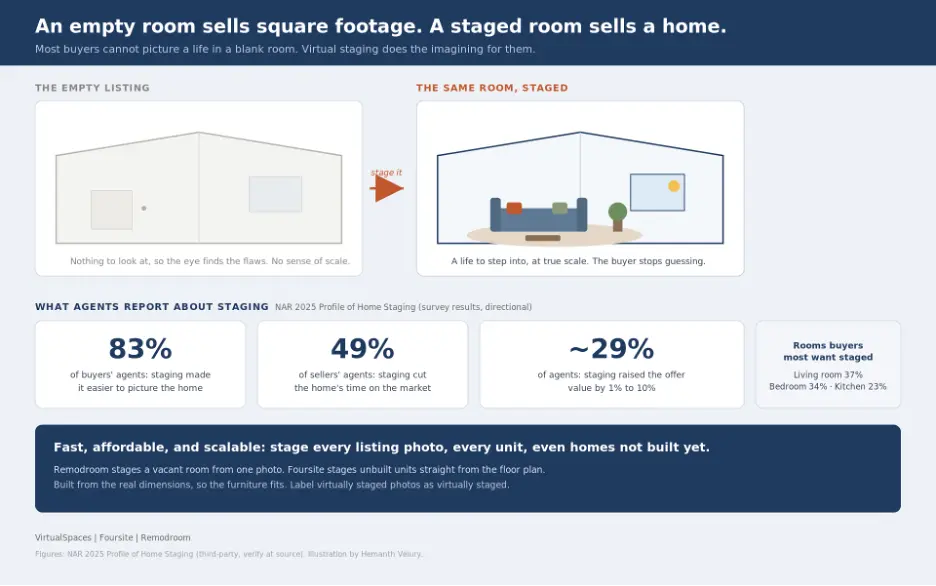
Start with what actually happens in a buyer's head. They open a listing, and the first thing they meet is a photograph. Home shopping begins online now, so those photos are the front door, the first impression, and the thing people scroll past in half a second if nothing grabs them. An empty room is a weak thumbnail. There is nothing to look at, so the eye goes straight to the flaws: the outlet on the wrong wall, the scuff by the door, the radiator nobody knows what to do with.
Then there is scale. People are terrible at judging the size of an empty room. With no furniture for reference, rooms read as smaller and stranger than they are. A buyer stands in a bare bedroom and cannot tell if their bed will fit, so they assume it will not. An empty living room with an awkward angle becomes a problem instead of a possibility, because there is no sofa in the picture showing that the angle actually works.
The industry has measured this. In the National Association of Realtors 2025 Profile of Home Staging, 83% of buyers' agents said that staging a home made it easier for a buyer to visualize the property as their future home (third-party figure, verify at the source below). Read that the other way around. When a home is not staged, most buyers struggle to picture living there, and a buyer who cannot picture living there does not make an offer. The empty room is not neutral. It is actively working against the sale.
What sitting empty actually costs
An unsold listing is not free to keep. Every extra week on the market has a price, and the prices stack.
-
Time on market. In the same NAR 2025 report, 49% of sellers' agents said staging reduced a home's time on the market (third-party figure, verify below). Days on market is not just a number. The longer a home sits, the more buyers assume something is wrong with it, and the "why is this still available" stigma becomes its own drag on offers.
-
Price. Nearly 3 in 10 agents, about 29%, reported that staging led to a 1% to 10% increase in the dollar value offered (NAR 2025, third-party figure, verify below). On a home of almost any price, a few percent is real money, and it is money left on the table by a room that showed as empty.
-
Carrying costs. While a home sits, someone is paying the mortgage, the taxes, the insurance, and the utilities on a space nobody is living in. That meter runs quietly the whole time the listing waits for a buyer who can see themselves in it.
Put simply, empty is not the cheap option. It only looks cheap because the cost shows up later, as a longer wait and a lower number.
Why staging works
Staging works because it does the buyer's imagining for them. A staged room hands over a life to step into instead of a blank space to decode. Furniture gives scale, so the room reads at its true size. A layout answers the awkward questions: yes, a bed fits here, yes, this odd corner becomes a reading nook, yes, two people can move around this kitchen. The buyer stops solving a puzzle and starts picturing a life, which is the exact moment a house becomes a home in their mind.
It matters most in the rooms people care about most. The NAR 2025 report found buyers rank the living room as the most important room to stage, at 37%, followed by the primary bedroom at 34% and the kitchen at 23% (third-party figures, verify below). Those are the rooms where a buyer decides whether they belong here, and those are exactly the rooms that fall flattest when they are empty.
Here is the picture in one place, straight from the same report.
| What agents reported (NAR 2025 Profile of Home Staging) | Figure |
| Buyers' agents: staging made it easier to visualize the home as their own | 83% |
| Sellers' agents: staging reduced the home's time on the market | 49% |
| Agents: staging raised the dollar value offered by 1% to 10% | about 29% |
| Most important room to stage, per buyers: living room / primary bedroom / kitchen | 37% / 34% / 23% |
These are survey results from real estate agents, not a promise about any single home, and they are worth reading as direction rather than a guarantee. But the direction is consistent and it points one way: the staged room helps the buyer, and the empty room does not.
The trouble with physical staging
If staging works, why is any listing still empty? Because traditional physical staging is expensive, slow, and hard to scale.
Physical staging means renting furniture, hiring people to move it in, styling the space, keeping it there for a monthly fee, and then hauling it all back out. It can run into real money for a single home, and it takes days to arrange. For a vacant house across town, or a whole building of unsold units, it becomes impractical fast. A developer cannot physically stage forty apartments to show forty buyers. And physical staging commits the room to one look, when different buyers respond to different styles.
So sellers do the math, decide staging is too expensive or too slow, and list the home empty. Then it sits, which was the expensive choice all along. The old options were a costly yes or a quiet no, and neither one was good.
What virtual staging does about it
Virtual staging changes the math completely. Instead of moving physical furniture into a room, you furnish the room in the photograph. You take the picture of the empty space and return it as a photoreal, fully furnished room, at a fraction of the cost and in a fraction of the time.
That small change fixes almost everything that made staging hard:
-
It is fast and affordable. There is no truck, no rental, no monthly fee, so staging stops being a luxury reserved for the flagship listing and becomes something you can do for every room in every home.
-
It scales. A developer can stage every unit and every floor plan variant, not just the model. Empty inventory that could never be physically staged can be shown as a place someone could live.
-
It flexes. The same empty room can be shown in more than one style, so different buyers each see a version that speaks to them. A modern scheme for one, something warmer for another, all from the same photo, all as easy as changing the AI interior decor on the room.
-
It works before a home exists. A unit still under construction cannot be photographed or physically staged at all. It can still be visualized and staged from the plans, months before framing.
This is the practical face of AI visualization, and the honest kind. It is not AI interior design inventing a fantasy. It is AI 3D visualization showing a real, accurate room as the home it could be, so the buyer does not have to guess, and the seller does not have to wait.
How it works in practice
Two tools from VirtualSpaces cover the two situations sellers face.
For a vacant home that already exists, the room just needs to be photographed and furnished. Remodroom takes a single room photo and returns a photoreal, styled version of that exact space, so an empty listing photo comes back staged, in the style you choose, ready for the listing. It is AI virtual staging on the real room, not a generic stock image dropped behind the furniture.
For homes that are not built yet, there is no room to photograph. Foursite converts 2D floor plans and blueprints into a spec-accurate 3D interior, then produces photoreal interior design renders and virtual staging from the plan itself. A developer can turn a floor plan to 3D and stage every unit in a building before a single wall is framed, which is the only way to sell off-plan inventory that a buyer cannot walk yet.
Both run on the same accurate 2D to 3D engine, so the staged room matches the real room's dimensions rather than a flattering guess. The furniture fits because the 3D visualization is built from the real numbers, not sketched over a photo. That accuracy is what separates honest staging from a misleading picture: the sofa that fits in the render is a sofa that fits in the room.
Who this helps most
The same fix lands a little differently depending on where you sit.
-
Listing agents. A staged set of photos is a stronger first impression and a better thumbnail, which is most of the battle when buyers shop online. It is a way to give every listing the polish that used to be reserved for the priciest one.
-
Sellers. Staging is no longer a big upfront bill to weigh against an uncertain payoff. The cost of a virtual stage is small enough that leaving a room empty stops being the safe, cheap choice it pretended to be.
-
Developers. This is where it scales hardest. A whole building of unsold, unbuilt units can be staged from the plans, so buyers can picture a home in inventory that does not physically exist yet. Off-plan selling stops depending on a buyer's imagination.
The honest part: label it
There is a right way to do this, and it matters. Virtually staged photos should be disclosed as virtually staged. Most listing services and agent codes of conduct require it, and buyers deserve to know that the furniture is added and that any wall color or finish shown is illustrative. Virtual staging is meant to help a buyer picture the space, not to hide a flaw or misrepresent the home. Used honestly, it does exactly what an in-person visit does: it lets a real room show its potential. Used to deceive, it burns the trust that makes the tool work at all. Show the empty photo too, label the staged one, and let the buyer see both.
The bigger picture
Step back and the pattern is bigger than one listing. Every vacant home on the market and every unbuilt unit in a development is a room asking a buyer to imagine, and most buyers cannot. That is not a small niche. It is a standing feature of how homes get sold. When staging stops being a costly, slow, physical event and becomes a fast digital layer you can apply to any listing photo or any floor plan, it stops being a special effort for the best homes and starts being the default for all of them.
An empty room shows a buyer what they are buying. A staged room shows them why they want it. The first sells square footage. The second sells a home, and the home is what people actually pay for.
Recommended for you

August 19, 2026
The End of the Model Home? 3D Changes the Math | VirtualSpaces
HHemanth Velury
CEO & Co-Founder
August 17, 2026
Designing Spaces That Actually Get Built | VirtualSpaces
HHemanth Velury
CEO & Co-Founder
August 12, 2026
Designing Homes for the Stuff People Actually Own | VirtualSpaces
HHemanth Velury
CEO & Co-Founder
August 07, 2026
Floor Plan to Bill of Materials: The 3D Model as Data | VirtualSpaces
HHemanth Velury
CEO & Co-Founder.png&w=1080&q=75)
August 05, 2026
Designing Homes for How People Actually Live | VirtualSpaces
HHemanth Velury
CEO & Co-Founder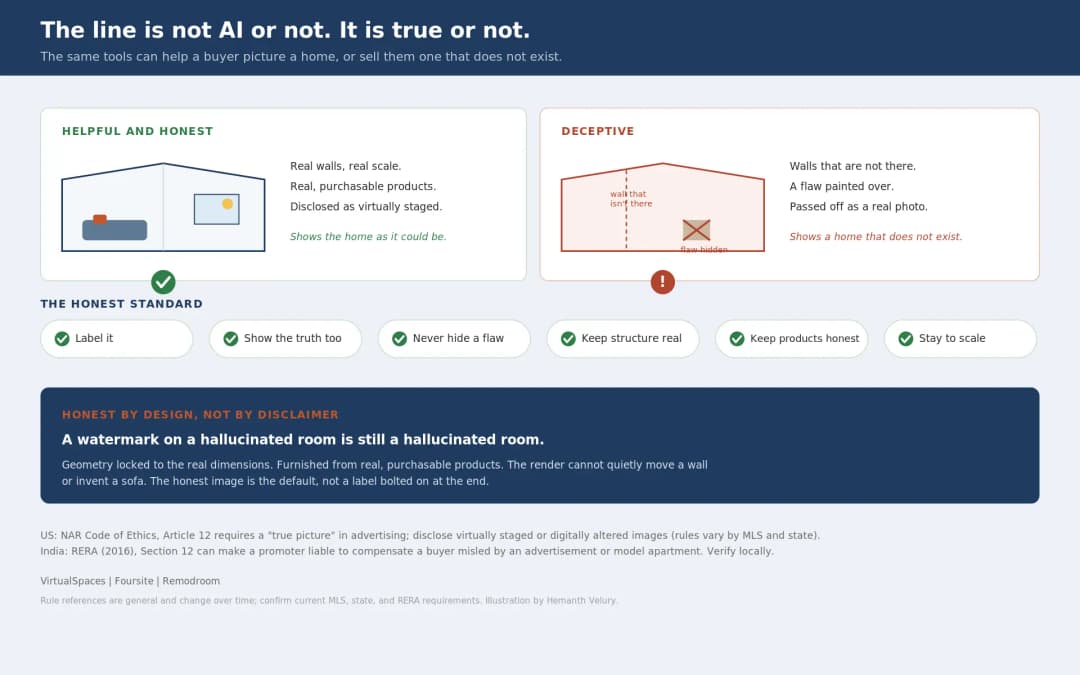
August 03, 2026
Honest by Design: Trust in AI Real Estate Imagery | VirtualSpaces
HHemanth Velury
CEO & Co-Founder
July 29, 2026
Kitchen and Bath: The Two Rooms That Decide Resale | VirtualSpaces
HHemanth Velury
CEO & Co-Founder
July 24, 2026
The Quiet Sustainability Win of Deciding in 3D | VirtualSpaces
HHemanth Velury
CEO & Co-Founder
July 22, 2026
Why Paint Swatches Lie: Test Color in 3D First | VirtualSpaces
HHemanth Velury
CEO & Co-Founder
July 20, 2026
Why Every Home Should Be Seen Before It's Built | VirtualSpaces
HHemanth Velury
CEO & Co-Founder
July 17, 2026
Why Big AI Labs Won't Build Floor Plan to 3D | VirtualSpaces
HHemanth Velury
CEO & Co-Founder
July 15, 2026
How We Solve Floor Plan to 3D, Accurately | VirtualSpaces
HHemanth Velury
CEO & Co-Founder
July 13, 2026
Designing Homes That Age With the People in Them | VirtualSpaces
HHemanth Velury
CEO & Co-Founder
July 10, 2026
Designing Spaces for How Light Actually Moves | VirtualSpaces
HHemanth Velury
CEO & Co-Founder
July 08, 2026
Designing Homes for Every Life Stage in 3D | VirtualSpaces
HHemanth Velury
CEO & Co-Founder
July 06, 2026
Build an Interior Design Portfolio Without Clients | VirtualSpaces
HHemanth Velury
CEO & Co-Founder
June 26, 2026
AI Interior Design: Full 3D Workflow in One Platform | VirtualSpaces
HHemanth Velury
CEO & Co-Founder
June 24, 2026
Scope Creep in Interior Design: How AI Visualization Fixes It | VirtualSpaces
HHemanth Velury
CEO & Co-Founder
June 22, 2026
What Buyers See on a Floor Plan: Your Biggest Sales Problem | VirtualSpaces
HHemanth Velury
CEO & Co-Founder
June 19, 2026
Small Design Studios vs Big Firms: The AI Advantage | VirtualSpaces
HHemanth Velury
CEO & Co-Founder
June 17, 2026
After the Mood Board: AI Interior Visualization | VirtualSpaces
HHemanth Velury
CEO & Co-Founder
June 15, 2026
Foursite Pro Editor: Full Floor Plan Control for Designers | VirtualSpaces
HHemanth Velury
CEO & Co-Founder
June 12, 2026
AI Interior Design: Style Any Room in Seconds with Foursite | VirtualSpaces
HHemanth Velury
CEO & Co-Founder
June 10, 2026
Foursite: Floor Plan to 3D Walkthrough in Minutes | VirtualSpaces
HHemanth Velury
CEO & Co-Founder
June 08, 2026
Win More Pitches With AI Renders Before the Meeting | VirtualSpaces
HHemanth Velury
CEO & Co-Founder
June 05, 2026
From Floor Plan to Finished Room: What AI Now Makes Possible | VirtualSpaces
HHemanth Velury
CEO & Co-Founder
June 03, 2026
The Interior Design Brief Is Broken. AI Fixes It | VirtualSpaces
HHemanth Velury
CEO & Co-Founder
June 01, 2026
Pre-Construction Home Sales: AI Interior Visualization Guide | VirtualSpaces
HHemanth Velury
CEO & Co-Founder
May 30, 2026
Interior Design Principles: Applied with AI | VirtualSpaces
HHemanth Velury
CEO & Co-Founder
May 28, 2026
Designing Spaces for People, Not Blueprints | VirtualSpaces
HHemanth Velury
CEO & Co-Founder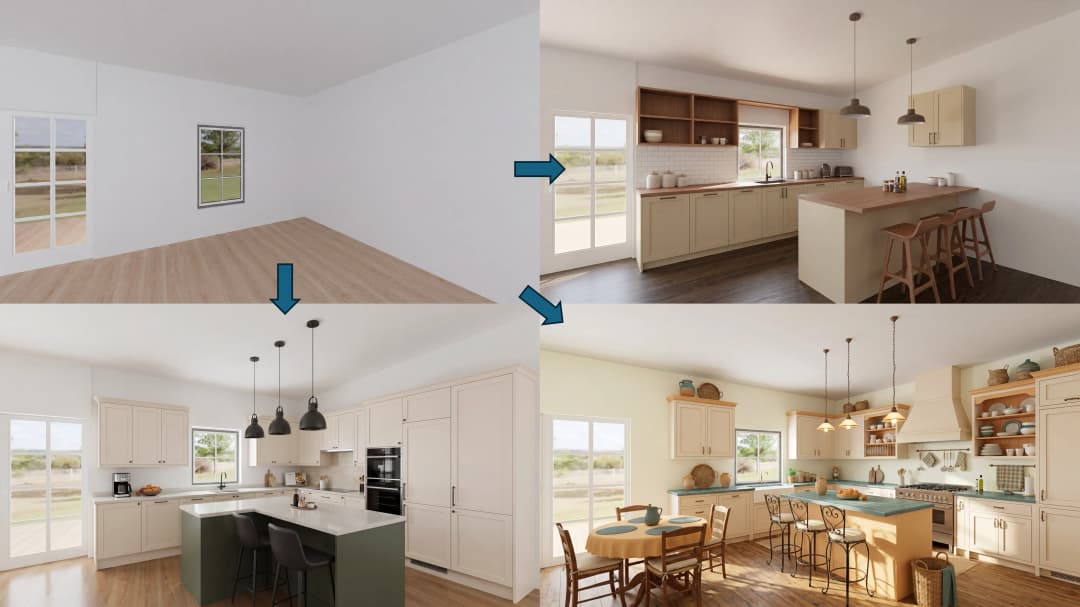
May 26, 2026
The Future of Interior Design: Closing the Visualization Gap with Foursite and Remodroom | VirtualSpaces
HHemanth Velury
CEO & Co-Founder
May 18, 2026
How AI Visualization Upgrades Property Data Platforms | VirtualSpaces
HHemanth Velury
CEO & Co-Founder
May 14, 2026
How AI-First Insurers Can Use 3D Property Data to Transform Home Claims | VirtualSpaces
HHemanth Velury
CEO & Co-FounderMay 12, 2026
Why Photoreal 3D Renders Are Replacing Mood Boards | Interior Design Client Presentations | VirtualSpaces
HHemanth Velury
CEO & Co-Founder
May 08, 2026
From 2D Floor Plans To Living Worlds: The Spec‑Accurate 3D Engine | VirtualSpaces
HHemanth Velury
CEO & Co-Founder
May 06, 2026
Why Furniture Brands Need AI 3D Visualization Now | VirtualSpaces
HHemanth Velury
CEO & Co-Founder
May 4, 2026
How Property Portals Can Turn 2D Floor Plans into 3D Design Decisions | VirtualSpaces
HHemanth Velury
CEO & Co-Founder
April 29, 2026
The Home-Fit Test: Why Square Footage Misleads | VirtualSpaces
HHemanth Velury
CEO & Co-Founder
April 27, 2026
Designing Homes That Sell: 3D Visualization ROI Data | VirtualSpaces
HHemanth Velury
CEO & Co-FounderApril 24, 2026
What's Next: Foursite & Remodroom's New AI Features | VirtualSpaces
HHemanth Velury
CEO & Co-Founder
April 22, 2026
AI in Architecture: Closing the 85% Exposure Gap | VirtualSpaces
HHemanth Velury
CEO & Co-Founder
April 20, 2026
Interior Design Pricing in 2026: From Hourly to Value-Based Fees | VirtualSpaces
HHemanth Velury
CEO & Co-FounderApril 17, 2026
How Foursite and Remodroom Help Designers Win Clients | VirtualSpaces
HHemanth Velury
CEO & Co-Founder
April 15, 2026
Designing Spaces for People: Remodroom + Foursite AI Guide | VirtualSpaces
HHemanth Velury
CEO & Co-Founder
April 13, 2026
Designing for the Way People Actually Live: How AI 3D Is Finally Closing the Gap Between Floor Plan and Reality
HHemanth Velury
CEO & Co-Founder
April 11, 2026
Design in Real Time: AI Renders in Your First Client Meeting
HHemanth Velury
CEO & Co-Founder
April 06, 2026
Why Real Estate Photography Is No Longer Enough: The Shift to Spatial-First Listings
HHemanth Velury
CEO & Co-Founder
April 03, 2026
Property Management's Hidden Weapon: AI 3D Floor Plans That Cut Vacancy Time and Raise Tenant Quality
HHemanth Velury
CEO & Co-Founder
April 01, 2026
Off-Plan and Oversubscribed: How AI 3D Visualization Is Transforming Real Estate Pre-Sales
HHemanth Velury
CEO & Co-Founder
March 30, 2026
Why Foursite Beats Generic AI Tools for Interior Design 3D Visualization
HHemanth Velury
CEO & Co-Founder
March 27, 2026
7 Tenets of Interior Design: How AI Accelerates Harmony in Residential Spaces
HHemanth Velury
CEO & Co-Founder
March 25, 2026
What Is the 3-5-7 Rule in Interior Design? Foursite's AI Guide for Residential Spaces
HHemanth Velury
CEO & Co-Founder
March 23, 2026
What Is the 70/30 Rule in Interior Design? Foursite's AI Guide for Residential Spaces
HHemanth Velury
CEO & Co-Founder
March 20, 2026
How AI 3D Visualization Is Rewriting Residential Interior Design Workflows
HHemanth Velury
CEO & Co-Founder
March 18, 2026
Beyond Marketing: How 3D Floorplans Transform FM, Retrofit Planning & ESG Operations
HHemanth Velury
CEO & Co-Founder
March 16, 2026
Why AI Companies Use Token Payments (And Why VirtualSpaces Is Returning To Fiat)
HHemanth Velury
CEO & Co-Founder
March 13, 2026
Floorplan‑Native Digital Twins: Beyond BIM for Consumer‑Ready Real Estate Experiences
HHemanth Velury
CEO & Co-Founder
March 11, 2026
The Foursite Platform Thesis: Why Floor Plans, Not Photos, Are the Next Property Software Primitive
HHemanth Velury
CEO & Co-Founder
March 09, 2026
Design Systems for Space: Building Reusable 3D Component Libraries on Top of AI Floorplan‑to‑3D Engines
HHemanth Velury
CEO & Co-Founder
March 06, 2026
How to Standardize Design Quality Across Global Projects Using AI Floorplan-to-3D Tools
HHemanth Velury
CEO & Co-Founder
March 04, 2026
From CAD-First to AI-First: Reskilling Your Team for AI-Native Design Workflows
HHemanth Velury
CEO & Co-Founder
March 02, 2026
Algorithmic Ergonomics Meets Photorealistic 3D: Designing Human-Centered Smart Homes with Foursite in 2026
HHemanth Velury
CEO & Co-Founder
February 27, 2026
The Ethics of AI in Interior Design: Ownership, Originality, and Client Transparency
HHemanth Velury
CEO & Co-Founder
February 25, 2026
Designing with Empathy: Using AI 3D Visualization to Improve Client Communication and Emotional Clarity
HHemanth Velury
CEO & Co-Founder
February 23, 2026
From Tool to Infrastructure: AI Floorplan-to-3D and the Next Wave of PropTech
HHemanth Velury
CEO & Co-Founder
February 20, 2026
AI Interior Design for Holiday Homes: Turn Spare Flats into High-Demand Short-Stay Rentals with 3D Visuals
HHemanth Velury
CEO & Co-Founder
February 18, 2026
The Pre‑Purchase Power Play: How Savvy Home Buyers Use 3D Floor Plan Visualization to Negotiate Better Deals
HHemanth Velury
CEO & Co-FounderFebruary 16, 2026
AI Interior Design for Non‑Designers: How Homeowners Can Brief Like Pros
HHemanth Velury
CEO & Co-Founder
February 13, 2026
Scaling a Design Business Without Hiring a 3D Team: An Owner's Guide
HHemanth Velury
CEO & Co-Founder
February 11, 2026
From Bland to Bold: How to Rescue Builder-Grade Interiors on Any Budget
HHemanth Velury
CEO & Co-Founder
February 6, 2026
The Psychology of Space: How Room Dimensions Influence Interior Design Decisions
HHemanth Velury
CEO & Co-Founder
February 4, 2026
The Future of Interior Design Visualization: How AI Technology is Transforming 2D Concepts Into 3D Reality
HHemanth Velury
CEO & Co-Founder
February 2, 2026
AI Interior Décor: How Artificial Intelligence Generates Design Options from Your Floor Plan
HHemanth Velury
CEO & Co-Founder
January 30, 2026
Photoreal vs. Reality: What Clients Actually Expect from Interior Design Visualization
HHemanth Velury
CEO & Co-Founder
January 28, 2026
The Design Approval Conversation That Changes Everything: Communication Strategy When Using Photorealistic Visualization
HHemanth Velury
CEO & Co-Founder
January 25, 2026
Interior Design as Experience Design: How 3D Visualization Changes Your Professional Identity
HHemanth Velury
CEO & Co-Founder
January 23, 2026
The Professional Gap: How 3D Visualization Changes Interior Design Client Perception
HHemanth Velury
CEO & Co-Founder
January 21, 2026
Why Clients Fire Designers (And How 3D Visualization Could Have Saved the Project)
HHemanth Velury
CEO & Co-Founder
January 16, 2026
Blueprint to Vision: Why Seeing Is Believing in Interior Design
HHemanth Velury
CEO & Co-Founder
January 14, 2026
The Speed of Responsiveness: How AI Visualization Tools Make You Look Like You Care More
HHemanth Velury
CEO & Co-Founder
January 12, 2026
Why Interior Designers and Architects Can't Compete Without AI 3D Visualization Tools
HHemanth Velury
CEO & Co-Founder
January 07, 2026
From "Saved" to "Sold": How Homeowners Are Planning Renovations with AI
HHemanth Velury
CEO & Co-Founder
January 05, 2026
The Interior Designer's Secret Weapon: Speed as Premium Positioning
HHemanth Velury
CEO & Co-Founder
December 31, 2025
Gratitude, Growth & Game-Changing Innovation: VirtualSpaces' 2025 Journey & What's Coming in 2026
HHemanth Velury
CEO & Co-Founder
December 29, 2025
Why Interior Designers Are Switching to AI Floor Plan-to-3D Tools in 2026
HHemanth Velury
CEO & Co-Founder
December 26, 2025
AI Virtual Staging for Real Estate Agents: Sell More Homes Faster with Foursite
HHemanth Velury
CEO & Co-Founder
December 24, 2025
Why Architects Are Switching to AI 2D-to-3D: The SketchUp Alternative
HHemanth Velury
CEO & Co-Founder
December 22, 2025
Cut 3 Weeks from Real Estate Sales Cycle: The ROI of AI 2D to 3D Visualization
HHemanth Velury
CEO & Co-Founder
December 19, 2025
2D Floor Plans Are Dying: Why 3D Visualization & AI Virtual Staging Are the Future
HHemanth Velury
CEO & Co-Founder
December 17, 2025
Virtual Staging vs Physical Staging: How AI Saves Money Per Property
HHemanth Velury
CEO & Co-Founder
December 15, 2025
AI Floor Plan to Image: Revolutionizing Real Estate Marketing for Agents
HHemanth Velury
CEO & Co-Founder
December 12, 2025
Color of the Year 2026: Cloud Dancer | VirtualSpaces AI Interior Design Guide
HHemanth Velury
CEO & Co-Founder
December 10, 2025
AI Floor Plan to 3D: The New Standard for Interior Design Workflows
HHemanth Velury
CEO & Co-Founder
December 08, 2025
How Interior Design Studios Can Operationalize AI 2D-to-3D Workflows (Without Breaking Their Process)
HHemanth Velury
CEO & Co-Founder
December 06, 2025
How to Implement AI Interior Design Workflows in Your Studio
HHemanth Velury
CEO & Co-Founder
December 4, 2025
How Homeowners Can Use AI Interior Design Tools to Plan Renovations with Confidence
HHemanth Velury
CEO & Co-Founder
November 28, 2025
Interior Designers in the Age of AI: From Threat Narrative to Superpower
HHemanth Velury
CEO & Co-Founder
November 21, 2025
Foursite Launch: Embracing 'Release Early, Release Often'
HHemanth Velury
CEO & Co-Founder
November 13, 2025
Foursite by VirtSpaces: Empowering Interior Designers, Architects, and Homeowners
HHemanth Velury
CEO & Co-Founder
November 7, 2025
Reimagining Architectural Education: How AI Floorplan-to-3D Technology Can Transform Design Learning
VVirtualSpaces Research Labs
AI Research Initiative
October 27, 2025
Archisculpt AI: Turning Architectural Drawings into Photorealistic 3D Spaces
AAbhijeet Naik
Co-Founder & CTO
October 13, 2025
Home Makeover: From Floor Plan to Dream Space with AI
HHemanth Velury
CEO & Co-Founder
October 6, 2025
Real-Time Rendering & AI: Revolutionizing Interactive Property Walkthroughs with VirtSpaces
HHemanth Velury
CEO & Co-Founder
September 26, 2025
Foursite - A True AI-Native Experience in Design Visualization
AAbhijeet Naik
CTO & Co-Founder
September 18, 2025
Why PropTech Startups Are Betting on AI Interior Design
HHemanth Velury
CEO & Co-Founder
September 11, 2025
How AI Differs from Traditional 3D Rendering Software
HHemanth Velury
CEO & Co-Founder
September 2, 2025
From Client to Investor: How Nila Spaces and VirtSpaces Are Redefining Proptech with AI
HHemanth Velury
CEO & Co-Founder
August 25, 2025
VirtSpaces From Virtual Reality to AI – Transforming Real Estate Visualization.
HHemanth Velury
CEO & Co-Founder


We help teams collaborate seamlessly and reduce costs. Virtual Spaces offers cutting-edge technology with flexible plans designed to fit modern teams.
Copyright © VirtSpaces Pvt. Ltd. 2025 All Rights Reserved.
CIN: U74999KA2016PTC094921