August 03, 2026
- AI Technology
- Real Estate
Honest by Design: Trust in AI Real Estate Imagery | VirtualSpaces
Hemanth Velury
CEO & Co-FounderHonest by Design: Trust and Disclosure in AI Real Estate Imagery
An AI tool can now produce a beautiful photograph of a home in seconds. It can furnish an empty room, repaint the walls, swap the flooring, and light the whole thing like a magazine cover, all from a single picture. That is a real gift to an industry that runs on images. It is also a loaded one, because the same tools that help a buyer picture a space can just as easily show them a space that is not real.
Real estate runs on trust. A buyer looks at a photo and makes decisions, sometimes an offer, on the belief that the picture is telling the truth. AI imagery is now testing that trust at scale. This post is about the line between helpful and deceptive, the rules that already govern it, and why building honesty into the image from the start is not just the ethical choice, but the winning one.
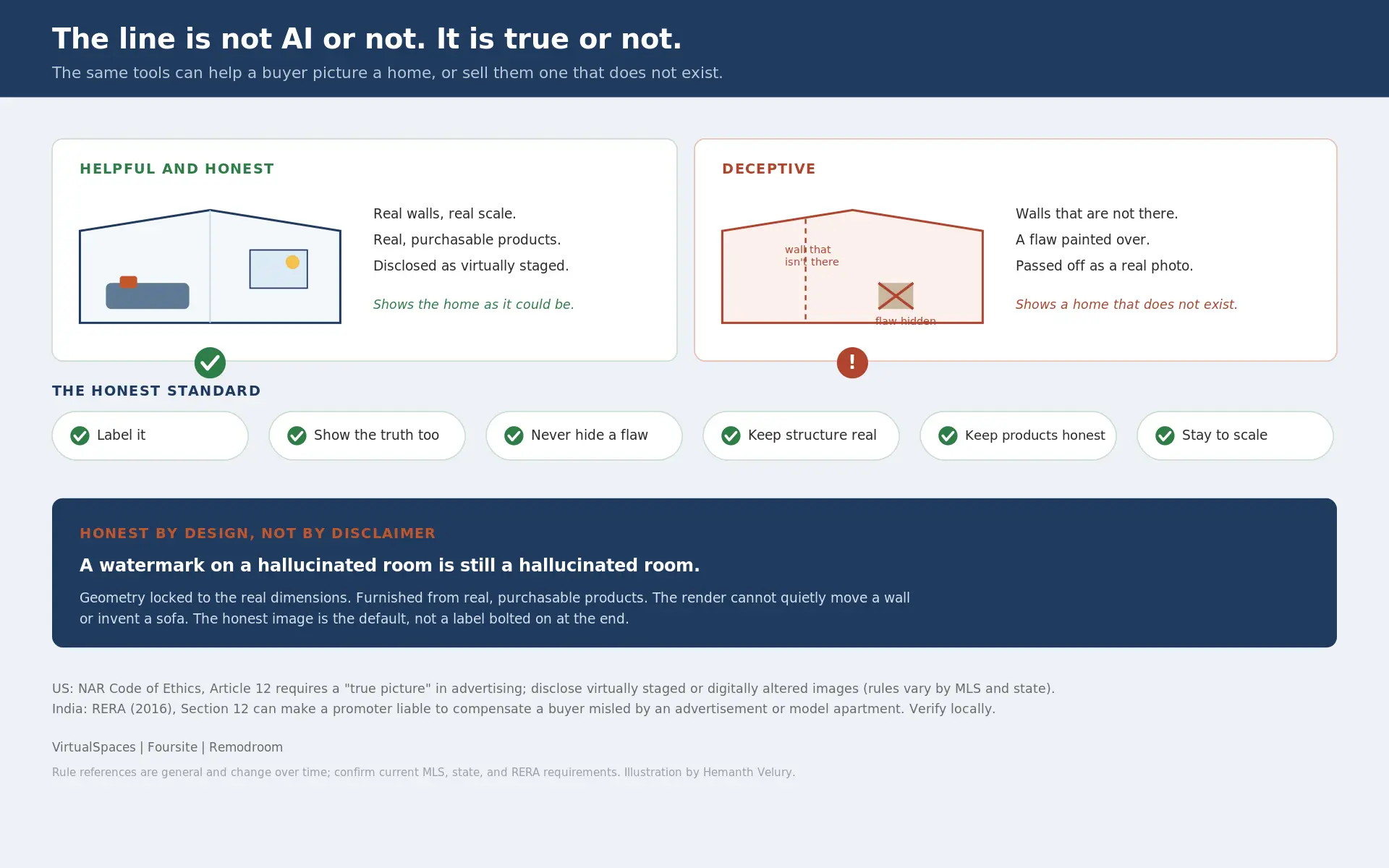
The line is not AI or not. It is true or not.
It helps to be clear about what actually matters here. The problem is not that an image was made with AI. Photographers have retouched, wide-angled, and flatteringly lit listings for as long as there have been listings. The real question is whether the image tells the truth about the property.
There are two very different things an AI image can do. It can show a real space as it could be: an empty room furnished so a buyer can read its scale, a dated kitchen previewed in a fresh finish, an unbuilt unit visualized from its floor plan. That is helpful. It closes the gap between what a buyer can see and what they can imagine, which is the entire reason visualization exists. Or it can show something false: a room with a wall that is not there, a photo that hides water damage, a layout that has been quietly enlarged, furniture that a buyer assumes conveys but does not. That is deceptive. The technology is identical. The honesty is not.
That is the whole distinction, and it is worth holding onto, because the loudest debates about AI imagery treat "AI" as the issue. It is not. A hand-retouched photo that hides a crack is dishonest. An AI render that faithfully shows an empty room furnished is not. Judge the image by what it claims about the home, not by the tool that made it.
Where AI imagery goes wrong
It is worth naming the specific ways an image crosses the line, because most of them are avoidable and a few are easy to do by accident.
-
Hallucinated structure. Generative tools that treat a photo or a plan as a loose suggestion can invent walls, windows, and dimensions that do not exist. The room looks great and is not the room.
-
Concealment. Staging or retouching used to hide a stain, a crack, a dated fixture, or a real defect. Adding a sofa is fine. Painting over the water damage behind it is not.
-
Misrepresented scale and layout. A render that makes rooms bigger, straightens an awkward angle, or reshuffles the plan sells a home the buyer will never actually receive.
-
Invented or implied products. Furniture and finishes shown so convincingly that a buyer assumes they convey, or that do not exist to buy at all.
-
No disclosure. A staged or heavily enhanced image presented as a literal photograph, with nothing telling the buyer it was altered.
Each of these erodes trust, and several can cross into deceptive advertising, which is not just a bad look. It is a rules problem, and the rules are clearer than most people assume.
The rules already exist, and they are tightening
Agents sometimes treat AI imagery as a legal gray area. It is less gray than it feels. The National Association of Realtors' Code of Ethics already requires members to present a "true picture" in their advertising and marketing, under Article 12. Virtual staging itself is permitted across the major U.S. multiple listing services, but on one firm condition: you disclose that the image has been digitally altered. Many boards go further and require a visible "Virtually Staged" watermark on the image itself, along with a note in the listing description.
The direction of travel is clear and it points one way: disclose, and do not deceive. Non-disclosure can carry real consequences, from MLS penalties to licensing trouble, and some states are moving to require disclosure directly in law. Beyond real estate rules, general advertising law prohibits misleading claims, and regulators have started paying closer attention to AI-generated content specifically.
This is not only a U.S. concern, and in India it is written more bluntly still. The Real Estate (Regulation and Development) Act, 2016, better known as RERA, addresses exactly this in Section 12. A promoter is made liable to compensate any buyer who makes a payment relying on an incorrect or false statement in an advertisement or prospectus, or on the basis of a model apartment, and that buyer may withdraw from the project and reclaim their entire investment with interest, plus compensation. RERA defines advertising broadly, so a marketing image that solicits a sale sits squarely within its reach, and a model apartment is treated as a representation the buyer is entitled to rely on. Under RERA, a flattering render that misleads a buyer is not a gray area. It is a compensable one.
The reassuring part is that none of this threatens honest visualization. Nobody is coming for the furnished render that helps a buyer picture an empty room, or the AI virtual staging that shows a bare unit as a place someone could live. They are coming for the image that lies. For anyone doing this in good faith, the safe path and the honest path turn out to be the same path.
What honest AI imagery looks like
Doing this right is not complicated. It is mostly discipline. Here is a short, usable standard that keeps AI imagery on the right side of the line.
-
Label it. Mark virtually staged or AI-enhanced images clearly, both on the image and in the listing text, in line with your MLS rules.
-
Show the truth too. Include the empty or original photo alongside the staged one, so a buyer can see both versions of the same room.
-
Never hide a flaw. Staging may add a possibility. It must never conceal a condition. If something is wrong with the room, it stays in the picture.
-
Keep the structure real. Walls, windows, dimensions, and layout must match the actual space. The image should describe the property, not redesign it.
-
Keep products honest. Do not imply that furniture or decor conveys and note that finishes and colors shown are illustrative.
-
Stay to scale. The room in the image should be the room's real size. If it looks bigger on screen than in person, you have a problem, not a photo.
Follow that and AI imagery does exactly what an honest in-person showing does. It lets a real space put its best foot forward without pretending to be something it is not. The buyer comes away understanding the home better, not misled about it, and that is the only version of visualization that survives the walk-through.
Honest by design, not by disclaimer
Here is where the how matters as much as the what. Most of the failures above are not malice. They are what happens when a tool is free to invent, and a disclaimer gets bolted on at the end to cover it. A watermark on a hallucinated room is still a hallucinated room.
The better approach is to make honesty a property of the system itself, not a label you add afterward. That is the principle behind how we build at VirtualSpaces. Because our 3D interiors are built from the drawing's real dimensions rather than guessed from pixels, the render cannot quietly move a wall or stretch a room to flatter the shot; the geometry is locked to the actual space. Because furnishing draws from a library of real, purchasable products, the image does not conjure a sofa that does not exist. The output is constrained, on purpose, to stay true to the real room and the real product. Brand-safe imagery is not a filter applied at the end. It is built into how the image is made, which is also the kind of thing worth protecting, and we have.
The point is not that AI cannot lie. It is that a system can be designed so the honest image is the easy default and the deceptive one is hard to produce by accident. That is a very different starting point from a general image generator that will cheerfully invent whatever looks best, and it is the difference between a tool that helps an agent stay compliant and one that quietly puts their license at risk.
One honest caveat belongs here, because it matters more than any sales point. No AI tool is free of hallucination. Not the general image generators, and not ours. Every model, given enough inputs, will occasionally produce something that is not quite right: a texture that is off, an object placed oddly, a small detail that does not match the real room. Anyone who tells you their AI is 100% accurate is selling you the exact overconfidence this whole post warns against. The goal was never a tool that never errs, because that tool does not exist. The goal is a system designed to make errors rare and contained rather than routine and invisible, plus a workflow that keeps a human in the loop to catch what slips through. Constraint reduces hallucination. It does not abolish it. That is precisely why disclosure and a careful human eye stay non-negotiable, no matter which tool made the image.
Why honesty is also the winning strategy
It would be easy to read all of this as compliance, a box to check. It is much more than that. In a market where AI images are about to be everywhere, trust becomes the scarce thing, and the credible player wins.
Think about it from the buyer's side. A buyer who feels tricked by a listing does not just walk away from that home. They start distrusting every image they see, from that agent, and often from the whole channel. Trust, once spent, is expensive to rebuild. The opposite is also true. An agent or developer known for imagery that matches reality earns the benefit of the doubt, and in a business built on repeat relationships and referrals, that reputation compounds quietly in the background of every deal.
For developers selling off-plan, this matters more still, because the entire sale happens before the buyer can walk the unit. If the render is accurate, the finished home matches the promise and the buyer is delighted at handover. If the render flattered, the handover becomes an argument, deposits get contested, and the reputation of the whole development takes the hit on the exact units still unsold. Honest visualization is not the cautious choice there. It is the only one that survives contact with the finished building.
There is a reputational asymmetry worth sitting with. A single exposed, deceptive image can undo a hundred honest ones, because distrust generalizes and delight does not. That math strongly favors the boring, honest render over the spectacular, misleading one, every time.
Who this is for
The honest standard lands a little differently depending on where you sit, but it protects everyone.
-
Agents keep their license and their reputation and avoid the disclosure violations that quietly pile up across a busy listing pipeline.
-
Developers protect the trust that off-plan selling completely depends on, and hand over homes that match what they sold.
-
Designers present work that a client can believe, which makes approvals faster rather than slower.
-
Buyers get what every one of them deserves and few can verify on their own: an image that tells the truth about where they might spend the next decade of their life.
How it shows up
Foursite converts a floor plan to 3D, turning 2D floor plans and blueprints into spec-accurate, dimensionally locked interiors, then produces photoreal interior design renders and virtual staging that match the real unit, which is exactly what off-plan buyers and their trust depend on. Remodroom restyles a real room from a single photo, so the space is shown as it could be while staying recognizably the space it is; it is AI interior decor that describes a home rather than reinventing it. Both run on the same accurate 2D to 3D engine that sits under our AI interior design work, so what a buyer sees on the screen is what they find at the door.
The bigger picture
As AI 3D visualization becomes the default layer on every listing and every plan, the question quietly changes. For a few years the race was about whether we could make an image look real. That race is basically over; the images look real now. The next race, the one that decides who gets trusted, is about whether the image is true. The tools that win will be the ones that make honesty the path of least resistance, so that showing a home accurately is simply easier than faking it.
The truest picture, not the prettiest
The goal was never the prettiest picture. It was the truest one. In real estate, an image people can trust is worth more than an image that merely impresses, because the trustworthy image sells the actual home, while the impressive lie sells a home that does not exist and, eventually, a dispute that does.
Disclose what you altered. Never hide what is real. And where you can, build the honesty in from the start, so the picture does the one job it was always meant to do: tell the buyer the truth about the place they are thinking of calling home.
Recommended for you

August 19, 2026
The End of the Model Home? 3D Changes the Math | VirtualSpaces
HHemanth Velury
CEO & Co-Founder
August 17, 2026
Designing Spaces That Actually Get Built | VirtualSpaces
HHemanth Velury
CEO & Co-Founder
August 12, 2026
Designing Homes for the Stuff People Actually Own | VirtualSpaces
HHemanth Velury
CEO & Co-Founder
August 07, 2026
Floor Plan to Bill of Materials: The 3D Model as Data | VirtualSpaces
HHemanth Velury
CEO & Co-Founder.png&w=1080&q=75)
August 05, 2026
Designing Homes for How People Actually Live | VirtualSpaces
HHemanth Velury
CEO & Co-Founder
July 29, 2026
Kitchen and Bath: The Two Rooms That Decide Resale | VirtualSpaces
HHemanth Velury
CEO & Co-Founder
July 27, 2026
Why Empty Rooms Don't Sell: Virtual Staging | VirtualSpaces
HHemanth Velury
CEO & Co-Founder
July 24, 2026
The Quiet Sustainability Win of Deciding in 3D | VirtualSpaces
HHemanth Velury
CEO & Co-Founder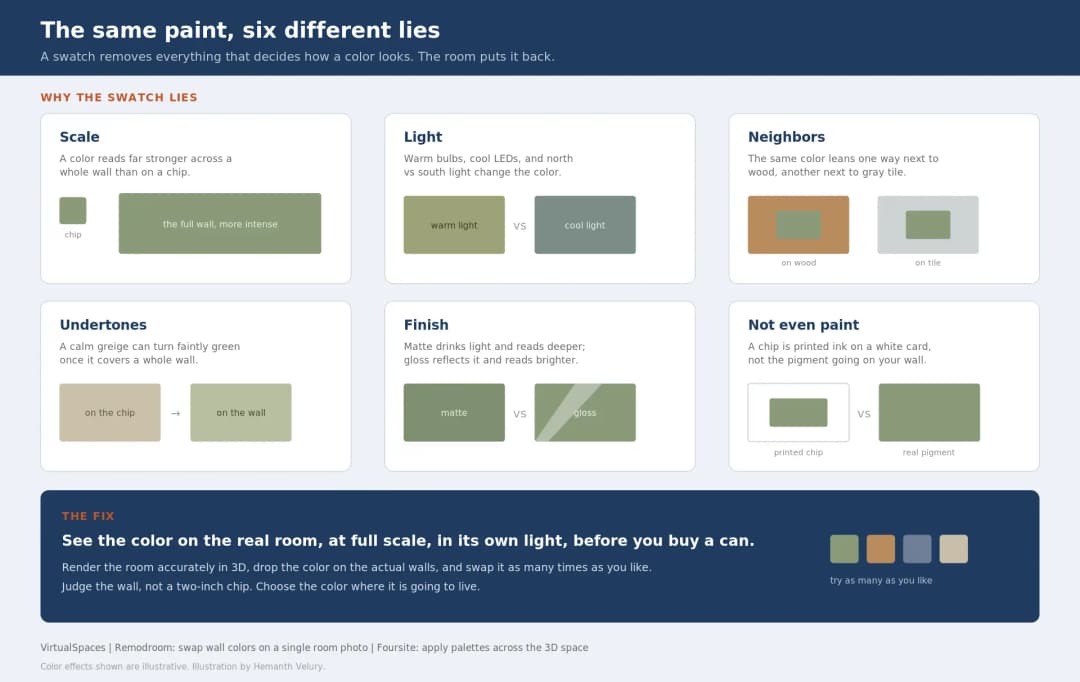
July 22, 2026
Why Paint Swatches Lie: Test Color in 3D First | VirtualSpaces
HHemanth Velury
CEO & Co-Founder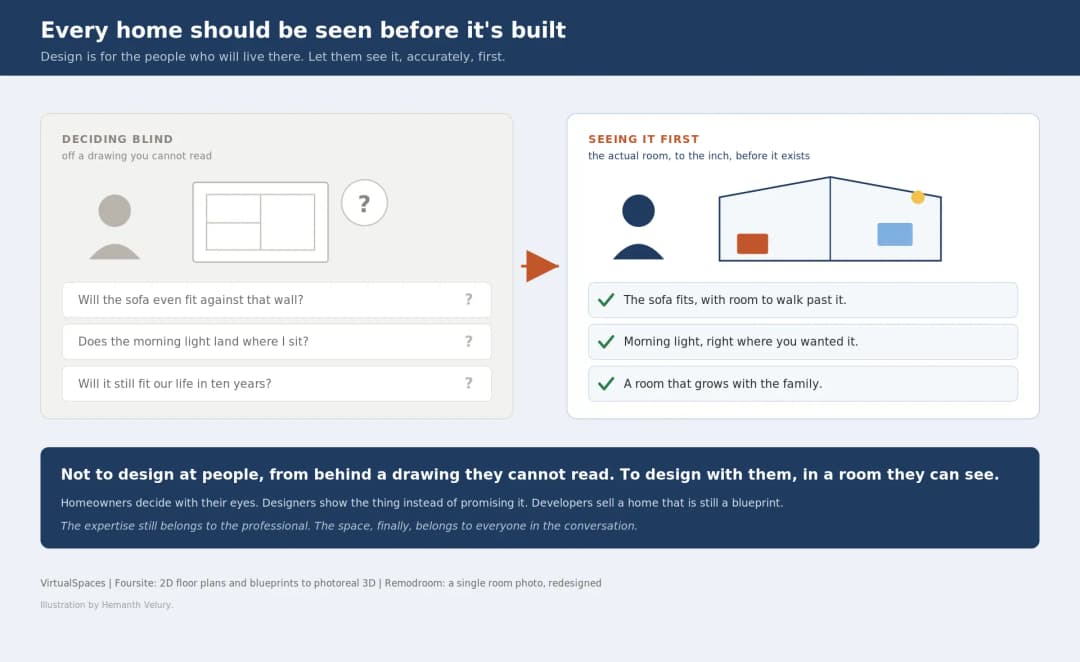
July 20, 2026
Why Every Home Should Be Seen Before It's Built | VirtualSpaces
HHemanth Velury
CEO & Co-Founder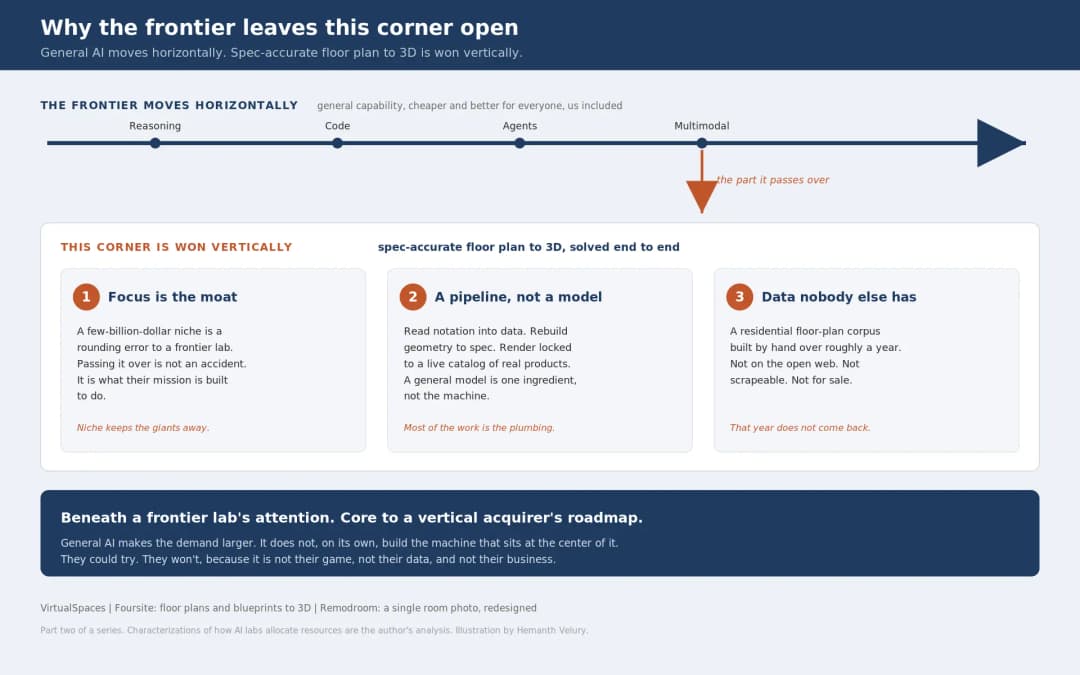
July 17, 2026
Why Big AI Labs Won't Build Floor Plan to 3D | VirtualSpaces
HHemanth Velury
CEO & Co-Founder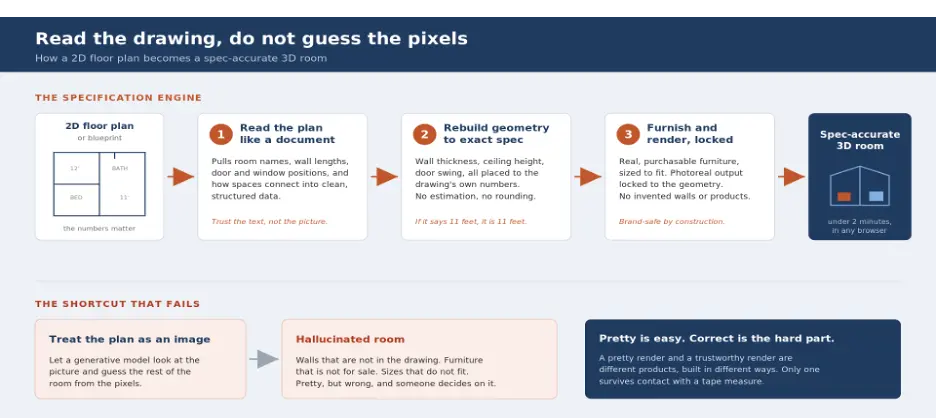
July 15, 2026
How We Solve Floor Plan to 3D, Accurately | VirtualSpaces
HHemanth Velury
CEO & Co-Founder
July 13, 2026
Designing Homes That Age With the People in Them | VirtualSpaces
HHemanth Velury
CEO & Co-Founder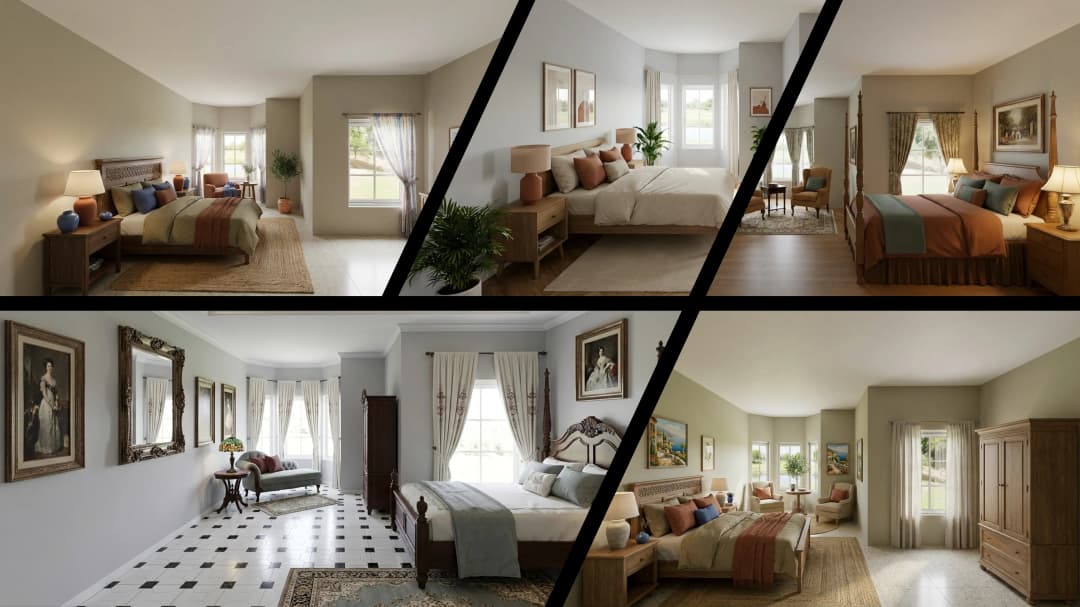
July 10, 2026
Designing Spaces for How Light Actually Moves | VirtualSpaces
HHemanth Velury
CEO & Co-Founder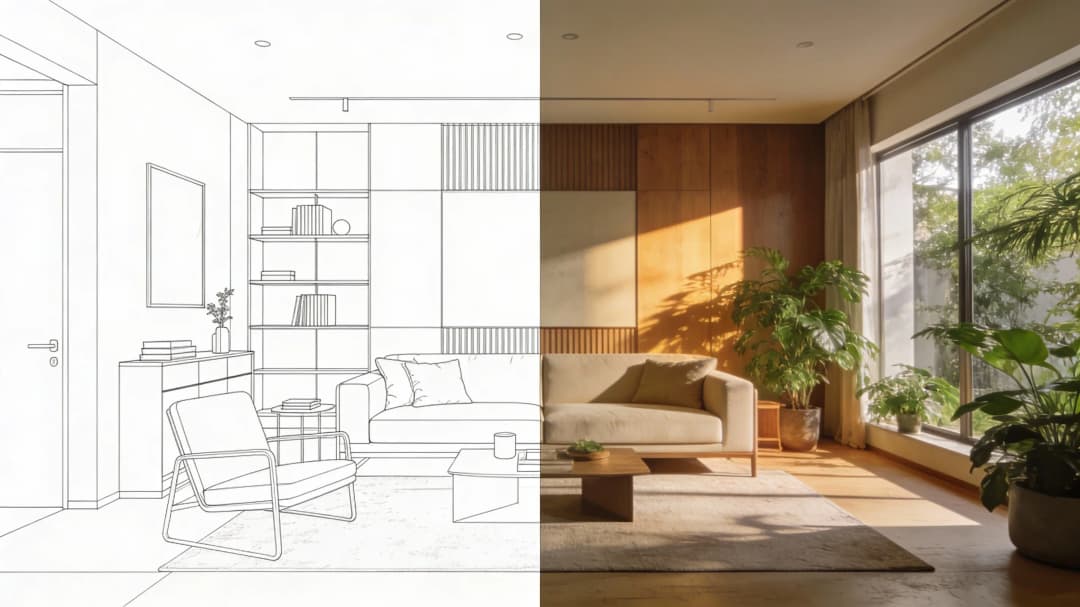
July 08, 2026
Designing Homes for Every Life Stage in 3D | VirtualSpaces
HHemanth Velury
CEO & Co-Founder
July 06, 2026
Build an Interior Design Portfolio Without Clients | VirtualSpaces
HHemanth Velury
CEO & Co-Founder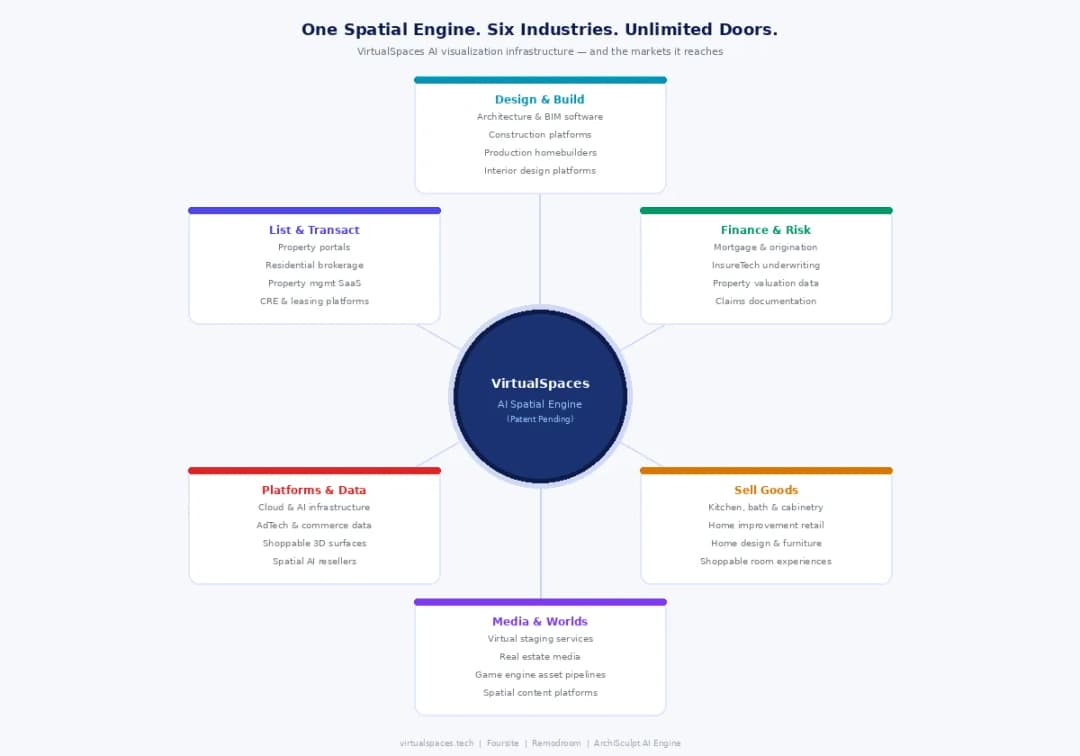
June 26, 2026
AI Interior Design: Full 3D Workflow in One Platform | VirtualSpaces
HHemanth Velury
CEO & Co-Founder
June 24, 2026
Scope Creep in Interior Design: How AI Visualization Fixes It | VirtualSpaces
HHemanth Velury
CEO & Co-Founder
June 22, 2026
What Buyers See on a Floor Plan: Your Biggest Sales Problem | VirtualSpaces
HHemanth Velury
CEO & Co-Founder
June 19, 2026
Small Design Studios vs Big Firms: The AI Advantage | VirtualSpaces
HHemanth Velury
CEO & Co-Founder
June 17, 2026
After the Mood Board: AI Interior Visualization | VirtualSpaces
HHemanth Velury
CEO & Co-Founder
June 15, 2026
Foursite Pro Editor: Full Floor Plan Control for Designers | VirtualSpaces
HHemanth Velury
CEO & Co-Founder
June 12, 2026
AI Interior Design: Style Any Room in Seconds with Foursite | VirtualSpaces
HHemanth Velury
CEO & Co-Founder
June 10, 2026
Foursite: Floor Plan to 3D Walkthrough in Minutes | VirtualSpaces
HHemanth Velury
CEO & Co-Founder
June 08, 2026
Win More Pitches With AI Renders Before the Meeting | VirtualSpaces
HHemanth Velury
CEO & Co-Founder
June 05, 2026
From Floor Plan to Finished Room: What AI Now Makes Possible | VirtualSpaces
HHemanth Velury
CEO & Co-Founder
June 03, 2026
The Interior Design Brief Is Broken. AI Fixes It | VirtualSpaces
HHemanth Velury
CEO & Co-Founder
June 01, 2026
Pre-Construction Home Sales: AI Interior Visualization Guide | VirtualSpaces
HHemanth Velury
CEO & Co-Founder
May 30, 2026
Interior Design Principles: Applied with AI | VirtualSpaces
HHemanth Velury
CEO & Co-Founder
May 28, 2026
Designing Spaces for People, Not Blueprints | VirtualSpaces
HHemanth Velury
CEO & Co-Founder
May 26, 2026
The Future of Interior Design: Closing the Visualization Gap with Foursite and Remodroom | VirtualSpaces
HHemanth Velury
CEO & Co-Founder
May 18, 2026
How AI Visualization Upgrades Property Data Platforms | VirtualSpaces
HHemanth Velury
CEO & Co-Founder
May 14, 2026
How AI-First Insurers Can Use 3D Property Data to Transform Home Claims | VirtualSpaces
HHemanth Velury
CEO & Co-FounderMay 12, 2026
Why Photoreal 3D Renders Are Replacing Mood Boards | Interior Design Client Presentations | VirtualSpaces
HHemanth Velury
CEO & Co-Founder
May 08, 2026
From 2D Floor Plans To Living Worlds: The Spec‑Accurate 3D Engine | VirtualSpaces
HHemanth Velury
CEO & Co-Founder
May 06, 2026
Why Furniture Brands Need AI 3D Visualization Now | VirtualSpaces
HHemanth Velury
CEO & Co-Founder
May 4, 2026
How Property Portals Can Turn 2D Floor Plans into 3D Design Decisions | VirtualSpaces
HHemanth Velury
CEO & Co-Founder
April 29, 2026
The Home-Fit Test: Why Square Footage Misleads | VirtualSpaces
HHemanth Velury
CEO & Co-Founder
April 27, 2026
Designing Homes That Sell: 3D Visualization ROI Data | VirtualSpaces
HHemanth Velury
CEO & Co-FounderApril 24, 2026
What's Next: Foursite & Remodroom's New AI Features | VirtualSpaces
HHemanth Velury
CEO & Co-Founder
April 22, 2026
AI in Architecture: Closing the 85% Exposure Gap | VirtualSpaces
HHemanth Velury
CEO & Co-Founder
April 20, 2026
Interior Design Pricing in 2026: From Hourly to Value-Based Fees | VirtualSpaces
HHemanth Velury
CEO & Co-FounderApril 17, 2026
How Foursite and Remodroom Help Designers Win Clients | VirtualSpaces
HHemanth Velury
CEO & Co-Founder
April 15, 2026
Designing Spaces for People: Remodroom + Foursite AI Guide | VirtualSpaces
HHemanth Velury
CEO & Co-Founder
April 13, 2026
Designing for the Way People Actually Live: How AI 3D Is Finally Closing the Gap Between Floor Plan and Reality
HHemanth Velury
CEO & Co-Founder
April 11, 2026
Design in Real Time: AI Renders in Your First Client Meeting
HHemanth Velury
CEO & Co-Founder
April 06, 2026
Why Real Estate Photography Is No Longer Enough: The Shift to Spatial-First Listings
HHemanth Velury
CEO & Co-Founder
April 03, 2026
Property Management's Hidden Weapon: AI 3D Floor Plans That Cut Vacancy Time and Raise Tenant Quality
HHemanth Velury
CEO & Co-Founder
April 01, 2026
Off-Plan and Oversubscribed: How AI 3D Visualization Is Transforming Real Estate Pre-Sales
HHemanth Velury
CEO & Co-Founder
March 30, 2026
Why Foursite Beats Generic AI Tools for Interior Design 3D Visualization
HHemanth Velury
CEO & Co-Founder
March 27, 2026
7 Tenets of Interior Design: How AI Accelerates Harmony in Residential Spaces
HHemanth Velury
CEO & Co-Founder
March 25, 2026
What Is the 3-5-7 Rule in Interior Design? Foursite's AI Guide for Residential Spaces
HHemanth Velury
CEO & Co-Founder
March 23, 2026
What Is the 70/30 Rule in Interior Design? Foursite's AI Guide for Residential Spaces
HHemanth Velury
CEO & Co-Founder
March 20, 2026
How AI 3D Visualization Is Rewriting Residential Interior Design Workflows
HHemanth Velury
CEO & Co-Founder
March 18, 2026
Beyond Marketing: How 3D Floorplans Transform FM, Retrofit Planning & ESG Operations
HHemanth Velury
CEO & Co-Founder
March 16, 2026
Why AI Companies Use Token Payments (And Why VirtualSpaces Is Returning To Fiat)
HHemanth Velury
CEO & Co-Founder
March 13, 2026
Floorplan‑Native Digital Twins: Beyond BIM for Consumer‑Ready Real Estate Experiences
HHemanth Velury
CEO & Co-Founder
March 11, 2026
The Foursite Platform Thesis: Why Floor Plans, Not Photos, Are the Next Property Software Primitive
HHemanth Velury
CEO & Co-Founder
March 09, 2026
Design Systems for Space: Building Reusable 3D Component Libraries on Top of AI Floorplan‑to‑3D Engines
HHemanth Velury
CEO & Co-Founder
March 06, 2026
How to Standardize Design Quality Across Global Projects Using AI Floorplan-to-3D Tools
HHemanth Velury
CEO & Co-Founder
March 04, 2026
From CAD-First to AI-First: Reskilling Your Team for AI-Native Design Workflows
HHemanth Velury
CEO & Co-Founder
March 02, 2026
Algorithmic Ergonomics Meets Photorealistic 3D: Designing Human-Centered Smart Homes with Foursite in 2026
HHemanth Velury
CEO & Co-Founder
February 27, 2026
The Ethics of AI in Interior Design: Ownership, Originality, and Client Transparency
HHemanth Velury
CEO & Co-Founder
February 25, 2026
Designing with Empathy: Using AI 3D Visualization to Improve Client Communication and Emotional Clarity
HHemanth Velury
CEO & Co-Founder
February 23, 2026
From Tool to Infrastructure: AI Floorplan-to-3D and the Next Wave of PropTech
HHemanth Velury
CEO & Co-Founder
February 20, 2026
AI Interior Design for Holiday Homes: Turn Spare Flats into High-Demand Short-Stay Rentals with 3D Visuals
HHemanth Velury
CEO & Co-Founder
February 18, 2026
The Pre‑Purchase Power Play: How Savvy Home Buyers Use 3D Floor Plan Visualization to Negotiate Better Deals
HHemanth Velury
CEO & Co-FounderFebruary 16, 2026
AI Interior Design for Non‑Designers: How Homeowners Can Brief Like Pros
HHemanth Velury
CEO & Co-Founder
February 13, 2026
Scaling a Design Business Without Hiring a 3D Team: An Owner's Guide
HHemanth Velury
CEO & Co-Founder
February 11, 2026
From Bland to Bold: How to Rescue Builder-Grade Interiors on Any Budget
HHemanth Velury
CEO & Co-Founder
February 6, 2026
The Psychology of Space: How Room Dimensions Influence Interior Design Decisions
HHemanth Velury
CEO & Co-Founder
February 4, 2026
The Future of Interior Design Visualization: How AI Technology is Transforming 2D Concepts Into 3D Reality
HHemanth Velury
CEO & Co-Founder
February 2, 2026
AI Interior Décor: How Artificial Intelligence Generates Design Options from Your Floor Plan
HHemanth Velury
CEO & Co-Founder
January 30, 2026
Photoreal vs. Reality: What Clients Actually Expect from Interior Design Visualization
HHemanth Velury
CEO & Co-Founder
January 28, 2026
The Design Approval Conversation That Changes Everything: Communication Strategy When Using Photorealistic Visualization
HHemanth Velury
CEO & Co-Founder
January 25, 2026
Interior Design as Experience Design: How 3D Visualization Changes Your Professional Identity
HHemanth Velury
CEO & Co-Founder
January 23, 2026
The Professional Gap: How 3D Visualization Changes Interior Design Client Perception
HHemanth Velury
CEO & Co-Founder
January 21, 2026
Why Clients Fire Designers (And How 3D Visualization Could Have Saved the Project)
HHemanth Velury
CEO & Co-Founder
January 16, 2026
Blueprint to Vision: Why Seeing Is Believing in Interior Design
HHemanth Velury
CEO & Co-Founder
January 14, 2026
The Speed of Responsiveness: How AI Visualization Tools Make You Look Like You Care More
HHemanth Velury
CEO & Co-Founder
January 12, 2026
Why Interior Designers and Architects Can't Compete Without AI 3D Visualization Tools
HHemanth Velury
CEO & Co-Founder
January 07, 2026
From "Saved" to "Sold": How Homeowners Are Planning Renovations with AI
HHemanth Velury
CEO & Co-Founder
January 05, 2026
The Interior Designer's Secret Weapon: Speed as Premium Positioning
HHemanth Velury
CEO & Co-Founder
December 31, 2025
Gratitude, Growth & Game-Changing Innovation: VirtualSpaces' 2025 Journey & What's Coming in 2026
HHemanth Velury
CEO & Co-Founder
December 29, 2025
Why Interior Designers Are Switching to AI Floor Plan-to-3D Tools in 2026
HHemanth Velury
CEO & Co-Founder
December 26, 2025
AI Virtual Staging for Real Estate Agents: Sell More Homes Faster with Foursite
HHemanth Velury
CEO & Co-Founder
December 24, 2025
Why Architects Are Switching to AI 2D-to-3D: The SketchUp Alternative
HHemanth Velury
CEO & Co-Founder
December 22, 2025
Cut 3 Weeks from Real Estate Sales Cycle: The ROI of AI 2D to 3D Visualization
HHemanth Velury
CEO & Co-Founder
December 19, 2025
2D Floor Plans Are Dying: Why 3D Visualization & AI Virtual Staging Are the Future
HHemanth Velury
CEO & Co-Founder
December 17, 2025
Virtual Staging vs Physical Staging: How AI Saves Money Per Property
HHemanth Velury
CEO & Co-Founder
December 15, 2025
AI Floor Plan to Image: Revolutionizing Real Estate Marketing for Agents
HHemanth Velury
CEO & Co-Founder
December 12, 2025
Color of the Year 2026: Cloud Dancer | VirtualSpaces AI Interior Design Guide
HHemanth Velury
CEO & Co-Founder
December 10, 2025
AI Floor Plan to 3D: The New Standard for Interior Design Workflows
HHemanth Velury
CEO & Co-Founder
December 08, 2025
How Interior Design Studios Can Operationalize AI 2D-to-3D Workflows (Without Breaking Their Process)
HHemanth Velury
CEO & Co-Founder
December 06, 2025
How to Implement AI Interior Design Workflows in Your Studio
HHemanth Velury
CEO & Co-Founder
December 4, 2025
How Homeowners Can Use AI Interior Design Tools to Plan Renovations with Confidence
HHemanth Velury
CEO & Co-Founder
November 28, 2025
Interior Designers in the Age of AI: From Threat Narrative to Superpower
HHemanth Velury
CEO & Co-Founder
November 21, 2025
Foursite Launch: Embracing 'Release Early, Release Often'
HHemanth Velury
CEO & Co-Founder
November 13, 2025
Foursite by VirtSpaces: Empowering Interior Designers, Architects, and Homeowners
HHemanth Velury
CEO & Co-Founder
November 7, 2025
Reimagining Architectural Education: How AI Floorplan-to-3D Technology Can Transform Design Learning
VVirtualSpaces Research Labs
AI Research Initiative
October 27, 2025
Archisculpt AI: Turning Architectural Drawings into Photorealistic 3D Spaces
AAbhijeet Naik
Co-Founder & CTO
October 13, 2025
Home Makeover: From Floor Plan to Dream Space with AI
HHemanth Velury
CEO & Co-Founder
October 6, 2025
Real-Time Rendering & AI: Revolutionizing Interactive Property Walkthroughs with VirtSpaces
HHemanth Velury
CEO & Co-Founder
September 26, 2025
Foursite - A True AI-Native Experience in Design Visualization
AAbhijeet Naik
CTO & Co-Founder
September 18, 2025
Why PropTech Startups Are Betting on AI Interior Design
HHemanth Velury
CEO & Co-Founder
September 11, 2025
How AI Differs from Traditional 3D Rendering Software
HHemanth Velury
CEO & Co-Founder
September 2, 2025
From Client to Investor: How Nila Spaces and VirtSpaces Are Redefining Proptech with AI
HHemanth Velury
CEO & Co-Founder
August 25, 2025
VirtSpaces From Virtual Reality to AI – Transforming Real Estate Visualization.
HHemanth Velury
CEO & Co-Founder


We help teams collaborate seamlessly and reduce costs. Virtual Spaces offers cutting-edge technology with flexible plans designed to fit modern teams.
Copyright © VirtSpaces Pvt. Ltd. 2025 All Rights Reserved.
CIN: U74999KA2016PTC094921