June 26, 2026
- AI Technology
- Interior Design
AI Interior Design: Full 3D Workflow in One Platform | VirtualSpaces
Hemanth Velury
CEO & Co-FounderThe Relay Race Is Over: Why Photorealistic 3D Interior Design Now Lives in One Place
Ask an interior designer or a residential developer what it takes to get from a 2D floor plan to a photorealistic, walkable 3D interior, and the answer is always the same: a lot.
A lot of software. A lot of specialists. A lot of money. A lot of time.
The pipeline that produces a high-fidelity 3D interior visualization has never been a single tool. It has always been a relay race: one expert hands off to the next, each working in different software, each adding cost and time and a file-format handoff to the chain. The output, when it arrives, is impressive. The process to get there is a logistical project in its own right.
This is why photorealistic 3D interior visualization has, for most of its existence, been a capability reserved for large-budget projects and large firms with the infrastructure to run the relay. The gap has never been one of demand. Architects, interior designers, residential developers, and homeowners have always wanted this. The gap has been in the tooling, not the market.
That gap is closing. And the way it is closing is more structurally significant than most people in the industry have yet recognized.
The Five-Tool Problem
To understand what is changing, it helps to understand what the existing workflow actually looks like.
Getting from a floor plan to a photorealistic, navigable 3D interior currently requires a sequence of disconnected, expensive, expert-gated tools. A professional moving through this pipeline must:
-
Work in architectural CAD software to establish the spatial geometry
-
Import that geometry into a 3D modeling environment and build the scene
-
Source and apply materials from a separate asset library, often requiring a paid subscription and manual optimization
-
Populate the scene with 3D furniture and fixture models from yet another library
-
Send the completed scene to a render engine, often running offline on dedicated hardware, and wait
Each step has its own software, its own file format, its own trained specialist, and its own timeline. A single high-quality photorealistic render of a residential interior, done properly, can take days and cost hundreds to thousands of dollars in labor and licensing. A full project with multiple rooms and multiple design options multiplies that by every variation.
The result is that 3D visualization has been rationed. Designers use it selectively, for the most important decisions and the most valuable clients. Developers commission it for flagship units and marketing materials, not for every floor plan type in a building. The rest of the decisions, the majority of the decisions, happen based on mood boards, floor plan printouts, and the client's imagination.
Everyone in the industry knows this is a compromise. Until now, it has also been the only viable option.
What a Collapsed Workflow Actually Means
The phrase 'collapsed workflow' is easy to say and easy to underestimate. It is worth being specific about what it means in practice.
VirtualSpaces has spent years building patent-pending AI visualization technology that brings the entire pipeline described above into a single platform. Floor plan reconstruction, 3D scene generation, material application, model placement, and photorealistic rendering: all of it lives in one place, accessible in a browser, without specialist software or a dedicated render setup.
The output is not a compromise. It is photorealistic at a quality level that, until very recently, required dedicated render infrastructure and specialist knowledge to achieve. The difference is that it is now accessible without either.
For an interior designer, this means a photorealistic render of a client's actual floor plan, in the proposed material scheme, with the proposed furniture layout, is a same-session output: not a week-long production process, not a vendor commission with a multi-week lead time.
For a residential developer, it means every unit type in a building can be visualized before the sales launch. Every finish package, every floor level, every orientation. Buyers see their specific home, not a generic impression of it.
For a homeowner planning a renovation, it means the redesign of their actual room, in the direction they want to go, is visible before any contractor is called.
Why This Took as Long as It Did
The natural question, when a capability like this becomes available, is why it did not exist sooner. The demand has always been there.
The honest answer: building a platform that does all of these things together, at the quality level that makes the output genuinely useful, without requiring specialist hardware, means solving a set of interconnected hard problems simultaneously. Most products in this space solve two or three of them and compromise on the rest. They produce tools that are fast but low quality, or high quality but slow, or browser-accessible but limited in scope.
What makes the VirtualSpaces platform distinct is that it targets all of them simultaneously: photorealistic output quality, real-time interactivity, no-install accessibility, and a full workflow from floor plan to finished render. The combination is what makes the capability genuinely new rather than an incremental improvement on existing tools.
The Asset Library: Why Scale Matters
A visualization platform is only as useful as the assets it can place in a space. Foursite is backed by a deep library of photorealistic 3D models and materials: furniture, fixtures, finishes, and surface treatments that represent the range a designer or developer actually needs to work with.
Building and maintaining a library of this scope has historically been one of the most expensive and labor-intensive parts of any visualization platform. The incumbents have built their libraries over many years with large content teams, and the size of those libraries is a genuine competitive advantage.
VirtualSpaces has approached this differently. Rather than building the library by hand, the team has built the infrastructure to build it, using AI-powered pipelines that scale content creation in ways that manual processes cannot match. The result is a library that grows with the platform and a marginal cost of expansion that is structurally lower than the traditional content-factory model. This is part of what VirtualSpaces' patent-pending approach protects.
Six Industries. One Engine.
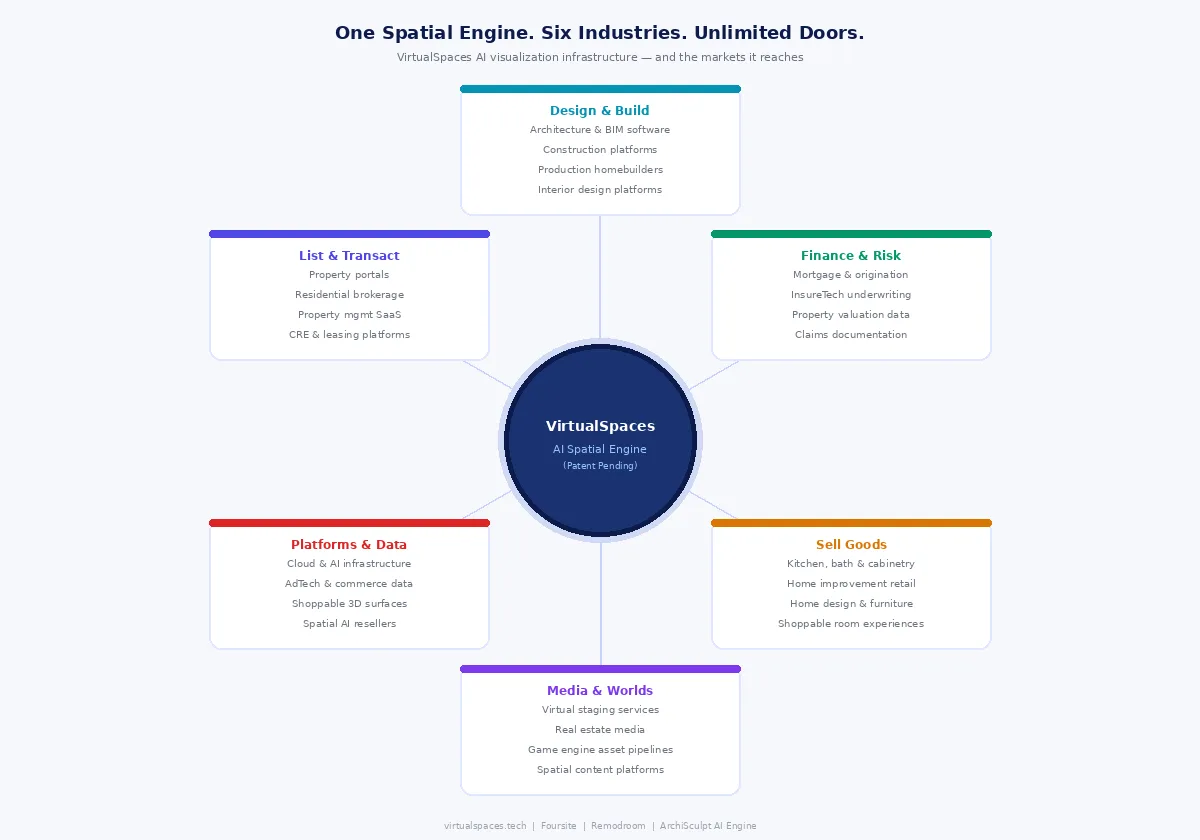
The practical applications of a full-stack spatial visualization platform extend far beyond interior designers and residential developers. When you can take any floor plan and produce a photorealistic, navigable, editable 3D interior in minutes, the use cases span an unexpectedly wide range of industries, each of which has been working around the same underlying visualization gap.
Figure 1: The six industry categories that spatial AI visualization reaches.
The breadth is worth understanding, because it reveals the real scale of the problem being solved:
List and Transact
Property portals, residential brokerage platforms, property management SaaS, and commercial real estate leasing all share the same problem: listings are backed by photographs and floor plans, and buyers and renters cannot picture the space from either. A 3D interior generated from any floor plan changes what a listing can offer at the point of decision.
Design and Build
Architecture software, construction platforms, production homebuilders, and interior design marketplaces all operate upstream of the finished space. Every project they touch requires visualization at some stage of the workflow, and every one of them has relied on the same fragmented, specialist-gated pipeline to produce it.
Finance and Risk
Mortgage originators, insurance underwriters, and property valuation platforms all make decisions based on the specification and condition of a space. Photorealistic renders generated from accurate floor plans give these parties a specification-accurate visual record that has never been easily producible at scale.
Sell Goods
Kitchen, bath, and cabinetry design platforms, home improvement retailers, and home furnishing brands all face a version of the same sales problem: the customer cannot visualize how the product will look in their actual room. A platform that places any product photorealistically in any real room, from a floor plan or a photograph, is a commerce capability that reaches every product category in the residential home.
Media and Worlds
Virtual staging services, real estate media platforms, and game engine asset pipelines all work with 3D spatial content at scale. The infrastructure to generate, refine, and deploy photorealistic interior environments efficiently is a capability each of these sectors needs and none has been able to build cheaply.
Platforms and Data
Cloud and AI infrastructure providers, adtech and commerce data platforms, and spatial AI developers all have a stake in what comes after the flat screen: shoppable 3D environments, room-scale advertising surfaces, and spatial computing experiences that require the kind of photorealistic interior content that the VirtualSpaces engine produces.
What each of these industries shares is a demand for spatial visualization that has been chronically underserved, not because the demand is niche, but because the tooling has been too expensive, too fragmented, and too specialist-gated to reach them at scale.
What the Platform Unlocks for Designers and Developers Right Now
The practical implications for interior designers working in residential projects are significant and immediate. Client presentations change. Brief resolution happens earlier, before procurement begins. Pitches are won on the strength of a photorealistic render of the prospect's actual floor plan rather than a mood board. Scope creep decreases because approvals are made against something the client has actually seen.
For residential developers, the pre-construction sales problem has a practical solution. Every unit type, every finish package can be rendered using Foursite before the sales launch. Buyers see their specific home. Sales cycles compress. Deposit collection begins earlier in the construction timeline.
For renovation and redesign, Remodroom turns a photograph of an existing room into a photorealistic redesign in minutes. Brief clarity that previously took multiple consultation sessions now happens in one meeting.
The Compounding Advantage
Platforms that combine depth of capability with scale of content assets tend to become more valuable over time rather than less. Each material added to the library makes every future project better. Each 3D model added expands the range of spaces that can be designed. Each feature built on top of the visualization infrastructure, walkthroughs, video exports, real-time editing, client-sharing links, becomes possible because the foundation exists to support it.
This is the nature of what VirtualSpaces has built. The platform is not a single feature with a single use case. It is infrastructure for a workflow that every residential design project, every residential development, and every home renovation requires. When that same infrastructure reaches across six distinct industry categories, each of which has been independently working around the same visualization gap, the aggregate market is not niche.
The relay race that has defined professional 3D interior visualization for decades is being replaced by a single platform. The implications for who can deliver great interior design, and what great interior design looks like when presented to a client, are only beginning to be felt.
Recommended for you

August 19, 2026
The End of the Model Home? 3D Changes the Math | VirtualSpaces
HHemanth Velury
CEO & Co-Founder
August 17, 2026
Designing Spaces That Actually Get Built | VirtualSpaces
HHemanth Velury
CEO & Co-Founder
August 12, 2026
Designing Homes for the Stuff People Actually Own | VirtualSpaces
HHemanth Velury
CEO & Co-Founder
August 07, 2026
Floor Plan to Bill of Materials: The 3D Model as Data | VirtualSpaces
HHemanth Velury
CEO & Co-Founder.png&w=1080&q=75)
August 05, 2026
Designing Homes for How People Actually Live | VirtualSpaces
HHemanth Velury
CEO & Co-Founder
August 03, 2026
Honest by Design: Trust in AI Real Estate Imagery | VirtualSpaces
HHemanth Velury
CEO & Co-Founder
July 29, 2026
Kitchen and Bath: The Two Rooms That Decide Resale | VirtualSpaces
HHemanth Velury
CEO & Co-Founder
July 27, 2026
Why Empty Rooms Don't Sell: Virtual Staging | VirtualSpaces
HHemanth Velury
CEO & Co-Founder
July 24, 2026
The Quiet Sustainability Win of Deciding in 3D | VirtualSpaces
HHemanth Velury
CEO & Co-Founder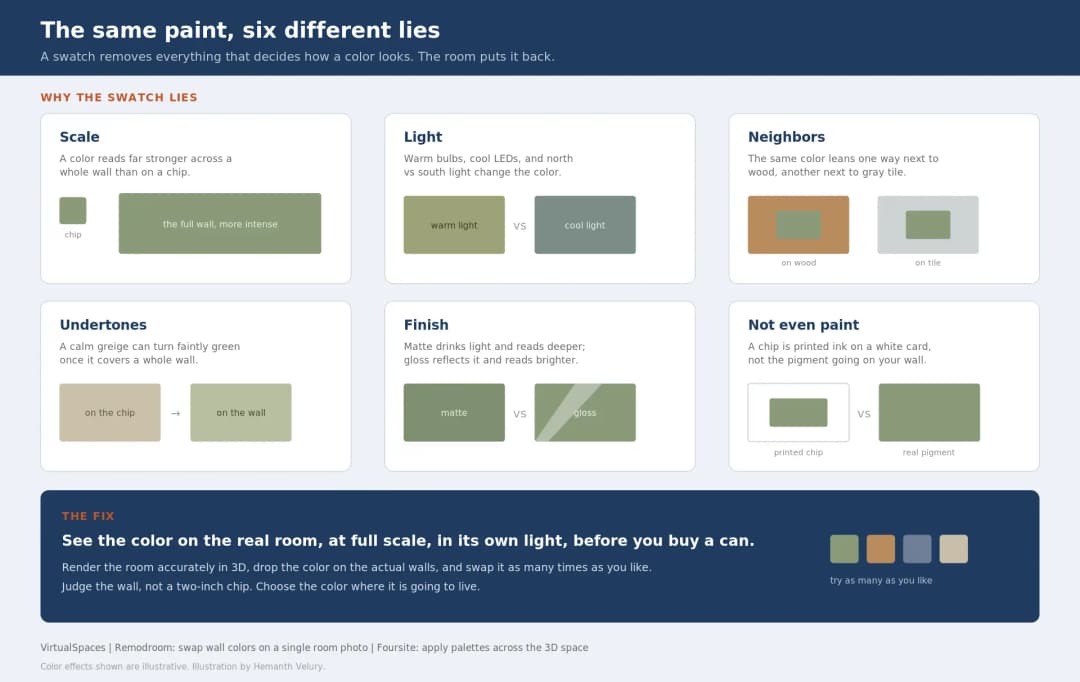
July 22, 2026
Why Paint Swatches Lie: Test Color in 3D First | VirtualSpaces
HHemanth Velury
CEO & Co-Founder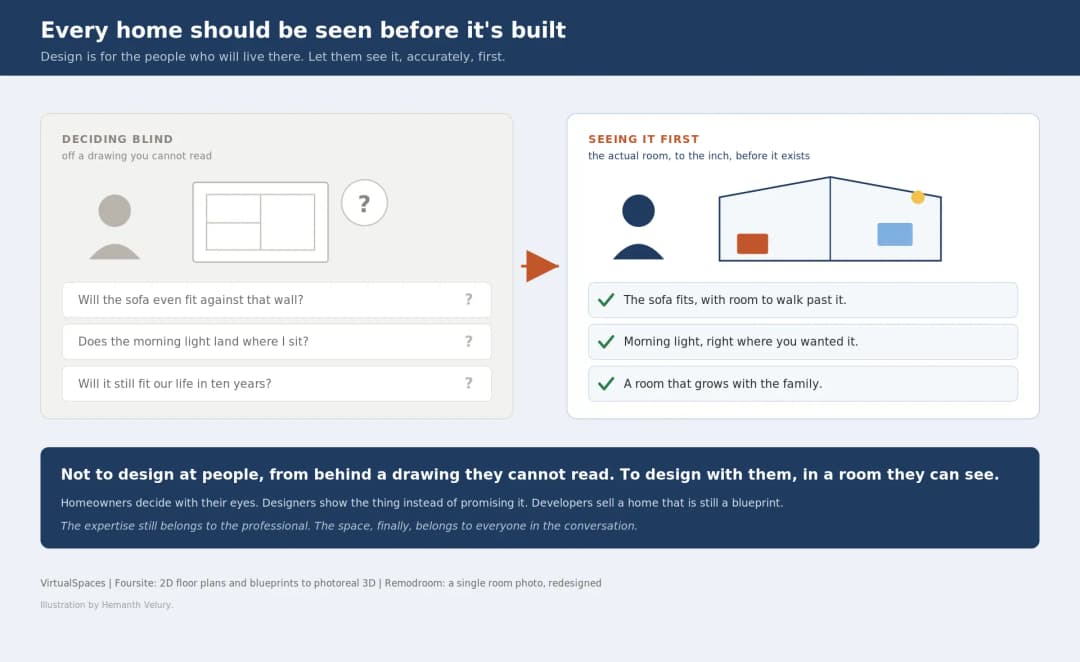
July 20, 2026
Why Every Home Should Be Seen Before It's Built | VirtualSpaces
HHemanth Velury
CEO & Co-Founder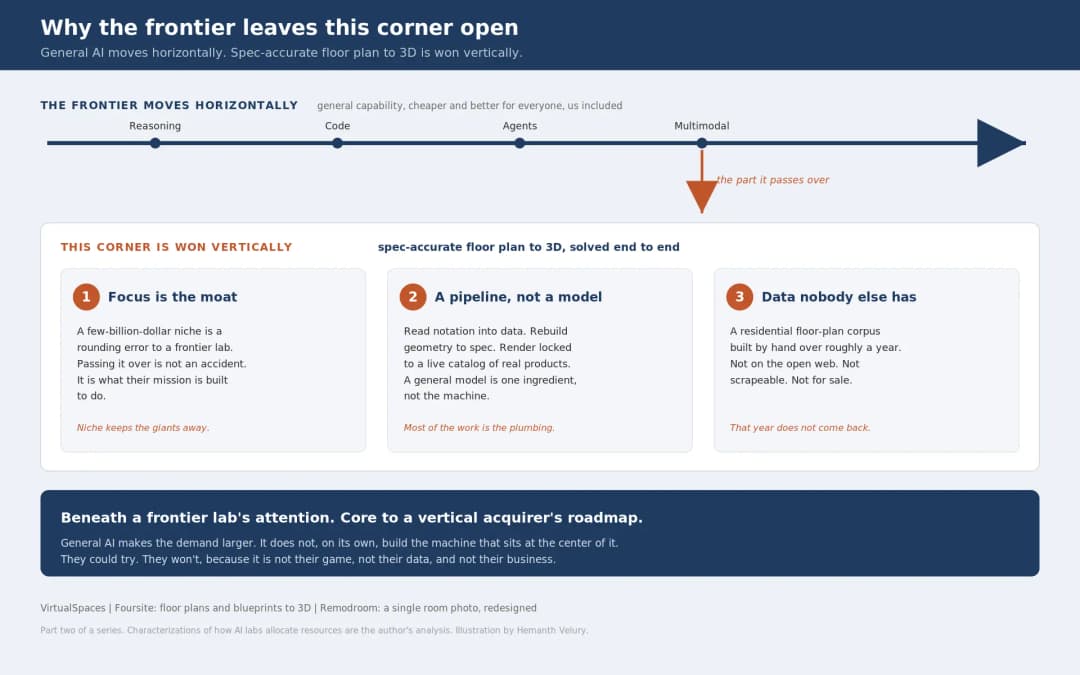
July 17, 2026
Why Big AI Labs Won't Build Floor Plan to 3D | VirtualSpaces
HHemanth Velury
CEO & Co-Founder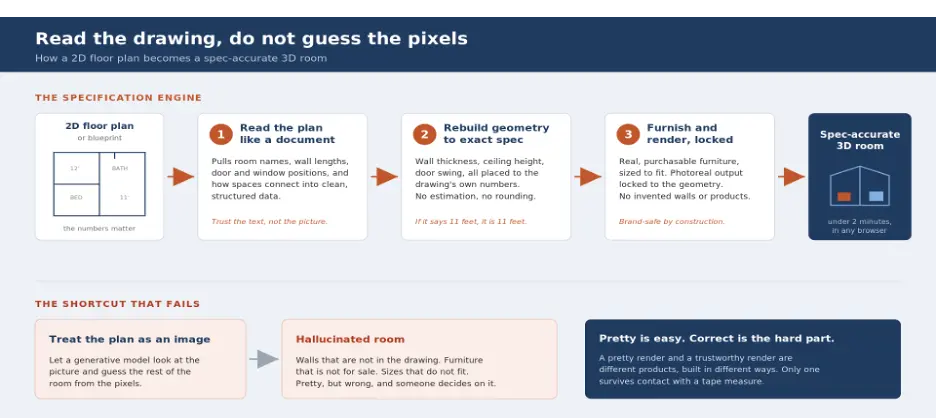
July 15, 2026
How We Solve Floor Plan to 3D, Accurately | VirtualSpaces
HHemanth Velury
CEO & Co-Founder
July 13, 2026
Designing Homes That Age With the People in Them | VirtualSpaces
HHemanth Velury
CEO & Co-Founder
July 10, 2026
Designing Spaces for How Light Actually Moves | VirtualSpaces
HHemanth Velury
CEO & Co-Founder
July 08, 2026
Designing Homes for Every Life Stage in 3D | VirtualSpaces
HHemanth Velury
CEO & Co-Founder
July 06, 2026
Build an Interior Design Portfolio Without Clients | VirtualSpaces
HHemanth Velury
CEO & Co-Founder
June 24, 2026
Scope Creep in Interior Design: How AI Visualization Fixes It | VirtualSpaces
HHemanth Velury
CEO & Co-Founder
June 22, 2026
What Buyers See on a Floor Plan: Your Biggest Sales Problem | VirtualSpaces
HHemanth Velury
CEO & Co-Founder
June 19, 2026
Small Design Studios vs Big Firms: The AI Advantage | VirtualSpaces
HHemanth Velury
CEO & Co-Founder
June 17, 2026
After the Mood Board: AI Interior Visualization | VirtualSpaces
HHemanth Velury
CEO & Co-Founder
June 15, 2026
Foursite Pro Editor: Full Floor Plan Control for Designers | VirtualSpaces
HHemanth Velury
CEO & Co-Founder
June 12, 2026
AI Interior Design: Style Any Room in Seconds with Foursite | VirtualSpaces
HHemanth Velury
CEO & Co-Founder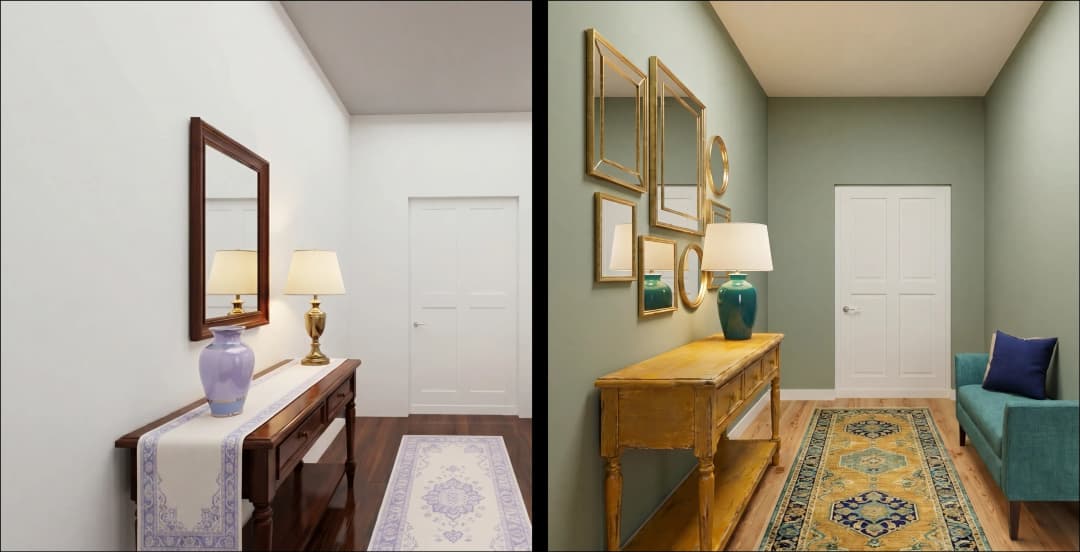
June 10, 2026
Foursite: Floor Plan to 3D Walkthrough in Minutes | VirtualSpaces
HHemanth Velury
CEO & Co-Founder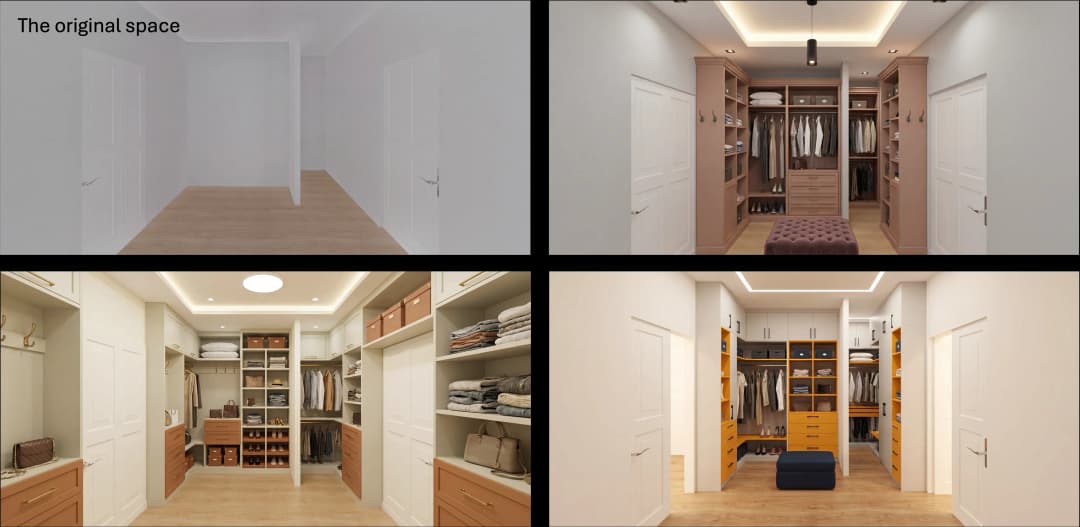
June 08, 2026
Win More Pitches With AI Renders Before the Meeting | VirtualSpaces
HHemanth Velury
CEO & Co-Founder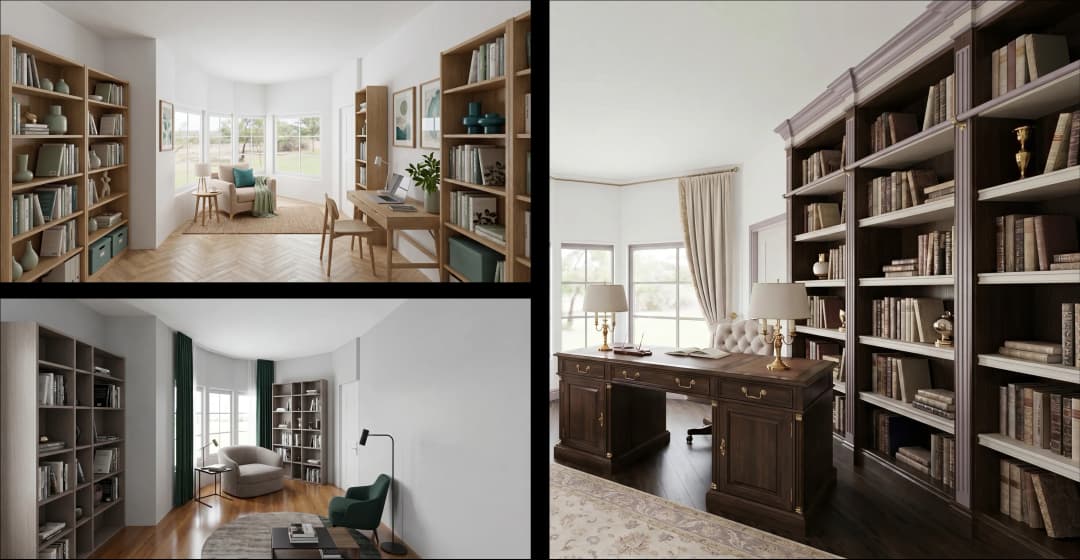
June 05, 2026
From Floor Plan to Finished Room: What AI Now Makes Possible | VirtualSpaces
HHemanth Velury
CEO & Co-Founder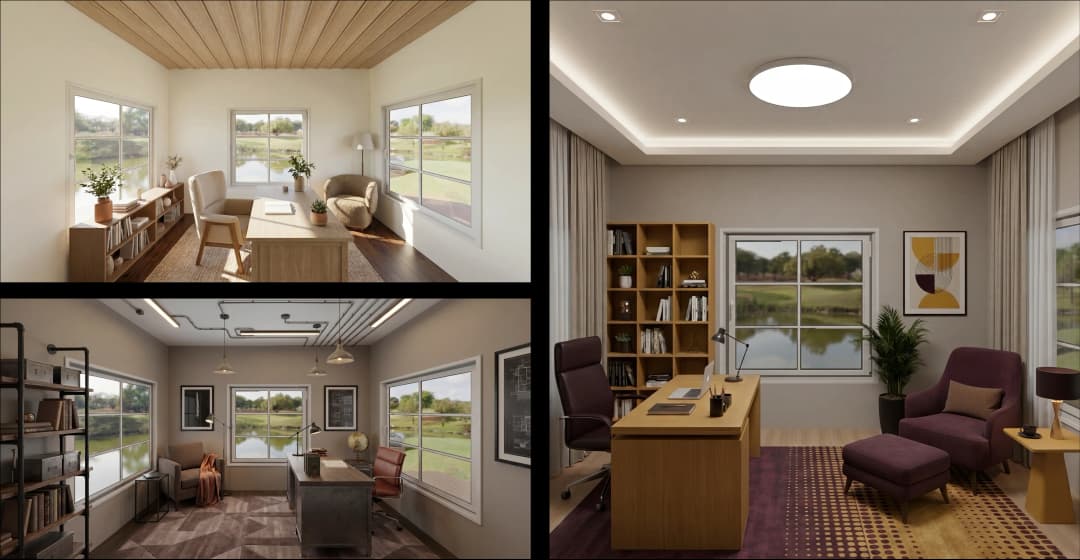
June 03, 2026
The Interior Design Brief Is Broken. AI Fixes It | VirtualSpaces
HHemanth Velury
CEO & Co-Founder
June 01, 2026
Pre-Construction Home Sales: AI Interior Visualization Guide | VirtualSpaces
HHemanth Velury
CEO & Co-Founder
May 30, 2026
Interior Design Principles: Applied with AI | VirtualSpaces
HHemanth Velury
CEO & Co-Founder
May 28, 2026
Designing Spaces for People, Not Blueprints | VirtualSpaces
HHemanth Velury
CEO & Co-Founder
May 26, 2026
The Future of Interior Design: Closing the Visualization Gap with Foursite and Remodroom | VirtualSpaces
HHemanth Velury
CEO & Co-Founder
May 18, 2026
How AI Visualization Upgrades Property Data Platforms | VirtualSpaces
HHemanth Velury
CEO & Co-Founder
May 14, 2026
How AI-First Insurers Can Use 3D Property Data to Transform Home Claims | VirtualSpaces
HHemanth Velury
CEO & Co-FounderMay 12, 2026
Why Photoreal 3D Renders Are Replacing Mood Boards | Interior Design Client Presentations | VirtualSpaces
HHemanth Velury
CEO & Co-Founder
May 08, 2026
From 2D Floor Plans To Living Worlds: The Spec‑Accurate 3D Engine | VirtualSpaces
HHemanth Velury
CEO & Co-Founder
May 06, 2026
Why Furniture Brands Need AI 3D Visualization Now | VirtualSpaces
HHemanth Velury
CEO & Co-Founder
May 4, 2026
How Property Portals Can Turn 2D Floor Plans into 3D Design Decisions | VirtualSpaces
HHemanth Velury
CEO & Co-Founder
April 29, 2026
The Home-Fit Test: Why Square Footage Misleads | VirtualSpaces
HHemanth Velury
CEO & Co-Founder
April 27, 2026
Designing Homes That Sell: 3D Visualization ROI Data | VirtualSpaces
HHemanth Velury
CEO & Co-FounderApril 24, 2026
What's Next: Foursite & Remodroom's New AI Features | VirtualSpaces
HHemanth Velury
CEO & Co-Founder
April 22, 2026
AI in Architecture: Closing the 85% Exposure Gap | VirtualSpaces
HHemanth Velury
CEO & Co-Founder
April 20, 2026
Interior Design Pricing in 2026: From Hourly to Value-Based Fees | VirtualSpaces
HHemanth Velury
CEO & Co-FounderApril 17, 2026
How Foursite and Remodroom Help Designers Win Clients | VirtualSpaces
HHemanth Velury
CEO & Co-Founder
April 15, 2026
Designing Spaces for People: Remodroom + Foursite AI Guide | VirtualSpaces
HHemanth Velury
CEO & Co-Founder
April 13, 2026
Designing for the Way People Actually Live: How AI 3D Is Finally Closing the Gap Between Floor Plan and Reality
HHemanth Velury
CEO & Co-Founder
April 11, 2026
Design in Real Time: AI Renders in Your First Client Meeting
HHemanth Velury
CEO & Co-Founder
April 06, 2026
Why Real Estate Photography Is No Longer Enough: The Shift to Spatial-First Listings
HHemanth Velury
CEO & Co-Founder
April 03, 2026
Property Management's Hidden Weapon: AI 3D Floor Plans That Cut Vacancy Time and Raise Tenant Quality
HHemanth Velury
CEO & Co-Founder
April 01, 2026
Off-Plan and Oversubscribed: How AI 3D Visualization Is Transforming Real Estate Pre-Sales
HHemanth Velury
CEO & Co-Founder
March 30, 2026
Why Foursite Beats Generic AI Tools for Interior Design 3D Visualization
HHemanth Velury
CEO & Co-Founder
March 27, 2026
7 Tenets of Interior Design: How AI Accelerates Harmony in Residential Spaces
HHemanth Velury
CEO & Co-Founder
March 25, 2026
What Is the 3-5-7 Rule in Interior Design? Foursite's AI Guide for Residential Spaces
HHemanth Velury
CEO & Co-Founder
March 23, 2026
What Is the 70/30 Rule in Interior Design? Foursite's AI Guide for Residential Spaces
HHemanth Velury
CEO & Co-Founder
March 20, 2026
How AI 3D Visualization Is Rewriting Residential Interior Design Workflows
HHemanth Velury
CEO & Co-Founder
March 18, 2026
Beyond Marketing: How 3D Floorplans Transform FM, Retrofit Planning & ESG Operations
HHemanth Velury
CEO & Co-Founder
March 16, 2026
Why AI Companies Use Token Payments (And Why VirtualSpaces Is Returning To Fiat)
HHemanth Velury
CEO & Co-Founder
March 13, 2026
Floorplan‑Native Digital Twins: Beyond BIM for Consumer‑Ready Real Estate Experiences
HHemanth Velury
CEO & Co-Founder
March 11, 2026
The Foursite Platform Thesis: Why Floor Plans, Not Photos, Are the Next Property Software Primitive
HHemanth Velury
CEO & Co-Founder
March 09, 2026
Design Systems for Space: Building Reusable 3D Component Libraries on Top of AI Floorplan‑to‑3D Engines
HHemanth Velury
CEO & Co-Founder
March 06, 2026
How to Standardize Design Quality Across Global Projects Using AI Floorplan-to-3D Tools
HHemanth Velury
CEO & Co-Founder
March 04, 2026
From CAD-First to AI-First: Reskilling Your Team for AI-Native Design Workflows
HHemanth Velury
CEO & Co-Founder
March 02, 2026
Algorithmic Ergonomics Meets Photorealistic 3D: Designing Human-Centered Smart Homes with Foursite in 2026
HHemanth Velury
CEO & Co-Founder
February 27, 2026
The Ethics of AI in Interior Design: Ownership, Originality, and Client Transparency
HHemanth Velury
CEO & Co-Founder
February 25, 2026
Designing with Empathy: Using AI 3D Visualization to Improve Client Communication and Emotional Clarity
HHemanth Velury
CEO & Co-Founder
February 23, 2026
From Tool to Infrastructure: AI Floorplan-to-3D and the Next Wave of PropTech
HHemanth Velury
CEO & Co-Founder
February 20, 2026
AI Interior Design for Holiday Homes: Turn Spare Flats into High-Demand Short-Stay Rentals with 3D Visuals
HHemanth Velury
CEO & Co-Founder
February 18, 2026
The Pre‑Purchase Power Play: How Savvy Home Buyers Use 3D Floor Plan Visualization to Negotiate Better Deals
HHemanth Velury
CEO & Co-FounderFebruary 16, 2026
AI Interior Design for Non‑Designers: How Homeowners Can Brief Like Pros
HHemanth Velury
CEO & Co-Founder
February 13, 2026
Scaling a Design Business Without Hiring a 3D Team: An Owner's Guide
HHemanth Velury
CEO & Co-Founder
February 11, 2026
From Bland to Bold: How to Rescue Builder-Grade Interiors on Any Budget
HHemanth Velury
CEO & Co-Founder
February 6, 2026
The Psychology of Space: How Room Dimensions Influence Interior Design Decisions
HHemanth Velury
CEO & Co-Founder
February 4, 2026
The Future of Interior Design Visualization: How AI Technology is Transforming 2D Concepts Into 3D Reality
HHemanth Velury
CEO & Co-Founder
February 2, 2026
AI Interior Décor: How Artificial Intelligence Generates Design Options from Your Floor Plan
HHemanth Velury
CEO & Co-Founder
January 30, 2026
Photoreal vs. Reality: What Clients Actually Expect from Interior Design Visualization
HHemanth Velury
CEO & Co-Founder
January 28, 2026
The Design Approval Conversation That Changes Everything: Communication Strategy When Using Photorealistic Visualization
HHemanth Velury
CEO & Co-Founder
January 25, 2026
Interior Design as Experience Design: How 3D Visualization Changes Your Professional Identity
HHemanth Velury
CEO & Co-Founder
January 23, 2026
The Professional Gap: How 3D Visualization Changes Interior Design Client Perception
HHemanth Velury
CEO & Co-Founder
January 21, 2026
Why Clients Fire Designers (And How 3D Visualization Could Have Saved the Project)
HHemanth Velury
CEO & Co-Founder
January 16, 2026
Blueprint to Vision: Why Seeing Is Believing in Interior Design
HHemanth Velury
CEO & Co-Founder
January 14, 2026
The Speed of Responsiveness: How AI Visualization Tools Make You Look Like You Care More
HHemanth Velury
CEO & Co-Founder
January 12, 2026
Why Interior Designers and Architects Can't Compete Without AI 3D Visualization Tools
HHemanth Velury
CEO & Co-Founder
January 07, 2026
From "Saved" to "Sold": How Homeowners Are Planning Renovations with AI
HHemanth Velury
CEO & Co-Founder
January 05, 2026
The Interior Designer's Secret Weapon: Speed as Premium Positioning
HHemanth Velury
CEO & Co-Founder
December 31, 2025
Gratitude, Growth & Game-Changing Innovation: VirtualSpaces' 2025 Journey & What's Coming in 2026
HHemanth Velury
CEO & Co-Founder
December 29, 2025
Why Interior Designers Are Switching to AI Floor Plan-to-3D Tools in 2026
HHemanth Velury
CEO & Co-Founder
December 26, 2025
AI Virtual Staging for Real Estate Agents: Sell More Homes Faster with Foursite
HHemanth Velury
CEO & Co-Founder
December 24, 2025
Why Architects Are Switching to AI 2D-to-3D: The SketchUp Alternative
HHemanth Velury
CEO & Co-Founder
December 22, 2025
Cut 3 Weeks from Real Estate Sales Cycle: The ROI of AI 2D to 3D Visualization
HHemanth Velury
CEO & Co-Founder
December 19, 2025
2D Floor Plans Are Dying: Why 3D Visualization & AI Virtual Staging Are the Future
HHemanth Velury
CEO & Co-Founder
December 17, 2025
Virtual Staging vs Physical Staging: How AI Saves Money Per Property
HHemanth Velury
CEO & Co-Founder
December 15, 2025
AI Floor Plan to Image: Revolutionizing Real Estate Marketing for Agents
HHemanth Velury
CEO & Co-Founder
December 12, 2025
Color of the Year 2026: Cloud Dancer | VirtualSpaces AI Interior Design Guide
HHemanth Velury
CEO & Co-Founder
December 10, 2025
AI Floor Plan to 3D: The New Standard for Interior Design Workflows
HHemanth Velury
CEO & Co-Founder
December 08, 2025
How Interior Design Studios Can Operationalize AI 2D-to-3D Workflows (Without Breaking Their Process)
HHemanth Velury
CEO & Co-Founder
December 06, 2025
How to Implement AI Interior Design Workflows in Your Studio
HHemanth Velury
CEO & Co-Founder
December 4, 2025
How Homeowners Can Use AI Interior Design Tools to Plan Renovations with Confidence
HHemanth Velury
CEO & Co-Founder
November 28, 2025
Interior Designers in the Age of AI: From Threat Narrative to Superpower
HHemanth Velury
CEO & Co-Founder
November 21, 2025
Foursite Launch: Embracing 'Release Early, Release Often'
HHemanth Velury
CEO & Co-Founder
November 13, 2025
Foursite by VirtSpaces: Empowering Interior Designers, Architects, and Homeowners
HHemanth Velury
CEO & Co-Founder
November 7, 2025
Reimagining Architectural Education: How AI Floorplan-to-3D Technology Can Transform Design Learning
VVirtualSpaces Research Labs
AI Research Initiative
October 27, 2025
Archisculpt AI: Turning Architectural Drawings into Photorealistic 3D Spaces
AAbhijeet Naik
Co-Founder & CTO
October 13, 2025
Home Makeover: From Floor Plan to Dream Space with AI
HHemanth Velury
CEO & Co-Founder
October 6, 2025
Real-Time Rendering & AI: Revolutionizing Interactive Property Walkthroughs with VirtSpaces
HHemanth Velury
CEO & Co-Founder
September 26, 2025
Foursite - A True AI-Native Experience in Design Visualization
AAbhijeet Naik
CTO & Co-Founder
September 18, 2025
Why PropTech Startups Are Betting on AI Interior Design
HHemanth Velury
CEO & Co-Founder
September 11, 2025
How AI Differs from Traditional 3D Rendering Software
HHemanth Velury
CEO & Co-Founder
September 2, 2025
From Client to Investor: How Nila Spaces and VirtSpaces Are Redefining Proptech with AI
HHemanth Velury
CEO & Co-Founder
August 25, 2025
VirtSpaces From Virtual Reality to AI – Transforming Real Estate Visualization.
HHemanth Velury
CEO & Co-Founder


We help teams collaborate seamlessly and reduce costs. Virtual Spaces offers cutting-edge technology with flexible plans designed to fit modern teams.
Copyright © VirtSpaces Pvt. Ltd. 2025 All Rights Reserved.
CIN: U74999KA2016PTC094921