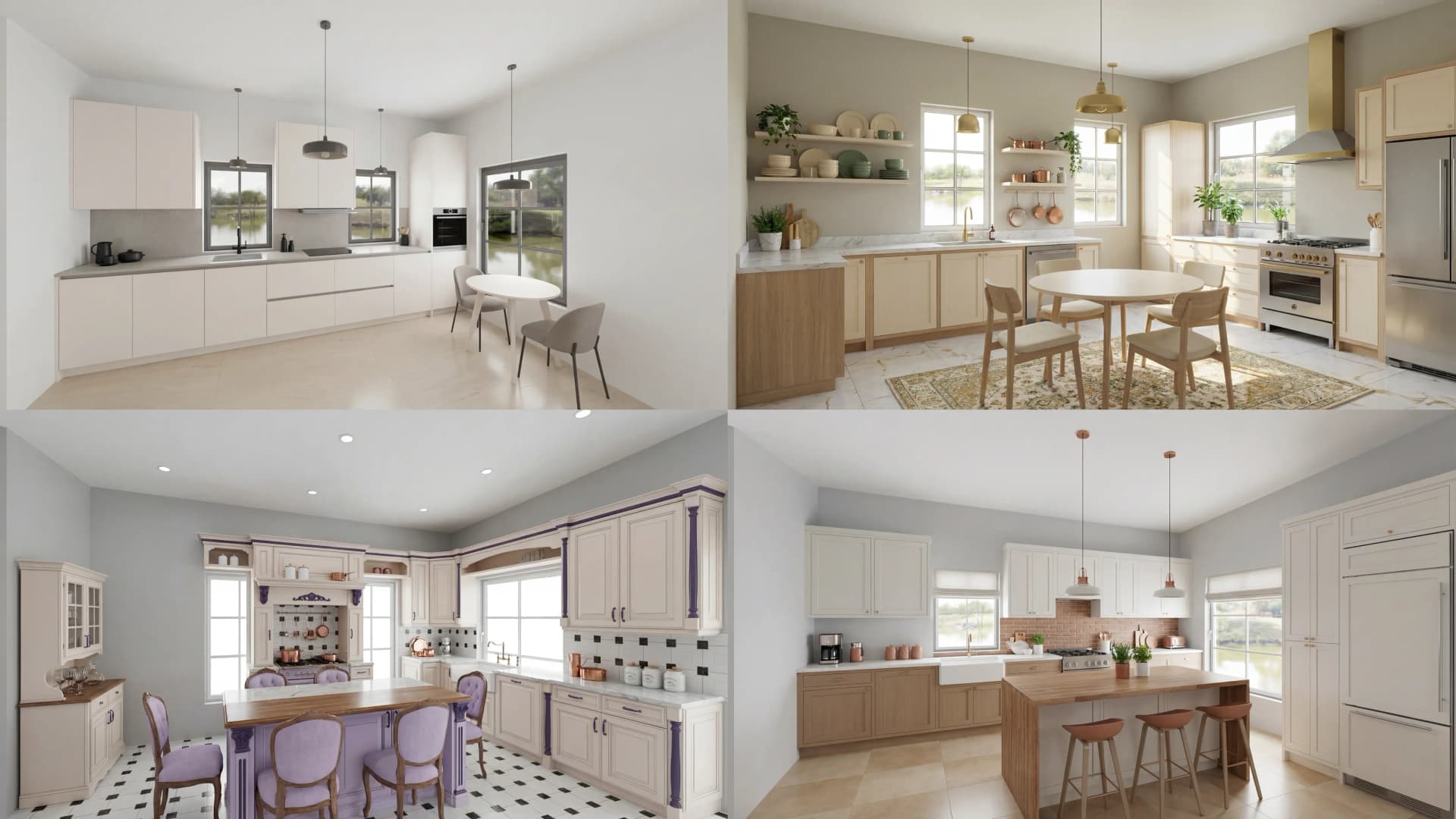
June 24, 2026
- AI Technology
- Interior Design
Scope Creep in Interior Design: How AI Visualization Fixes It | VirtualSpaces
Hemanth Velury
CEO & Co-FounderThe Real Cost of Scope Creep in Interior Design (And How Visualization Kills It)
Every interior designer knows the conversation. The project is three weeks in. The concept has been approved. The procurement list is nearly finalized. And then the client calls.
"I've been thinking about the kitchen. I'm not sure the island is quite right. Can we look at it again?"
What follows is not a quick adjustment. It is a cascade. The island changes, so the pendant lighting specification changes, so the flooring layout changes, so the quote to the contractor changes. A single 'can we look at it again' becomes three weeks of rework, a revised procurement list, a tense call with the contractor, and a fee scope that no longer matches the actual work being done.
This is scope creep. And in residential interior design, it is so common that most designers have stopped calling it a problem and started calling it the job.
It is a problem. It is just one whose root cause is more specific than most people realize, and whose solution is more accessible than it has ever been.
Scope Creep Is Not a Client Behavior Problem
The instinct when scope creep happens is to diagnose it as a client issue: indecisiveness, poor brief clarity, difficulty committing. Some clients genuinely do change their minds for reasons unrelated to the design process. But the majority of scope creep in residential interior design traces back to a single, structural cause.
The client approved something they could not fully picture
When a client says yes to a concept direction, a material palette, a furniture arrangement, or a kitchen layout presented as a 2D plan and a mood board, they are not approving the space. They are approving a representation of the space, processed through their best attempt at spatial translation, filtered through whatever they could imagine on that day in that meeting.
Three weeks later, when procurement is underway and the project is becoming real, the client gets a clearer mental image. The island that looked fine on a floor plan now seems large relative to the window. The tile they approved in a sample board looks different at scale. The lighting position that made sense in a sketch does not read the same way in the actual ceiling plan.
They are not changing their minds. They are seeing the design for the first time. And the cost of that first real look falls on the designer.
What Scope Creep Actually Costs
Most designers track scope creep by the hours it adds to a project. That is the visible cost. The invisible costs are larger and compound across a practice over time.
Here is a realistic accounting of what a single significant scope change costs a residential interior design practice:
-
Redesign time: the designer's hours to rework the affected area of the scheme, which rarely stays contained to the specific element the client flagged
-
Contractor coordination: revised quotes, updated site instructions, potential re-ordering of the construction sequence
-
Procurement rework: cancelled orders, replacement lead times, supplier communication, restocking fees on items already ordered
-
Specification updates: revised drawings, updated schedules, amended material lists
-
Client management time: the calls, the emails, the revised presentation, the approval meeting for the revised concept
-
Subcontractor delay costs: if the rework falls on the critical path, downstream trades are affected and the project timeline extends
None of this appears in the original fee. If the scope change is significant, the designer faces a choice between absorbing the cost to protect the client relationship or raising a variation order that the client may contest because, from their perspective, they are only asking to fix something that was not right.
The client does not feel they changed the brief. They feel the designer did not understand what they wanted. That is the relationship damage that scope creep produces, and it is harder to quantify than the hours.
The Approval That Was Never Really an Approval
Interior design approvals are often weaker than they appear. A client who says 'yes, I love it' in an approval meeting is expressing enthusiasm for a direction. They are not necessarily confirming a spatial decision they have fully processed.
This is not a failure of professional communication. It is a structural limitation of the tools being used to communicate. A 2D floor plan communicates dimensions and adjacency. It does not communicate proportion, scale, or the lived experience of moving through a space. A material board communicates colour and texture at small scale. It does not communicate how those materials read when they fill a room.
The gap between what the designer presents and what the client is actually approving is the single biggest driver of scope creep. Not client indecisiveness. Not poor briefing. The gap between what the tools can show and what the client needs to see.
What Changes When You Show Clients Their Actual Space
Photorealistic AI 3D interior design visualization changes the approval dynamic in a specific and measurable way. When a client sees their actual room, with their actual dimensions and their actual material selections rendered at photorealistic quality, the approval they give is categorically different from one given in response to a floor plan and a mood board.
They have already worked out the questions that would otherwise surface three weeks into procurement. They can see whether the island is the right size. They can see how the tile reads at scale. They can see where the afternoon light hits and whether it conflicts with the pendant position. They make those observations during the visualization review, not after the contractor has started work.
Foursite by VirtualSpaces is built on patent-pending AI visualization technology that converts 2D floor plans and architectural blueprints into photorealistic AI 3D interior renders in minutes. A designer can apply the proposed material palette, furniture layout, and lighting concept to the client's actual floor plan and present the result in the same meeting where the concept is introduced. The client sees the design in the space, not adjacent to it.
The changes they request at that point are real changes, made from a position of full information, before anything has been ordered or built. That is not scope creep. That is the brief being properly resolved before the project starts.
The revision cycle moves from the procurement phase, where it is expensive, to the concept phase, where it is almost free.
The Renovation Context: Remodroom and the Existing Space Problem
Scope creep in renovation projects has an additional dimension that new construction does not. The client already lives in the space. They have opinions formed from daily experience of it. They know what frustrates them about the current layout, but they struggle to articulate exactly what the replacement should look like.
This is a brief clarity problem more than a visualization problem, but the two are connected. A client who cannot picture what their renovated kitchen will look like is a client who will keep refining the brief as the project progresses, because each decision forces them to imagine something they cannot yet see.
Remodroom addresses this directly. A client uploads a photo of their existing room and sees it redesigned in minutes, with their chosen style, finishes, and furniture direction applied photorealistically to the actual space. The brief clarification that previously happened through multiple consultation rounds and iterative mood board revisions happens in a single session, against a visual that leaves little to imagination.
For the designer, the result is a signed-off brief that reflects what the client actually wants, not what they could articulate in the absence of a visual reference. That is a brief strong enough to build a contract around, with clear scope boundaries that both parties have seen and agreed to.
Visualization as a Scope Management Tool: The Practical Workflow
The application of AI visualization to scope management is not complicated. It is a sequencing change in how the approval process works.
The traditional sequence:
-
Concept developed by designer
-
Concept presented via floor plan, mood board, and material samples
-
Client approves concept
-
Detailed design and procurement begin
-
Client sees design becoming reality and requests changes
-
Scope creep begins
The visualization-first sequence:
-
Concept translated into photorealistic AI 3D interior visualization using Foursite or Remodroom
-
Client reviews a render of their actual space with the design applied
-
Changes are requested and resolved at the visualization stage, before procurement
-
Client approves a render that reflects their actual brief
-
Detailed design and procurement begin from a fully resolved brief
-
Scope is held because the client has already seen the outcome and committed to it
The change requests that used to arrive during procurement arrive instead during the visualization review. The cost of addressing them drops from significant to negligible. The project starts procurement with a client who has already seen their design and confirmed it is what they wanted.
The Business Case: What This Is Worth to a Design Practice
Scope creep is not a minor inconvenience. It is a margin problem. In a residential interior design practice, the projects that run over scope are the projects where the fee structure holds but the hours exceed it. The profitable projects are the ones that run close to scope, where the work done matches the work priced.
A practice that reduces scope creep by resolving briefs more fully before procurement starts does not just save time on individual projects. It improves the economics of the entire practice: higher effective hourly rates, more predictable project timelines, more capacity for new projects, and stronger client relationships that generate referrals.
The investment in AI interior design visualization tools pays for itself the first time it prevents a significant revision cycle. After that, it is accretive on every project where the visualization review surfaces a client preference that would otherwise have appeared mid-procurement.
The residential interior design market is built on referrals and repeat clients. VirtualSpaces' patent-pending visualization platform, through tools like Foursite and Remodroom, gives practices the infrastructure to deliver projects that match what clients approved because what clients approved was something real. That is a different quality of client experience, and it compounds.
Scope Creep Is Solvable. The Tool Exists.
Interior designers have managed scope creep for as long as the profession has existed. They have developed contract clauses for it, change order processes for it, client communication frameworks for it. All of these are responses to a problem that has been treated as inherent to the work.
It is not inherent. It is the predictable result of asking clients to approve designs they cannot fully see. When clients can see the design completely and photorealistically before any commitment beyond the approval itself, the change request pattern shifts. Changes happen earlier, when they are cheap. Fewer changes happen later, when they are not.
The conversation that starts with 'I've been thinking about the kitchen' does not go away. But it happens in the visualization review, over a render, before the contractor is involved. That is a different kind of problem: one that is easy to solve, that produces better design, and that does not cost anyone money.
Show them the space before you build it. The rest of the conversation gets much simpler.
Recommended for you

August 19, 2026
The End of the Model Home? 3D Changes the Math | VirtualSpaces
HHemanth Velury
CEO & Co-Founder
August 17, 2026
Designing Spaces That Actually Get Built | VirtualSpaces
HHemanth Velury
CEO & Co-Founder
August 12, 2026
Designing Homes for the Stuff People Actually Own | VirtualSpaces
HHemanth Velury
CEO & Co-Founder
August 07, 2026
Floor Plan to Bill of Materials: The 3D Model as Data | VirtualSpaces
HHemanth Velury
CEO & Co-Founder.png&w=1080&q=75)
August 05, 2026
Designing Homes for How People Actually Live | VirtualSpaces
HHemanth Velury
CEO & Co-Founder
August 03, 2026
Honest by Design: Trust in AI Real Estate Imagery | VirtualSpaces
HHemanth Velury
CEO & Co-Founder
July 29, 2026
Kitchen and Bath: The Two Rooms That Decide Resale | VirtualSpaces
HHemanth Velury
CEO & Co-Founder
July 27, 2026
Why Empty Rooms Don't Sell: Virtual Staging | VirtualSpaces
HHemanth Velury
CEO & Co-Founder
July 24, 2026
The Quiet Sustainability Win of Deciding in 3D | VirtualSpaces
HHemanth Velury
CEO & Co-Founder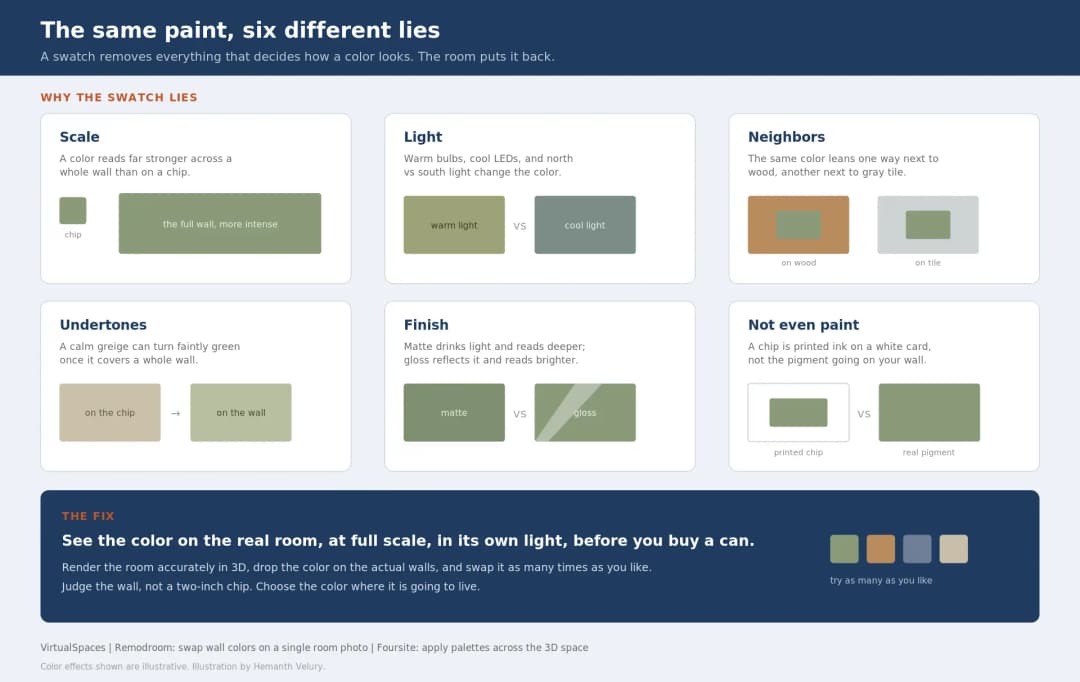
July 22, 2026
Why Paint Swatches Lie: Test Color in 3D First | VirtualSpaces
HHemanth Velury
CEO & Co-Founder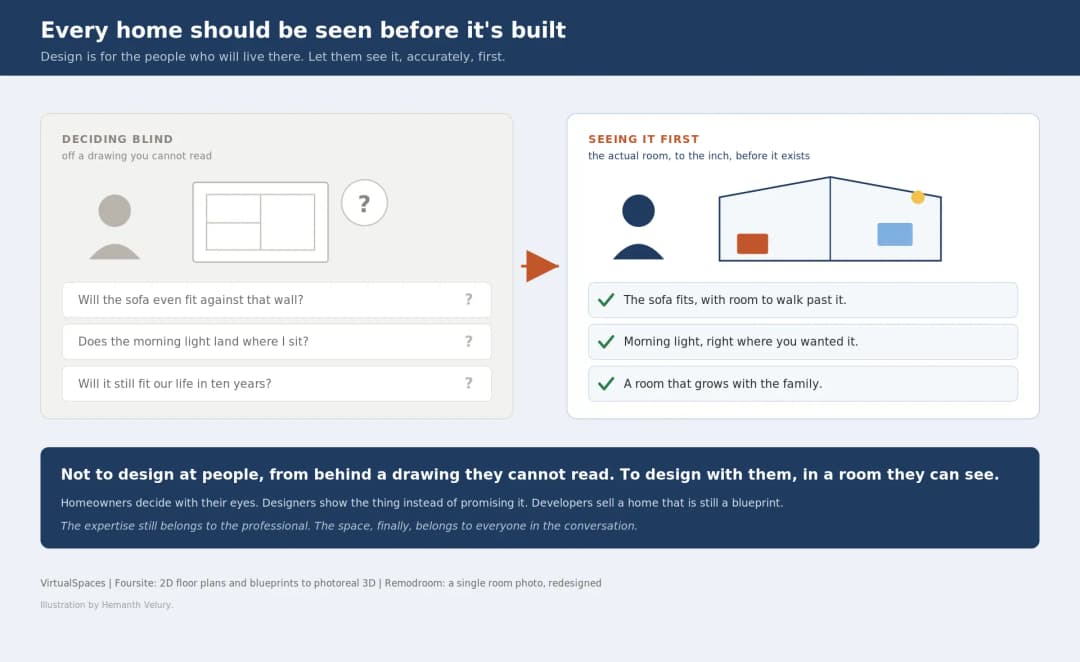
July 20, 2026
Why Every Home Should Be Seen Before It's Built | VirtualSpaces
HHemanth Velury
CEO & Co-Founder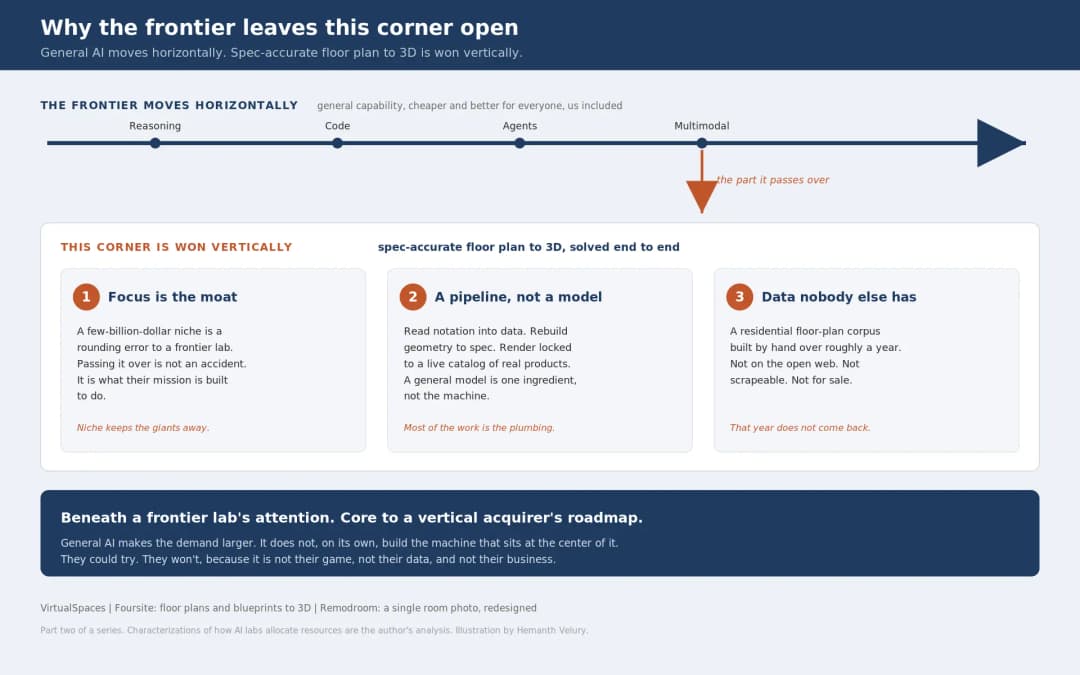
July 17, 2026
Why Big AI Labs Won't Build Floor Plan to 3D | VirtualSpaces
HHemanth Velury
CEO & Co-Founder
July 15, 2026
How We Solve Floor Plan to 3D, Accurately | VirtualSpaces
HHemanth Velury
CEO & Co-Founder
July 13, 2026
Designing Homes That Age With the People in Them | VirtualSpaces
HHemanth Velury
CEO & Co-Founder
July 10, 2026
Designing Spaces for How Light Actually Moves | VirtualSpaces
HHemanth Velury
CEO & Co-Founder
July 08, 2026
Designing Homes for Every Life Stage in 3D | VirtualSpaces
HHemanth Velury
CEO & Co-Founder
July 06, 2026
Build an Interior Design Portfolio Without Clients | VirtualSpaces
HHemanth Velury
CEO & Co-Founder
June 26, 2026
AI Interior Design: Full 3D Workflow in One Platform | VirtualSpaces
HHemanth Velury
CEO & Co-Founder
June 22, 2026
What Buyers See on a Floor Plan: Your Biggest Sales Problem | VirtualSpaces
HHemanth Velury
CEO & Co-Founder
June 19, 2026
Small Design Studios vs Big Firms: The AI Advantage | VirtualSpaces
HHemanth Velury
CEO & Co-Founder
June 17, 2026
After the Mood Board: AI Interior Visualization | VirtualSpaces
HHemanth Velury
CEO & Co-Founder
June 15, 2026
Foursite Pro Editor: Full Floor Plan Control for Designers | VirtualSpaces
HHemanth Velury
CEO & Co-Founder
June 12, 2026
AI Interior Design: Style Any Room in Seconds with Foursite | VirtualSpaces
HHemanth Velury
CEO & Co-Founder
June 10, 2026
Foursite: Floor Plan to 3D Walkthrough in Minutes | VirtualSpaces
HHemanth Velury
CEO & Co-Founder
June 08, 2026
Win More Pitches With AI Renders Before the Meeting | VirtualSpaces
HHemanth Velury
CEO & Co-Founder
June 05, 2026
From Floor Plan to Finished Room: What AI Now Makes Possible | VirtualSpaces
HHemanth Velury
CEO & Co-Founder
June 03, 2026
The Interior Design Brief Is Broken. AI Fixes It | VirtualSpaces
HHemanth Velury
CEO & Co-Founder
June 01, 2026
Pre-Construction Home Sales: AI Interior Visualization Guide | VirtualSpaces
HHemanth Velury
CEO & Co-Founder
May 30, 2026
Interior Design Principles: Applied with AI | VirtualSpaces
HHemanth Velury
CEO & Co-Founder
May 28, 2026
Designing Spaces for People, Not Blueprints | VirtualSpaces
HHemanth Velury
CEO & Co-Founder
May 26, 2026
The Future of Interior Design: Closing the Visualization Gap with Foursite and Remodroom | VirtualSpaces
HHemanth Velury
CEO & Co-Founder
May 18, 2026
How AI Visualization Upgrades Property Data Platforms | VirtualSpaces
HHemanth Velury
CEO & Co-Founder
May 14, 2026
How AI-First Insurers Can Use 3D Property Data to Transform Home Claims | VirtualSpaces
HHemanth Velury
CEO & Co-FounderMay 12, 2026
Why Photoreal 3D Renders Are Replacing Mood Boards | Interior Design Client Presentations | VirtualSpaces
HHemanth Velury
CEO & Co-Founder
May 08, 2026
From 2D Floor Plans To Living Worlds: The Spec‑Accurate 3D Engine | VirtualSpaces
HHemanth Velury
CEO & Co-Founder
May 06, 2026
Why Furniture Brands Need AI 3D Visualization Now | VirtualSpaces
HHemanth Velury
CEO & Co-Founder
May 4, 2026
How Property Portals Can Turn 2D Floor Plans into 3D Design Decisions | VirtualSpaces
HHemanth Velury
CEO & Co-Founder
April 29, 2026
The Home-Fit Test: Why Square Footage Misleads | VirtualSpaces
HHemanth Velury
CEO & Co-Founder
April 27, 2026
Designing Homes That Sell: 3D Visualization ROI Data | VirtualSpaces
HHemanth Velury
CEO & Co-FounderApril 24, 2026
What's Next: Foursite & Remodroom's New AI Features | VirtualSpaces
HHemanth Velury
CEO & Co-Founder
April 22, 2026
AI in Architecture: Closing the 85% Exposure Gap | VirtualSpaces
HHemanth Velury
CEO & Co-Founder
April 20, 2026
Interior Design Pricing in 2026: From Hourly to Value-Based Fees | VirtualSpaces
HHemanth Velury
CEO & Co-FounderApril 17, 2026
How Foursite and Remodroom Help Designers Win Clients | VirtualSpaces
HHemanth Velury
CEO & Co-Founder
April 15, 2026
Designing Spaces for People: Remodroom + Foursite AI Guide | VirtualSpaces
HHemanth Velury
CEO & Co-Founder
April 13, 2026
Designing for the Way People Actually Live: How AI 3D Is Finally Closing the Gap Between Floor Plan and Reality
HHemanth Velury
CEO & Co-Founder
April 11, 2026
Design in Real Time: AI Renders in Your First Client Meeting
HHemanth Velury
CEO & Co-Founder
April 06, 2026
Why Real Estate Photography Is No Longer Enough: The Shift to Spatial-First Listings
HHemanth Velury
CEO & Co-Founder
April 03, 2026
Property Management's Hidden Weapon: AI 3D Floor Plans That Cut Vacancy Time and Raise Tenant Quality
HHemanth Velury
CEO & Co-Founder
April 01, 2026
Off-Plan and Oversubscribed: How AI 3D Visualization Is Transforming Real Estate Pre-Sales
HHemanth Velury
CEO & Co-Founder
March 30, 2026
Why Foursite Beats Generic AI Tools for Interior Design 3D Visualization
HHemanth Velury
CEO & Co-Founder
March 27, 2026
7 Tenets of Interior Design: How AI Accelerates Harmony in Residential Spaces
HHemanth Velury
CEO & Co-Founder
March 25, 2026
What Is the 3-5-7 Rule in Interior Design? Foursite's AI Guide for Residential Spaces
HHemanth Velury
CEO & Co-Founder
March 23, 2026
What Is the 70/30 Rule in Interior Design? Foursite's AI Guide for Residential Spaces
HHemanth Velury
CEO & Co-Founder
March 20, 2026
How AI 3D Visualization Is Rewriting Residential Interior Design Workflows
HHemanth Velury
CEO & Co-Founder
March 18, 2026
Beyond Marketing: How 3D Floorplans Transform FM, Retrofit Planning & ESG Operations
HHemanth Velury
CEO & Co-Founder
March 16, 2026
Why AI Companies Use Token Payments (And Why VirtualSpaces Is Returning To Fiat)
HHemanth Velury
CEO & Co-Founder
March 13, 2026
Floorplan‑Native Digital Twins: Beyond BIM for Consumer‑Ready Real Estate Experiences
HHemanth Velury
CEO & Co-Founder
March 11, 2026
The Foursite Platform Thesis: Why Floor Plans, Not Photos, Are the Next Property Software Primitive
HHemanth Velury
CEO & Co-Founder
March 09, 2026
Design Systems for Space: Building Reusable 3D Component Libraries on Top of AI Floorplan‑to‑3D Engines
HHemanth Velury
CEO & Co-Founder
March 06, 2026
How to Standardize Design Quality Across Global Projects Using AI Floorplan-to-3D Tools
HHemanth Velury
CEO & Co-Founder
March 04, 2026
From CAD-First to AI-First: Reskilling Your Team for AI-Native Design Workflows
HHemanth Velury
CEO & Co-Founder
March 02, 2026
Algorithmic Ergonomics Meets Photorealistic 3D: Designing Human-Centered Smart Homes with Foursite in 2026
HHemanth Velury
CEO & Co-Founder
February 27, 2026
The Ethics of AI in Interior Design: Ownership, Originality, and Client Transparency
HHemanth Velury
CEO & Co-Founder
February 25, 2026
Designing with Empathy: Using AI 3D Visualization to Improve Client Communication and Emotional Clarity
HHemanth Velury
CEO & Co-Founder
February 23, 2026
From Tool to Infrastructure: AI Floorplan-to-3D and the Next Wave of PropTech
HHemanth Velury
CEO & Co-Founder
February 20, 2026
AI Interior Design for Holiday Homes: Turn Spare Flats into High-Demand Short-Stay Rentals with 3D Visuals
HHemanth Velury
CEO & Co-Founder
February 18, 2026
The Pre‑Purchase Power Play: How Savvy Home Buyers Use 3D Floor Plan Visualization to Negotiate Better Deals
HHemanth Velury
CEO & Co-FounderFebruary 16, 2026
AI Interior Design for Non‑Designers: How Homeowners Can Brief Like Pros
HHemanth Velury
CEO & Co-Founder
February 13, 2026
Scaling a Design Business Without Hiring a 3D Team: An Owner's Guide
HHemanth Velury
CEO & Co-Founder
February 11, 2026
From Bland to Bold: How to Rescue Builder-Grade Interiors on Any Budget
HHemanth Velury
CEO & Co-Founder
February 6, 2026
The Psychology of Space: How Room Dimensions Influence Interior Design Decisions
HHemanth Velury
CEO & Co-Founder
February 4, 2026
The Future of Interior Design Visualization: How AI Technology is Transforming 2D Concepts Into 3D Reality
HHemanth Velury
CEO & Co-Founder
February 2, 2026
AI Interior Décor: How Artificial Intelligence Generates Design Options from Your Floor Plan
HHemanth Velury
CEO & Co-Founder
January 30, 2026
Photoreal vs. Reality: What Clients Actually Expect from Interior Design Visualization
HHemanth Velury
CEO & Co-Founder
January 28, 2026
The Design Approval Conversation That Changes Everything: Communication Strategy When Using Photorealistic Visualization
HHemanth Velury
CEO & Co-Founder
January 25, 2026
Interior Design as Experience Design: How 3D Visualization Changes Your Professional Identity
HHemanth Velury
CEO & Co-Founder
January 23, 2026
The Professional Gap: How 3D Visualization Changes Interior Design Client Perception
HHemanth Velury
CEO & Co-Founder
January 21, 2026
Why Clients Fire Designers (And How 3D Visualization Could Have Saved the Project)
HHemanth Velury
CEO & Co-Founder
January 16, 2026
Blueprint to Vision: Why Seeing Is Believing in Interior Design
HHemanth Velury
CEO & Co-Founder
January 14, 2026
The Speed of Responsiveness: How AI Visualization Tools Make You Look Like You Care More
HHemanth Velury
CEO & Co-Founder
January 12, 2026
Why Interior Designers and Architects Can't Compete Without AI 3D Visualization Tools
HHemanth Velury
CEO & Co-Founder
January 07, 2026
From "Saved" to "Sold": How Homeowners Are Planning Renovations with AI
HHemanth Velury
CEO & Co-Founder
January 05, 2026
The Interior Designer's Secret Weapon: Speed as Premium Positioning
HHemanth Velury
CEO & Co-Founder
December 31, 2025
Gratitude, Growth & Game-Changing Innovation: VirtualSpaces' 2025 Journey & What's Coming in 2026
HHemanth Velury
CEO & Co-Founder
December 29, 2025
Why Interior Designers Are Switching to AI Floor Plan-to-3D Tools in 2026
HHemanth Velury
CEO & Co-Founder
December 26, 2025
AI Virtual Staging for Real Estate Agents: Sell More Homes Faster with Foursite
HHemanth Velury
CEO & Co-Founder
December 24, 2025
Why Architects Are Switching to AI 2D-to-3D: The SketchUp Alternative
HHemanth Velury
CEO & Co-Founder
December 22, 2025
Cut 3 Weeks from Real Estate Sales Cycle: The ROI of AI 2D to 3D Visualization
HHemanth Velury
CEO & Co-Founder
December 19, 2025
2D Floor Plans Are Dying: Why 3D Visualization & AI Virtual Staging Are the Future
HHemanth Velury
CEO & Co-Founder
December 17, 2025
Virtual Staging vs Physical Staging: How AI Saves Money Per Property
HHemanth Velury
CEO & Co-Founder
December 15, 2025
AI Floor Plan to Image: Revolutionizing Real Estate Marketing for Agents
HHemanth Velury
CEO & Co-Founder
December 12, 2025
Color of the Year 2026: Cloud Dancer | VirtualSpaces AI Interior Design Guide
HHemanth Velury
CEO & Co-Founder
December 10, 2025
AI Floor Plan to 3D: The New Standard for Interior Design Workflows
HHemanth Velury
CEO & Co-Founder
December 08, 2025
How Interior Design Studios Can Operationalize AI 2D-to-3D Workflows (Without Breaking Their Process)
HHemanth Velury
CEO & Co-Founder
December 06, 2025
How to Implement AI Interior Design Workflows in Your Studio
HHemanth Velury
CEO & Co-Founder
December 4, 2025
How Homeowners Can Use AI Interior Design Tools to Plan Renovations with Confidence
HHemanth Velury
CEO & Co-Founder
November 28, 2025
Interior Designers in the Age of AI: From Threat Narrative to Superpower
HHemanth Velury
CEO & Co-Founder
November 21, 2025
Foursite Launch: Embracing 'Release Early, Release Often'
HHemanth Velury
CEO & Co-Founder
November 13, 2025
Foursite by VirtSpaces: Empowering Interior Designers, Architects, and Homeowners
HHemanth Velury
CEO & Co-Founder
November 7, 2025
Reimagining Architectural Education: How AI Floorplan-to-3D Technology Can Transform Design Learning
VVirtualSpaces Research Labs
AI Research Initiative
October 27, 2025
Archisculpt AI: Turning Architectural Drawings into Photorealistic 3D Spaces
AAbhijeet Naik
Co-Founder & CTO
October 13, 2025
Home Makeover: From Floor Plan to Dream Space with AI
HHemanth Velury
CEO & Co-Founder
October 6, 2025
Real-Time Rendering & AI: Revolutionizing Interactive Property Walkthroughs with VirtSpaces
HHemanth Velury
CEO & Co-Founder
September 26, 2025
Foursite - A True AI-Native Experience in Design Visualization
AAbhijeet Naik
CTO & Co-Founder
September 18, 2025
Why PropTech Startups Are Betting on AI Interior Design
HHemanth Velury
CEO & Co-Founder
September 11, 2025
How AI Differs from Traditional 3D Rendering Software
HHemanth Velury
CEO & Co-Founder
September 2, 2025
From Client to Investor: How Nila Spaces and VirtSpaces Are Redefining Proptech with AI
HHemanth Velury
CEO & Co-Founder
August 25, 2025
VirtSpaces From Virtual Reality to AI – Transforming Real Estate Visualization.
HHemanth Velury
CEO & Co-Founder


We help teams collaborate seamlessly and reduce costs. Virtual Spaces offers cutting-edge technology with flexible plans designed to fit modern teams.
Copyright © VirtSpaces Pvt. Ltd. 2025 All Rights Reserved.
CIN: U74999KA2016PTC094921